The 20th Century’s 100 Best American Movies Worth Watching Today: Part 1 (1917-1939)
The Silent Era & Early Sound Foundations
Controversial Movies Part 2: 1940-1949 True Cult Classics
First off, this is NOT a list of the greatest movies ever made, and it’s also NOT a list of my favorite movies. I’m writing this because I love movies, both old and new, and I want more people to love them too.
I set out with an extremely difficult target: build a 100-film collection of 20th-century American cinema where an average 25-year-old with zero nostalgia and zero era-based forgiveness can watch any of them and actively enjoy them, while ensuring every single film has a strong claim to greatness. This is a killer constraint. If a movie felt like homework just to watch, it didn’t make the cut.
I asked, does each film deserve its place based on its own merit? It’s irrelevant if a movie pioneered a camera trick or changed cinema history, there is no historical obligation and no nostalgia either. There needs to be a real reason for a movie to be called one of the best once you strip away its reputation, awards, etc.
I limited this list to American movies only (international films need their own guide), which forced some absolutely ruthless cuts. Leaving out Lawrence of Arabia nearly killed me, but I had to; it’s one of my three favorite movies of all time, but despite being backed by American funding it was made by a British company, directed by a Brit, starred mostly British actors, and was filmed overseas. It’s also why African Queen and Leaving Las Vegas aren’t here.
We are going to start by cheating. I said this was the top 100, but there are two short films I need to recommend first that aren’t officially part of the list. They are both necessary and sufficient to kick off our tour (and free to watch on YouTube), and we’ll then proceed chronologically. Give these early films a real try, they are way better than you think.
Short Films
The Immigrant (1917, Charlie Chaplin)
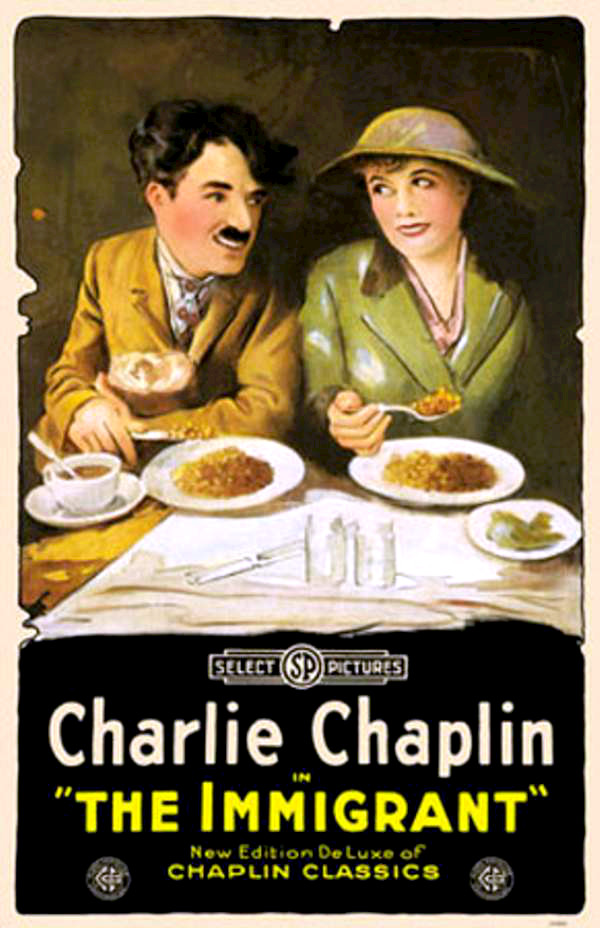
In all of Hollywood history there may never have been a better filmmaker than Charlie Chaplin. The Immigrant is only 22 minutes long, but it packs in a rough Atlantic crossing, a dice game, seasickness, and a budding romance before Charlie Chaplin’s perpetually poor Little Tramp even arrives in America. The Immigrant is magnetic and funny, it’s hard to stop watching once you’ve started. What really stays with you is the feeling: the slapstick at the ship’s dinner table, especially Chaplin’s graceful struggle to eat a plate of beans as the boat rocks, is pure physical comedy. The restaurant scene makes you feel the stress of having no money in your pocket. The shot of the Statue of Liberty is moving at first, but the mood quickly shifts as passengers are herded off like cattle, briefly undercutting the American dream. Even so, the film ends on a note of hard-earned warmth, cheering for an underdog who gets by on nothing but wit and charm. It’s free on YouTube, why not watch it?
The Music Box (1932, James Parrott)
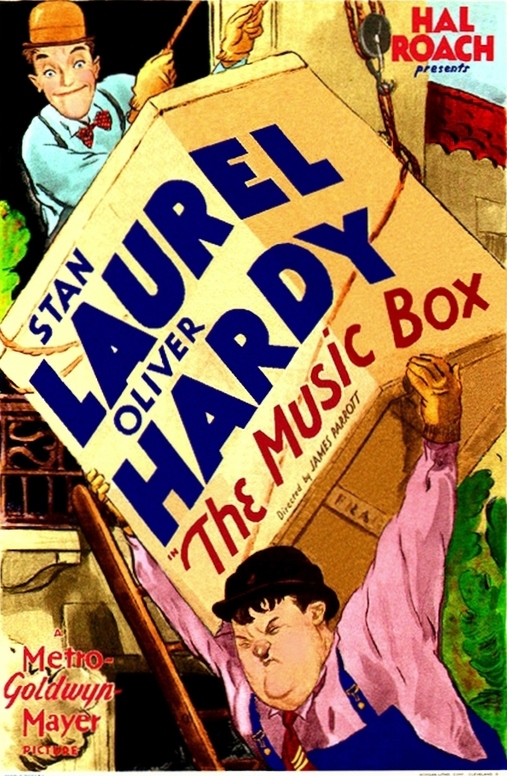
Stan and Ollie take on what seems like a simple job: hauling a crated player piano up a huge 131-step public staircase in Los Angeles. But gravity, pushy bystanders, and their own stubborn mistakes turn the task into a drawn-out struggle. This scene is a perfect example of Laurel and Hardy’s comic magic, like Sisyphus in bowler hats, stretched out for half an hour with flawless timing and growing frustration. This tour frankly has to contain Laurel & Hardy, they’re so foundational to the DNA of American comedy. It’s also free on YouTube, less than 30 minutes of your life, so go see what I’m talking about. An equally funny short film is Big Business, also free. It takes a bit longer to get going but it escalates and escalates and escalates, and then twists.
One bit of important info going forward: none of these feature films are widescreen, because it wasn’t a thing in mainstream cinema until the 1950s. I’ll talk more about that in part 3.
Feature Films
Safety Last! (1923, Fred C. Newmeyer & Sam Taylor)
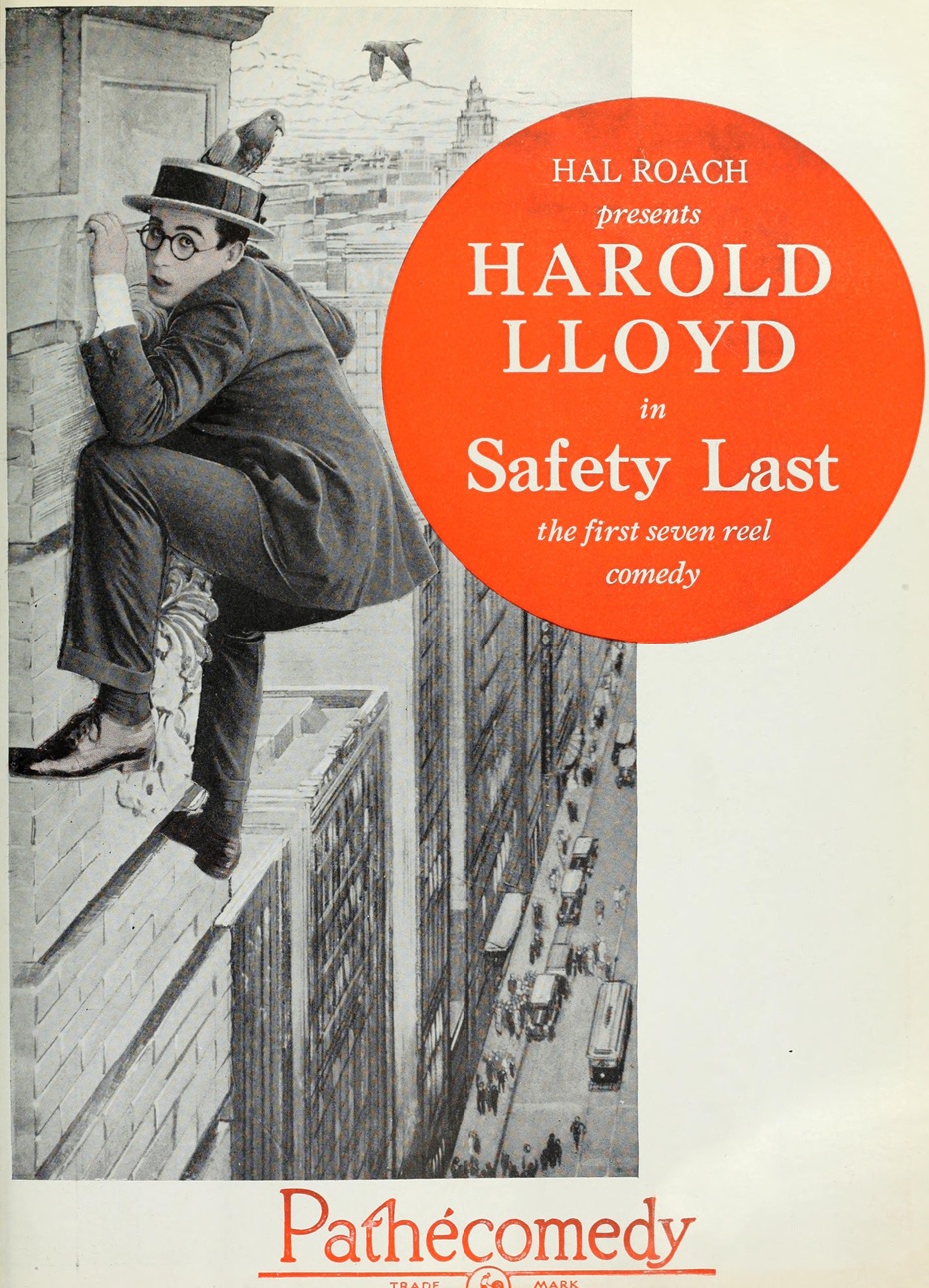
Safety Last! tells the story of Harold, a small-town man hoping to make it big in the city. He keeps his sweetheart back home waiting with stories of success he hasn’t really achieved. Working as an underpaid department store clerk, he hears his boss offer a thousand-dollar bonus to anyone who can find a “human fly” to climb the store’s twelve-story building for publicity. Harold sets it up but after a run-in with a beat cop he annoys, ends up having to make the climb himself.
This film is probably the best example of “thrill comedy.” Instead of relying only on light slapstick, it mixes quick, building jokes with heart-pounding danger in the climax of the movie. The famous clock scene is a long, tense sequence that uses real heights, perfect timing, and growing risk with each floor–seriously, it will still make you nervous. At just over an hour the movie keeps a quick pace, stays fun, and finishes with an ending that can still make you grip your seat. It shows that great comedy really is timeless. It also happens to be the third movie in a row that is free on YouTube.
The General (1926, Buster Keaton & Clyde Bruckman)
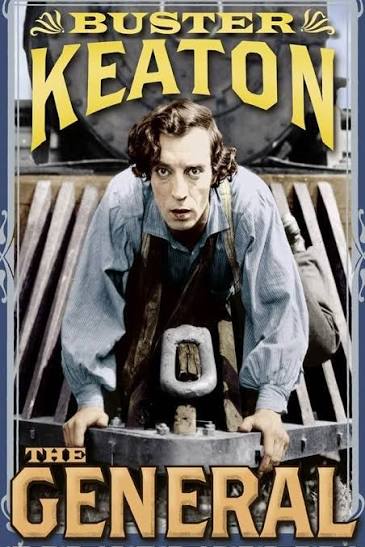
Johnnie Gray is a Southern railroad engineer who cares about two things: his locomotive, the General, and the woman he wants to marry. When Union spies steal both of them during the Civil War, Johnnie sets off on a determined chase deep into enemy territory. The pursuit quickly turns around, and soon he is racing back home with Union soldiers on his tail.
The General is Buster Keaton’s best work and sets the standard for fast-paced silent comedy. Instead of using simple sight gags he transforms the American landscape into a huge, fast-moving obstacle course. Some of the stunts in this movie are insane, like a real train crashing through a burning bridge in one take(!)–an awesome piece of large-scale silent-era filmmaking. Instead of feeling old-fashioned it comes across as a thrilling, carefully planned action-comedy that has a satisfying ending. This movie does feature a man on the side of the South, so if you can tolerate that you’re in for a great movie. If not, well, I don’t know what to tell you other than you’re missing out. It’s also free on YouTube.
All Quiet on the Western Front (1930, Lewis Milestone)
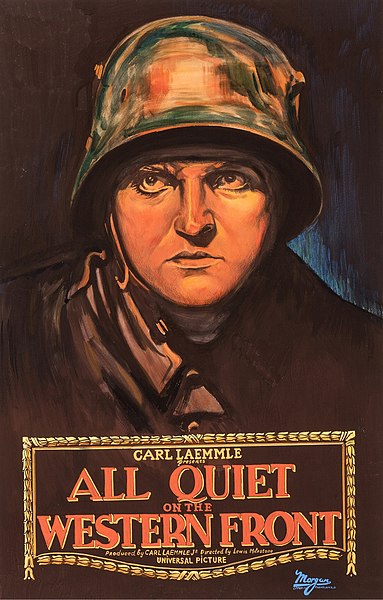
This is the first film on our list with full sound, in the talkie era. Encouraged by their schoolmaster’s patriotic speeches, Paul and some German classmates sign up for World War I with excitement only to have their illusions destroyed in the harsh, rat-filled trenches of the Western Front. Training is humiliating, life at the front means hunger and fear, and every death makes the surviving boys feel older and emptier. A powerful scene shows Paul trapped in a shell crater with a dying French soldier he has stabbed, making him face the real person behind the word “enemy.”
All Quiet on the Western Front is still one of the best war films ever made, because it never makes suffering look exciting or heroic. The camera follows the soldiers as they charge, only to show explosions, mud, and gunfire breaking them apart. While some of the dialogue might feel a little old-fashioned now, its main message is still powerful: adults give boys a romantic view of war, but war destroys them. The film remains raw, sad, and unforgettable. Oh, and it’s free on YouTube.
City Lights (1931, Charlie Chaplin)
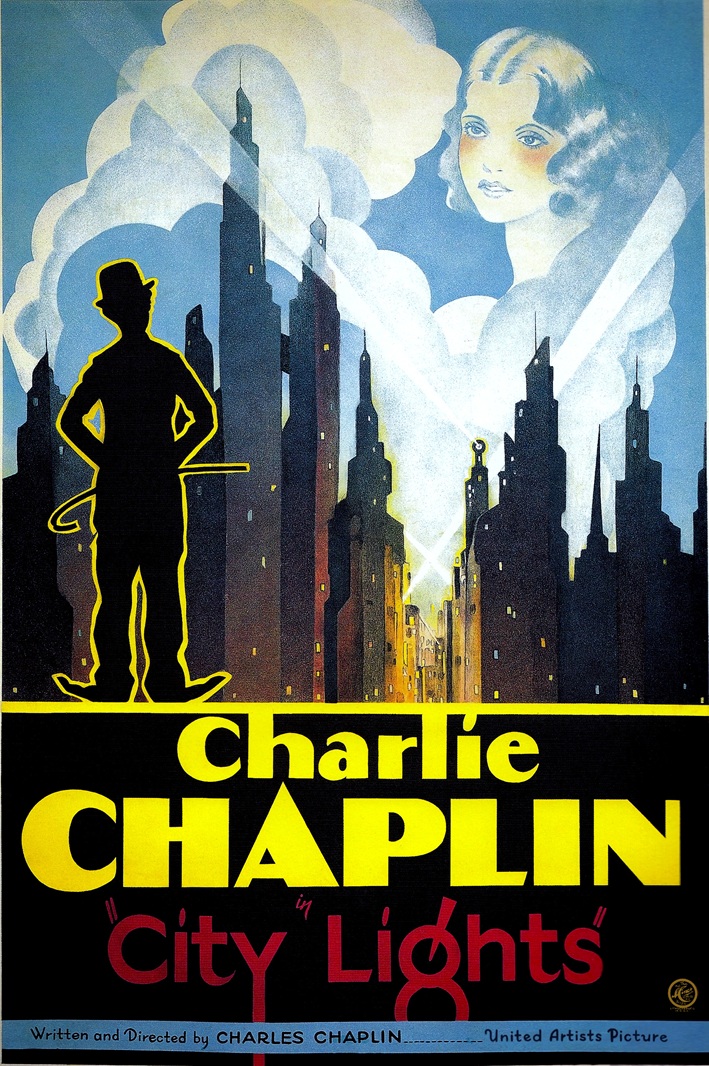
We are back to the silent era for Chaplin, as he held off on making any talkies for quite a while. This is my favorite Chaplin film; if you only watch one silent film, this is it. The Tramp falls for a blind flower girl who thinks he is a wealthy aristocrat. At the same time, he deals with a crazy friendship with an eccentric millionaire who only recognizes him when he’s drunk. To pay for the surgery that might restore the girl’s sight, the Tramp tries all sorts of odd jobs and even enters a hilariously rigged boxing match—all the time worried by what will happen when she learns who he really is.
City Lights deserves its place here because it delivers one of the most moving endings in film history without losing any of its humor. Chaplin famously avoided making talking pictures, showing that a single look can be more powerful than words. The physical comedy still feels fresh, but the real strength of the film is in the quiet, uncertain question: will he still be enough for her once she can see him? Even today, that final shot can break through anyone’s cynicism. It, too, is free to watch in its entirety on YouTube. Unfortunately this is where the free ride ends
Duck Soup (1933, Leo McCarey)
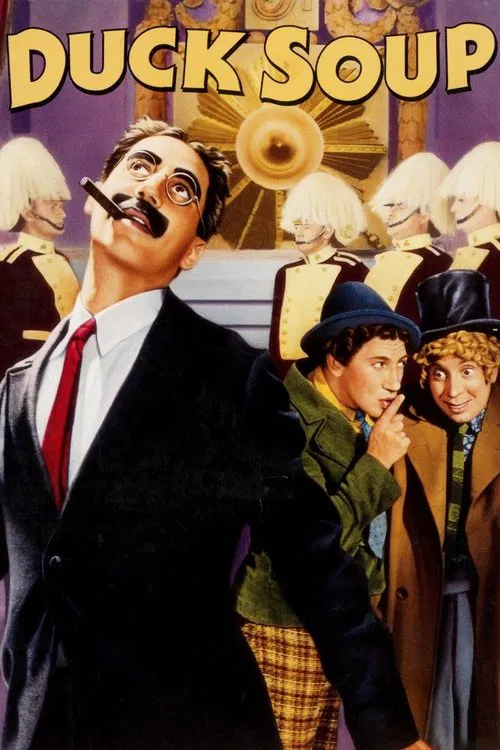
It would be flat-out illegal to not include a Marx Brothers film on our tour. Rufus T. Firefly becomes the dictator of the bankrupt nation of Freedonia after a wealthy dowager insists on it, and he quickly throws the nation into chaos. When the neighboring country Sylvania sends Chico and Harpo in as bumbling spies, Firefly’s quick temper and stubbornness turn small insults into a pointless, all-out war.
Duck Soup shows the Marx Brothers at their wildest and most focused. The movie skips the romantic subplots that slow down some of their other films and instead delivers nonstop Groucho wordplay, Harpo’s gleeful destruction, Chico’s crooked logic, and the famous mirror scene. The film never tries to teach a lesson; instead it makes every leader, ambassador, soldier and national symbol look silly. That’s why it feels so alive. You are not following a careful plot, but watching four comedians tear apart polite society and somehow make total chaos exciting.
It Happened One Night (1934, Frank Capra)
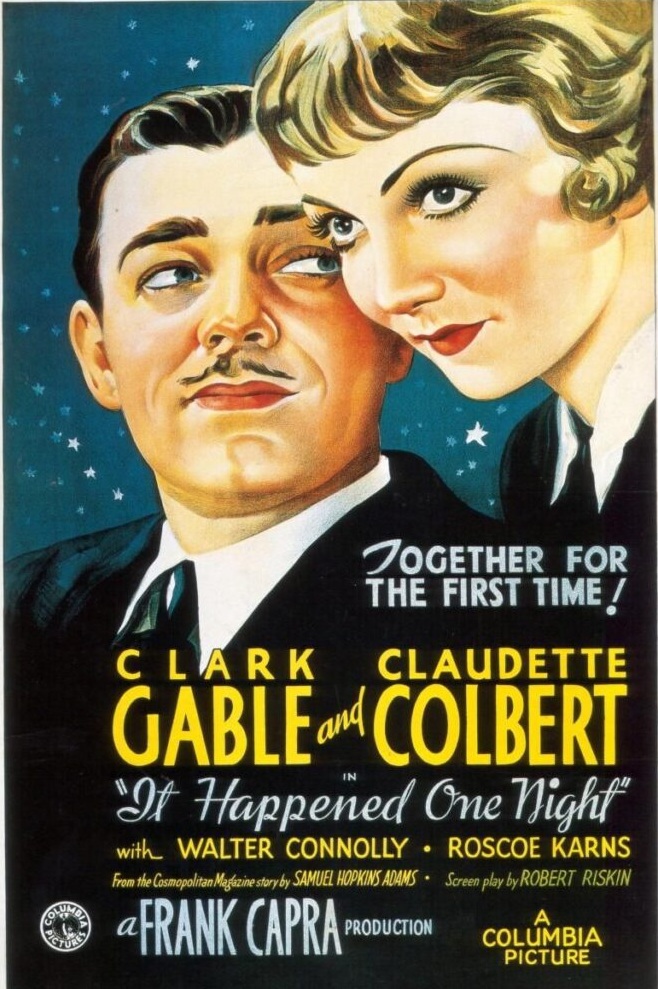
Ellie Andrews, a spoiled heiress on the run from her controlling father, tries to reunite with her new husband, who isn’t much of a catch. Along the way she meets Peter Warne, a quick-witted newspaper reporter who’s out of work. Peter sees a chance to save his career and promises to help Ellie get to New York without being recognized, as long as she lets him write her story. Their journey across the country has them sharing cheap motel rooms, missing buses, dodging Ellie’s father, and arguing about almost everything.
It Happened One Night deserves its place because it helped create the screwball romantic-comedy style, but still feels fresh today. Frank Capra turns simple things like overnight buses, rainy roads, and a blanket between twin beds—the “Walls of Jericho”—into great movie moments. Claudette Colbert and Clark Gable make their characters’ arguments feel sharp, funny, and believable. Peter’s working-class cynicism challenges Ellie’s privileged background, but the best part is watching them slowly become equals. By the end, they’re not just a couple who learned to get along; they’re perfect for each other.
Bride of Frankenstein (1935, James Whale)
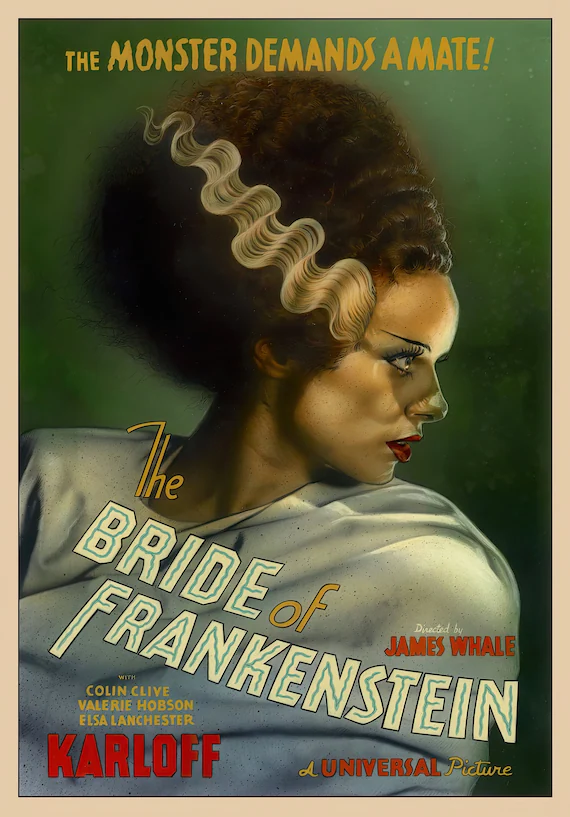
Having survived the burning windmill, Frankenstein’s Monster roams the countryside searching for warmth and human connection, but he only finds fear, angry villagers, and violence. He briefly finds kindness with a blind hermit, but soon falls in with Dr. Pretorius, who is flamboyant, fond of gin, and determined to get Henry Frankenstein to build the Monster a mate. Henry refuses at first, but Pretorius blackmails him back into the lab. The Bride’s dramatic entrance, covered in bandages and sporting lightning-bolt hair, becomes one of horror’s all-time great entrances.
What makes Bride of Frankenstein special is that it somehow outclasses the iconic original film. James Whale folds Gothic horror, sly camp, wicked comedy, and tragedy into a film that feels strange and alive from scene to scene. Boris Karloff gives the Monster genuine soul, so the Bride’s horrified rejection lands as more than a punchline. It is weird, audacious, surprisingly touching, and visually stunning, building toward an electric creation scene that feels like pure cinema.
Modern Times (1936, Charlie Chaplin)
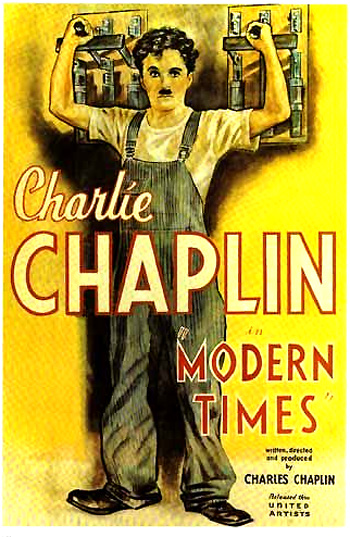
This is the last silent film on my list, but it’s worth it. The Tramp is a frantic assembly-line worker who literally gets swallowed by the gears of industrial machinery before having a nervous breakdown. After spending some time in the hospital and accidentally getting involved in a workers’ protest, he meets the lively, and hungry, Gamine. Together they bounce through the hardships of the Great Depression, looking for a place to call home. Their journey takes them to jail cells, a night shift at a department store, and a café job where the Tramp becomes a singing waiter.
Modern Times is where Chaplin’s physical comedy meets his sharp social commentary. Even though it was made after sound films became popular, Chaplin uses sound in his own way. Bosses and salesmen shout orders through screens and machines, while the Tramp’s only spoken words are a joyful, made-up song. The film is both very funny and surprisingly modern, showing the struggles of daily life with empathy and visual invention. Fortunately, you can watch it for free on YouTube.
Bringing Up Baby (1938, Howard Hawks)
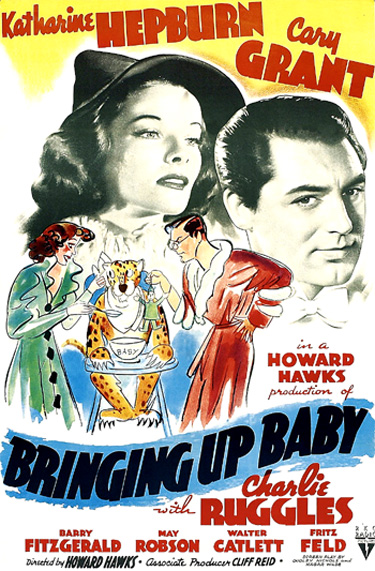
In Bringing Up Baby, an uptight paleontologist is trying to land a museum donation when his carefully ordered life is turned upside down by an unpredictable heiress and her pet leopard. What begins with a missing brontosaurus bone quickly becomes a wild adventure with stolen cars, mistaken identities, jail cells, and even Cary Grant in a frilly negligee. Katharine Hepburn’s Susan Vance is supposed to help David Huxley, but she keeps making every plan go wrong. At first, she’s exhausting, but somehow she ends up winning over both David and the audience.
This is the kind of comedy that keeps piling on complications until it seems like everything should fall apart, but it never does. Grant and Hepburn talk over each other, argue about everything, and gradually show that David’s strict routine wasn’t really helping him. If you like romantic comedies where the couple has to get through a lot of chaos before realizing they’re meant for each other, Bringing Up Baby is a great choice. It’s also free on YouTube. If you’ve only been watching the free movies up to this point, you already have a better grounding in early film than anyone you’ve ever met.
The Wizard of Oz (1939, Victor Fleming)
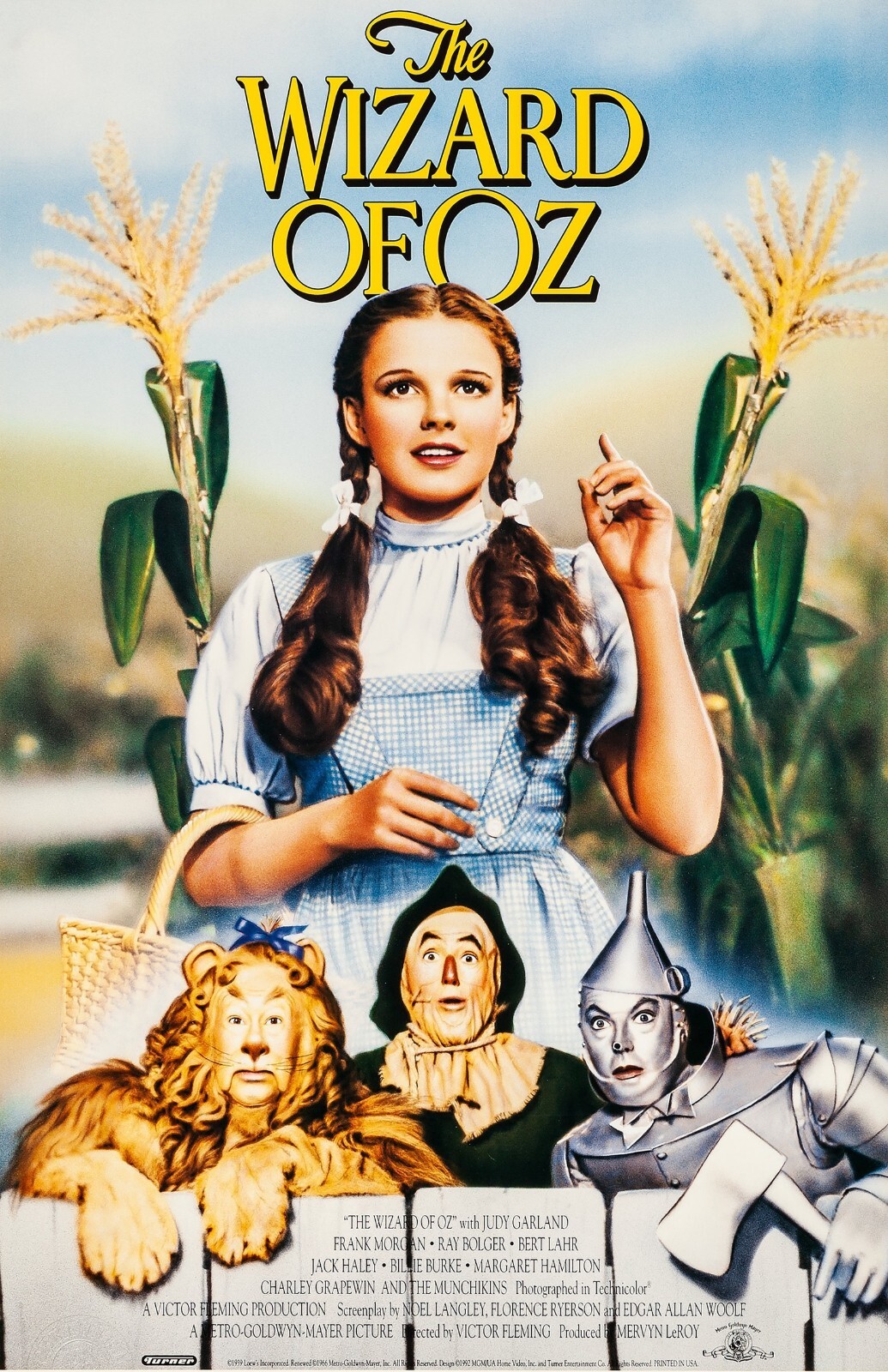
This film needs no introduction, right? The Wizard of Oz sweeps young Dorothy from her sepia-toned Kansas farm into a Technicolor land full of danger and wonder. To get home, she follows the Yellow Brick Road to the Emerald City, meeting three imperfect friends and escaping the Wicked Witch of the West.
Wizard blends classic storytelling, impressive visuals, and Judy Garland’s heartfelt performance as Dorothy. The well-known story combines excitement and real suspense, along with a strong longing for home. While the witches and “Over the Rainbow” are memorable, the lasting message is that what we search for far away is often something we already have.
Fun Fact: While Victor Fleming gets the credit, four other directors actually worked on this film! The Wizard of Oz is the final prewar landmark before Hollywood enters the 1940s: a decade shaped by screwball speed, wartime romance, postwar disillusionment, and the shadowy moral world of film noir.
That’s it for part one. All of these are very much worth your time, even if you were born in the 2000’s.
EDIT: Deciding which films are in and out is a merciless process. Previously I had The Thin Man, The Adventures of Robin Hood and Snow White on this list, but I had to cut them because of stronger candidates. Watch all three, they’re great, but I had to get rid of them. Part 2 is out now.