The 25 Best Fights in Comics Since 1980 Part 2
Part 1 is Here
Here is the second half of the list as well as the top Honorable Mentions, which are part of exceptional stories as well. I talk more about my methodology and how I arrived at my list in part 1. I continued the painstaking process of going year by year for 45 years to cull the best fights that comics did across the industry and gathered them together as a resource for comic book enthusiasts.
Top 25 Continued
Orion #5 DC (2000)
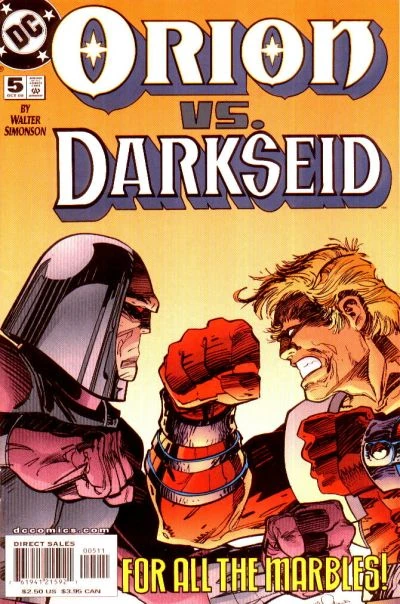
Walt Simonson’s Orion stands out as one of the few New Gods stories after Kirby that really captures the original spirit. In issue #5, all the build-up pays off. After four issues of Orion fighting his way across Apokolips to reach his father, Darkseid, the big showdown that fans have waited for since 1970 finally happens. Simonson lets the action speak for itself.
The fight barely has any words, which fits two gods who have nothing left to say. The story unfolds in huge panels and full-page splashes, so every change in panel size and pacing feels important, and the silence makes each hit feel heavier. Simonson’s bold, angular art keeps every move clear, even at this big scale. The whole thing feels epic without needing to say so. Take your time reading it, because the quiet moments make the art even more powerful. The best way to own it is Orion by Walt Simonson Book One.
The Amazing Spider-Man Vol. 2 #33–35 (2001, Marvel)
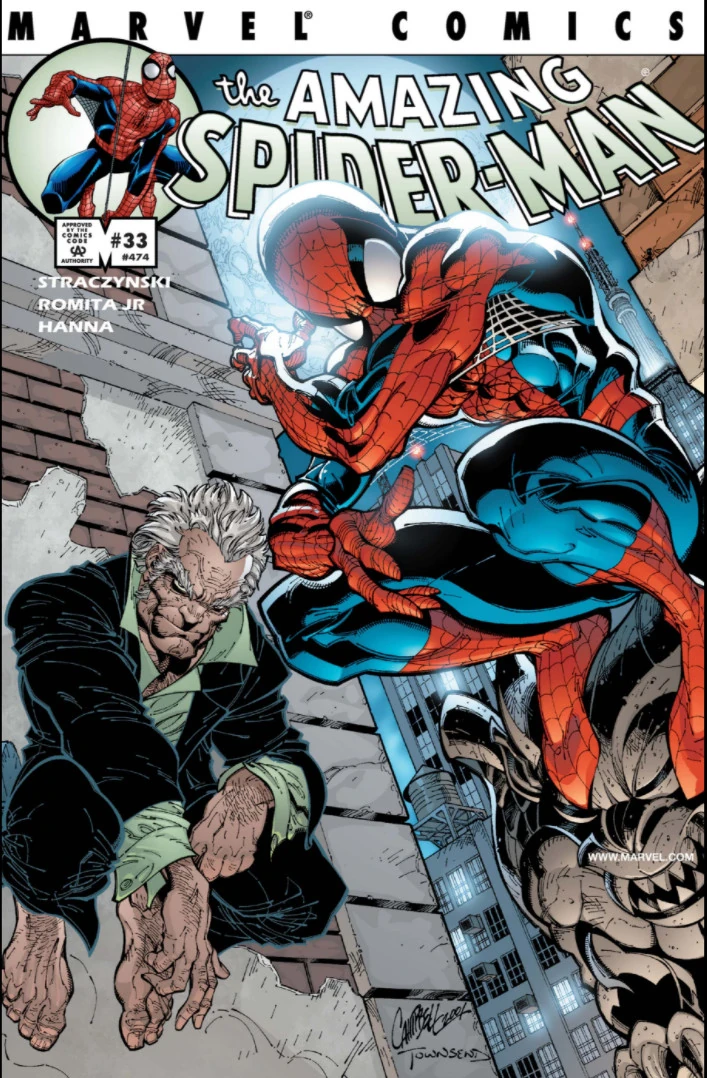
Morlun is an ancient predator who feeds on totemic energy, and he brushes off Peter’s webbing and other tricks like Spider-Man is nothing. Over three issues, J. Michael Straczynski and John Romita Jr. turn the story into a nonstop chase through the city. Unlike the Juggernaut fight, which is about finding ways around raw power, this battle is about a hero who can’t escape an enemy that is designed to defeat him.
Romita Jr. shows Peter’s decline through the physical details: his costume gets shredded, his body breaks down, and his posture slumps as he gives up his usual acrobatics just to survive. One by one, his usual tricks stop working, and his speed stops being an advantage. The fight becomes a test of problem-solving while exhausted, whilethe city stops being a playground and becomes to a ticking clock. It’s one of the darkest times in Spider-Man’s history, and the art makes it impossible to look away. The best way to own it is Amazing Spider-Man Modern Era Epic Collection: Coming Home, but frankly the whole run is great. If you are wanting all of JMS run, start with Omnibus 1.
The Ultimates #5 Marvel (2002)
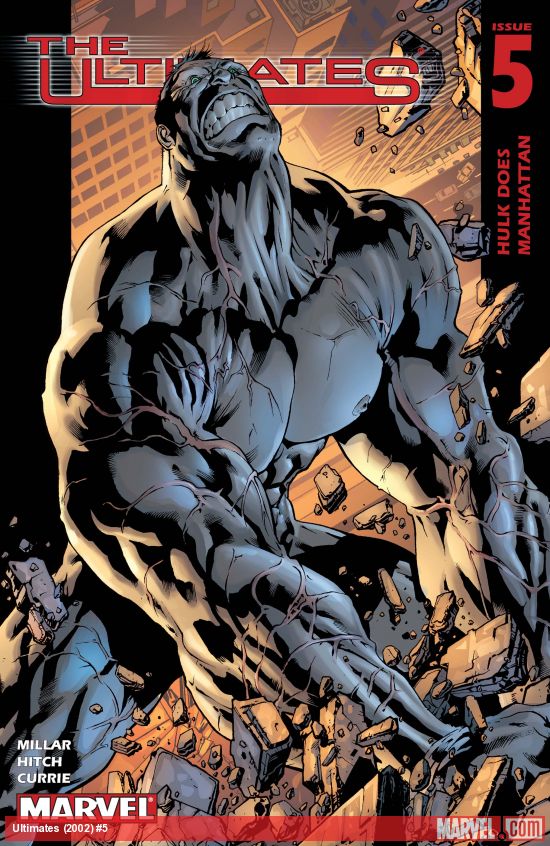
After four issues of build-up, Bruce Banner becomes the Hulk and goes on a rampage through Manhattan, forcing the new Ultimates team to stop him. Mark Millar writes the story, but it’s Bryan Hitch’s wide, cinematic pages that make the action stand out. Each hero fights in their own way—Captain America up close, Iron Man from above, and the Wasp at a tiny size—which makes it easy to follow the team battle from panel to panel.
Hitch draws the destruction with incredible detail: rubble, glass, and debris fill the air, making the chaos feel real. Even backgrounds like the marble floor of Grand Central add to the sense of scale. This is big, cinematic action done so well that it set the standard for later comics, and it’s still easy to follow. You’ll notice new details and hero moments every time you reread it. The best way to own it is The Ultimates volume 1: Super-human.
Usagi Yojimbo Vol. 3 #60 (2002, Dark Horse)
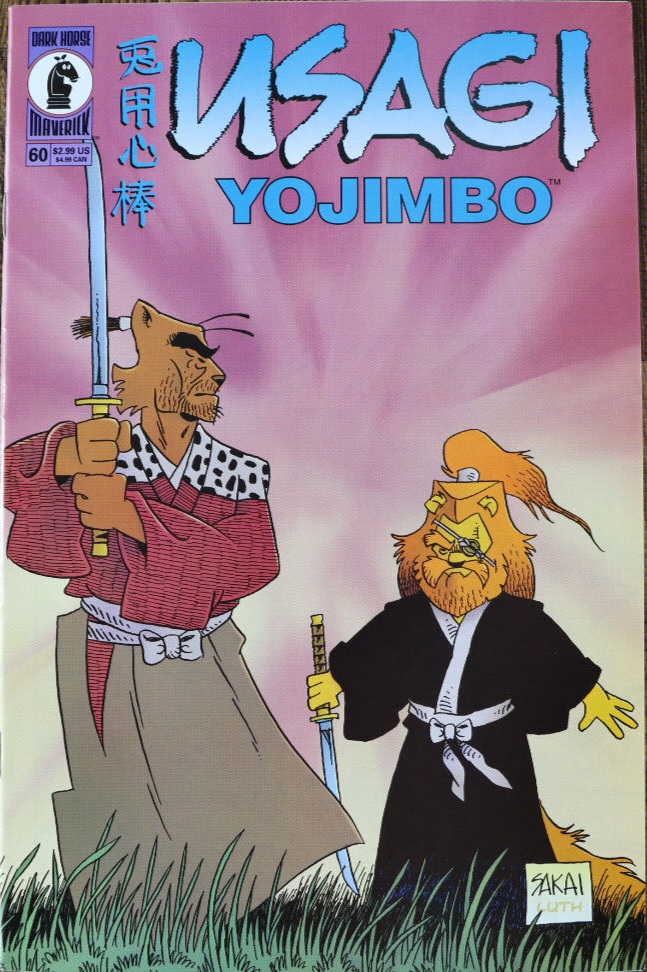
One of the finest fights ever, “Duel at Kitanoji” isn’t even Usagi’s fight… he’s just watching. His old mentor, Katsuichi, is challenged by a wandering swordsman who has waited years for this moment. Stan Sakai builds the whole issue around restraint. The lead-up, such as the formalities, the meeting, the quiet walk, and the bow, are drawn with the same care and rhythm as the duel, because in this world the ritual is part of the fight.
Sakai’s art is so clear that you can see the exact distance and stance in every panel, and the tension comes from knowing both fighters are too skilled to waste a single move. The fight feels personal, not flashy. Few action comics use stillness this well, and watching Usagi worry makes you feel like you’re right there with him. It’s a slow, careful read, but every moment of waiting pays off when the swords finally clash. The best way to own it is Usagi Yojimbo Saga Volume 4, but since the paperback is very expensive in this one case I recommend the Kindle version.
The Immortal Iron Fist #9 (2007, Marvel)
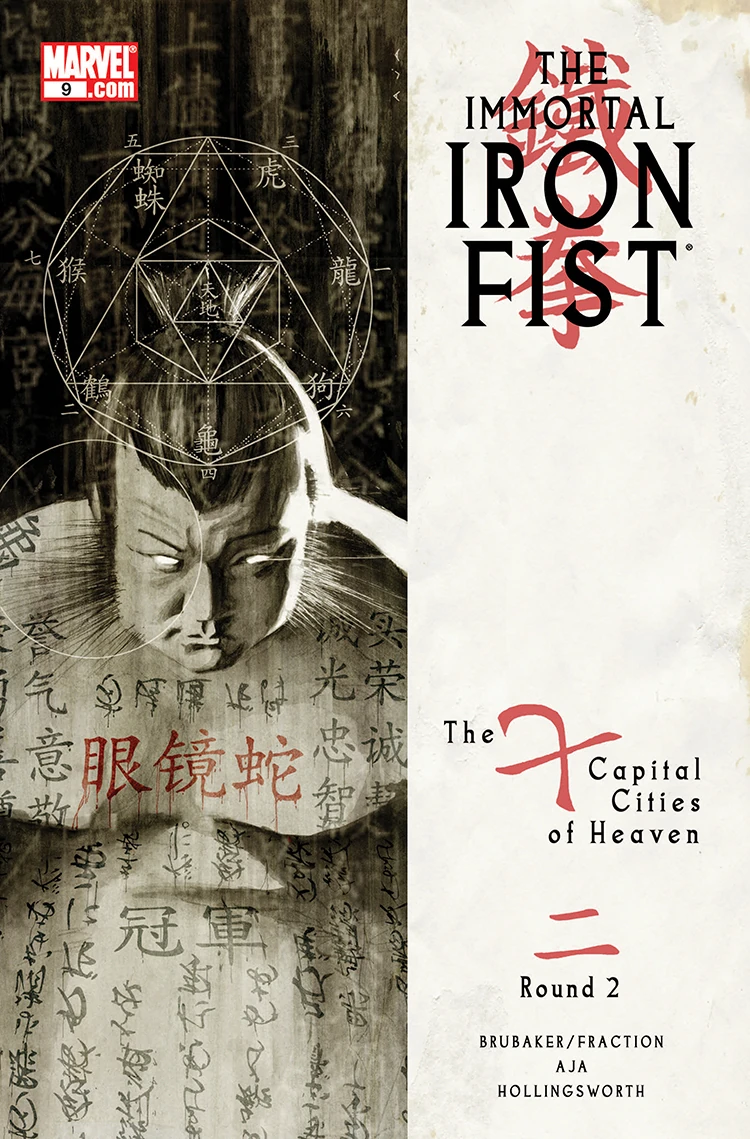
The Immortal Weapons tournament starts with Danny Rand facing Fat Cobra, the huge, century-old champion of Peng Lai. Ed Brubaker and Matt Fraction set up a battle of styles: Danny’s careful precision versus Cobra’s size and surprising speed. But it’s David Aja’s art that really brings it to life. His clean, sharp lines make every move look like a real martial arts technique, and you can see Chinese art influences in how the pages are laid out.
Aja shows each fighter’s style by shaping the panels around them, so you get how they fight before you even finish the page. This is martial arts action drawn with the smart visuals the series always needed, and it sets the standard for the rest of the tournament. If you only pick up one issue from this run, make it this one. It’s also a great place to start the series, since the tournament setup makes the action easy to follow. The best way to own it is The Immortal Iron Fist, Vol. 1. It’s really good, you may want Brubaker’s whole run.
Punisher MAX #33–34 (2006, Marvel MAX)
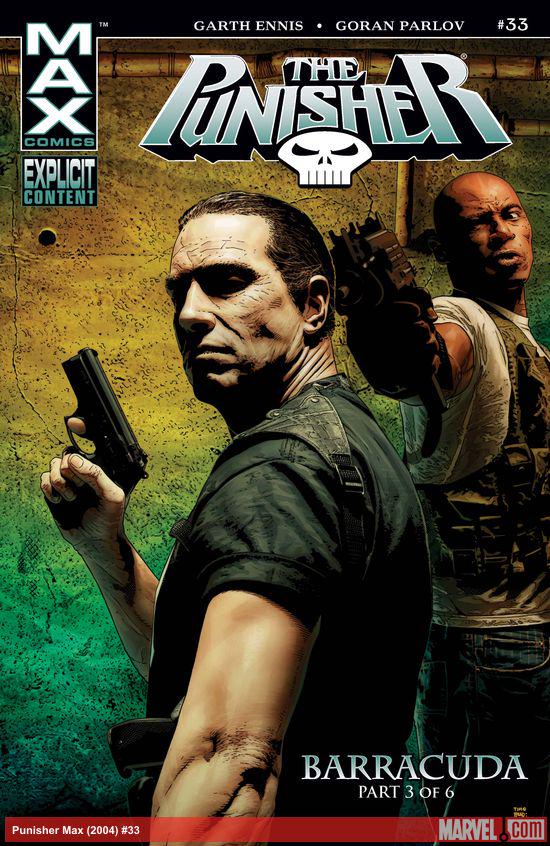
Garth Ennis’s Punisher MAX is grounded crime fiction, and the Barracuda story is its most purely physical. Frank Castle is tracking a conspiracy in Florida when he runs into Barracuda, a cheerful mercenary so brutally durable that the real question becomes whether Frank can put down a man who won’t stop.
Their first face-to-face melee is the centerpiece. Goran Parlov draws it with a grounding in weight and pain that most superhero action can’t touch: improvised weapons, no elegant martial arts, and two men visibly deteriorating as the fight runs on. Ennis and Parlov treat it as an endurance event, not a spectacle. Barracuda treats injuries that would drop anyone else as an occupational hazard, and that gives the choreography a comic-nightmare energy. Frank is answering durability he can’t out-plan. Expect ugly, grinding violence instead of heroic spectacle, because the nastiness is the point of the fight, so be warned. The best way to own it is Punisher Max: The Complete Collection Vol. 3, but again the physical copy is expensive, so Kindle may be better for you. If you’re a Punisher guy, start with the Omnibus, but vol 1 doesn’t include the Barracuda arc.
Invincible #61–64 (2009, Image)
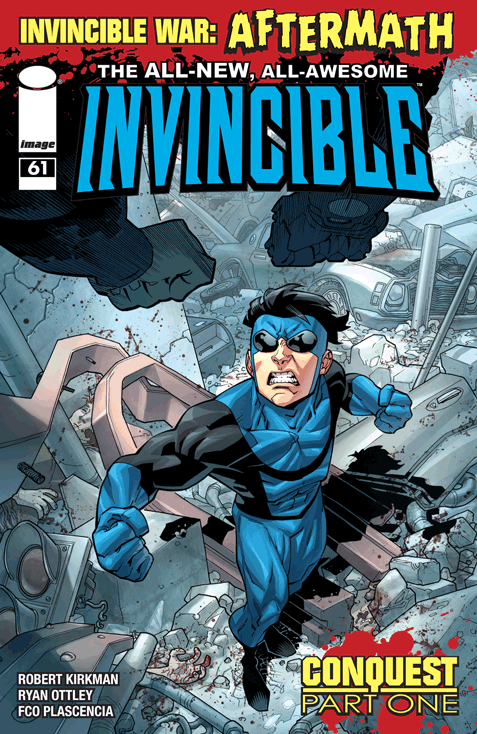
Conquest is a Viltrumite sent to check on Mark’s progress; he’s an ancient, oddly cheerful conqueror who treats the fight as just a formality. There are no breaks or scene changes here, it’s one long escalating fight built around a single question: how much more can Mark take? Robert Kirkman writes it, but Ryan Ottley’s art carries it. He shows the physical toll of every exchange, and each issue gets more brutal as Mark faces challenges he’s never seen before.
The escalation never feels like shock for its own sake. It’s the visual language of a body breaking down, and the spatial clarity stays rock-solid even when the panels fill with blood. Few comics have made a single fight carry this many pages without wearing out their welcome, and this one never loses its tension. It’s also a quick way to find out whether you can handle the series’ violence. The best way to own this fight/arc is Invincible: The Ultimate Collection Volume 6, and it’s a rare example of a hardcover being reasonably priced. A lot of people like owning the whole series, so start with Invincible Omnibus Vol. 1 if that’s the case–you’ll get hooked.
The Legend of Luther Strode #6 (2013, Image)
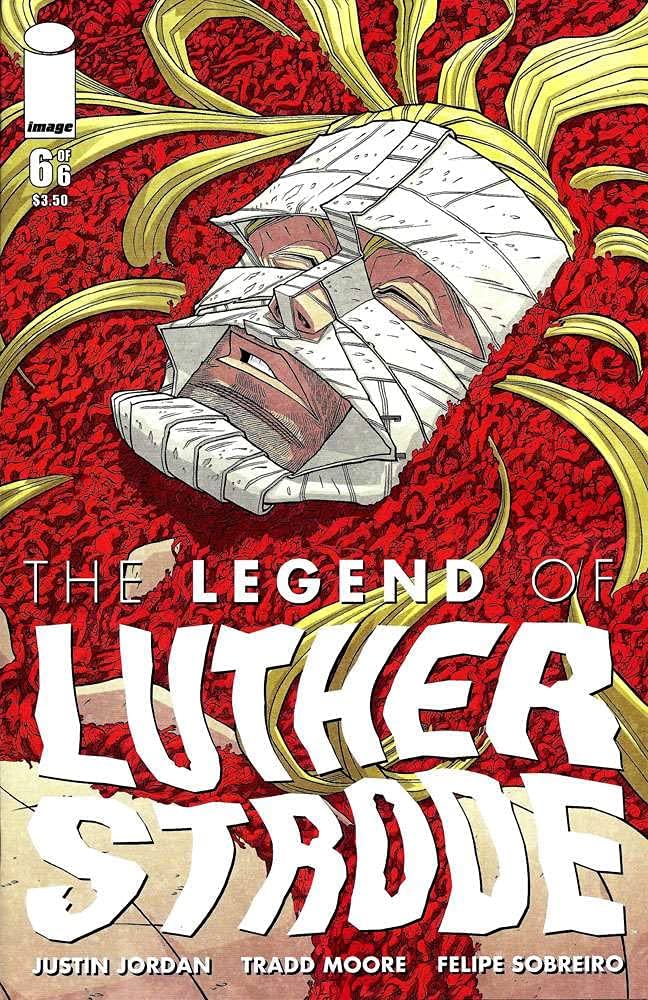
Justin Jordan and Tradd Moore’s trilogy is built on a simple idea: a weak kid reads a book that turns him into a superhuman killer. In this issue Luther faces Jack the Ripper, another person changed by the same method, that takes place in a shopping mall. It’s a duel between Jack’s speed, knives, and skill against Luther’s raw strength. Moore’s stretched figures, distorted faces, and panels that break apart in motion really capture the feeling of bodies moving at superhuman speed.
Every panel shows both where a body is and where it’s about to go, which keeps the action clear even with all the distortion. The fight takes up almost the whole issue, and Moore keeps adding more visual detail without losing track of the two fighters. It’s rare for a comic’s art style to become the fight itself. It’s fast-paced and gory, and nothing else on this list looks quite like it. The best way to read it is The Legend of Luther Strode.
Daredevil Vol. 3 #25 (2013, Marvel)
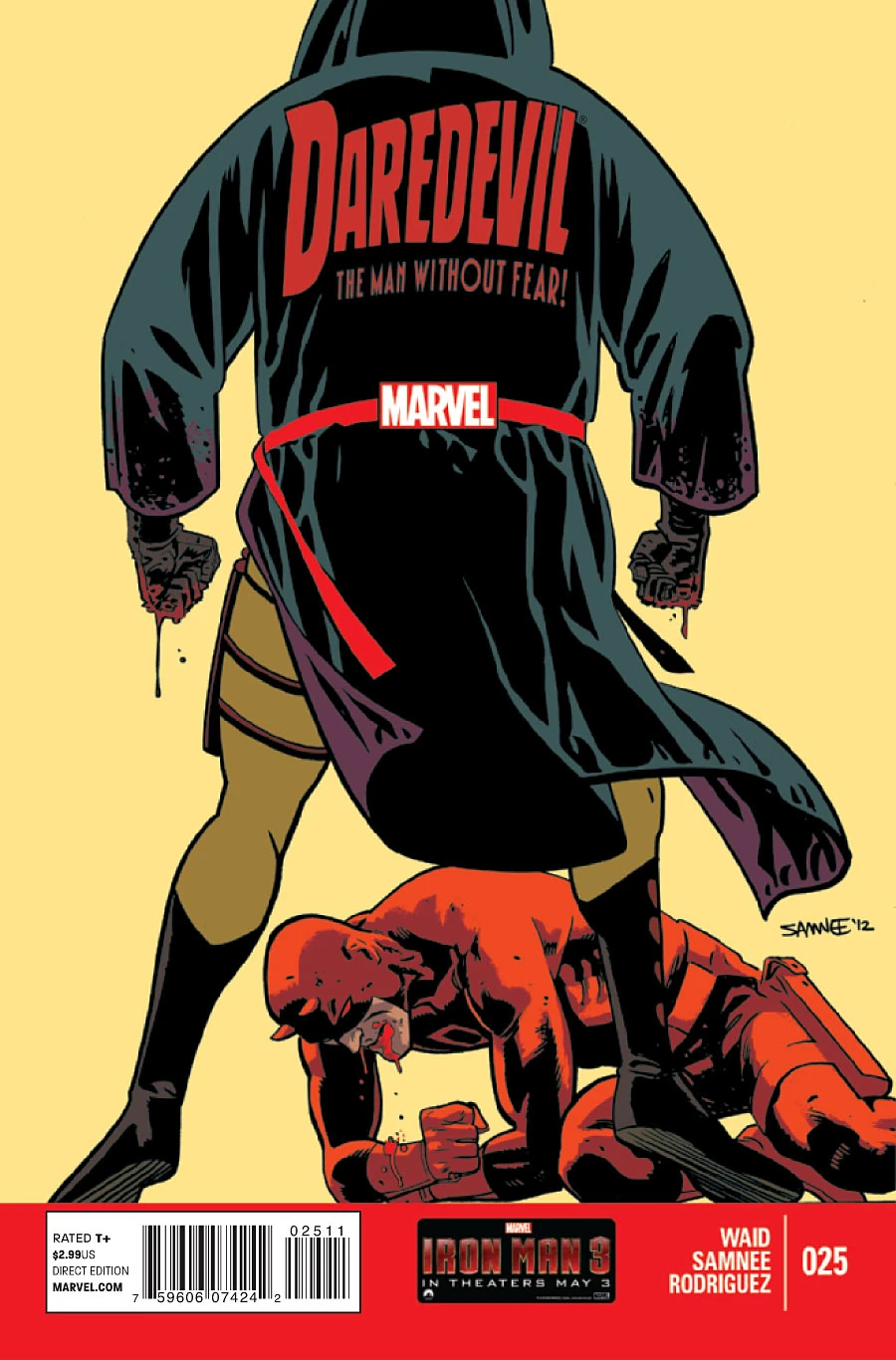
Matt Murdock is lured into a trap that introduces Ikari, an enemy with his own radar sense. Daredevil’s greatest advantage is gone, and Matt knows it from the first panel. Mark Waid and Chris Samnee build the entire fight around that knowledge. In an abandoned sporting-goods store, Samnee stretches a single reaching movement across three narrow panels while a broken sprinkler rains down, turning a fraction of a second into an agonizing pause.
This is suspense that only comics can do, with the rhythm of the pages creating tension like a horror movie’s music. The action stays clear and realistic, and the tension builds through body language instead of narration. You always know where both men are, even when Matt doesn’t. This is the issue to show someone who thinks superhero fights are just noise without tension. The best way to read it is Daredevil By Mark Waid Vol. 5, but this is an example of a TPB being out of print and more expensive, so the Kindle is available to you.
Moon Knight Vol. 7 #5 (2014, Marvel)
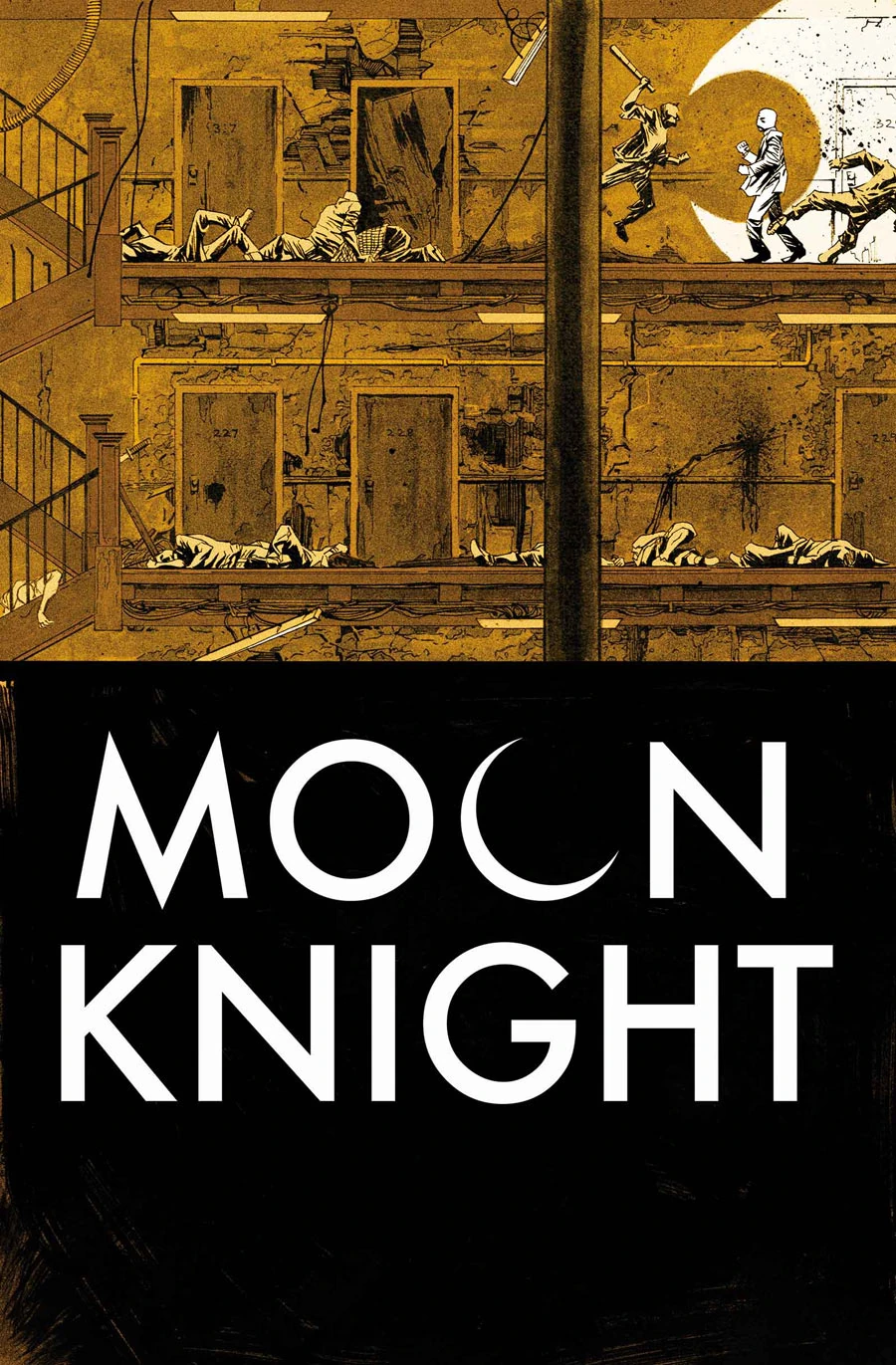
Warren Ellis and Declan Shalvey’s Moon Knight run is made up of standalone issues, and #5 really shows what the concept can do. Moon Knight, wearing his white suit, climbs a six-story building to rescue a kidnapped girl and fights through a gang on every floor. It’s basically a comic-book version of The Raid, and the art proves it.
The white suit stands out against the dark backgrounds, making Moon Knight easy to follow. With almost no dialogue the action has to tell the story. Shalvey shows exactly how each takedown happens, using precise body mechanics and weight instead of generic action poses. The six-floor structure gives the issue a naturally escalating rhythm, with each floor as a new mini-scene. It treats Moon Knight as a serious martial artist, and the art backs it up. It’s a complete story in one issue, so it’s easy to recommend to anyone interested in the character. The best way to read it is Moon Knight Vol. 1: From The Dead, another example of an expensive out of print TPB where Kindle is cheaper.
Ultramega #1 (2021, Image/Skybound)
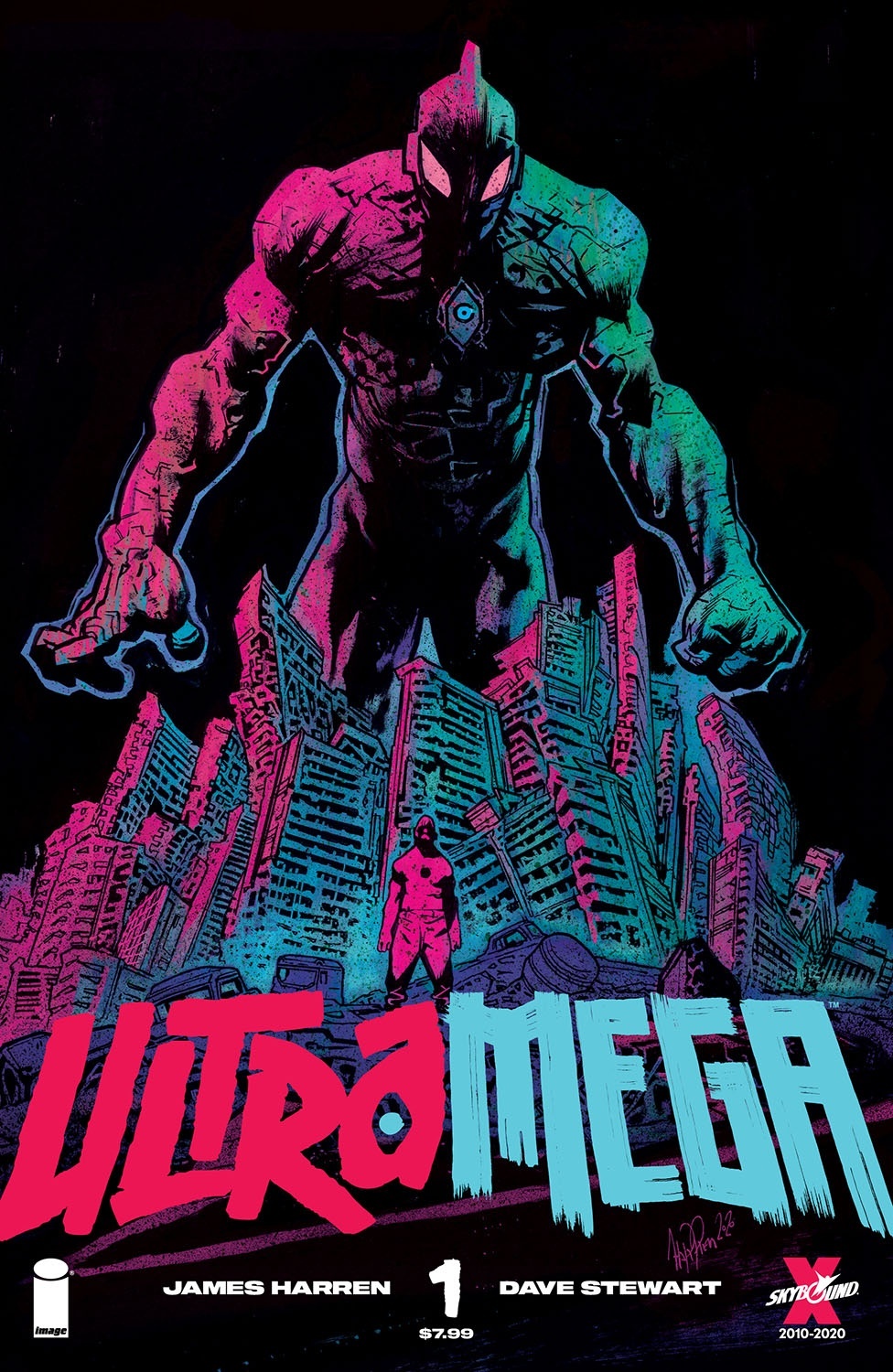
James Harren’s Ultramega is a kaiju comic where the fights feel like real brawls. A cosmic plague turns regular people into monsters, and three powered humans, including Jason, a retired boxer chosen by a cosmic entity. The first issue runs 68 pages, and its centerpiece is Jason’s city-sized fight against a rampaging monster, drawn with the detail of a street fight.
Every panel is full of grime and grit. Harren’s dense, heavy lines give the monsters a real sense of weight, and his fight scenes focus on impact and damage, while Dave Stewart’s muted colors make the world feel tired and worn out. It’s rare for a kaiju comic to make the fights feel real instead of just a spectacle, and the extra pages let the brawl build in clear stages. It’s loud and gory, but always easy to follow. The best way to read it is Ultramega Vol. 1, finally something in paper that’s normally priced!
Orphan and the Five Beasts #4 (2022, Dark Horse)
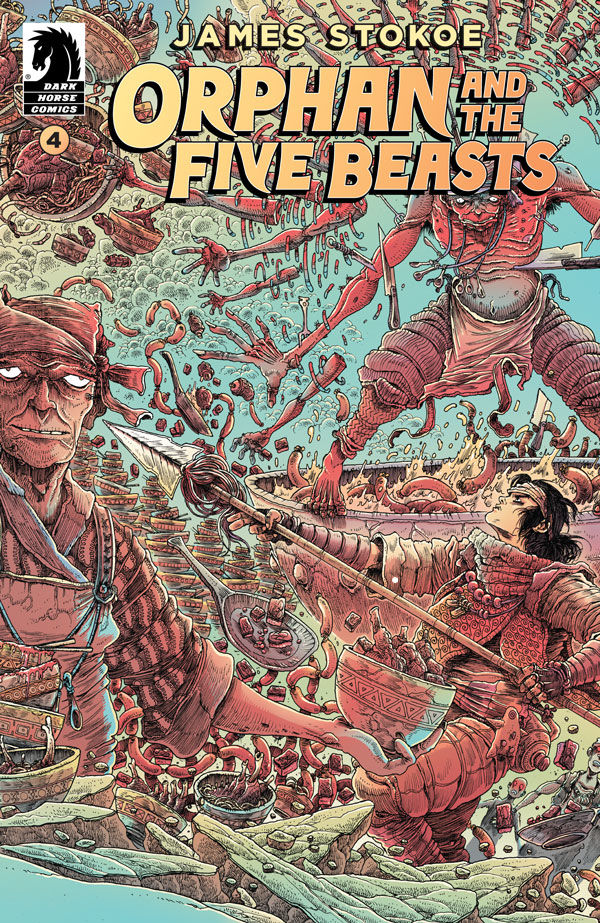
James Stokoe writes and draws this kung-fu epic about a warrior hunting five corrupted martial artists. In issue #4 Mo faces Chopper Teng, the second of the five, whose power lets him control the villagers he has corrupted. She has to fight a crowd as much as a master. Stokoe’s heavy lines fill every panel with the physical signs of the fight: blood, muscle, broken ground, and weapon marks that show where each hit landed.
The fight takes up almost the whole issue, with very little dialogue, and each page turn raises the stakes with new attacks, new forms, and new grotesqueries. Stokoe even shatters his own word balloons mid-impact when a blow lands hard enough. This is action cartooning at its most physical, and his pages are worth rereading because you keep finding new details in the damage. It’s dense but never confusing, so take your time with every panel. The best way to read it is Orphan and the Five Beasts.
Do a Powerbomb! #7 (2022, Image)
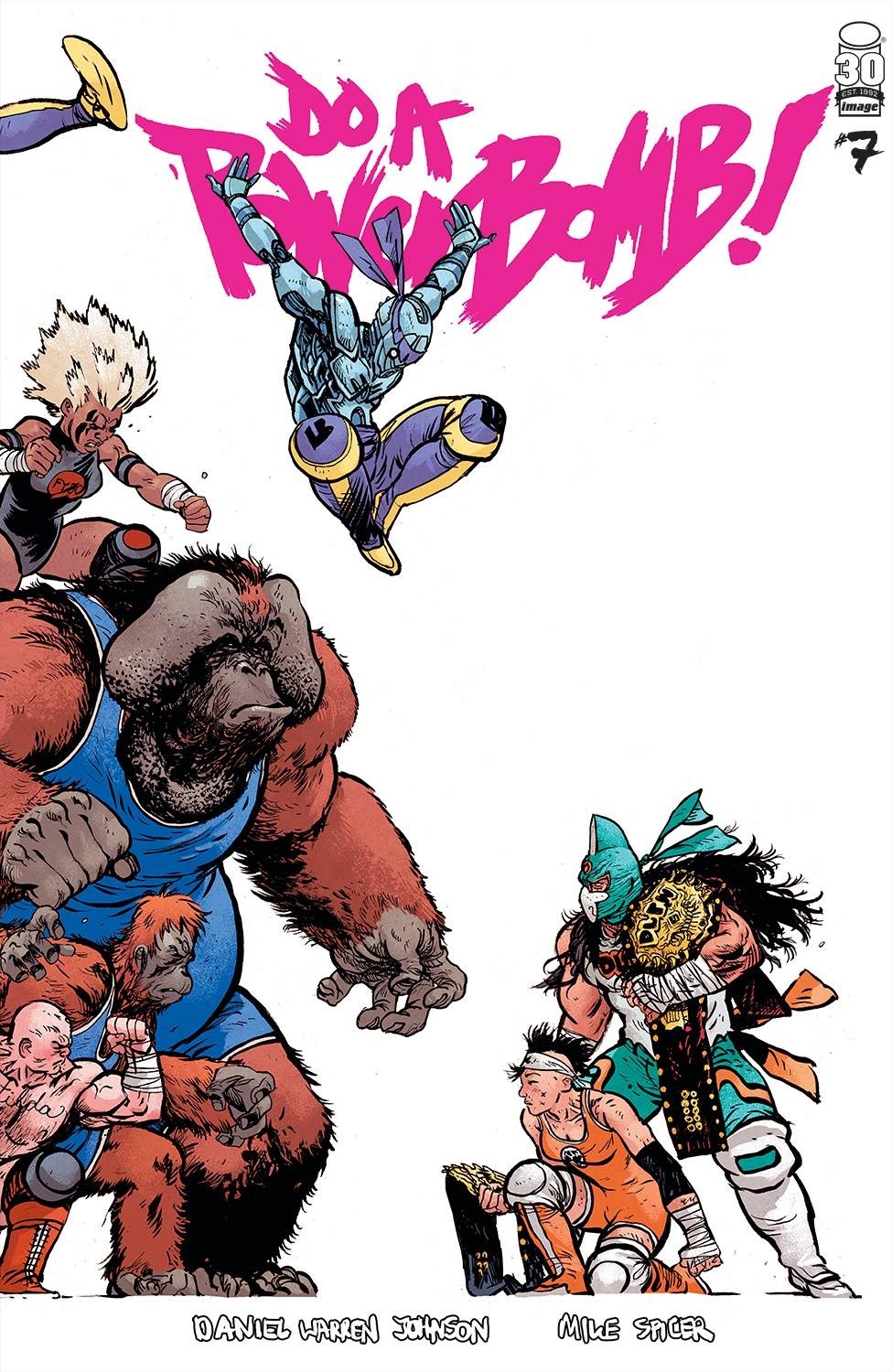
Daniel Warren Johnson’s Do a Powerbomb! is a tribute to professional wrestling, and the final issue is the big payoff for the whole miniseries. Lona Steelrose, a young wrestler trying to step out of her mother’s shadow, and her tag partner Cobrasun have battled through a necromancer’s tournament for the chance to bring her dead mother back. The last match is all that stands in their way. This is one of those rare comics everybody seems to love, from critics to fans.
Johnson structures his page turns like wrestling moves: a hold, an escape, a counter, a run off the ropes, with each panel showing a clear physical action instead of a generic pose. His manga-inspired sound effects are part of the art, and Mike Spicer’s colors make the whole thing feel like a stadium event. It’s a comic that almost lets you hear the crowd. For the best experience, read the earlier issues first, since the finale builds directly on them. The best way to read it is Do a Powerbomb!
Honorable Mentions
Superman Annual #11
Alan Moore and Dave Gibbons’ “For the Man Who Has Everything” isn’t famous for its fight, but that fight is what makes the second half of the issue so effective. Mongul uses the Black Mercy, a parasite that traps its victim in a fantasy. With Superman out of action, Wonder Woman steps up to face Mongul. Gibbons draws the fight with clear choreography that makes her look like a real heavyweight. The story switches between the battle and Superman’s dream of Krypton, giving the action an eerie double rhythm and raising the stakes in both scenes. The best way to read it is in DC Universe by Alan Moore, which has multiple stories by my favorite writer.
Miracleman #15
Alan Moore and John Totleben’s conclusion to the Kid Miracleman story changed how superhero violence was shown in comics. Johnny Bates turns back into his superhuman form and destroys London, while Totleben draws the chaos with panels shaped like shattered glass to match the destruction. The horror is detailed and specific, with bodies stacked on buildings and damage you can see in each panel. The fight between Miracleman and Kid Miracleman is quick and brutal, but Totleben makes sure both characters are clear even in the middle of the chaos. The story is famous for its impact, but the pages themselves make it unforgettable. The best way to read it is Miracleman, Book 3: Olympus, but honestly you are robbing yourself if you only read book 3. This series is up there with Watchmen in quality.
Preacher #12
Garth Ennis and Steve Dillon’s story reaches its high point with Jesse Custer’s bare-knuckle fight against Jody, the man who killed his father and the only person Jesse has never beaten. The fight is intentionally old-school: a rough, ugly brawl with no powers or tricks, just two men who know each other’s moves well, which makes the fight feel personal and intense. Dillon’s artwork makes every punch and moment of exhaustion feel real, and he keeps the action clear with simple panel layouts. Ennis treats the fight as a true payoff, and it delivers on that promise. This is a straightforward fistfight that earns every moment. The best way to read this issue is the start to the whole violent series, Preacher Book One.
Authority #13–14
Justice League America #39–40 (1990)
Keith Giffen, J.M. DeMatteis, and Adam Hughes’ Despero storyline shows that the “Bwahaha League” could handle a truly serious fight. Despero comes back to destroy the Justice League, focusing on the Detroit-era members he holds a grudge against, and Hughes draws the battle with grounded, physical action, making each takedown clear and specific instead of happening off-panel. The Martian Manhunter’s showdown with Despero, including a telepathic attack that makes J’onn relive his family’s death, adds rare psychological depth for a team book. Hughes’ clean artwork keeps every exchange punishingly clear even as the bodies pile up. The best way to read it currently is Justice League International Omnibus Vol. 2, oddly enough. You may just want to buy the issues themselves if you’re a fan.