The Best Major Comic Book Crossover Events, 1984–1999
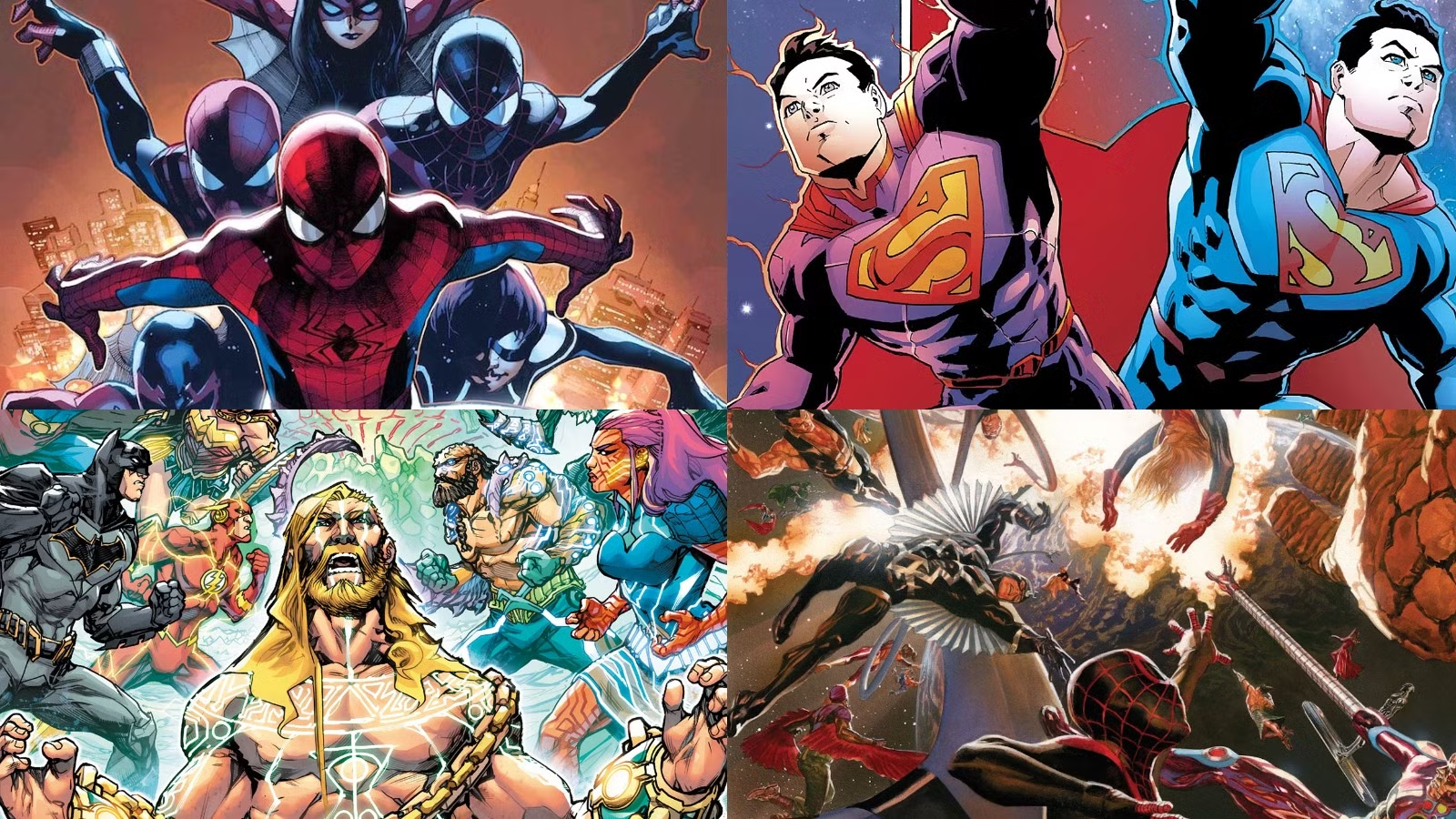
I think one of the hardest things to do in comics is have a major crossover event that is excellent from start to finish. Think about it: you’ve got to coordinate one story among several different ongoing titles, with different creative teams, over several months at a time, and have it pay off at the end. The goal is to boost readership, particularly among lesser-selling titles, but this can have the opposite effect since readers can get sick of trying to keep up with (and pay for) everything. To execute it well from beginning to end is a super hard thing. I’ve set out to find the best comic book crossover events in history, all the way up through 2026!
I have a much more rigorous definition of what I mean by the term “major crossover event” than CBR, Nerdist, IGN etc., so I’ll go into it in more detail. When I say major crossover event I’m not talking about a core mini-series with a bunch of optional tie-ins, like Infinity Gauntlet or World War Hulk. I only count events where you have to read at least 3 different titles to keep up, two of which are ongoing.
Likewise, something can be a successful crossover but still not be a “major” crossover event. Kraven’s Last Hunt is arguably the best Spider-Man story ever told, and it crossed through three Spider-Man titles, but it’s just six issues total. That is a crossover but not a major event, which I’m saying has to have 9 issues minimum, not counting optional tie-ins. And it cannot get bloated.
Finally, the story has to maintain consistently high execution until it’s done. This rules out crossovers like Batman: Knightfall. Knightfall itself is awesome and well-done, but it doesn’t end; it continues through KnightQuest and KnightsEnd, and the overall execution doesn’t stay as high. So I can’t put it in by itself, and I can’t put the whole thing in either. Don’t worry though, Bats will be represented.
In the end I found more than I thought: 24 major crossovers that are pretty rock solid from beginning to end (down from my original 29). We’ll start by covering the progenitors that kick-started the modern publisher-wide event. Without these titles my list wouldn’t exist. I will attempt to post a picture of the issue that kicked off the crossover where possible, because my preference is the original artwork should be showcased. My links will be to the physical copies of the crossover collection, as I have a bias there too, but Kindle is also available.
The Progenitors
Marvel Super Heroes Secret Wars (1984-1985)

Secret Wars was the Big Bang. Marvel did a proof of concept with Contest of Champions in 1982, but it was really this 12-issue maxi-series that proved readers really loved seeing the biggest characters in the universe all working together with something epic. In fact the character of Venom came out of Secret Wars. It wasn’t really a crossover (tie-ins were optional reading), but it established the footprint that other publishers would follow from then on, and it’s still a good read today.
DC followed suit with Crisis on Infinite Earths a year later, and took it a step further. It did more than bring a lot of heroes together, it rewrote the DC Universe! It consolidated, it restructured, major heroes died, it was a huge deal and affected the whole industry. There were lots of tie-ins too, but none of them were required reading to follow the story. Also still a great read today.
Marvel then did Mutant Massacre (1986) for the X-Men titles, which is probably the first major crossover event as I’ve defined it: it spanned 12 chapters and at least five titles, had multiple creative teams working together, and you needed to read all 12 chapters. It’s monumental, but it’s not on my list because the execution of the story doesn’t hold together consistently enough from beginning to end to meet my standard; that’s not a knock, it was blazing a new trail.
FYI, as with my other posts I get a small commission if you buy anything through my links, but it doesn’t cost you anything extra. I only recommend comics I believe in, and your support helps support my site. Finally this is NOT a ranked list, we are going in chronological order. Let’s dive in:
Major Crossover Events
X-Tinction Agenda (1990)

Mutant Massacre was great, Inferno was even better, but X-Tinction Agenda was the first crossover event that really met all my standards from start to finish and made my list. The hook is brutally simple: Magistrates from the mutant-enslaving nation of Genosha raid the X-Mansion, kidnapping Storm and several New Mutants. That single strike forces the X-Men, X-Factor, and the remaining New Mutants into an alliance to mount a rescue mission behind enemy lines.
This nine-part story runs through Uncanny X-Men, New Mutants, and X-Factor, and feels like a coordinated relay race. Each issue moves the main conflict forward, and every title adds something important to the overall story. Chris Claremont, Louise Simonson, and their creative teams work together really well. The action is quick, the stakes keep rising, and the ending is satisfying. Most importantly it never feels like three separate books just sharing a plot. Instead, it’s one ongoing adventure and a great example of what a major superhero crossover can achieve.
If you want the core event, get the X-Men Milestones: X-Tinction Agenda version. If you love it and want all the tie-ins too, pick up the omnibus.
Operation: Galactic Storm (1992)
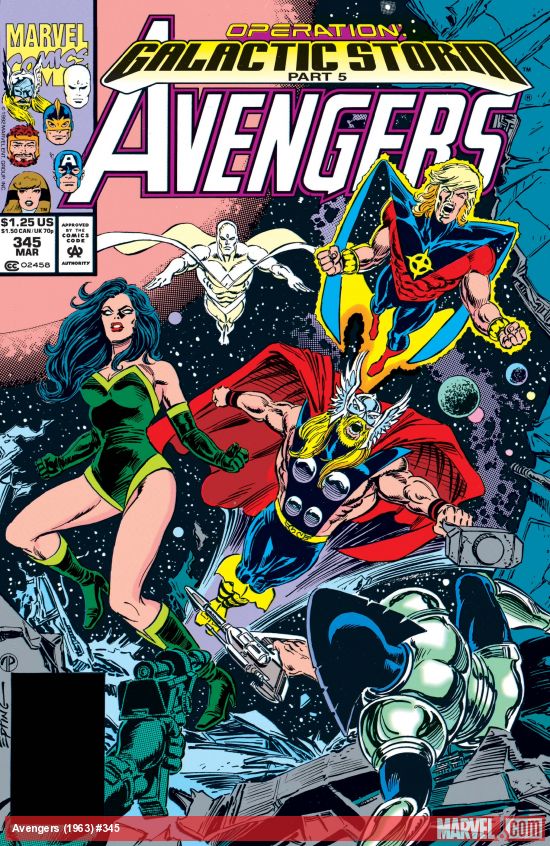
1992 was a banner year for great crossovers, as there are three of them. The first is Operation: Galactic Storm. The premise raises the stakes to a cosmic level: an interstellar war breaks out between the Kree and Shi’ar empires, and their use of a nearby stargate begins destabilizing Earth’s sun, threatening all life on the planet. To stop this, the Avengers split into different teams; some head into deep space to confront the warring empires, while another team stays behind to defend Earth.
The story stretches over 19 issues and seven different titles, which is impressive by itself. Every book matters, juggling a big cast and building up to a complex ending that shows the team’s deep disagreements. But it’s not just a big space adventure. The story digs into tough questions about intervention, the consequences of war, and how far heroes should go to prevent disaster. This is peak early-’90s Avengers: bold, exciting, and willing to let heroes face hard choices.
The best way to own it is the Operation: Galactic Storm Epic Collection.
The Death and Return of Superman (1992)

You already know the story, and it made national headlines at the time: an unstoppable monster named Doomsday rampages toward Metropolis, and Superman pays the ultimate price to stop him. But the real magic of The Death and Return of Superman isn’t the stunt, it’s what happens next. As Metropolis mourns, four mysterious contenders appear: a cyborg, a teenager, a steel-clad hero, and a ruthless Kryptonian, each claiming to be the real Man of Steel.
This story runs across all four Superman titles and stays impressively cohesive. The four creative teams work together closely, with triangle numbers on the covers helping readers follow the story almost every week. That level of quality and coordination is rare in any era. Each chapter pushes the larger narrative forward, mixing grief, strong character work and blockbuster action. What could easily have been just a gimmick turns into a thoughtful look at what Superman means to Metropolis and the world. It’s still one of DC’s most satisfying and ambitious crossover sagas.
The best way to own it is The Death and Return of Superman Compendium.
X-Cutioner’s Song (1992)
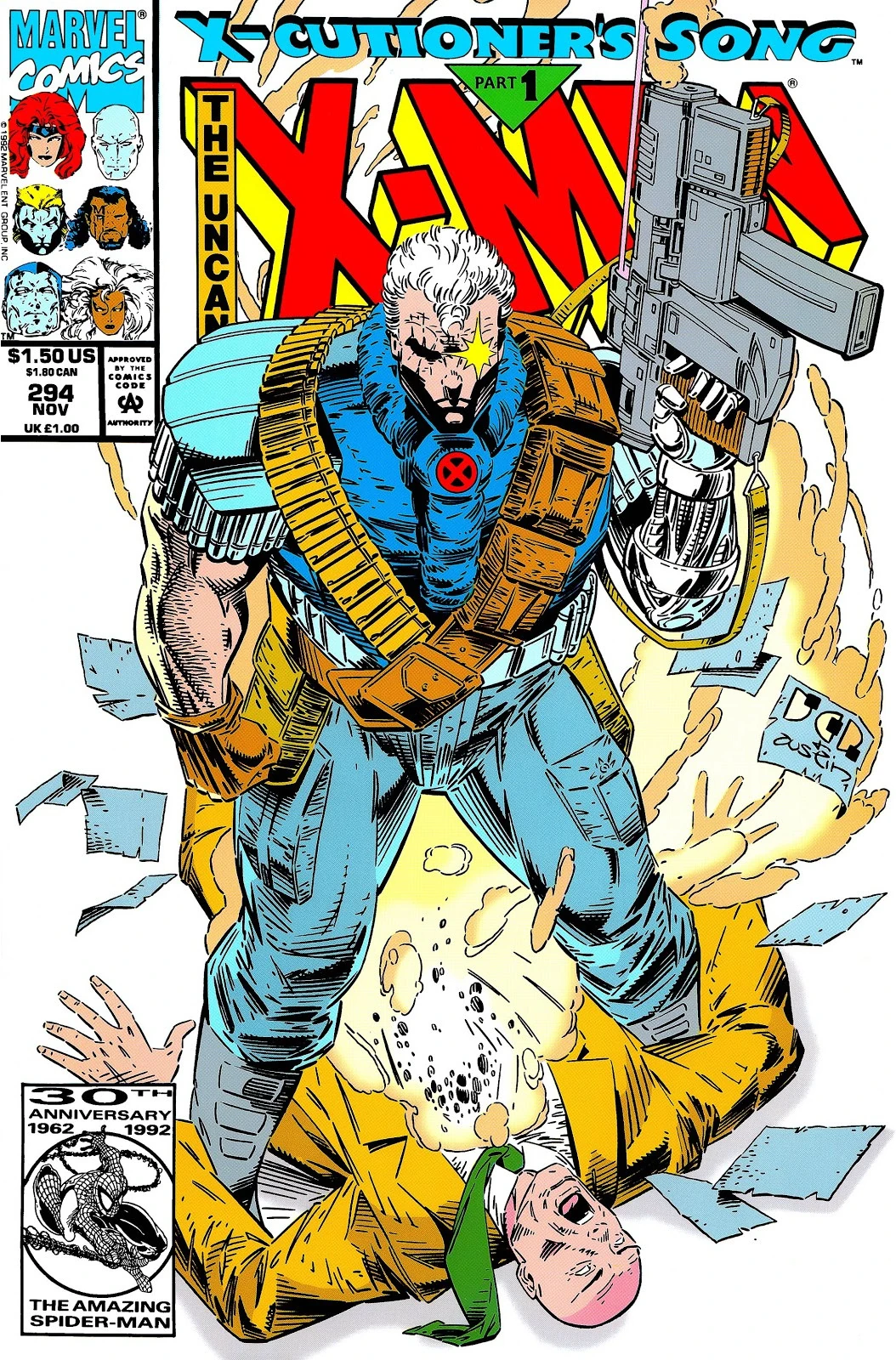
An assassination attempt on Professor X, apparently carried out by his time-traveling ally Cable, sparks a manhunt that pits the X-Men, X-Factor, and X-Force against each other. Apocalypse and Mr. Sinister are also involved somehow, while the mysterious Stryfe emerges as the mastermind behind the chaos.
X-Cutioner’s Song is so much fun because it turns a big action story into a tangled family soap opera. Each group has its own issues: X-Force stands by Cable, X-Factor is stuck as government enforcers, and the X-Men are caught in the middle trying to keep everyone from fighting. Yes, the ’90s time-travel plot gets pretty wild and at times a bit convoluted, especially when Stryfe’s grudge against Cyclops and Jean Grey comes up, but the fast pace and dramatic twists make the whole thing a great ride.
The best way to own it today is through the X-Men Epic Collection.
Worlds Collide (1994)

Inter-company crossovers are almost never done right; they’re usually cash grabs, which is what makes Worlds Collide such a pleasant surprise. The story follows Fred, an ordinary postal worker who unknowingly becomes a living bridge between DC’s Metropolis and Milestone Media’s Dakota City. When the villainous Rift takes over that connection, the two universes start to merge, and Superman, Steel, and Superboy have to team up with Static, Icon, Hardware, and the Blood Syndicate to save both worlds.
The other creative teams bring two very different superhero worlds together while giving Milestone’s characters real importance in the larger story. The different books offer their own perspectives and personalities, but the central narrative holds together and builds toward a satisfying conclusion. It’s more than a novelty pairing of characters who wouldn’t ordinarily share a comic; it’s an ambitious crossover with real heart, and a fascinating piece of comics history.
The best way to own it is Milestone Compendium Two, and I think it’s worth it.
Age of Apocalypse (1995-1996)

A time-travel accident kills Charles Xavier before he can form the X-Men, creating an alternate reality where Apocalypse has conquered much of North America. In this dystopian world, Magneto leads a resistance of familiar heroes whose lives have changed dramatically. Together they fight to fix the timeline and stop this nightmare from lasting forever.
What makes Age of Apocalypse so remarkable to me is the scale of Marvel’s gamble. Instead of running the story through its existing X-Men titles, Marvel temporarily replaced the whole line with alternate versions, each focusing on a different team in this broken world. Over 34 chapters these stories come together to show the full scope of Apocalypse’s regime, but it never becomes bloated. With tightly coordinated storytelling and amazing art, this event makes its alternate reality feel like a fully realized world rather than a temporary gimmick. It’s a feat of shared storytelling and one of the most memorable comic-book events of the entire decade.
The best way to own it is the X-Men: Age Of Apocalypse Omnibus. If you want a cheaper version of the first third, get Age Of Apocalypse–Alpha instead, followed by Reign and Omega.
Batman: Contagion & Legacy (1996)
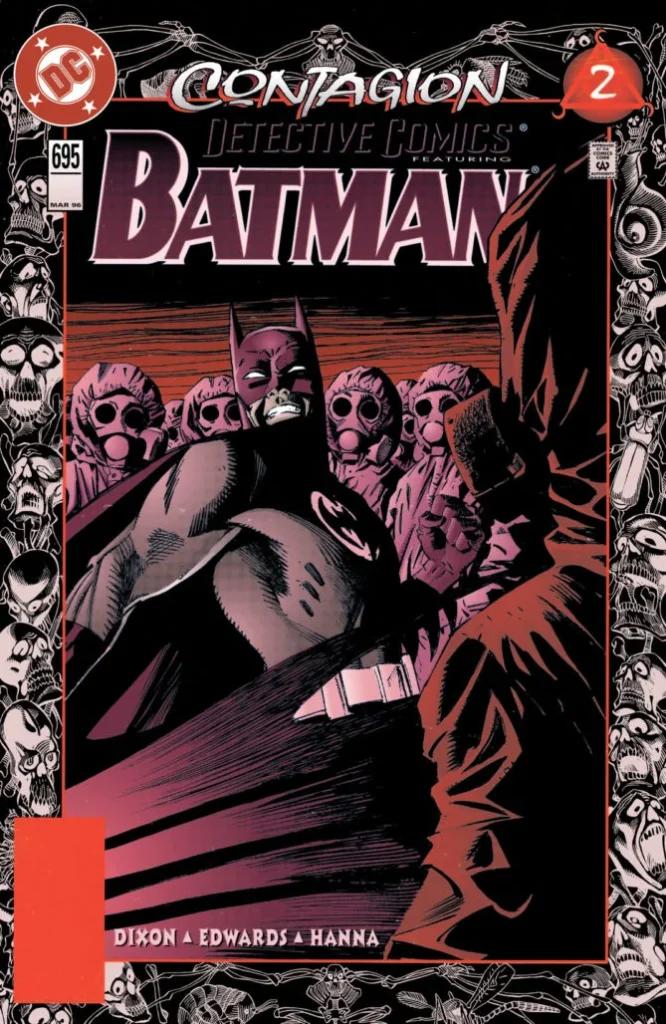
The overlapping Batman: Contagion and Batman: Legacy are best when read together as one big, connected thriller. The story begins with a deadly virus called the Clench spreading through Gotham, forcing Batman and his allies to the test as they try to stop it and find a cure. Even after they handle the first outbreak the virus returns in a more dangerous form, leading Batman to Ra’s al Ghul and a worldwide plot to spread the plague.
Reading these two stories together gives a great change in tone. In Contagion, Batman and his allies are stuck in a quarantined Gotham fighting an invisible enemy they can’t just punch into submission. Legacy expands the conflict into a globe-spanning race against an international conspiracy, with Ra’s al Ghul providing a great adversary. The wider Bat-family gets involved as the story shifts from a survival thriller in the city to an international adventure. I think it’s one of the strongest extended Batman crossover stories of the decade.
The best way to own it today is as trade paperbacks: Contagion is easy to own in physical form, Legacy is out of print, but the best version is the 1997 Batman: Legacy TPB. There are also Legacy Vol 1 and 2, which include optional tie-ins.
Batman: Cataclysm (1998)
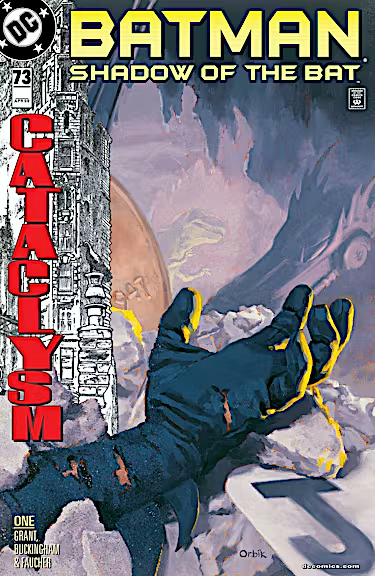
Most superhero crossovers raise the stakes with cosmic warlords or alien invasions, but Batman: Cataclysm is different because it feels grounded and pretty darn scary. A massive earthquake suddenly hits Gotham City without warning, it devastates the city, destroys Wayne Manor, and leaves Batman trapped under the Batcave. Without his usual resources, he and the rest of the Bat-family have to work together to rescue survivors, manage the chaos, and stop Gotham from falling apart.
Without supervillains or high-tech gadgets, the heroes are pushed into tough, real-world search-and-rescue missions where just saving people from the rubble feels heroic. The story moves between different parts of the ruined city, giving each Bat-family member—from Nightwing and Robin to Huntress and Oracle—a unique and important part in keeping Gotham alive. Yes, it famously sets the stage for No Man’s Land, Cataclysm stands on its own as a tense and emotionally grounded disaster thriller.
The best way to own it today is the Cataclysm trade paperback, but the Kindle is available too if you want digital.
Batman: No Man’s Land (1999)
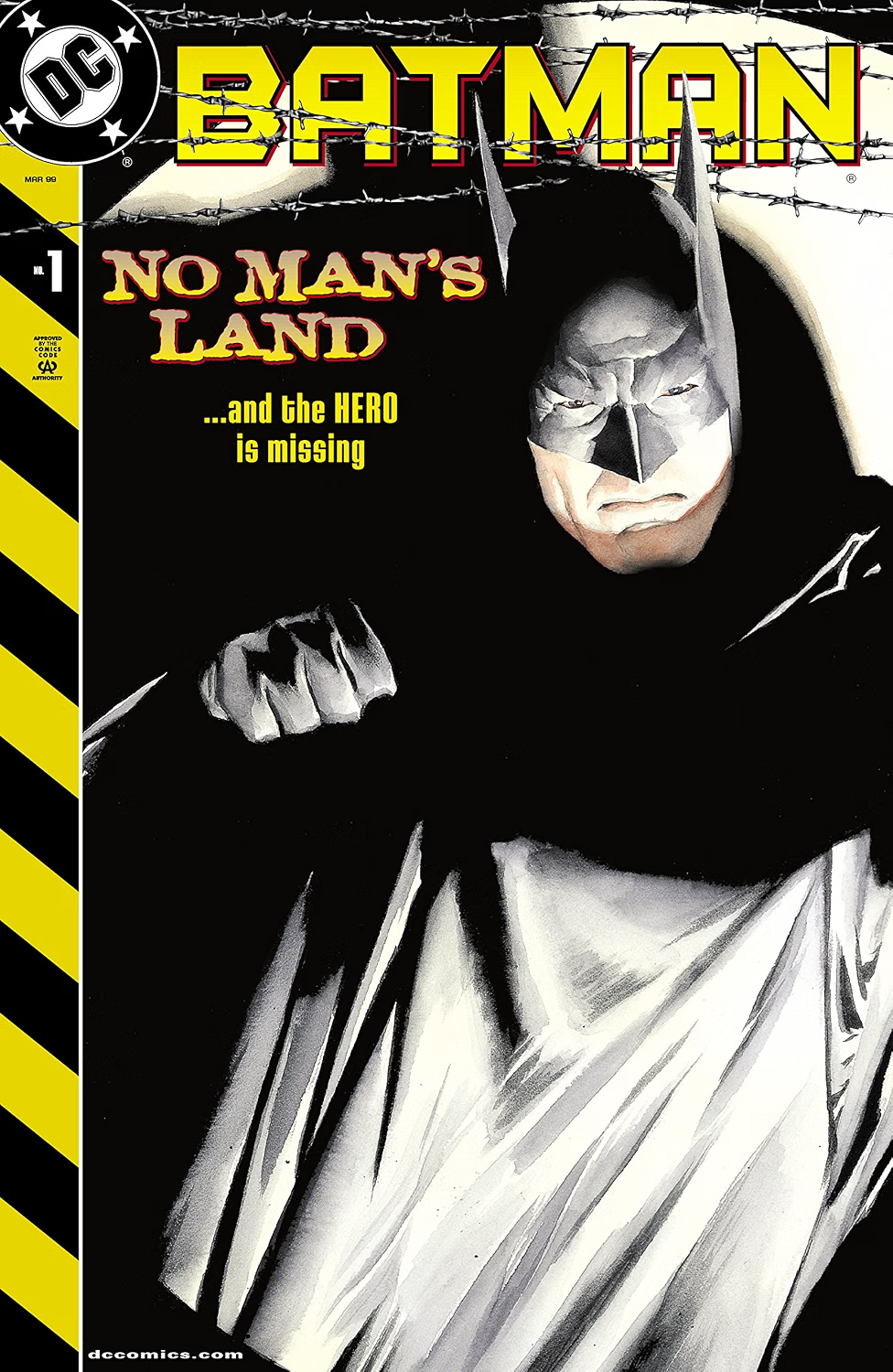
After Cataclysm, the U.S. government makes a drastic decision: it declares Gotham City a lost cause, destroys the remaining bridges and cuts it off from the rest of the country. Batman, Commissioner Gordon, and the Bat-family are left behind in a lawless and post-apocalyptic city. They have to fight to take Gotham back from the villains and gangs who have carved it into rival territories.
No Man’s Land ran for a whole year across the Bat-family comics, and I think it’s an extraordinary example of serialized storytelling. The different books follow competing factions, shifting alliances, and battles over territory and resources, all leading up to Gotham’s liberation and rebuilding. Batman’s long absence causes a serious rift with Gordon, while Oracle steps up as a key leader, and it introduces Cassandra Cain as the new Batgirl. This gritty, sprawling epic uses its shared setting to give every Bat-family comic a strong story for the whole year.
The best way to own it is No Man’s Land Omnibus Vol. 1 and Omnibus Vol. 2.
Alright, that’s it for part one. I want to point something out before I end, about Batman. From Contagion through No Man’s Land, I think this may be the strongest sustained run of interconnected, multi-title storytelling in Batman’s entire history. Each crossover builds on the world established by the previous one, but each has its own identity too. You go from a citywide epidemic to a global conspiracy, to a natural disaster, to the collapse and reconstruction of Gotham. DC’s “Bat-office” showed an exceptional ability to coordinate several ongoing titles around ambitious, coherent narratives without losing sight of the individual characters or becoming bloated, and I want to shine a light on that accomplishment.
Ready for the next era? Check out Part 2: The Best Comic Book Crossover Events, 2000–2014.