The 25 Best Fights in Comics Since 1980, Part 1
Part 2 is Here
I’ve been reading comics since the early 80’s, so I have some history. Marvel, DC, Image, Dark Horse, Valiant, you name it and I’ve read it or heard about it. I decided to make a list of the best fights in comics. This is not a list of famous fights, the highest stakes, or the best stories with a fight scene; what I want is action that stands out because of how the comic tells the story: how each panel leads to the next, how a page turn delivers a punch, and how the layout can leave you feeling as winded as the characters. Some of these fights are famous, but that’s not my intention. Here’s how I chose them.
What made a fight eligible? I looked for specific encounters in specific issues from 1980 to now. Only a single issue or a tightly focused sequence counted, not a story arc with several separate fights. If a fight stretched across multiple issues it had to be one continuous conflict, like a chase, a citywide brawl, a siege or a long duel. If the story reset or moved on to a different fight I judged those parts separately. Fights that kept cutting away had to work harder to keep up their momentum than those that stayed in the room.
What did I look for? I used eight(!) different lenses: how clear the action is, how the choreography develops, the momentum and rhythm of the pages, the physical weight and consequence, how the environment is used, the tactics shown, how the fight escalates and pays off, and how well it takes advantage of the medium. In other words, can you follow the action, does it change and grow, do you feel the hits, and does it do something only comics can do?
What influenced the final choices? Emotional stakes mattered only if they showed up in the fight itself. Fear can change how someone moves, and anger can make them reckless, but a strong character relationship wasn’t enough. When I had to decide between close contenders, I picked for variety; I wanted a mix of brawls, tactical duels, martial arts, and grand melees from different styles, but I didn’t reserve spots for any publisher or creator. Also, the length of the fight didn’t really matter: a short amazing fight beats a long repetitive one.
It all came down to one question: does the physical action itself, not just the story, stay exceptional when you follow how each panel leads to the next?
Let’s dive in. We’ll go in chronological order.
Top 25
Uncanny X-Men #137 (1980, Marvel)
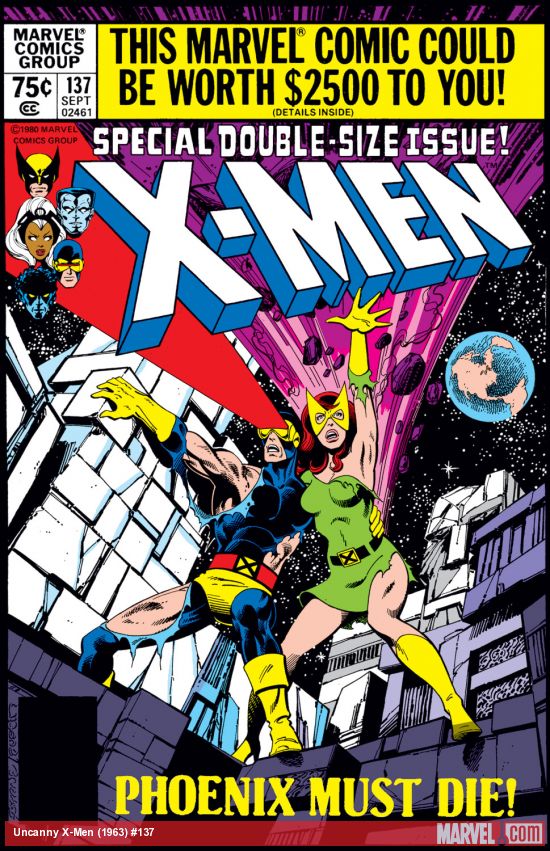
In “The Fate of the Phoenix” Jean Grey is out of control, the Shi’ar Empire wants her dead, and the X-Men make a desperate last stand on the Moon to protect her. What secures this fight’s place on the list is how artist John Byrne manages the total chaos on the page: he tracks over a dozen different combatants moving through the crumbling alien ruins of the Blue Area, but you never lose your spatial awareness.
Instead of cutting between a bunch of disconnected one-on-one duels, Byrne constructs a massive ensemble brawl where the broken landscape actively dictates the team’s tactics. You see the X-Men forced to adapt on the fly against a vastly superior Imperial Guard force, utilizing every piece of cover and combination of powers they have just to survive the opening minutes. The way Byrne illustrates that overwhelming disadvantage without losing sequential clarity is exactly why this sequence is so impressive. The best way to read this is the Dark Phoenix Saga.
Daredevil #181 (1982, Marvel)
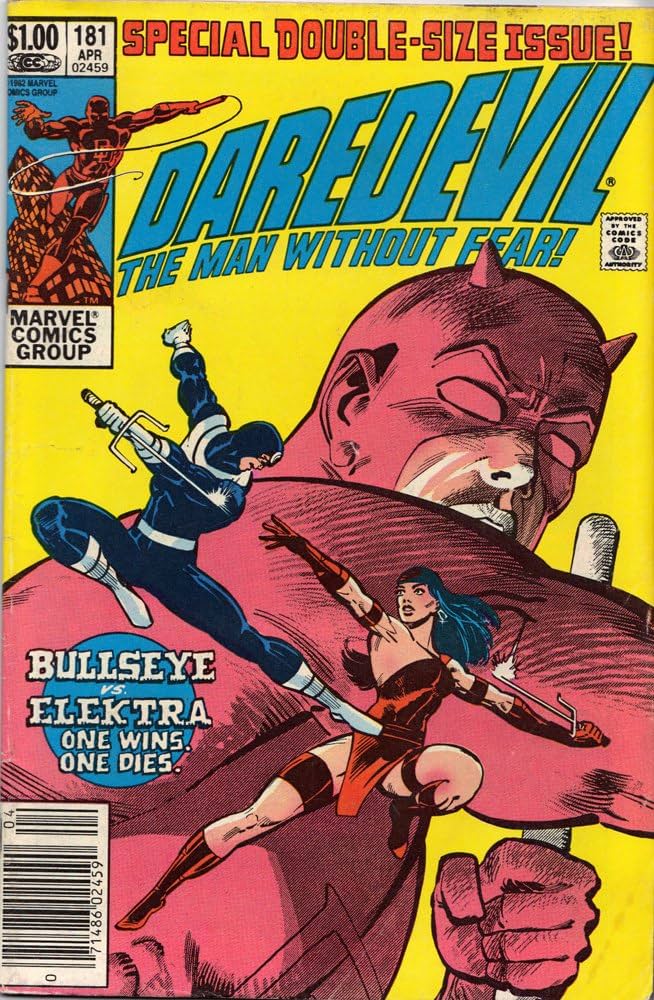
In “Last Hand,” Bullseye has lost his place as the Kingpin’s favored assassin and Elektra has taken it. When these two pros finally face off, Miller and Klaus Janson focus the whole fight on a strong visual contrast between their fighting styles. The choreography keeps their moves clear: Elektra’s smooth, disciplined martial arts push against Bullseye’s wild, deadly improvisation. This isn’t a neat superhero spar, it’s a vicious, high-speed street fight where the environmental integration really shines.
Bullseye grabs anything he can and turns it into a weapon, which forces Elektra to keep changing her position. Miller’s layouts manage the pace perfectly, letting you feel the quick and violent bursts of action and the tense pauses as both fighters try to recover. The fight is a great example of showing physical weight and tactics, building heavy tension all the way to the final, deadly moment. The easiest way to own it is Daredevil by Frank Miller and Klaus Janson Vol. 2.
Wolverine #4 (1982, Marvel)
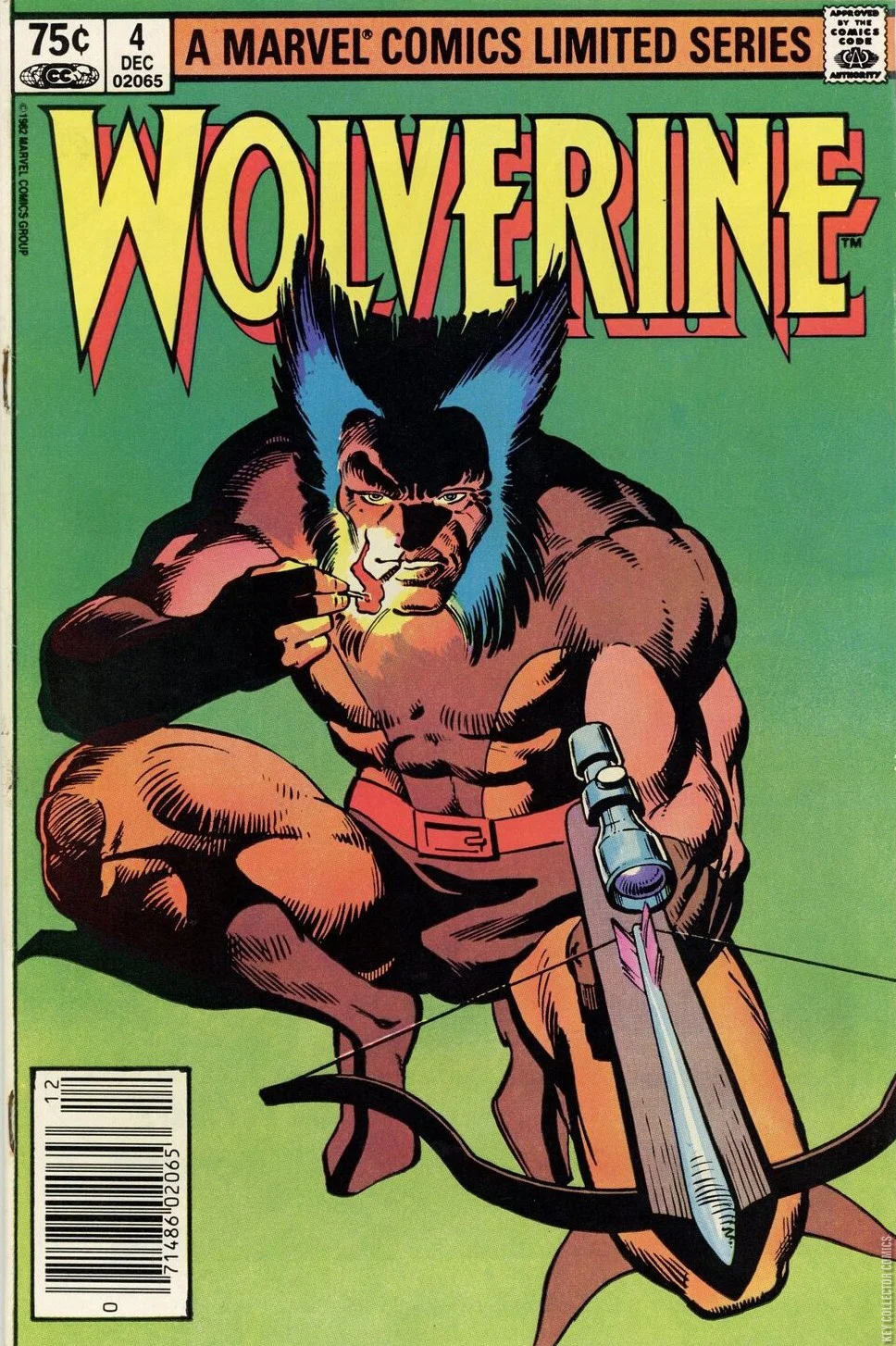
Before healing factors became a cure-all, Logan was a brawler who could actually get broken. In the first chapter of this Wolverine miniseries, Logan goes to Japan for the woman he loves and ends up facing her father, Lord Shingen. Shingen totally humiliates him in a wooden sword duel, leaving him battered and disgraced. When they face off again in issue #4, Miller ditches the usual berserker rage for cold, calculated discipline. You can see Logan’s shifting tactics directly in the layouts.
Instead of wild lunges Miller uses tight, claustrophobic panels to frame Logan holding perfectly still, waiting out Shingen’s flawless katana strikes and dodging them by fractions of an inch. The page rhythm intentionally slows the action down to a crawl, forcing you to watch a man calculate distance rather than just soak up damage. It completely changes the physical language of a Wolverine fight, building an agonizing suspense right up to the final, rapid-fire exchange. The best way to own it is Wolverine by Claremont & Miller: Deluxe Edition.
The Amazing Spider-Man #229–230 (1982, Marvel)
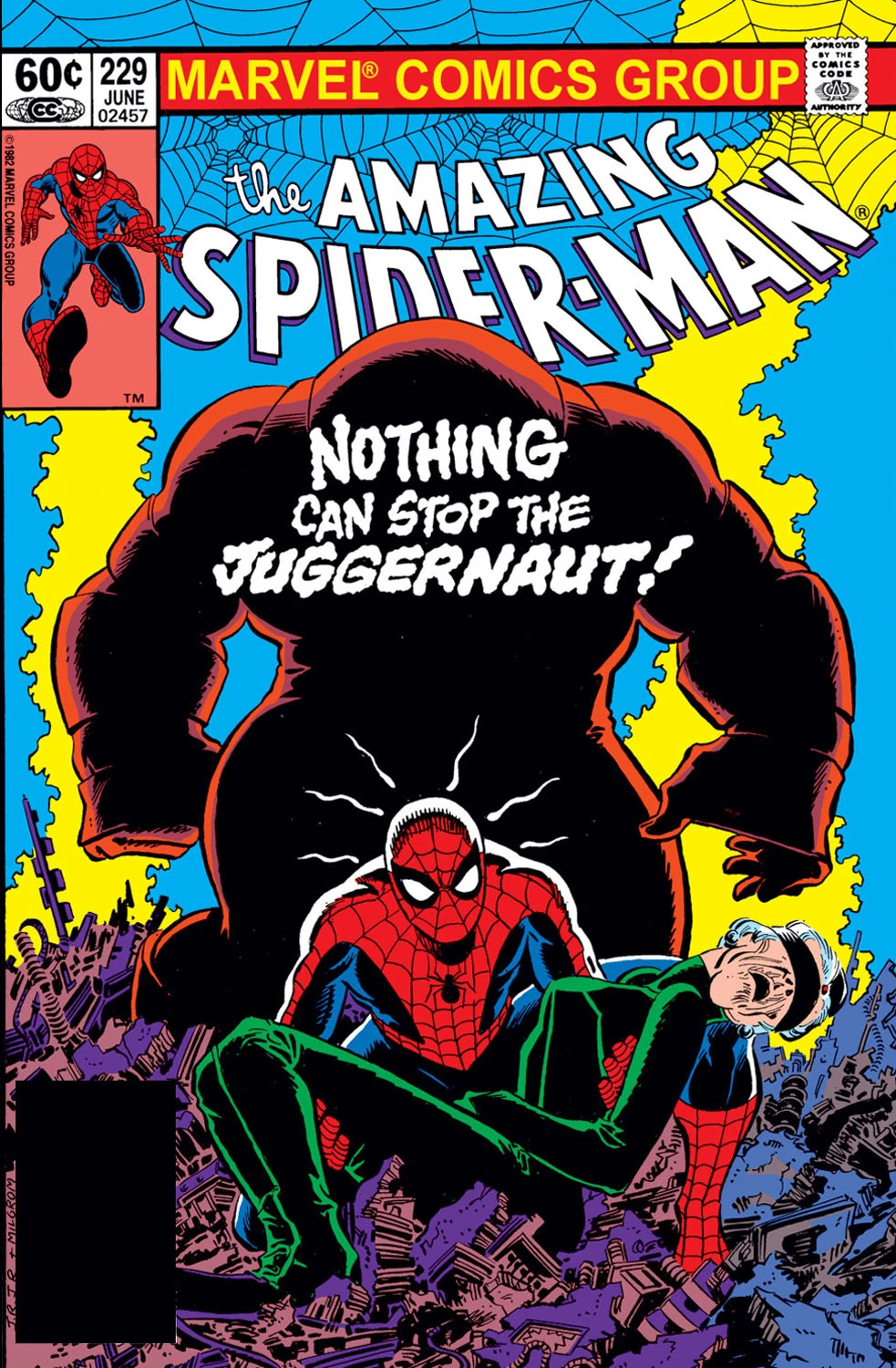
In these issues of The Amazing Spider-Man, Madame Web predicts a deadly attack and asks Spider-Man to protect her by stopping the unstoppable, the Juggernaut. What follows isn’t just a brawl, it’s a desperate, relentless retreating defense across Manhattan where Spidey weaponizes the entire city, and John Romita Jr. tracks Peter’s escalating panic directly through the environment. Spider-Man starts with standard webbing, upgrades to swinging a literal wrecking ball into Juggernaut’s chest, and even resorts to driving an explosive fuel truck into him.
With every failed impact, Romita Jr. degrades Peter’s body language and shreds his costume, visually tracking the continuing toll of the fight. It strips away Spider-Man’s trademark acrobatic rhythm and reduces him to pure, exhausted survival tactics. The fight is exceptional because the physical toll dictates the pacing, making every page turn a question of how much more punishment Peter can actually take before he breaks. The best way to own it is just buying the two issues. If you want the story within a cohesive run instead of two floppies, get Amazing Spider-Man Epic Collection: Nothing Can Stop The Juggernaut.
G.I. Joe: ARAH #21 (1984, Marvel)
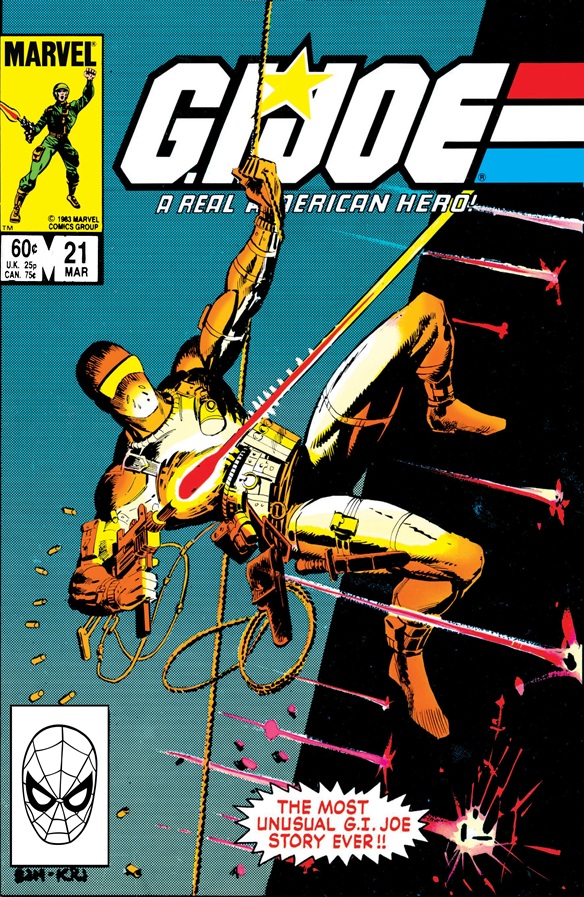
In G.I. Joe #21, Scarlett is held captive in Destro’s well-guarded castle, but she’s already working on her own escape plan. At the same time, Snake Eyes arrives to rescue her and starts working his way through the castle. Larry Hama and Steve Leialoha pull off this entire infiltration sequence without using any dialogue, captions, or sound effects.
The whole fortress sequence feels like one long tactical puzzle. With no text to set the pace, the tight panel layouts control the rhythm, making you focus on every move instead of looking for the next word balloon. When Snake Eyes finally faces off with Storm Shadow, the fight itself tells their story. Their shared past comes out through the action, ending in a sword clash that reveals an important clue about them, and the silence makes the visual reveal even more powerful. There is a short TPB called G.I. Joe: Silent Missions Volume 1, but if you want to get into the series, get G.I. JOE: Compendium One.
Uncanny X-Men #205 (1986, Marvel)
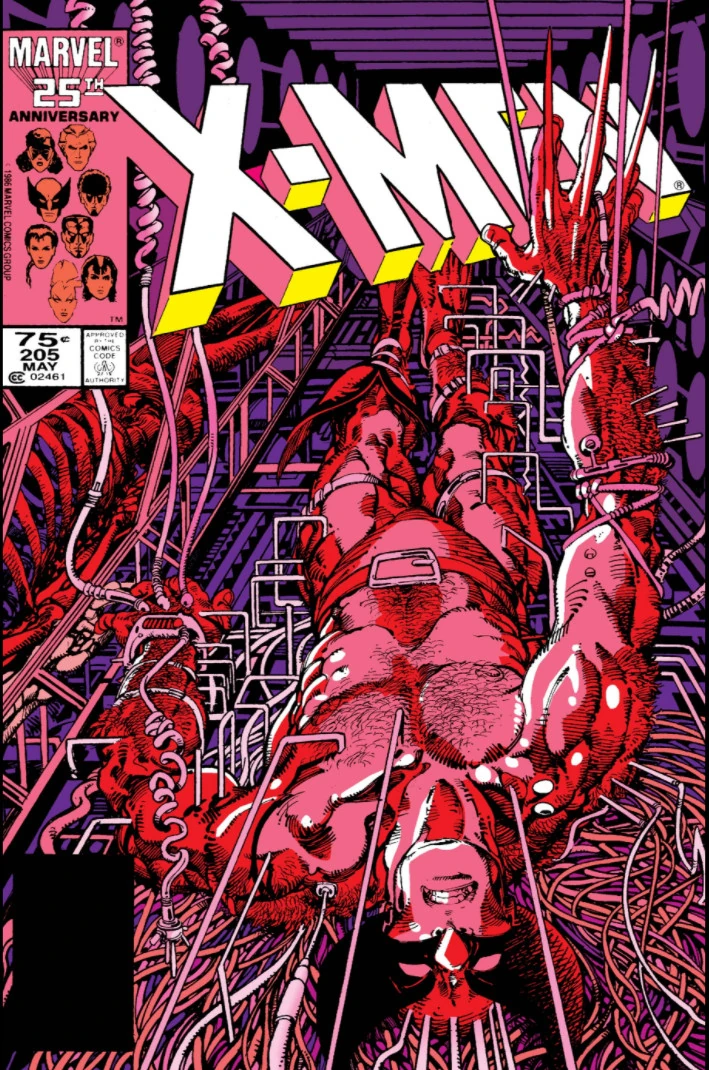
“Wounded Wolf” throws an injured and hallucinating Wolverine into a raging New York blizzard, where he’s hunted by Lady Deathstrike and three cyborgs. These are the same Hellfire Club guards Logan took down years ago, now back for revenge. Things get even more complicated when Logan crosses paths with young Katie Power, forcing him to protect a child while he’s wounded and on the run.
The detailed crosshatched art makes each frantic movement feel heavy and real. The blinding snowstorm wipes out the background, so all your attention goes to Logan’s desperate hit-and-run moves. He crouches over Katie, using the snow as cover to ambush a cyborg before slipping away again–every move he makes is shaped by how vulnerable he is. What stands out most is how the artist shows Logan’s weakening body language, making the fight much more gripping because the hero is just trying to keep a kid safe from one page to the next. The best way to own this (other than buying the single issue) is to buy X-Men Epic Collection: Wounded Wolf. They named the whole thing after the issue, which ought to tell you something.
Batman: The Dark Knight Returns #2 (1986, DC)
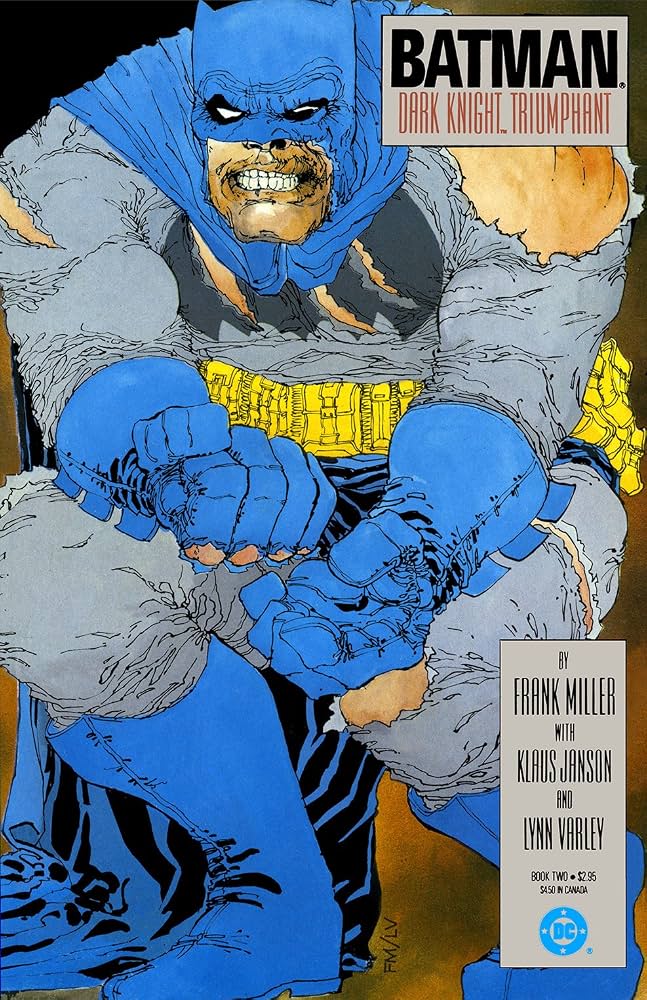
Bruce Wayne, now older, finds out the hard way that confidence alone can’t beat youth. Gotham is under the control of the Mutant gang, and Batman’s comeback leads to a brutal fight with their younger, stronger Leader. He loses pretty badly. In DKR #2, the rematch is where Batman uses his earlier defeat as motivation. Instead of trying to match his opponent’s strength, Bruce plans around it and uses the mud pit to his advantage. The fight is shaped by his choices, and Miller’s layouts show Batman figuring things out as he goes.
So why not pick the famous Batman/Superman fight in #4? Yeah it’s a bigger spectacle but it relies more on preparation and setup, with the actual fight coming later against an opponent who isn’t really trying to kill him back. The mud-pit rematch, on the other hand, keeps everything in the moment—the terrain, the quick thinking, and the adjustments all play out right on the page, which is exactly what my list is about. Honestly you need to own the whole thing, so get Batman: The Dark Knight Returns (New Edition).
Avengers #276–277 (1986–1987, Marvel)
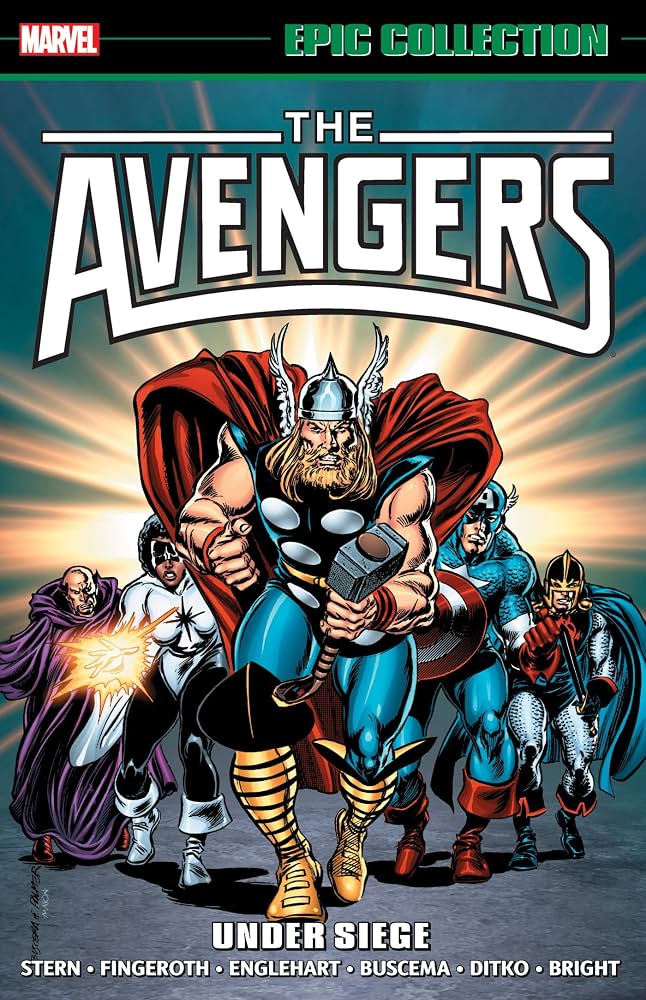
In “Under Siege,” the Avengers’ home turns into their biggest weakness. Baron Zemo puts together a Masters of Evil team strong enough to take down the Avengers and launches an attack on their mansion. The Avengers home base offers no help and Hercules is very badly hurt, some Avengers are captured, and the Wasp has to put together a rescue team.
The fight I’m picking in particular is the counterattack in issues #276 and #277, when the heroes take back the mansion and the battle splits into several fronts. Maybe the best part is Captain America facing the Wrecker, a villain who has gained a lot of strength but not much skill. Cap’s strategy is to outsmart him instead of trying to match his power, making this a rare big-team fight with a tactical idea at its center. John Buscema draws it across a house the Avengers are literally fighting to retake.
Thor #380 (1987, Marvel)
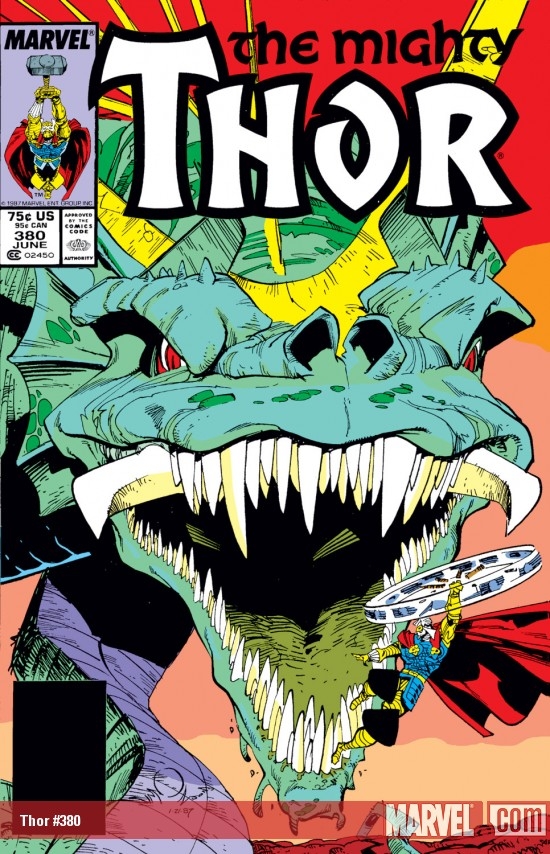
Imagine going up against the world’s most dangerous monster when your bones are brittle and death has been taken off the table. That is Thor’s situation in #380, “Mjolnir’s Song.” Hela’s curse has made him fragile, and the Midgard Serpent, his fated enemy from the prophecy of Ragnarök, is waiting for him.
Walt Simonson writes and designs the whole issue using splash pages, with Sal Buscema finishing the art, and the risk pays off. Every exchange gets its own page, from Thor’s hammer blows to the Serpent’s huge counterattacks, so the pace feels slow and epic instead of fast and choppy. Since Thor is so fragile each page turn feels like it takes a toll. Combined with the verse-style narration, this layout makes the story feel like a legend unfolding right in front of you. You’re welcome to get the single issue, but a great tpb is Thor Visionaries – Walter Simonson, Vol. 5. Walt’s whole run is great.
Batman #405–406 (1987, DC)
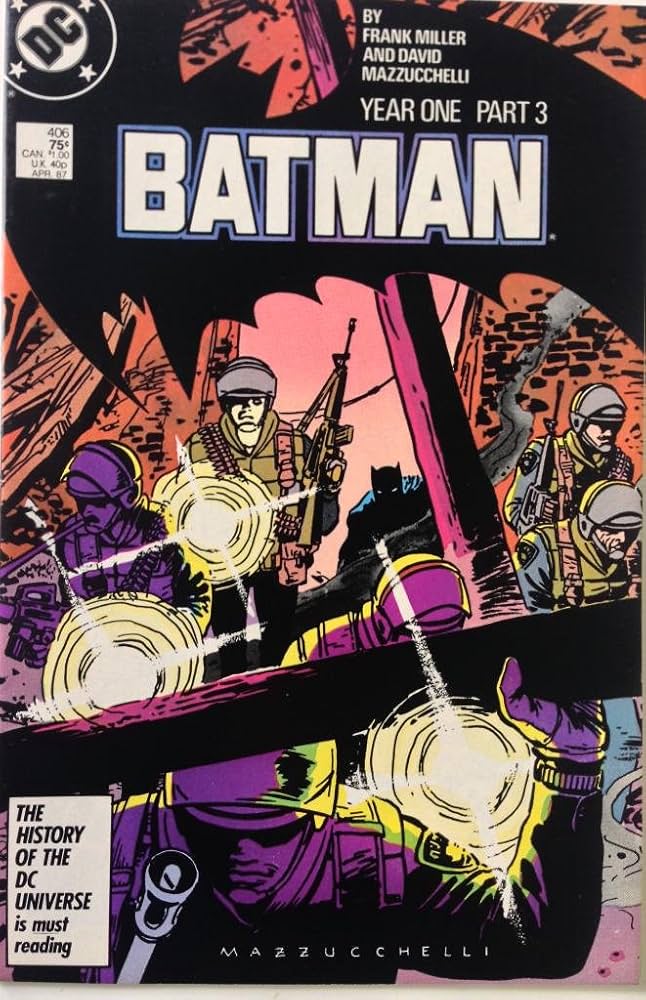
Before Batman becomes Gotham’s master tactician, he has to survive as the city’s most wanted man. Batman #405–406 (from Batman: Year One) shows his early fight against Gotham’s corrupt leaders as a siege. The police trap the inexperienced vigilante in an old rundown building, drop a bomb on the roof, and send in SWAT.
David Mazzucchelli brings the issue to life by focusing the action on Batman’s need to dodge and survive. With only a few gadgets, every move gives Batman just a bit more space before he faces another problem. His gas trick fails because the police have masks, so he has to improvise. One of the best moments is when he hides inside a broken chimney to take down an officer and grab his radio. Instead of a typical superhero fight, this scene uses hiding, surprise, and escape, making Batman’s struggle to survive much more exciting than a perfect win. Buying Batman: Year One is the way to go.
Hard Boiled #2 (1990, Dark Horse)
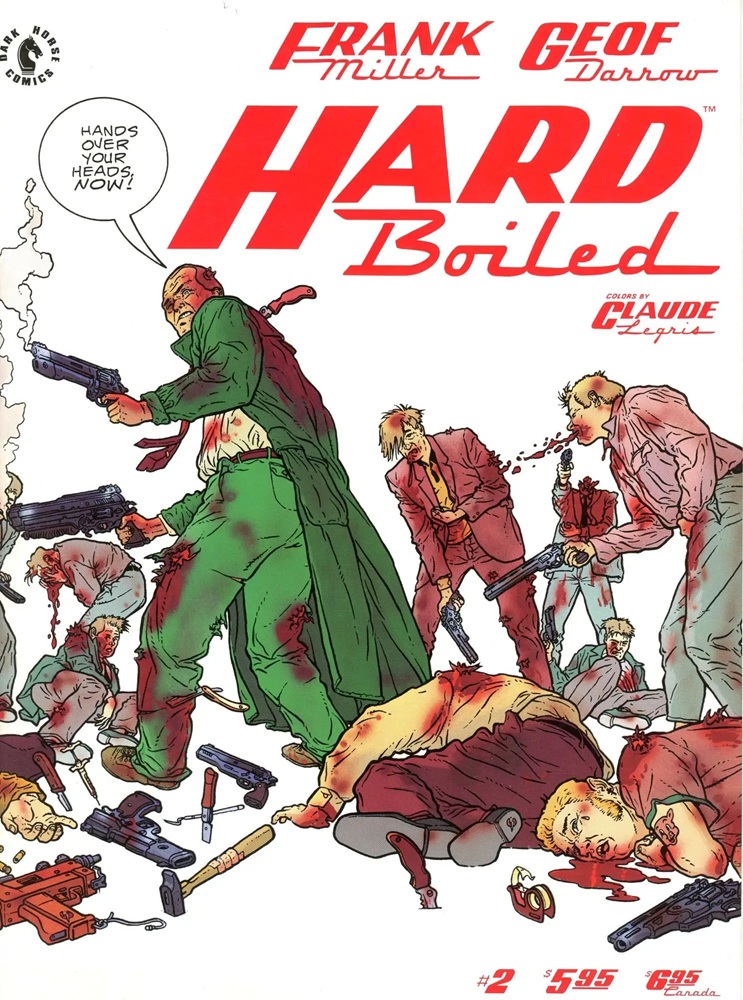
A mild-mannered insurance investigator gradually discovers that his suburban life is a lie and that he is far more dangerous than he thought. Nixon is actually a robot programmed to think he is just a regular family man. In Hard Boiled #2, this illusion breaks during a chase through a freeway traffic jam that spills onto city streets. He causes chaos wherever he goes and keeps fighting, even after being hit by a car.
With every injury more of the robot underneath is revealed, showing that the violence is as much about character as it is about action. Geof Darrow’s highly detailed art makes the wreckage just as interesting as the fights, and you can keep spotting new bits of damage long after the crash. If you’re looking for a brutal cyberpunk satire this collection offers dark humor and spectacular destruction, but not much emotional warmth. Hard Boiled (Second Edition) has the whole series. It’s available on Kindle but I linked to the physical book, which is outstanding.
Superman vs Doomsday (1992–1993, DC)
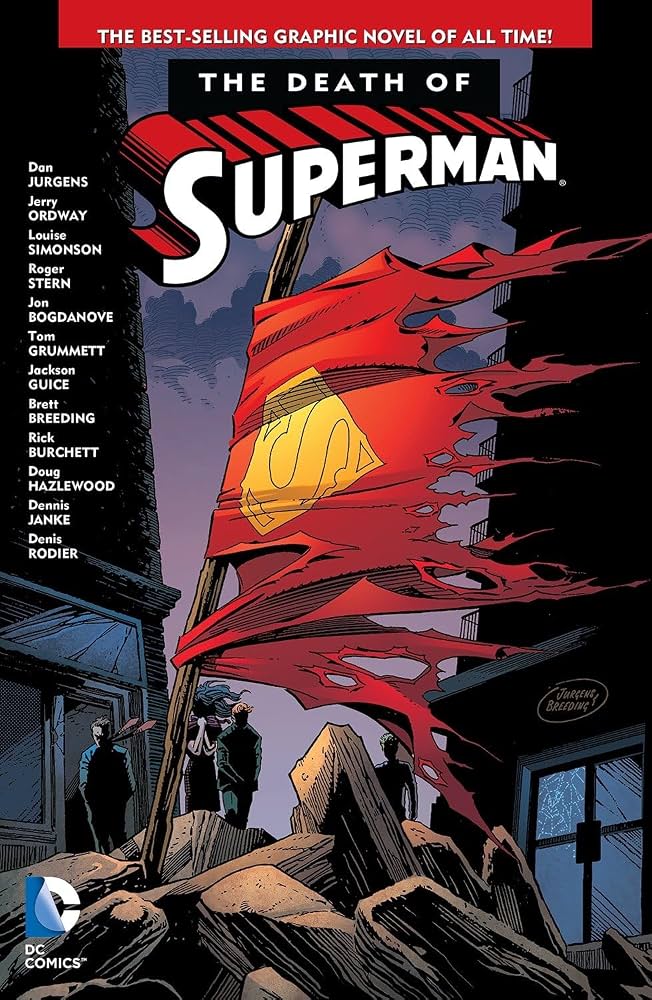
I am singling out the issues covering Superman #74 through the crossover chapters to #75. In #74, teamwork actually makes things worse: the heroes’ combined attack does really nothing except break Doomsday’s restraints, it doesn’t stop him at all. Superman faces an enemy who only grows more violent, putting civilians in danger. By issue #75 the fight moves to Metropolis, and protecting people means Superman has to take the punishment himself instead of just fighting back.
The fight’s defining achievement is its visual rhythm. Across the intervening crossover chapters the panel count contracts toward #75’s full-page images, turning the finale into a countdown of devastating impacts. But those expansive pages also make room for witnesses, allowing Lois, Jimmy, and Superman’s parents to register the human cost. Spectacle becomes something painfully personal, and endurance becomes an expression of his character: Superman commits everything he has to protect the city while the fight keeps growing on the page. Gotta get the Death of Superman tpb if you want things to make sense.
Okay that is part 1, with 12 of the top 25 fights listed. In the second post I will cover everything from 1994 up to at least 2022. Part 2 is out now!