Social Enmeshment TTRPGs: You Think Social Mechanics Are Flavor. They Aren’t.
This is part of my ongoing series on system structure and pressure models—see also: Consequence Routing: When Getting Stronger Doesn’t Make You Safer.)
You likely think that social RPGs are really just flavor layered on top of the real game. So if a social mechanics TTRPG has romance, court politics, or faction drama, that makes it a social game, right? Legend of the Five Rings? Masks? Burning Wheel? Nope. In a pure social enmeshment system, the other players are the real game.
This post isn’t about what social TTRPGs look like, it’s about how social pressure works at the system level. When people hear “social game,” they often picture persuasion rolls, court politics, and relationship mechanics. So, a game with intrigue and reputation qualifies, right? Nope, that’s not enough. In most RPGs those systems are only situational, they matter when the scene calls for them but then fade back behind combat, exploration, or general problem-solving. The system hasn’t made social obligation the engine of play, all its done is delay when players can ignore it. The rules should do more than model relationships, they ought to trap you inside them.
As in my previous pieces, this analysis is predictive and offers a blueprint: if you want to build a social enmeshment game, these are the bones you must have in place. If you’re missing one, you can predict exactly where the system will fail — or where you’ve deliberately chosen to let it break to accommodate something different. Here’s the key question: if you took away all the artwork, cut out every bit of fiction and stripped away the GM’s narration, would the mechanics alone still make you feel the genre?
Once again, tone and setting are only half the game. Of course tone and setting matter but they sit on top of an engine, which are the rules, and if that engine doesn’t enforce the premise then the GM has to. In a social enmeshment system, conflict does not clear the board. If you win a scene, for example, the system does not let you walk away clean; it converts that contact into new leverage, obligation, or dependence that will matter later. Social pressure is not erased, it is stored in the cast. The moment players can solve important problems without routing consequence through each other, the enmeshment collapses. A real social enmeshment system is one where you don’t get autonomy back, you redistribute it.
Methodology
The four criteria that follow are the clear pattern that appears when you research what games enforce through their rules, not just their atmosphere. I surveyed systems across the last 30 years of the hobby and identified the industry-wide threads that separate true social mechanics systems from games that just look like it on the surface. What you’re reading is not my personal preference for what a social enmeshment should mean, it is a description of what game design has been doing for decades that no one has mapped before. I am presenting a tool that designers can use to make their games sustain social enmeshment conditions over time.
The Four Structural Criteria
These criteria are about whether your system enforces social enmeshment during sustained play. If you miss one you’re asking GMs to do the work your mechanics should be doing. To qualify a game has to meet all four. If it doesn’t you’re likely running a heroic model instead:
- Specific Hooks (Leashes, Not Armor): Does the system give other players a specific mechanical handle on your character, or just a social score? If you can’t point to a rule that lets one player directly constrain another player’s choices then it’s armor, not a leash.
- No Bypassing the Players: Can someone spend multiple sessions chasing goals mostly through the GM’s world, and come back with their obligation web basically unchanged? If the answer is yes the web is optional, not structural.
- It Still Works Without the GM: If you strip away outside pressure for a session, does the game still move forward through the claims players hold on each other? If the answer is no then the real engine is the world, not social enmeshment.
- No Reset Button: Does gameplay keep tangling the cast over time, or can characters clear their slate and stand alone again? If the system can reliably return everyone to independence then the enmeshment was only temporary.
Important note: You can’t really do this alone. In other words, one-on-one play usually weakens it too. Social enmeshment works best when at least three players are all pushing, owing, and constraining each other.
The Relational Pressure Loop
Every pressure model has a core engine. In heroic systems it’s the restorative upward arc, in survival it’s the material treadmill, and in horror it’s the ratchet. In social enmeshment it’s simpler and stranger than any of those: contact creates claims, and claims redistribute who holds the wheel.
Gameplay looks like this: Independence → Contact → Obligation → Mutual Constraint. Players pursue what they want, and the mechanics turn that pursuit into leverage, debt, or dependence held by someone else at the table. Crucially, the loop doesn’t care if you succeed or fail. Winning a scene mints leverage for whoever you beat, and losing mints it for whoever beat you, while the web densifies on both branches. The engine’s most counterintuitive feature is that in social enmeshment, success and failure move you in the same direction. Social pressure is stored in the other players, it’s not in the world, or your character sheet, or in the GM’s faction clocks — it’s in the other players.
That’s what separates social enmeshment from the other pressure models:
Heroic systems: Growth makes you stronger.
Grimdark systems: Fighting evil corrupts you.
Survival systems: Existing costs you.
Horror systems: Exposure erodes the self.
Consequence routing: Success reroutes risk.
Social enmeshment: Contact redistributes who holds the wheel.
Why People Play Social Enmeshment Games
People don’t play social enmeshment games to become unstoppable, they actually play to get caught. The appeal comes from watching all the wins, mistakes, favors and betrayals make the next choice harder. The world hasn’t gotten more dangerous, but the people around you hold more of your steering wheel.
These games are for players who want relationships to carry the same mechanical weight that combat does in other RPGs. The drama isn’t just about what your character wants, it’s about who has leverage over those wants, what it costs to pursue them, and which relationships you’re willing to strain to get there. Session by session the cast builds a web so dense that acting freely stops being an option. For the right players that is not a loss condition, that is the whole point.
Social Enmeshment Game Systems
Pure enmeshment systems are rare because they require designers to remove individual autonomy through rules between players, not through events directed by a game master. These are the only games I found that fully meet the enmeshment contract:
Monsterhearts (2012, 2017, Avery Alder)
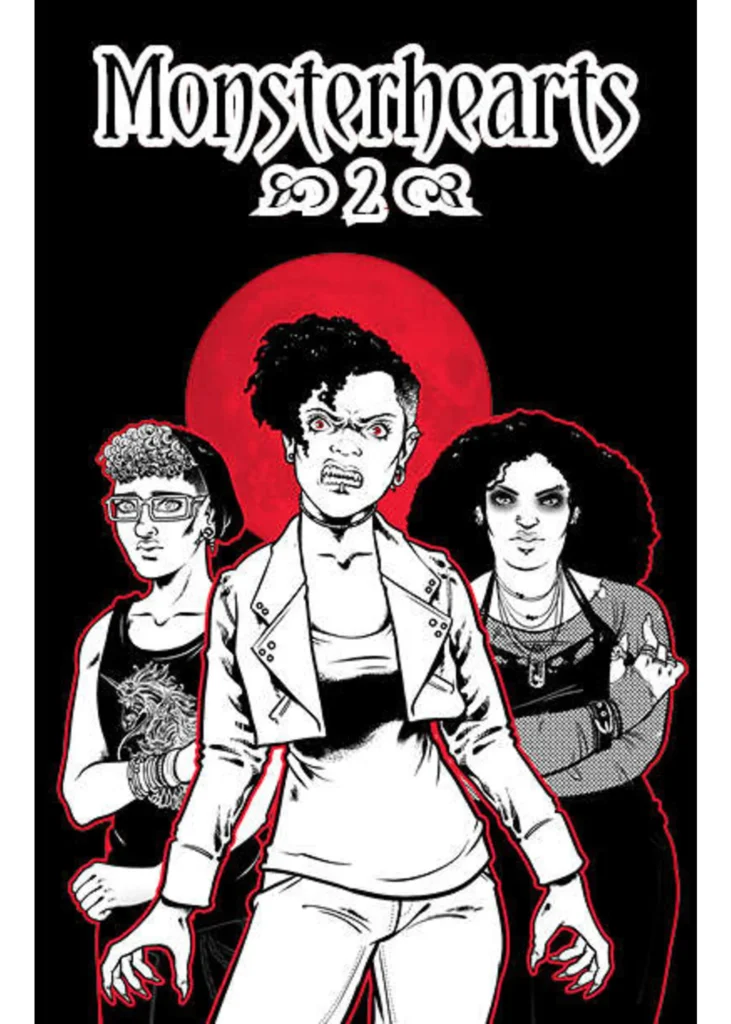
Monsterhearts is a gold standard example of social enmeshment in games. You play as teenage monsters dealing with desire, status, shame, and messy relationships. What makes the game stand out is that these relationships drive everything else, and here’s how. The main mechanic, Strings, lets one character hold social leverage over another. You earn Strings by turning someone on, showing vulnerability, making an emotional connection, or getting under someone’s skin. Later you can use Strings to tempt, pressure, or influence that person.
This creates a cycle where each interaction leads to new obligations. Winning or losing does not take the story in opposite directions, it just shifts who has the advantage, so no matter what the relationships get more complicated. Monsterhearts adds to this with Conditions, risky moves, and each Skin’s Darkest Self, which pushes characters into destructive patterns when their emotions get out of hand. In this game social pressure builds up among the characters, not in the world around them. You are not trying to fix the miss, you play to see how tangled things get before something finally gives way.
Try it with: the original book is really all you need, but if you want something prewritten try The Carnival.
Hillfolk (2012, Robin D. Laws)
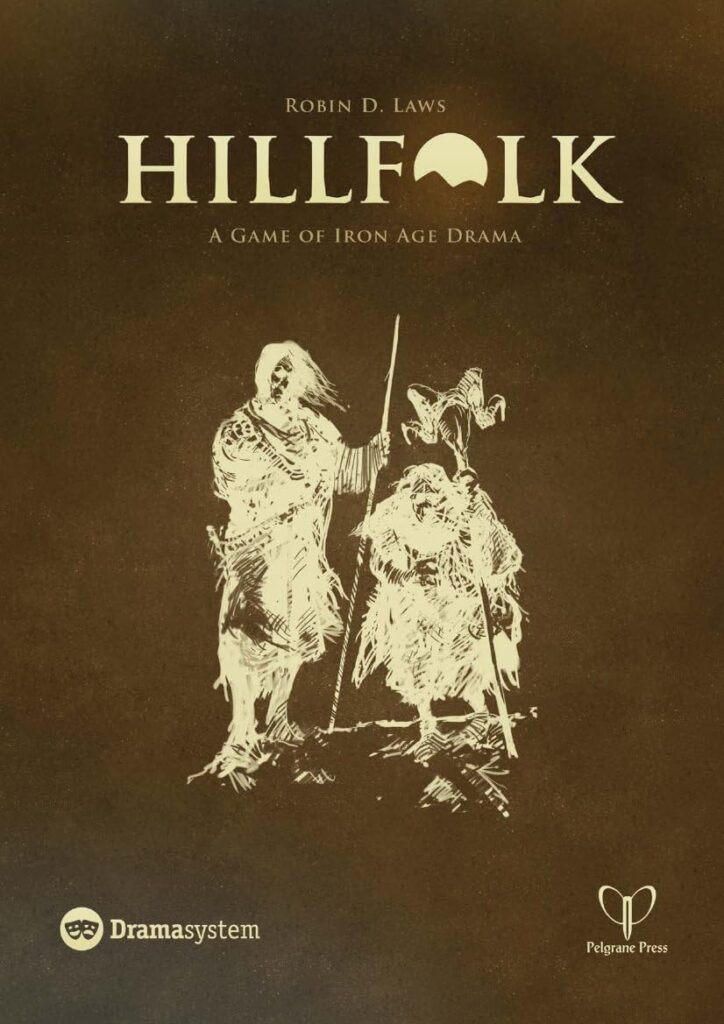
Hillfolk is probably the purest social enmeshment game ever made. You play members of an Iron Age tribe, but the setting is almost beside the point because the real game is emotional dependency. Every character is built around desires they want fulfilled by other players, and complex relationships that make those desires hard to satisfy. Scenes revolve around a Petitioner asking a Granter for an emotional favor, but no matter the outcome the system creates new leverage: if the Granter agrees they get a Drama Token, and if they refuse the Petitioner gets one.
This is why Hillfolk works so well as a way to explore social entanglement, because every interaction makes the relationships more complicated. You either get what you want right away, or you earn tokens that let you push for what you want later. The tokens represent shared control among the players, and they can be used to interrupt scenes or resist others, so the tension stays within the group. Hillfolk works even without a game master, since it focuses much more on the emotional ties between characters than on outside challenges. You don’t play it to solve problems and move on, not at all, you play to see how a group becomes so tangled up that they can never relate to each other in a simple way again.
Try it with: just run the default tribal pitch from the core book.
Urban Shadows (2016, 2025, Medeiros and Truman)
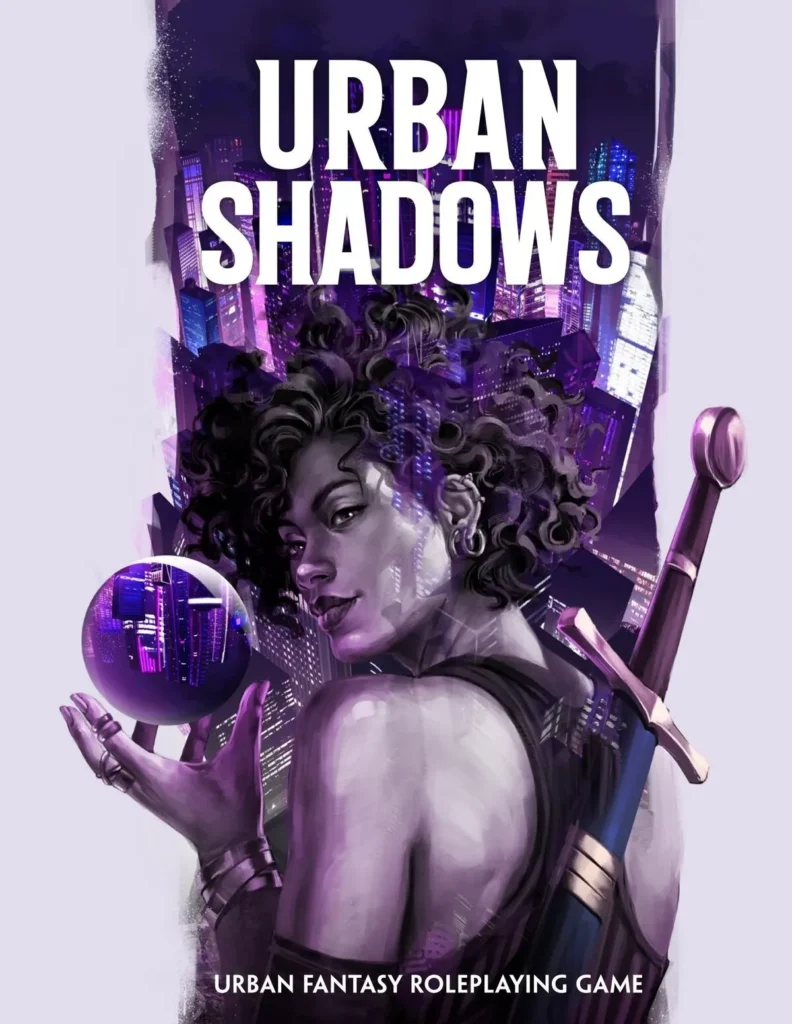
Urban Shadows is all about tangled relationships with bite. You play as mortals and monsters in a modern city, but the real focus isn’t on supernatural powers, it’s on Debt. Every favor, slight, and compromise adds to a web of obligation. Debts are clear, direct claims, so if someone helps you or lets something slide, they get a hold over you they can use later. The game makes you keep track of who owes what, and what it might cost to say no to a request.
This is the “Relational Pressure Loop” on a city-wide scale. The tension lives in the characters, not just the setting. Factions set the scene, but their main role is to draw characters back into political deals. Winning doesn’t really wipe the slate clean, it usually means someone is left owing, or vulnerable, or caught in new complications. Even gaining power is risky, because Status and Corruption just pull you further into messy exchanges you can’t fully control. Nobody plays Urban Shadows to rise above the city, they play to find out how much freedom you’ll give up just to keep playing.
Try it with: the Quickstart is pay-what-you-want, it’s great.
Good Society (2018, Hendro and Gordon)
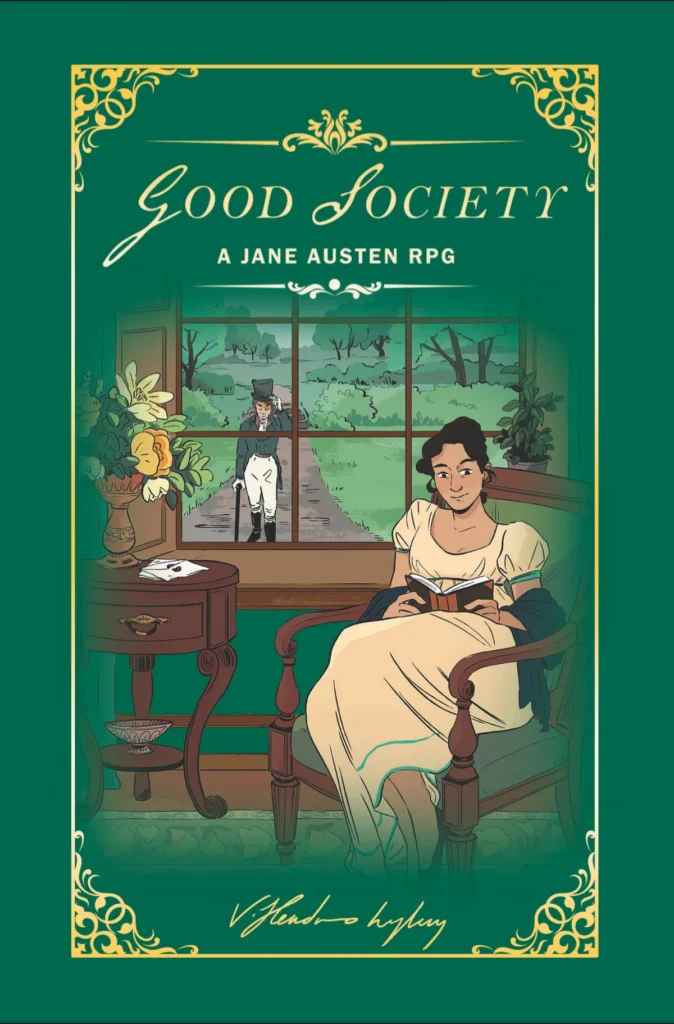
Good Society is just social enmeshment in period dress. You play as characters navigating through Regency-era England — courtship, reputation, family obligation, secret desire — but the setting is almost beside the point. The real engine is Resolve tokens and the reputation economy surrounding them. Resolve tokens are directed claims, you spend them to assert story control, introduce a secret, or complicate another character’s scene. The trick is, Reputation tags and rumors do not fade between scenes, they circulate through the cast, attaching scandal and obligation to specific characters that others can leverage later, so a polite conversation can shift the balance of social power at the table as decisively as a confrontation in Monsterhearts.
What makes Good Society a pure qualifier is that the web densifies regardless of outcome. A successful courtship creates new expectations and vulnerabilities, while a failed one generates rumors, but either way something active stays in another player’s hands. You do not play Good Society to resolve the drama, because it can’t be resolved, you play to see how elegantly you can maneuver inside an elegant web that keeps tightening around you.
Try it with: everything you need is in the box.
What Gets Mislabeled as Social Enmeshment (And Why That Matters)
Understanding why games fail social enmeshment criteria is as useful as knowing which pass, because it reveals what players actually want versus what these systems deliver. Once you know the pattern you can look at any playtest doc or published game and predict, before you ever sit down to a campaign, whether the rules will eventually slide into something else instead.
Blades in the Dark seems like a game about social entanglement because it has a focus on obligation, faction pressure, and ongoing fallout, but it fails C3. Most consequences go through Heat, faction clocks and the GM’s city rather than unavoidable claims that players hold over each other. If the GM stops driving faction consequences the game’s pressure comes from the environment, not from other players because in Blades the city is the system, not the players themselves.
Legend of the Five Rings core social mechanics are not leashes, so it fails C1. Honor, Glory, and Status are broad reputation tracks that show how society views your character, but they aren’t really specific claims that one player can use against another. L5R definitely focuses on politics, but the pressure comes from hierarchy, duty, and the setting’s institutions instead of direct, peer-to-peer obligations.
Vampire: The Masquerade is the best-known political game in the industry, so why didn’t it make it? It fails C1 because traits like Status and Generation act as social armor instead of creating direct ties between players. These traits don’t set up clear claims or connections between people at the table, and it also falls short on C2 since the main source of pressure comes from the GM. You could play through an entire campaign just reacting to the Prince’s orders, and the rules never really make you negotiate with other players.
Burning Wheel is usually hailed as the gold standard for character-driven design, but it fails C2. Its Duel of Wits subsystem is brilliant, high-stakes tactical combat mapped onto verbal debate, but because the duels are primarily fought against the GM’s NPCs, the pressure remains GM-centralized. The mechanics don’t force you to redistribute your agency among your peers to function, so you can win every argument in the book and still walk away with your individual autonomy completely intact.
Masks: A New Generation seems like a great fit because of Influence, which is a targeted leash that lets teammates and mentors change your stats. It meets C1 through C3, but it fails C4. Masks is a game about the Exit, not the Trap. Its core mechanical arc is Rejecting Influence to grow, so the goal is to stop being controlled by others. It’s a coming-of-age game with an escape route, not one that traps you in social ties.
Conclusion
True social enmeshment isn’t just about adding drama to games, it means creating a system where independence is something players share and shift around, not something they simply get back. Many games called social or political are really just heroic or survival systems with relationship decoration, as you probably already know. They might route some consequences through NPCs or factions, but players can usually escape the web, pay off what they owe, or finish the game without needing each other. That is not true enmeshment, it is just atmosphere.
The four criteria I outlined define what the engine actually requires. If your game lets players erase their obligations, act on their own, or get so strong they no longer rely on others, then enmeshment has already failed. The web of connections should get tighter no matter what happens, and winning only changes who holds the claims, it never offers you a way out.
For designers the useful question is not “does this feel social?”, it’s “what happens to player autonomy over time?” If every meaningful action leaves something active in another player’s hands then you’ve probably built a social enmeshment engine. If players can eventually act alone then you’ve built something else. Know which game you’re making before you go to print.
And as always, if you know a game that meets the criteria and hasn’t been mentioned here, I’d really like to hear about it.
Want this kind of structural analysis applied to your system? Request a Structural Audit
You’ll get a written diagnosis of where your mechanics create unintended pressure, plus concrete fixes aligned to your intended play experience.
If you’d like notifications for future posts, subscribe below.