The 8 Best TTRPG Campaigns Ever Written
Read The 8 Best TTRPG Sandbox Campaigns Ever for my companion piece.
Over the past year I’ve shared posts on lots of TTRPG topics, but I haven’t really focused on campaigns. I decided to find the best prewritten campaigns ever made and put them together so enthusiasts can play them. This guide examines the best TTRPG campaigns ever written: eight prewritten, fully guided campaign arcs with a clear beginning, middle, and end, strong GM support, and lasting respect across the industry.
Part of my goal here was to identify the campaigns that set that standard. I had two main criteria: first, the campaign had to be fully guided, with a clear beginning, middle, and end, a strong structure, and helpful guidance for the GM all the way through. No exceptions. Second, the really tough one, it needed to have earned lasting critical respect across the industry—not just love from fans of one game. These campaigns need to be so good that they’re worth learning a whole new system just to experience them. In the end, only eight campaigns in RPG history made the cut.
Guided does not mean railroaded! Railroading takes away a player’s ability to choose what happens in a scene. “Guided” means that the book tells the GM what happens next, how the world responds and what the stakes are but it’s all directed at the GM, not at the players. Every campaign here is guided, not railroaded. I’ll start with the history of campaign design as I feel it’s crucial to understand the giants that later designers stood on the shoulders of to get the great campaigns we have today. I list them in the order they were originally released, and links are included in case you want to buy any of them.
While these campaigns give you a clear, guided structure, running them at a high level still requires a strong grasp of your role behind the screen. If you want to improve the core skills needed to run these arcs smoothly, like prepping situations instead of plots, managing table dynamics, and avoiding burnout, take a look at my post on The Five GMing Philosophies Every Game Master Should Understand.
The Progenitors (All are D&D)
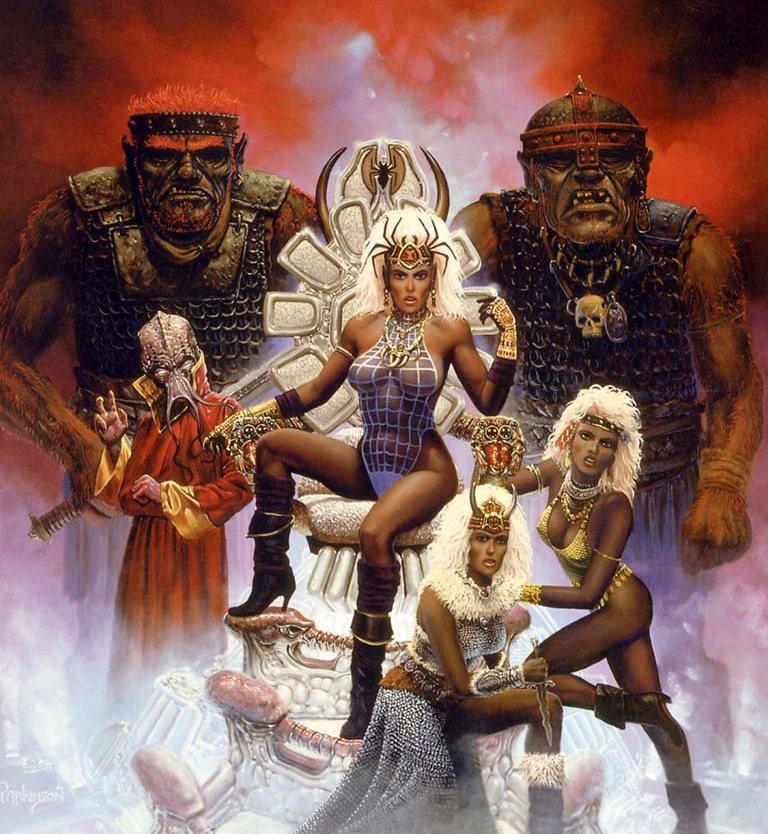
The Giants, Drow and Queen series, GDQ for short is the first example of a linked adventure chain, which established serialized campaign design. Gary Gygax himself wrote almost all the adventure modules, which were later collected into the Queen of the Spiders campaign. It was voted the #1 Dungeons & Dragons campaign of all time by Dungeon magazine in 2004. Every guided campaign that’s come since can trace its lineage back to this series of interconnected adventures.
Dragonlance belongs here because it is the first major story-first campaign in the hobby’s history and the industry took notice. Written by Tracy Hickman and others, this 12-module story is the clearest ancestor of the modern adventure path, decades before Paizo coined the term. Its real innovation was dramatic continuity: recurring characters, plot turns, world-changing stakes, and the expectation that play would move through an authored beginning, middle, and end. If GDQ proved adventures could be serialized, Dragonlance proved they could be novelistic.
Temple of Elemental Evil became TSR’s definitive early “supermodule” dungeon‑campaign, expanding The Village of Hommlet into a single, cohesive publication you could run for an entire campaign. More than just a big dungeon, it presents a complex network of cult factions and internal rivalries, pushing players to navigate politics and exploit divisions instead of just fighting room by room. If GDQ is the prototype for the serialized campaign, Temple is the prototype for the dungeon presented as a full‑blown campaign arc.
Without further ado, here are the Elite 8.
The Greats
Masks of Nyarlathotep (Call of Cthulhu — DiTillio and Willis)
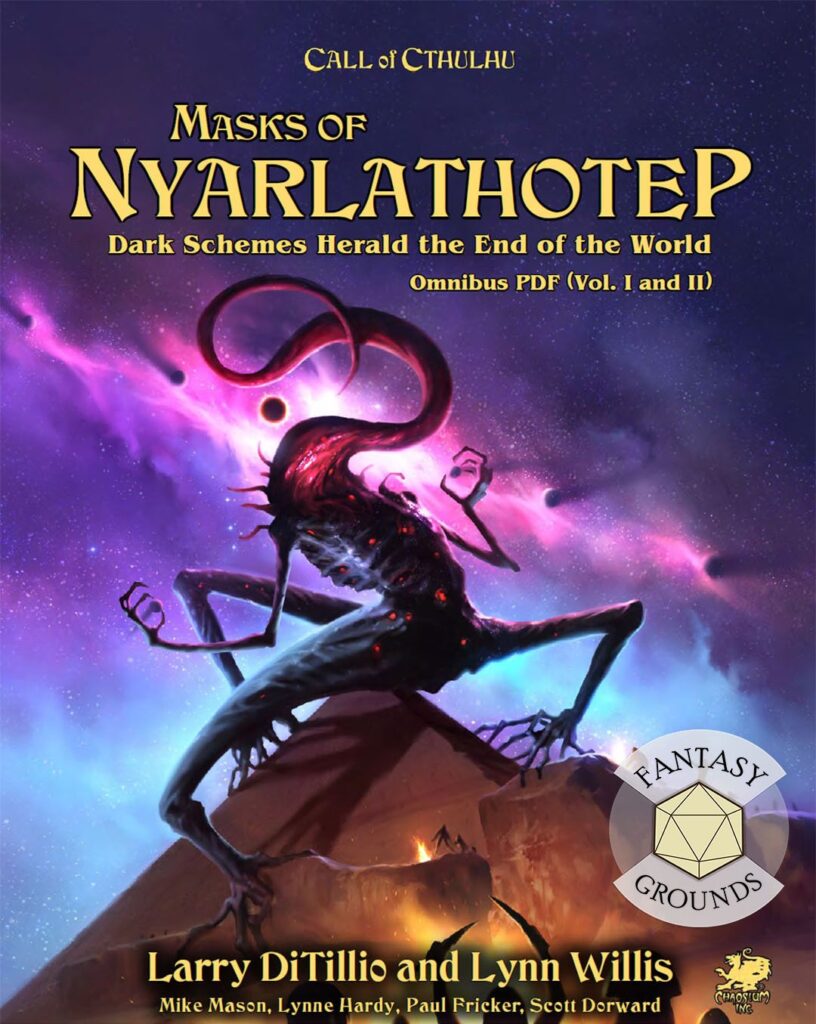
Masks of Nyarlathotep is from Call of Cthulhu, which I discuss more fully on my posts on Horror RPGs and the Top 10 RPGs of All Time. Itopens with a classic noir gut-punch: in 1925, the investigators discover that their friend Jackson Elias has been brutally murdered in a New York hotel room. He had been looking into the doomed Carlyle Expedition, and his death is just the start of a bigger conspiracy involving cults, occult forces, and a looming cosmic catastrophe. What starts as a personal investigation quickly expands into a globe-spanning pursuit, carrying the players from New York to London, Cairo, Nairobi, and Shanghai in an effort to understand what the Carlyle Expedition uncovered before its consequences engulf the world.
Masks is so highly regarded because it demonstrated that a prewritten campaign can be both wide-ranging and tightly structured. It is more than a series of linked adventures, it is a genuine epic, designed so investigators can follow leads across different continents without sacrificing momentum or coherence. That balance between freedom and authored structure is central to its legacy, establishing that horror could sustain a long, sweeping arc.
The Enemy Within (Warhammer FRP — Gallagher, Bambra, Davis)
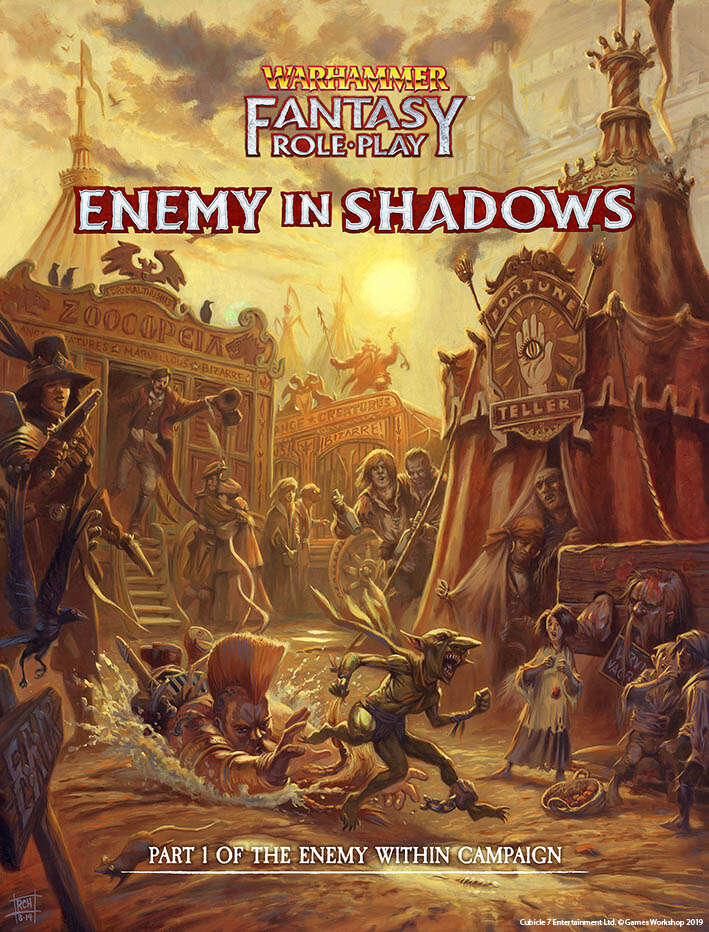
The Enemy Within is from Warhammer FRP, and it starts with one of the great hooks in RPG history: the characters find a corpse by the roadside, only to discover the dead man bears an unsettling resemblance to one of them. This discovery pulls them into a tangle of mistaken identity, hidden documents and questionable allies, and then into a much larger conflict eating away at the Warhammer Empire. What begins as a personal mystery expands into a long journey through conspiracies, cults and political decay as the characters move through inns, cities, noble courts, and ruined corners of the Old World searching for answers.
The Enemy Within is on my list because it proved that a fantasy campaign could be built around paranoia, investigation, and corruption instead of monsters or treasure. It gives the GM a solid framework, but what players experience is a world that feels unstable, lived-in, and perpetually on the verge of collapse. More than most campaigns of its era it showed that a long prewritten adventure could sustain social intrigue, systemic rot, and mounting dread without losing momentum.
Horror on the Orient Express (Call of Cthulhu — Geoff Gillan et al.)
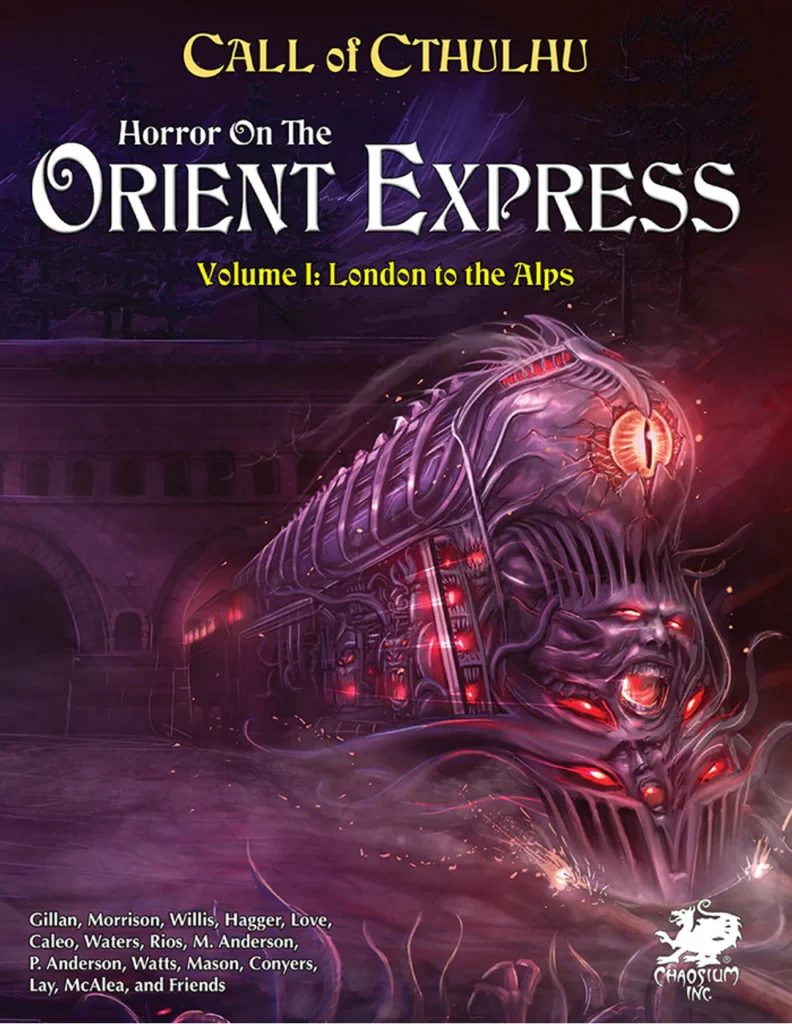
Horror on the Orient Express opens in London with a dying man’s request: recover the scattered pieces of an artifact with a terrible history. That request sends the investigators aboard the Orient Express and into an epic campaign across Europe, where each stop reveals new clues, new dangers, and deeper connections between seemingly disparate occult horrors. The campaign’s central appeal is simple but powerful: it turns travel itself into the engine of suspense, using the famous train line to carry the players steadily toward darker truths whether they want it or not.
The campaign is lauded for its size and for its elegant design. Orient Express is a classic example of a linear campaign that succeeds because its structure fits the story so well. The fixed route keeps the story moving forward, while each city brings a new mood, culture, and sense of danger. Few campaigns capture the feeling of a grand, luxurious world slipping into horror as well as this one does.
Red Hand of Doom (D&D 3e — Jacobs and Baker)
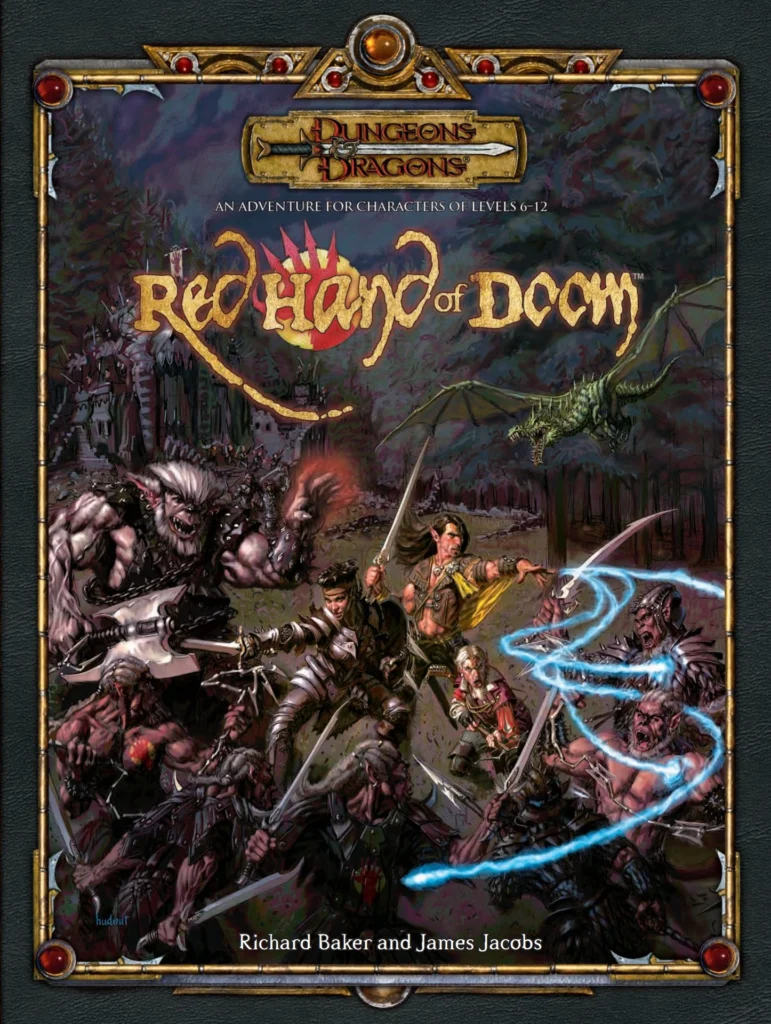
Red Hand of Doom begins with a rude awakening: the smoke on the horizon is not a distant campfire, but the leading edge of an invading army. As the characters look into raids in the Elsir Vale, they discover that the Red Hand, a disciplined hobgoblin force supported by dark faith and deadly monsters, is already on the move. Instead of a single adventure, the story unfolds as a focused mini-campaign. The party travels across the Vale, working to slow the invasion, gather allies, weaken the enemy, and choose where their actions will have the most impact before war breaks out. RHoD is shorter than the other campaigns I’ve listed, but the scope of the campaign doesn’t matter much, it’s the structure that matters.
It is so highly regarded because it shows that a D&D war story can feel urgent, strategic, and fun to play without becoming a wargame. The campaign gives the GM a strong timeline and a clear sense of the larger conflict, but still lets players make real choices about how to respond. This balance makes every win feel important, as the party’s actions shape the overall defense. More than other adventures from its time, RHoD proved that a published “module” could deliver the scope, escalation, and payoff of a full campaign.
Rise of the Runelords (Pathfinder — James Jacobs et al.)
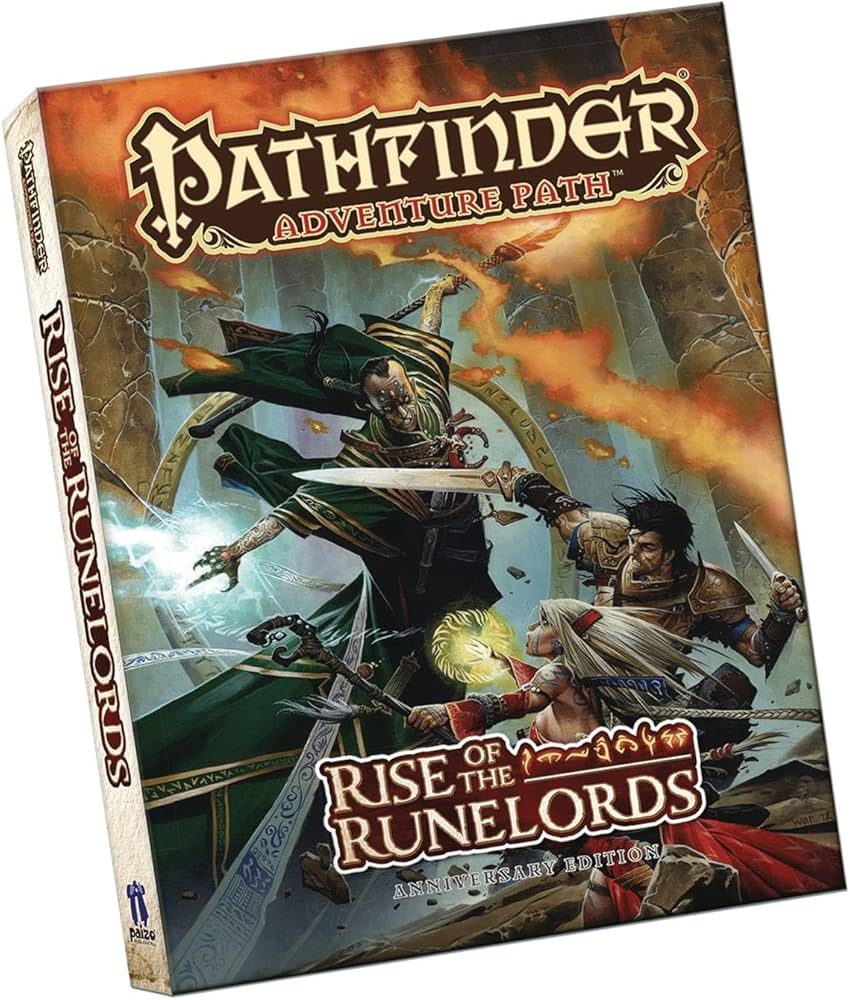
Pathfinder’s Rise of the Runelords starts with a classic high-fantasy hook. The characters arrive in the coastal town of Sandpoint to celebrate the Swallowtail Festival, which is shattered by a goblin raid. What first looks like an isolated attack soon reveals itself as the opening sign of a much older and more dangerous awakening. From that point, the campaign expands from a local emergency into a Zero to Hero epic, taking players from defending a village and investigating the region to uncovering the secrets of an ancient empire, leading to a confrontation with the ancient Runelords.
RotR is a big deal because it set the standard for modern Adventure Paths. It shows how a long, prewritten campaign can start with a memorable home base, get players invested in a specific place, and then gradually expand its scope while staying focused. The way it’s structured gives the story a clear sense of growth, moving smoothly from small-scale heroics to epic high-fantasy challenges. At the time the industry consisted of standalone dungeon modules or campaign setting books. Paizo reminded everyone that the escalating, linked-adventure model the GDQ series had pioneered could still deliver something epic, and people were hungry for it.
Curse of the Crimson Throne (Pathfinder — James Jacobs et al.)
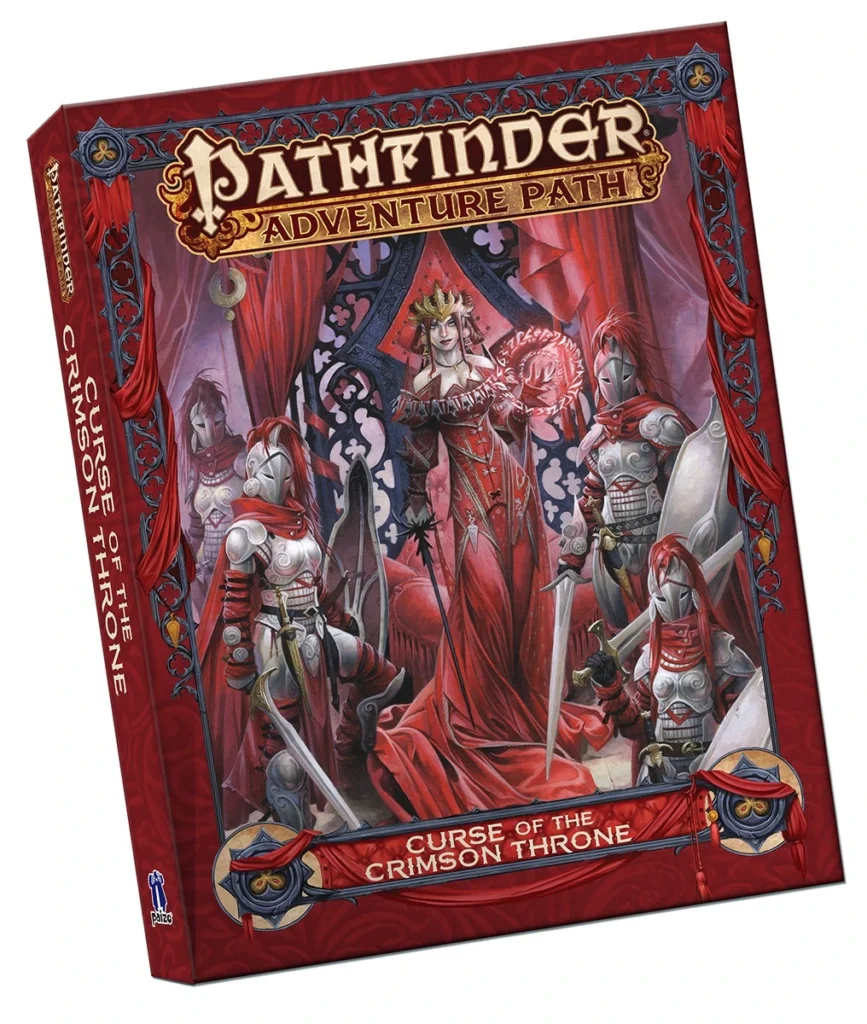
Curse of the Crimson Throne begins with a personal vendetta. A fortune teller brings together a group of strangers who have all been wronged by the same local crime lord, drawing them into what first seems like a mission of revenge. But as Korvosa reels from the sudden death of its king, that private conflict is overtaken by a far larger crisis. What follows is a city-centered campaign full of conspiracy, disease and political struggle, as the characters become increasingly entangled in the fate of a metropolis sliding toward chaos.
CotCT is still the benchmark for the guided urban campaign, proving that a prewritten campaign can stay in one city and still deliver excitement and epic payoffs. It makes Korvosa feel vivid, unstable, and alive; not just a setting but the heart of the story. The campaign begins with small, street-level problems and steadily widens its scope, proving that local politics, civic collapse, and urban identity can carry stakes as high as any world-spanning quest.
Eternal Lies (Trail of Cthulhu — Hindmarch, Tidball and Keller)
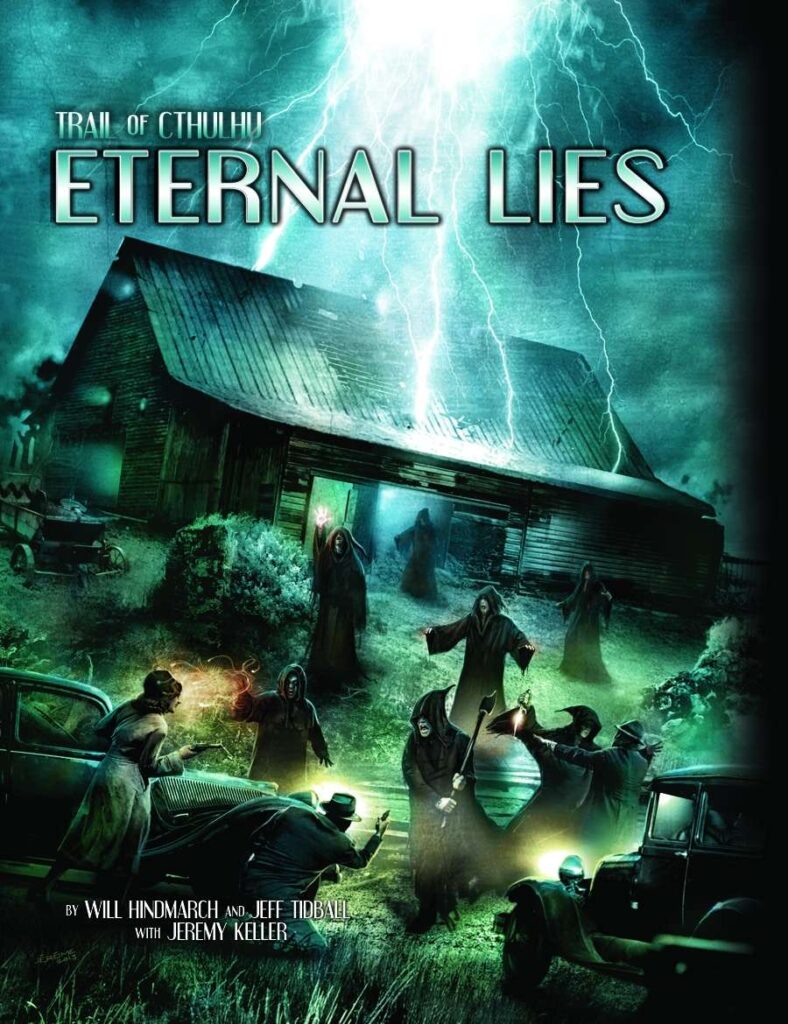
Eternal Lies begins with a disturbing premise: years ago, a group of investigators supposedly stopped a world-ending occult disaster, but the story of that victory is starting to come apart. In 1937, the characters are drawn into the ruins of that earlier investigation, following clues left behind by people who died, disappeared, or may have made things even worse. What follows is a globe-spanning horror campaign of cults, ruined histories, and mounting revelations, as the investigators move from city to city trying to piece together a truth that grows more catastrophic the clearer it becomes.
Eternal Lies balances a large international story with careful, resilient design. It has the worldwide scope and high stakes of the great classic horror epics, but its structure is notably cleaner, helping players follow leads without losing momentum. The dread works on two levels simultaneously: the Liar threatens the world, but its influence takes over the investigators too, rewriting their bodies and identities until the cosmic and the personal become the same catastrophe. It’s that blend of smart investigative design, tragic legacy, and large-scale dread that makes it one of the defining modern campaigns.
Impossible Landscapes (Delta Green — Dennis Detwiller)
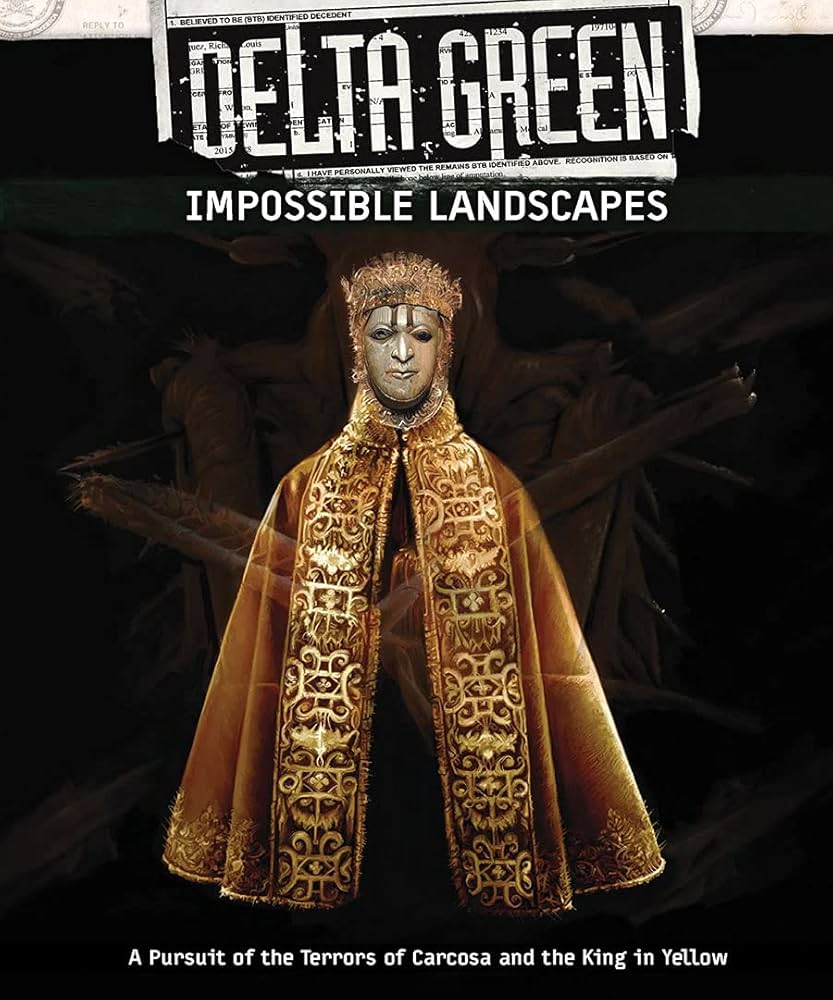
Impossible Landscapes begins with what looks like a routine missing-person case in 1995. A young woman has vanished from her New York apartment, and when the investigators search the scene they find something weirder: a space that does not make sense, pages of disturbing writing, and signs of a forbidden play tied to the King in Yellow. What begins as an investigation becomes a long descent into fractured memory, shifting identity, and a reality that grows less stable the deeper the agents go. Where Eternal Lies makes the cosmic personal, Impossible Landscapes does something harder: it makes the personal irrelevant.
This is one of the best modern examples of surreal horror at full campaign scale. Impossible Landscapes builds disorientation into the experience so that uncertainty, recursion, and psychological collapse become the campaign’s core. It is exceptionally structured beneath its chaos, giving the GM enough support to run material that would collapse in a weaker design. More than most contemporary horror adventures it’s a prewritten campaign that’s experimental, emotionally devastating, and very playable.
Honorable Mention
Kingmaker (Pathfinder — Corff, Grady, Hitchcock)
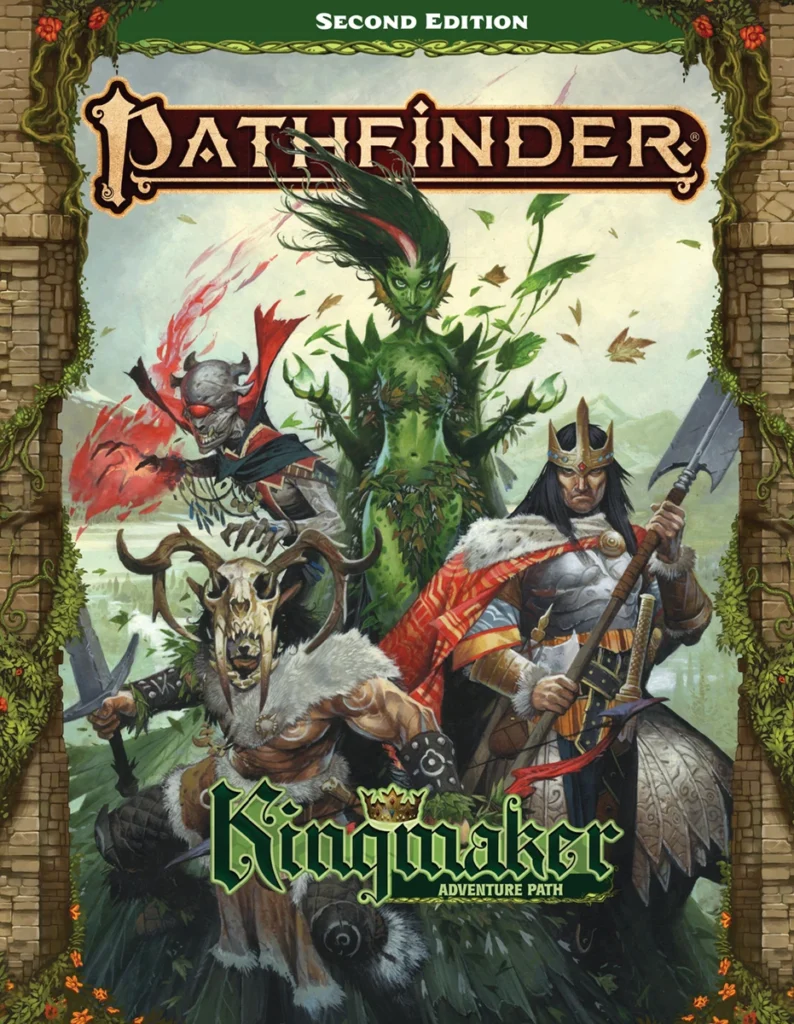
Kingmaker starts with a classic frontier hook: the characters are sent into the Stolen Lands, a dangerous and loosely controlled region. Their charter is to explore it, deal with local threats and bring order to a wilderness full of monsters, bandits, rival groups, and old ruins. The campaign focuses on exploration, settlement, and rulership, as the party gradually shifts from adventurers on the edge of civilization to becoming the founders and protectors of a new realm. The structure is very open, letting players choose which problems to address and how to shape the land they claim.
Kingmaker deserves an honorable mention because it sits in the hybrid space between a sandbox and a guided campaign. It is too open-ended to fit this list’s criteria exactly, but it doesn’t count as a true sandbox either–you simply cannot do the stuff in book 4 while playing in book 1 for example. Its kingdom-building systems, frontier setting, and long-term growth made it one of Paizo’s most influential campaigns and a landmark in the design of player-driven fantasy.