The 8 Best TTRPG Sandbox Campaigns Ever Written
It may help to read my previous piece, The 8 Best Guided Campaigns Ever for context.
In my last post I focused on the best guided, prewritten campaigns. This is my companion piece, the best TTRPG sandbox campaigns ever written. Sandbox campaigns are the hardest to design as published products, because so much of what makes them work depends on GM improvisation and player initiative that no book can fully do. That’s what makes the best ones worth studying: they solve that problem anyway.
My first requirement: it has to be a sandbox campaign engine, not just a sandbox setting. The term “sandbox” gets used really loosely, but what exactly is it? A sandbox campaign is a published campaign built for open-ended play, with no required sequence of events, where players decide which opportunities to pursue. The world can absolutely have structure, conflict, or major antagonists, but the book can’t require players to engage them in a fixed order — and, crucially, it has to give you reasons to keep playing in it.
That definition rules out more than you think. Planescape is out because, while it supports sandbox play, it’s primarily a setting and not a self-sustaining campaign engine; it waits for you to act, and that doesn’t qualify for my standard. Kingmaker is out because despite feeling ‘sandboxy’, it still ultimately depends on a required progression from point A to B. Blades in the Dark and Worlds Without Number are out because good sandbox mechanics alone aren’t enough; it must be a sandbox campaign in and of itself.
My other requirement is the same as in my last post, and it’s even tougher to satisfy here. These campaigns need to have stood the test of time across the whole hobby, not just have love from fans of a specific game or genre. They need to be so good that they’re worth learning a whole new system just to experience them. I’ll start with the history of sandbox campaign design because in my view, knowing the roots of something is indispensable. I list them in the order they were originally released, and links are included in case you want to buy any of them.
Because sandbox campaigns rely so heavily on player initiative and reactive GMing, running one successfully requires a clear framework for your role at the table. That’s one significant reason I wrote The Five GMing Philosophies Every Game Master Should Understand. Pay attention to the philosophy of living worlds especially.
The Progenitors
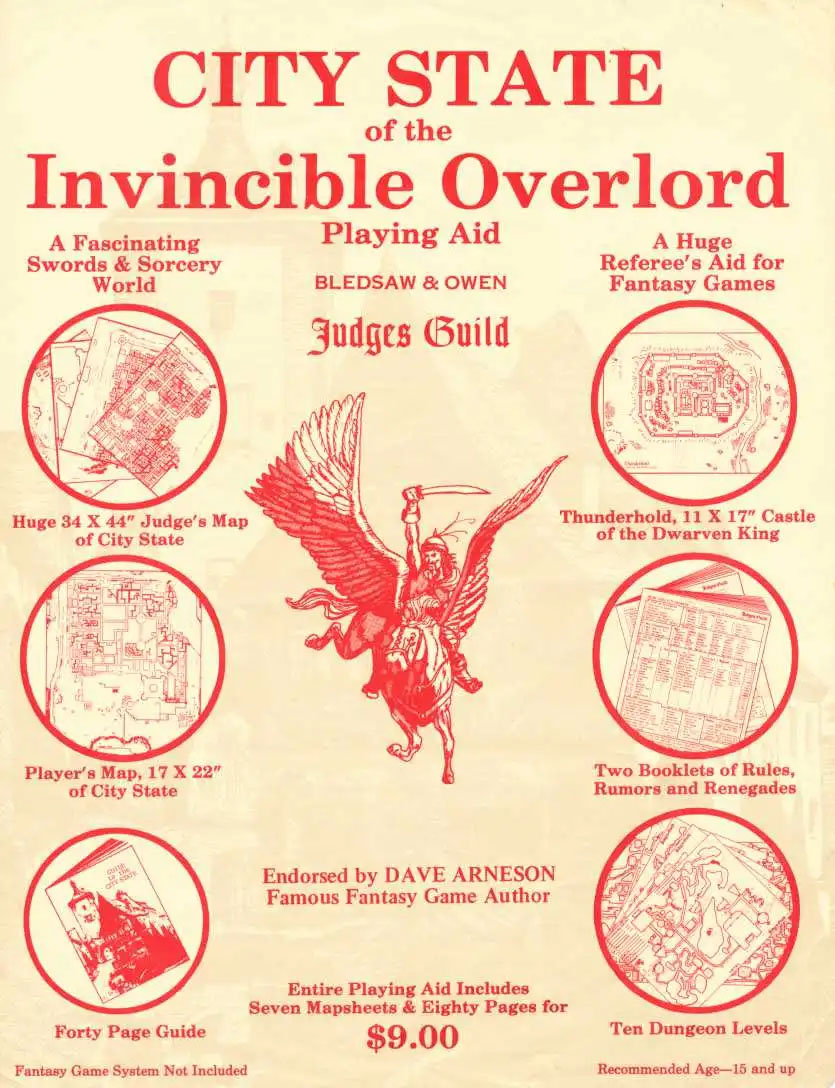
It all started with a city. Judges Guild’s City State of the Invincible Overlord (1977) was the first sandbox sold to the public. It offered a detailed, playable urban environment instead of something just to read. Wilderlands of High Fantasy, also by Judges Guild, first defined sandbox campaigns on a regional scale. It took the open-ended style of early roleplaying and turned it into a huge, mapped wilderness and first established the hexcrawl. Its influence came from the way it laid the groundwork for open campaign worlds that later sandbox games would build on.
World of Greyhawk (1980) did build on it by giving the sandbox its first moment of mainstream legitimacy. While Wilderlands was a small-press release with a basic look, Greyhawk came from TSR and had the full support of D&D. It had detailed geography, political history, and a living world that felt real without telling players what to do. It showed the sandbox style could succeed at the top of the industry, and it also proved that a richly detailed world could exist alongside true player freedom. My goal is to point to the greatest inheritors of what these sandboxes established.
Without further ado, here are the 8 best sandbox campaigns ever written (and some honorable mentions):
The Greats
The Caverns of Thracia (D&D — Jennell Jaquays)
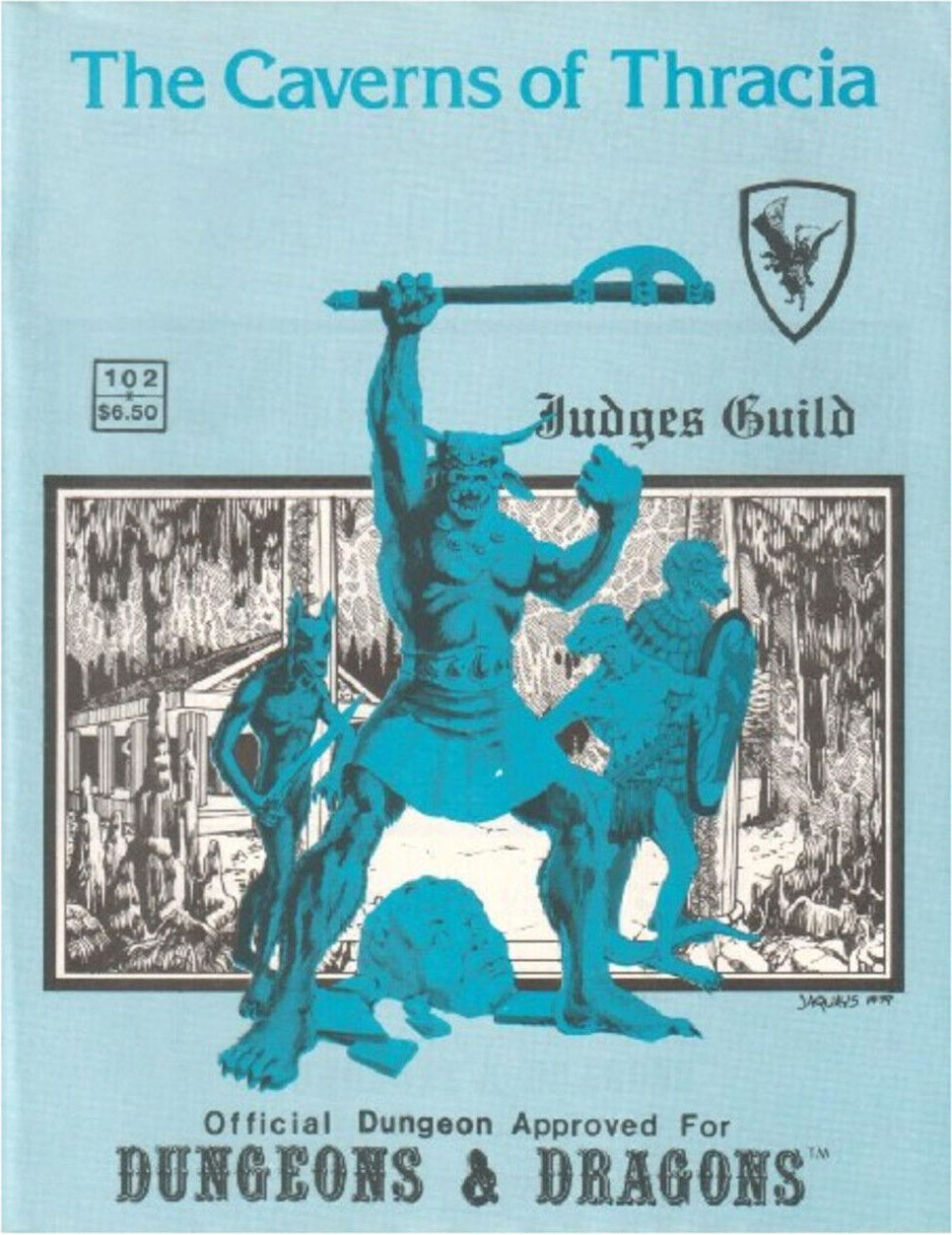
The Caverns of Thracia is the first dungeon to work as a sandbox campaign. When game designers talk about ‘Jacquaysing a dungeon,’ they mean letting players explore in many different ways, not just following a single path. Thracia lets players wander through a layered underworld where exploration, faction conflicts, and their own choices shape the adventure instead of a fixed story. With several entrances, vertical shafts, hidden passages, and overlapping levels, it feels wide open. This is the only megadungeon that made my list.
What makes Thracia worth running is how well it creates exciting campaign play. The factions aren’t just there for show: they control areas, chase their own goals, and respond when players start poking around. That tension builds naturally, so what starts as exploration keeps escalating into something more complicated. If Wilderlands showed that a wilderness could be a sandbox, The Caverns of Thracia showed a dungeon could work the same way. It’s one of the best examples of how spatial design can give players real, lasting freedom. Goodman Games recently gave this masterpiece a massive, high-prestige treatment, updating it with expanded editions for both D&D 5e and DCC.
Griffin Mountain (Runequest — Kraft, Jaquays, Stafford)
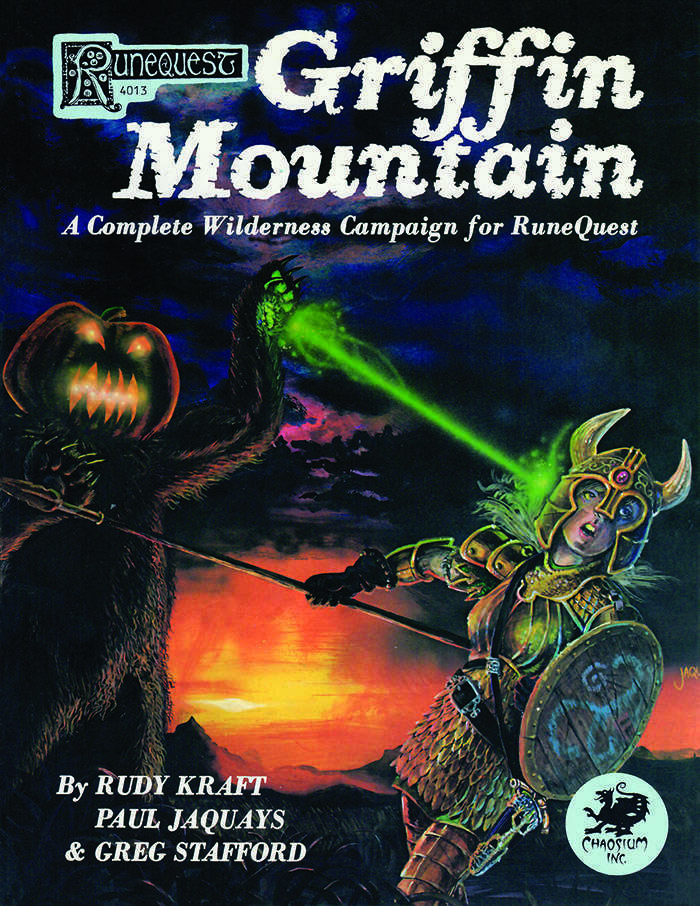
Griffin Mountain is still possibly the purest sandbox campaign ever written. I discuss RuneQuest in my post on the Top 10 RPGs of All Time. It’s set in Balazar and the Elder Wilds of Glorantha, where players find themselves in a low-tech frontier full of tribal politics, ancient ruins, dangerous wilderness, and the growing influence of outside groups like the Lunar Empire. There’s no set storyline. Instead, the book gives the GM a detailed regional setting with factions, personalities, threats, and opportunities that generate play through the players’ decisions.
What makes it so pure comes from its structure. Most sandboxes just give you a world and wait for you to act, but Griffin Mountain is already moving when players show up. Every layer of the book, from rumors and encounter tables to NPC reactions, connects back to the same group of named characters. This means the region creates its own consequences. You don’t have to look for a plot because the world’s own conflicts bring one to you. Just roll on the encounter tables and improvise, and a story will still take shape.
Griffin Mountain is available today through Chaosium’s Classic line. Readers who want the most complete version should get the Moon Design Glorantha Classics edition (which I’ve linked to). It incorporates additional NPC and faction material that deepens the sandbox considerably. Grab the Core Rulebook and go to town.
Pavis, Big Rubble (Runequest — Perrin, Stafford, et al)
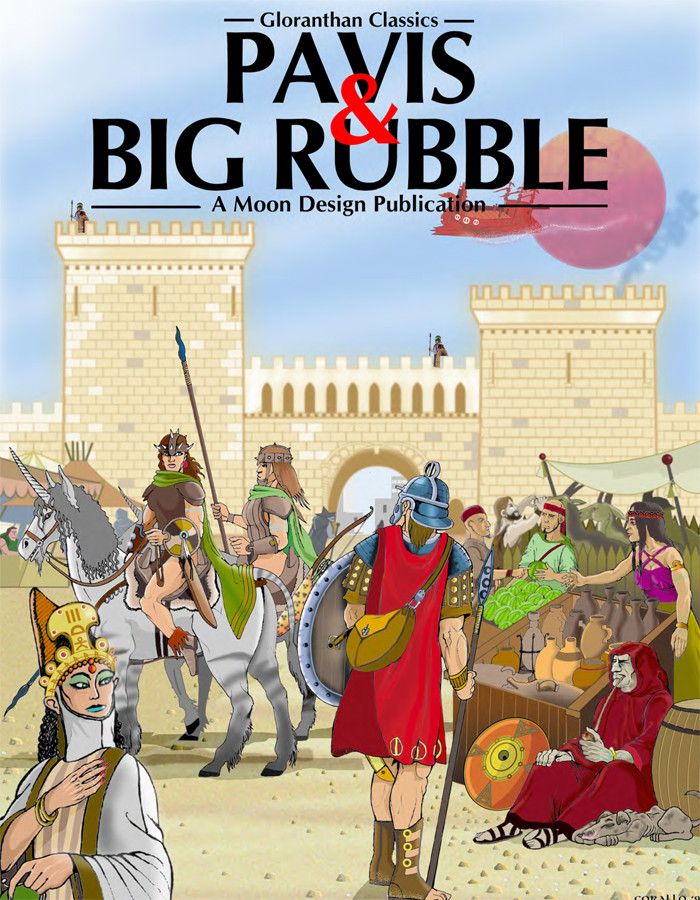
Pavis and Big Rubble work best as a pair because each one makes the other necessary. This RuneQuest campaign setting sits on Glorantha’s desert frontier. It combines New Pavis, a city shaped by cults, politics, and Lunar occupation, with the Big Rubble, the huge ruins of an older city full of treasure, danger, and rival groups Together they form one of the best urban sandbox settings in the hobby: a living home base beside an enormous field of exploration.
What makes them outstanding is the constant movement between those two spaces. The Rubble is not just a dungeon to loot, and Pavis is not just a place to rest. Discoveries in the ruins create political and social consequences in the city, while alliances, rivalries, and obligations in the city shape what players do in the ruins. That rhythm lets the campaign sustain itself for a very long time.
Pavis and Big Rubble have historically been sold separately for RuneQuest, but Moon Design did a great job of combining them, which is what I’ve linked to.
Chicago by Night (Vampire the Masquerade — Greenberg, Rein-Hagen)
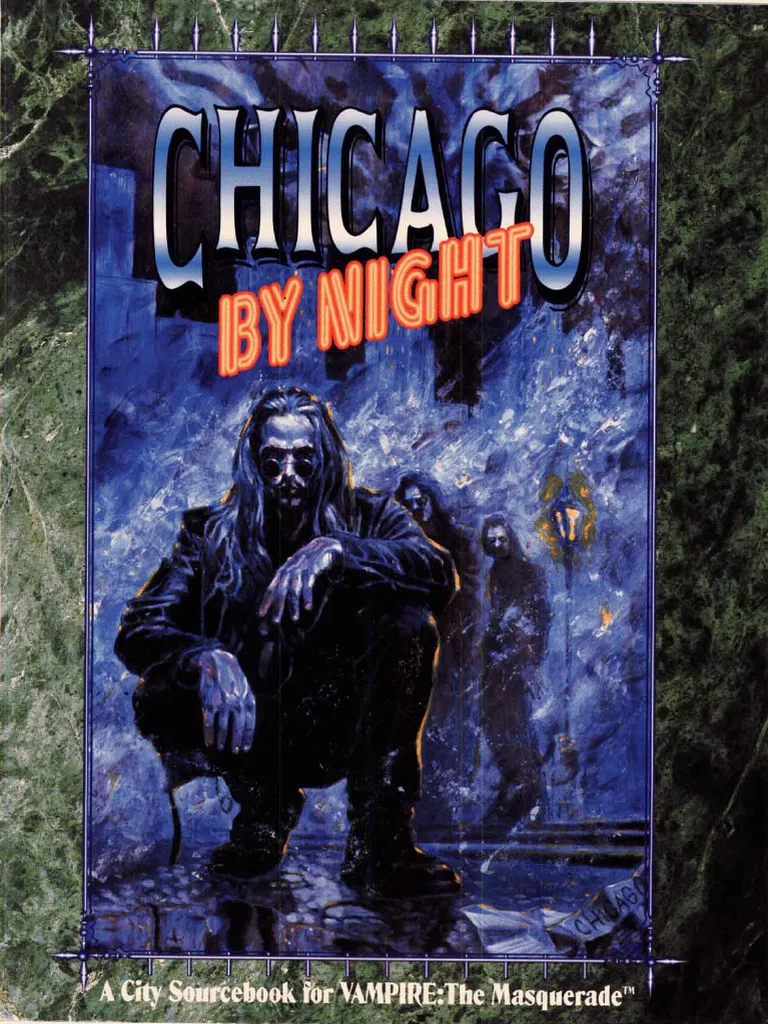
Chicago by Night is one of the clearest examples of a social sandbox ever written because the city is more than just a setting, it’s the engine of the whole campaign. Chicago shifted the sandbox away from geography and toward social friction, building a campaign set in a city filled with shaky alliances, old grudges, and secret power plays. In VtM’s version of Chicago, players find themselves in a tense political scene ruled by a strong Prince (or not), ambitious elders, corporate interests and a rebellious anarch underclass, and that tension alone generates the plot.
What makes Chicago by Night special is the way it turns NPCs into the structure of play. Instead of depending on a fixed plot, the book presents a dense network of rivalries, loyalties, secrets, and vulnerabilities that players can exploit, disrupt, or get trapped inside. Every alliance has consequences, and every move can send pressure through the rest of the city. That gives the campaign momentum without ever requiring a scripted sequence of events.
Earlier sandbox games showed that geography could support open-ended play, but Chicago by Night showed that politics could do it arguably better. It is one of the best examples of a city becoming a complete sandbox in its own right. I recommend the absurdly complete Vampire: The Masquerade 20th Anniversary Edition core rulebook.
Dark Sun (AD&D 2e — Brown and Denning)
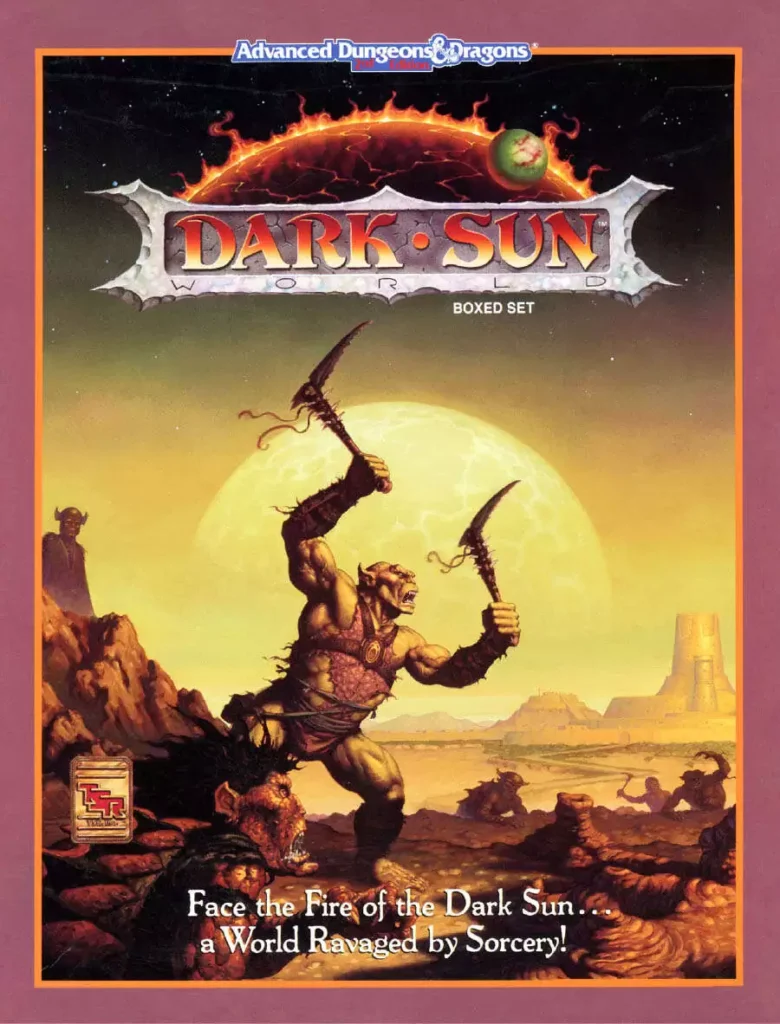
Dark Sun is the only AD&D boxed setting that really works as a sandbox campaign engine. One of the most respected and influential campaign settings ever published, it puts players in Athas: a desert world ruined by defiling magic, where water is scarce, metal is precious, and sorcerer-kings rule isolated city-states through force. The Tyr Region offers a campaign area filled with rival factions, dangerous landscapes, slavery, raiders, and political chaos, but there’s no set storyline. The world itself creates enough tension that a scripted plot isn’t needed.
Dark Sun is a sandbox campaign paragon because its main ideas are more than just background details. Scarcity, oppression, and environmental threats affect every choice players face, from where they go to who they trust and how they survive. This gives the sandbox real momentum: Athas is always creating new conflicts because the land, society, and rulers are all unstable.
It’s more than a great fantasy setting, it’s a brilliant example of campaign design built to support open-ended play through constant pressure. I am not saying that Athas is a richer world than the Forgotten Realms, Planescape or anything else — it’s that the Dark Sun box was designed as a pressure-driven campaign engine in a way those settings were not. This is an AD&D 2e product, head to DrivethruRPG and grab the PHB and DMG if interested.
The Great Pendragon Campaign (Pendragon — Greg Stafford)
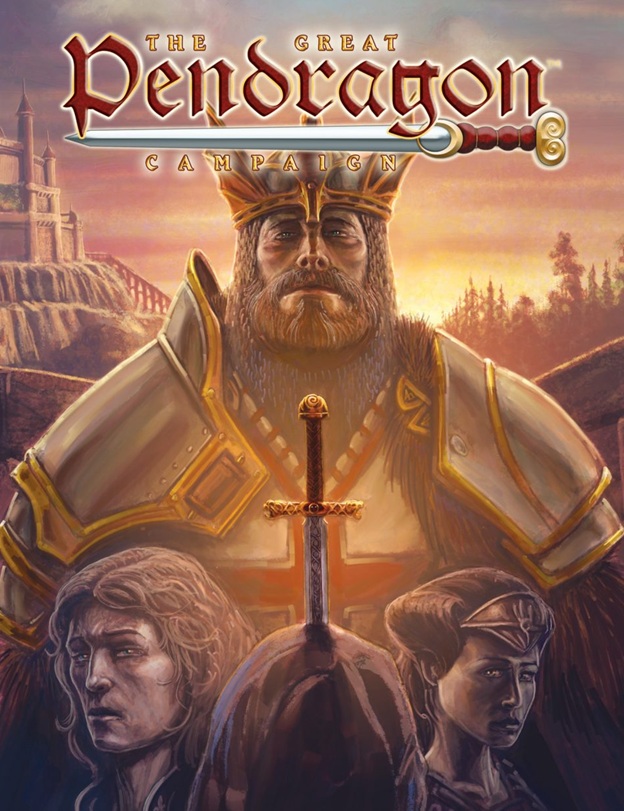
Yet another product of Greg Stafford, The Great Pendragon Campaign is the best example of a historical sandbox. I also discuss Pendragon in my post on The Best Licensed RPGs. Covering decades of Arthurian Britain from Uther’s reign to Camelot’s fall, it offers players a world shaped by war, dynasties, marriage, land, and generations. While the campaign follows a historical timeline, it never tells players what to do next. Instead it places them inside a changing world and lets them decide how their knights, families, and heirs will navigate it.
The GPC is a superb example of the distinction between a world with a timeline and a campaign with a script. History advances, kings die, and kingdoms rise and fall but the players are not marched through a fixed sequence of scenes or solutions. Systems like the Winter Phase make marriage, estate management, inheritance, and lineage into part of the campaign’s structure, so the game becomes about more than a single character’s story. What it’s really about is a family moving through an age.
This is the first of three sandboxes that I don’t recommend diving into if you are new to the system. Trying to run any of the three without running a few “test flights” first is like taking a jet out on the runway without ever having flown a plane. Begin with the Starter Set, or better yet grab the Core Rulebook and try The Grey Knight. Once you feel comfortable, go for the GPC.
Dracula Dossier: Dracula Unredacted (Night’s Black Agents — Kenneth Hite et al)
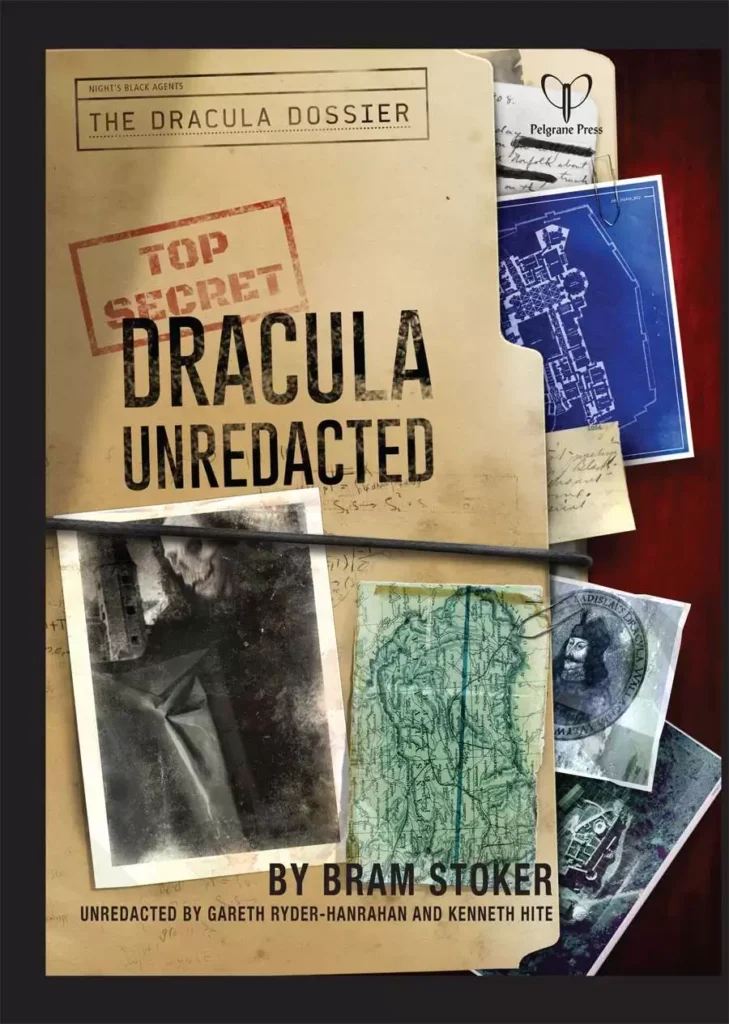
The Dracula Dossier is possibly the best investigative sandbox ever written. Most mystery campaigns still follow a hidden sequence of events, but the Dracula Dossier breaks from that completely. It shows that espionage, conspiracy, and paranoia can support real sandbox play.
Built for the Night’s Black Agents RPG, it starts with a simple and brilliant premise: Bram Stoker’s Dracula was inspired by a real British intelligence mission. Players get an “unredacted” novel packed with clues about a modern conspiracy. Rather than following a set path players choose which names, places, and clues to pursue, and the campaign grows outward from their choices.
What makes it a breakthrough is the way it turns a physical object into the structure of play, because the novel itself becomes the campaign map. Players can follow any lead that catches their attention, while the Director’s Handbook gives the GM a deep network of characters, factions, betrayals, and responses to build from. It solves one of the hardest problems in RPG design, which is how to run a long, open-ended investigation without losing momentum or coherence.
This is the second of the three I mentioned earlier. The DD is outstanding, but it’s the deep end of the pool. Running an NBA op first teaches the GM how to handle the GUMSHOE investigative spend, how to track Heat, and how to execute a basic 3-tier Vampyramid response. Trying to run a 400-page unredacted novel right off the bat is a recipe for operational paralysis. I’d recommend The Persephone Extraction or at least The Edom Files first.
Curse of Strahd (D&D 5e — Perkins, Hickman & Hickman)
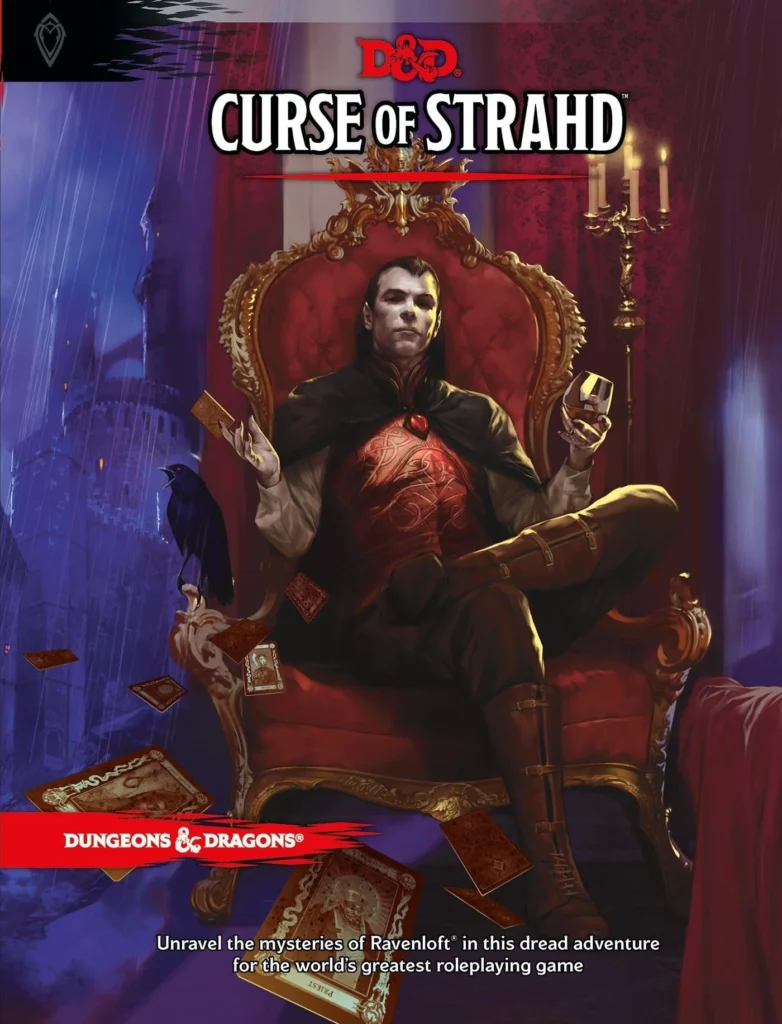
Curse of Strahd is the best bounded regional sandbox in modern D&D. Set in the mist-locked valley of Barovia, it gives players an open map filled with villages, ruins, curses, and desperate factions, all under the shadow of Strahd von Zarovich. While the campaign has a main villain and a strong central focus, it doesn’t rely on a set order of events. Players are free to travel through Barovia in any direction, follow different clues, and choose their own way to face Strahd.
What qualifies it for my list is the way it gives that openness structure. The Tarokka reading at the start of the campaign randomizes the locations of key artifacts, important allies, and Strahd’s final position, which helps make the order of discovery completely flexible. Barovia is small enough to feel coherent and pressure-filled, but large enough to sustain meaningful exploration and choice. That gives the campaign shape without turning it into something guided.
It is not the most open sandbox on this list, but that’s actually good. The original 1e Ravenloft was an adventure module, but Curse of Strahd proved that a campaign can have a strong villain and a defined endpoint while still giving players real freedom over what matters and how they get there. Grab the core bundle and go to work.
Honorable Mentions:
Pirates of Drinax (Traveller — Gareth Hanrahan)
Pirates of Drinax is one of the most ambitious sandbox campaigns in science fiction roleplaying. Set in Traveller’s Trojan Reach, it hands players a stealth commerce raider and a letter of marque from a desperate king, then lets them try to rebuild a fallen star-kingdom through piracy, diplomacy, trade, blackmail, or war. There is no set order for events. Players get a politically unstable sector and the freedom to choose what kind of power they want to become.
Its scale is what really sets it apart. Few sandbox campaigns let players shape the future of a whole region through their strategic, economic, and political choices. It is an honorable mention here because its reputation is strongest among Traveller fans, and it is not as widely recognized across the hobby. Even so, as a large-scale sci-fi sandbox, it is a remarkable achievement.
This is the third sandbox I’d recommend running an adventure or two before attempting; PoD hands players a stealth commerce raider and asks them to influence the geopolitical balance of an entire 20-system star sector through trade, blockades, piracy, and diplomatic privateering. Try Flatlined and/or High and Dry first, you’ll thank me.
Hot Springs Island (OSR systems — Jacob Hurst et al)
Hot Springs Island is probably the best modern example of the discovery sandbox, and built to be system-agnostic from the ground up. Set on a dense volcanic island full of competing factions, strange ruins, elemental forces, and dangerous terrain, it gives players a place where almost every direction leads to something worth investigating. There is no required sequence of events and no imposed storyline. The campaign runs on exploration, faction pressure, and the gradual accumulation of information — none of which depends on a specific ruleset, so GMs have ported it across OSR games, 5e, and beyond. The industry took notice, Dark of Hot Springs Island swept the EnNies, winning 5 in 2018.
What I also appreciate is how the sandbox is divided between two books. The Dark of Hot Springs Island gives the GM a well-organized collection of material, while A Field Guide to Hot Springs Island offers players an in-world book to read, question, and use for their own goals. This approach makes curiosity the main force behind the game. It earns an honorable mention because it doesn’t have the long history of other entries, but as a modern exploration sandbox, it’s a major accomplishment.
Forbidden Lands (Tomas Härenstam et al)
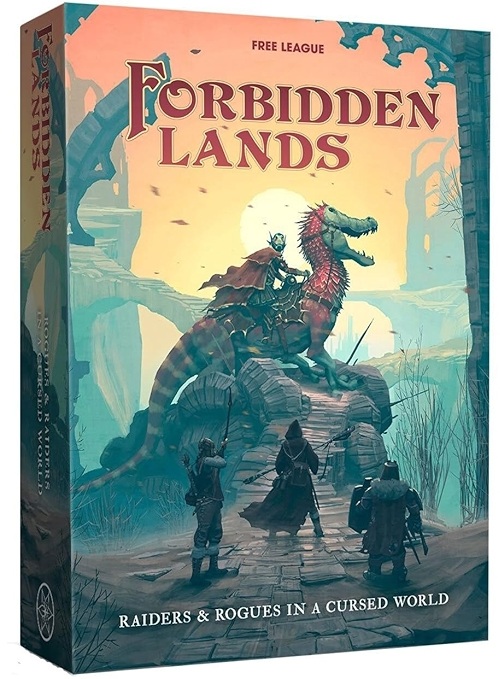
Forbidden Lands is the strongest modern example of the travel sandbox. Set in the Ravenland, a harsh frontier newly reopened after centuries of isolation, it is built around open-ended exploration rather than an authored plot. There is no required sequence of events. Instead, the campaign grows out of movement across the map, resource pressure, discovery, and the risks that come from pushing deeper into forgotten territory.
What makes it stand out is how fully its rules support its structure. Travel, foraging, survival, stronghold-building, and modular adventure sites all feed directly into the campaign loop, so the sandbox feels like something the game is designed to sustain rather than just permit. It’s an honorable mention because it is still a little too recent to claim the long-term prestige of the main entries, and because much of its engine is tied closely to its core rules. Even so, it is one of the best modern examples of mechanically supported wilderness exploration.