Horror TTRPGs: The Rules Are the Monster
This is part of my ongoing series on system structure and pressure models—see also: Survival TTRPGs: The Real Test (And Why Most Games Fail It)
Just as in my previous posts, this isn’t about what horror looks like, it’s about what it does at the system level. Most player discussions of horror TTRPGs fixate on tone: monsters, atmosphere, fear at the table. As a designer, though, that’s surface-level. What matters is how your rules affect player control over time.
The setting is the world you’re playing in. The underlying engine, the mechanics, is what drives that world. Horror RPGs are about a lot more than just allowing scary moments. Almost any RPG in the industry can produce a scary moment, that doesn’t mean much. Pathfinder, Dragonbane or GURPS can all produce scary or dread-filled moments, that doesn’t make them horror games. If that’s the standard then a “horror game” can include almost any game, which is completely useless as a definition.
That’s what this analysis is designed to identify: the mechanical tentpole of pure horror. The core question is: If you took away all the artwork, cut out all the fiction and stripped away the GM’s narration, would the mechanics alone still give you the feeling of the genre? The three criteria that follow and the pressure model they create identify that tentpole in game mechanics. From there you can decide whether to build directly around that tentpole, modify one of its components, or create something adjacent.
If your rules don’t support the theme of your game, the GM has to do all the work. Horror TTRPGs are not trying to instill and sustain fear, because they can’t reliably do that. What they can do is build a trap: players must engage with the thing that is destroying them, and the rules guarantee they can’t do it safely. The moment players find a way to stabilize, optimize, or outlast the threat, the horror collapses. A true horror system is one where engagement is always toxic, no matter how well you play.
Most TTRPGs run on a heroic pressure model: setbacks are temporary, recovery restores capability, advancement expands options. Horror runs the opposite engine, meaning your ability to choose decreases over time. Horror erodes control, systematically destroying equilibrium itself.
Methodology
The three criteria that follow are based on what games actually enforce through their rules, not just their feel at the table. I researched games labeled “horror” across the last 45 years of the hobby, going as far back as Call of Cthulhu (1981) and Chill (1984). I searched for the common mechanical supports that let some systems sustain a horror structure, while others didn’t. This led to a model of the genre’s core mechanics. Designers can use this tool to spot the main features of survival structure and decide how much they want to include them in their own games.
The Three Structural Criteria
These criteria aren’t about labeling games, but rather whether they enforce psychological erosion during normal play. Miss one and you’re asking GMs to do the work your mechanics should be doing. For a TTRPG to be truly horror it needs all three criteria working together. If you miss one, you’re leaving GMs to handle what your mechanics should cover; you don’t just get a slightly-less-horror-based game — you get pulled toward whatever genre that missing piece opens the door to.
- Engagement Is Toxic. Does engaging with the game cost the character something, regardless of whether they succeed or fail? In a horror game every core action comes at a cost. Investigating the mystery, reading the forbidden tome or surviving the encounter should actively erode your character’s safety, sanity, or ability to choose.
- The Floor Permanently Drops. Does the system permanently reduce the character’s stability over the course of the campaign, regardless of success or failure? Horror systems work like a mechanical ratchet: things only go one way. The game may grant small reprieves such as restoring a few sanity points or patching a wound, but the maximum your character can achieve is steadily reduced–permanently.
- The Rules Must Take the Wheel. Do the rules ever take control of the character or the story away from the player? Even in a tragic story you, the player, control how it happens. In a horror TTRPG, control erodes. This can take multiple forms, but at some point your survival is no longer fully in your hands. You don’t just lose health, you lose the steering wheel.
The quickest way to spot a false horror game is to look for a hard reset. If the rules provide a way to fully restore your character to who they were at the start of the campaign then the ratchet is broken. Though it might seem like pure horror games could only support one-shots or adventures, multiple systems support full-blown campaigns as well.
The Psychological Downward Pressure Loop
What sets horror TTRPGs apart isn’t just monsters or mood, it’s the way your system turns actions into risk. The core loop has to be corrosive: Exposure → Irreversible Cost → Narrowed Options → Desperate Action. Players engage; mechanics ensure engagement costs something irreversible; systems narrow available options; the rules force players into increasingly desperate choices, then the cycle repeats with a smaller safety margin. Once you know whether your rules actually enforce this loop, you can predict in advance whether your horror game will stay horror or drift into something else.
The core engine is indispensable: participation itself drives the erosion. This has to be enforced mechanically, because if players can play without triggering erosion then the loop is optional and the horror collapses. More importantly, it’s something you can deliberately build or accidentally break through mechanical choices. If any step can be bypassed by playing well or GM mercy, the horror structure is fragile.
Unlike grimdark or survival, what horror erodes isn’t your resources or your morality; it’s your stability, your agency, and your grip on who you are.
That’s what separates horror from other pressure models:
- Heroic systems: Setbacks wound you. Recovery restores you. Growth makes you stronger.
- Grimdark systems: Fighting evil corrupts you.
- Survival systems: Existing costs you.
- Horror: Exposure erodes the self.
Why People Play Horror Games
Unlike horror movies, novels or video games, horror TTRPGs are not about instilling and sustaining fear, because they can’t do that reliably. From a design perspective, they’re really about slowly taking away a player’s sense of control. Good horror systems chip away at agency, stability, and safety as the game goes on. The rules that used to protect the character start to fail. It needs to be gradual, because if control collapses too quickly then the tension can give way to player detachment.
Why wouldn’t players just resent the loss of control? Because the horror experience isn’t about winning, it’s about witnessing change. You can’t ultimately stop the character from breaking, but you do dictate the flavor of the collapse. You still decide whether that looks like desperation, sacrifice, denial, obsession, cowardice, or grace. The real hook is that you are still the author of their humanity long after you’ve lost control of the plot.
Players who are drawn to horror tend to be curious about that process. They want to see what happens when the rules stop protecting them, when safety disappears one layer at a time. Horror isn’t about slaying monsters, it’s more about watching what emerges when control is lost. Horror is for players who find meaning in decline, who understand that loss, handled well, can be more memorable than triumph.
Tentpole Horror Systems
These systems show how different mechanical approaches can all produce the same downward arc. They are the games this model was extracted from, and they are also the games it correctly predicts as true horror when you apply the three tests. Pure horror systems are rare because they demand that designers dismantle safety and certainty through rules rather than GM narration. These are the only games I could find in the industry that enforce the horror contract:
Call of Cthulhu (1981, Sandy Petersen)
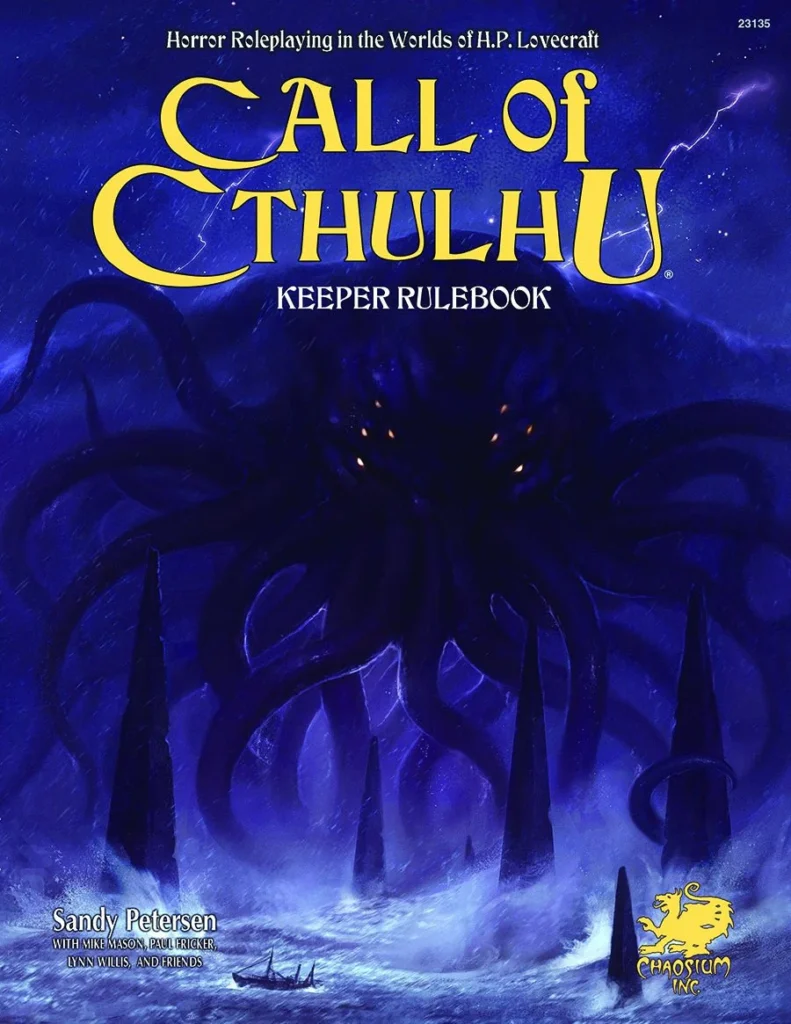
Call of Cthulhu is the grandaddy of structural horror. You play investigators uncovering cosmic truths humanity was never meant to understand. The game’s brilliance is in how it turns investigation against you. Learning about the Mythos is required to survive it, but every forbidden text and alien geometry you witness damages your mind. Knowledge itself is toxic.
The main mechanic is the Sanity system. When you face strange encounters you have to make SAN checks, and failing them erodes your mental stability. As your Sanity drops your character can develop phobias or go temporarily mad. At those moments you lose control, and your character acts on their own. The ratchet is hard-coded. As your Cthulhu Mythos skill goes up your maximum Sanity permanently goes down, so you can’t be both very skilled and completely sane. While therapy and rest can help you recover some Sanity, it’s never more than your new, lower maximum.
CoC also proves that true horror games can be sustained through full campaigns, such as the iconic Masks of Nyarlathotep. The goal isn’t to win but to see how much truth you can handle before you break. Cthulhu Dark Ages sits right here as well, as does Trail of Cthulhu in purist mode.
Play it with: the Starter Set if you want to get a taste. I also discuss CoC (and Delta Green) in my post The 8 Best RPG Campaigns of Ever Written.
Delta Green (1997, Detwiller/Glancy/Tynes)
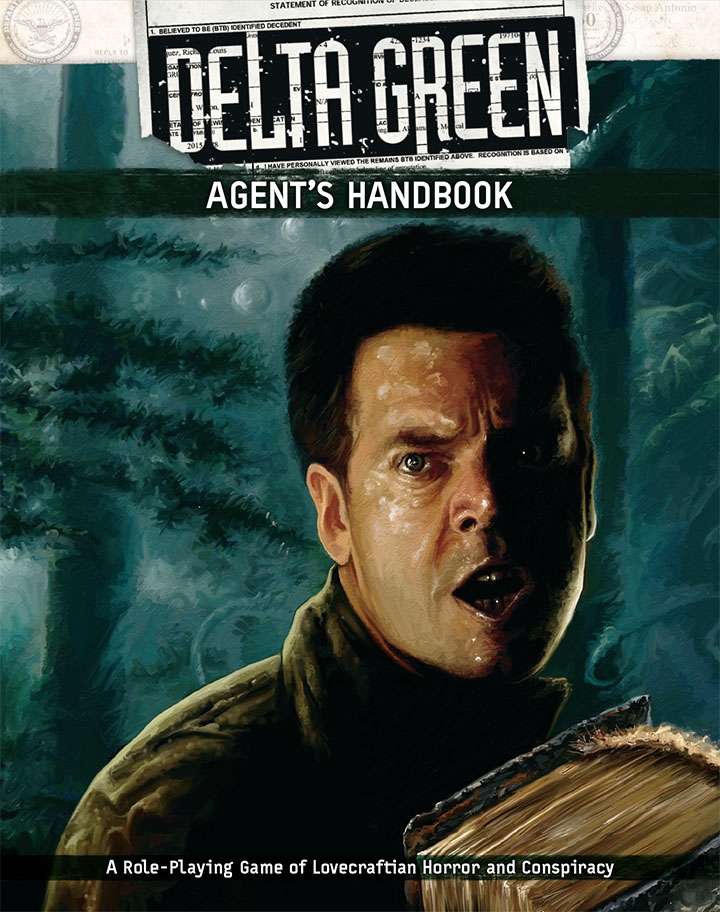
Delta Green combines the cosmic horror of the Mythos with the tension of modern conspiracies. In the game you play federal agents and intelligence operatives fighting a secret, unwinnable war to keep humanity unaware of the unnatural. Your job isn’t just to find the truth but to hide it, often at great personal sacrifice. DG continues the tradition of full-scale campaigns as well, including the iconic Impossible Landscapes.
While it shares Call of Cthulhu’s mechanical DNA, Delta Green shifts the downward pressure from cosmic revelation to human alienation. Exposure to violence, helplessness, and the unnatural erodes your Sanity, triggering panic responses that yank your steering wheel away. But the game’s cruelest genius is the Bond system: survive enough violence and you adapt, but Adaptation permanently strips your Charisma and burns your Bonds. When you suffer trauma you can only save your mind by projecting that horror onto your relationships: your spouse, your kids, your friends.
This is a devastating ratchet effect. You are forced to burn your real-world anchors like ablative armor just to survive the mission. You don’t just lose sanity, you systematically dismantle your own humanity to hold the line. The question isn’t whether you will win, but what you will become in the process. It’s also a true Consequence Routing game, which I talk about in more detail right here.
Try it with: Need to Know, the free, Ennie-winning starter rulebook.
Dread (2005, Ravachol/Barmore)
Dread removes dice and stats, replacing them with a terrifying physics engine: the Jenga tower. I also covered this game on my post What Makes A Good RPG Rulebook. You play as characters trapped in classic horror situations. When you try something risky, you pull a block. If the tower stays up, you succeed, if it falls your character dies, goes mad, or disappears and is gone for good.
This is erosion driven by participation in the most direct way. You cannot investigate, fight, or run away without pulling a block. Every move you make to survive weakens your only safety net. There is just one exception: you can choose to knock the tower over yourself and narrate your own ending, whether it is a sacrifice, a last act, or a meaningful exit.
The tower is the ratchet. There is no healing spell or long rest to put blocks back. As the tower starts to sway, you lose control over your story. You have full control over your actions until the game’s physics suddenly takes it away. Dread is effective because it turns psychological pressure into real physical tension. When your hand shakes as you reach for the next block, you feel the same dread as your character. Dread works because it doesn’t simulate that pressure, it actually produces it.
Ten Candles (2015, Stephen Dewey)
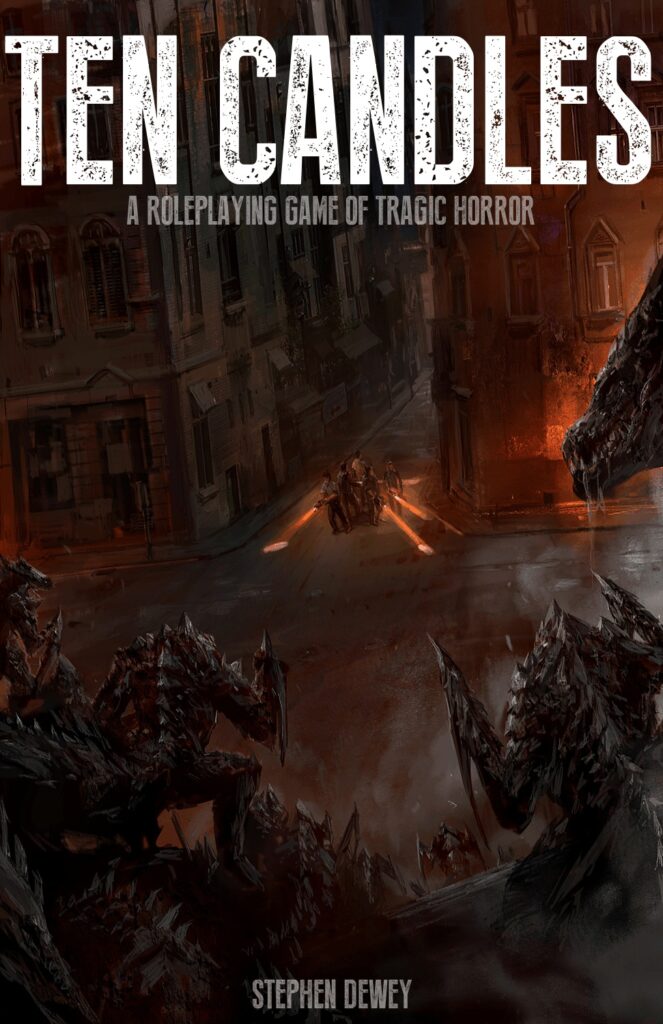
Ten Candles is a tragic horror game built around the certainty of doom. You play survivors in a sunless world hunted by hidden forces known only as “Them.” Before you even start, the table has to acknowledge a hard truth: everyone will die. The game is not about survival, it’s about what you accomplish until the darkness takes you.
The ratchet is physical and visible. The game is played by the light of ten real candles. Players roll a shared pool of dice, the GM rolls a separate pool. As scenes end and candles are put out, the player pool shrinks while the GM’s grows. Your probability of success collapses as narrative authority shifts to the dark. The floor drops in real time, on the table, right in front of you.
The authorship degradation is where it gets personal. Your character’s defining traits are written on index cards. To reroll failures and buy a few more minutes of agency you must burn those cards in the candle flame, sacrificing your character’s humanity piece by piece just to stay in the fight. You don’t play to survive. You play to mean something before the last light goes out.
Bluebeard’s Bride (2017, Beltrán/Kelly/Richardson)
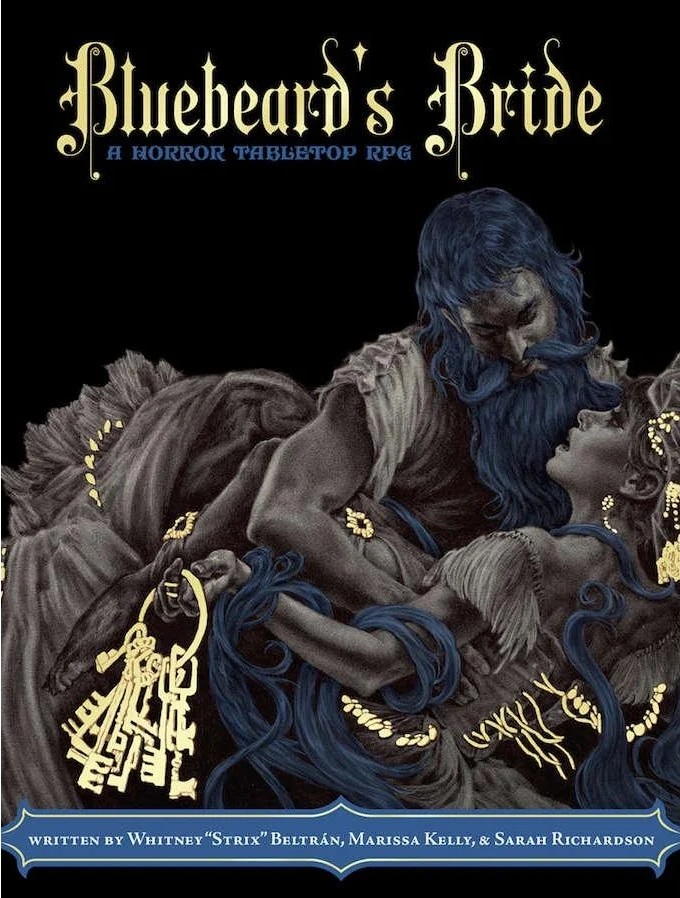
Bluebeard’s Bride is psychological horror on a very intimate level. In this Powered by the Apocalypse game you don’t play investigators, you collectively play the splintered mind of a young woman exploring the forbidden rooms of her new husband’s mansion.
The game uses curiosity against you. Opening doors guarantees exposure to the house’s horrors, and the system doesn’t wait for you to fail. The Shiver from Fear mechanic triggers consequences based on your own physical reactions. If you squirm in your seat or utter a word of discomfort, the house notices. As trauma accumulates, Sisters shatter. When a Sister shatters, that player stops playing a protagonist and transitions to helping the GM describe the horrors visited on the survivors. The floor doesn’t just drop, pieces of the Bride’s mind defect to the darkness.
The steering wheel is a physical token: the Bride’s ring. Only the player holding it can direct her actions, but the house constantly forces it to pass between players. You are fighting your own shattered mind for control. You don’t play to escape. You play to find out what the Bride discovers behind the final door, and what it costs her to look.
Try it with: The core book has all you need, but try Book of Rooms for GMs who are short on prep.
Mothership (2018, Sean McCoy)
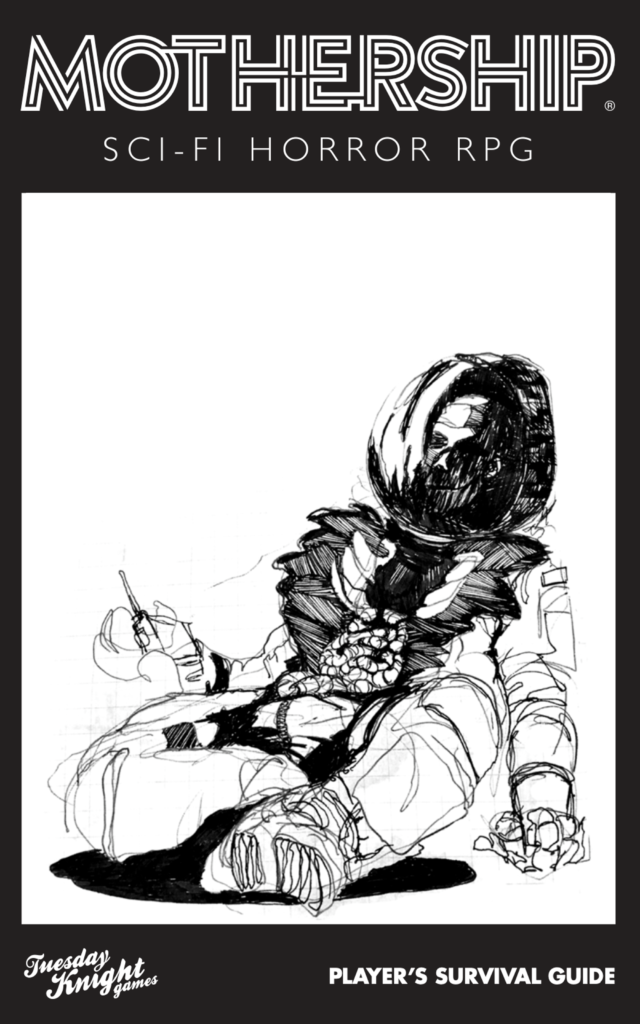
Mothership is blue-collar sci-fi horror. You play ordinary people trapped in the hostile vacuum of space. Here, the horror is built directly into the math of its Stress and Panic engine. As you face danger or fail critical saves, your Stress builds. The brilliance of Mothership is in disguising this downward pressure as a short-term power-up: it’s an adrenaline trap, where the brief boost from higher Stress sharpens your focus, luring you in, but the higher it climbs the more likely a bad roll will trigger a catastrophic Panic Check.
This is where the steering wheel is violently yanked away. Panic forces involuntary actions: freezing, screaming, losing control entirely. Severe Panic inflicts permanent Conditions like “Paranoia” or “Loss of Confidence.” These scar your character sheet for good. Worse, some Panic results permanently raise your minimum Stress floor. Shore Leave can reduce current Stress, but never below that rising baseline. The ceiling of safety keeps dropping after every mission. You aren’t heroes, you’re just the crew.
Try it with: Another Bug Hunt, an excellent intro adventure. Mothership is built around modules and scenario toolkits, but it too has an ambitious campaign, Gradient Descent.
Trophy Dark (2022, Jesse Ross)
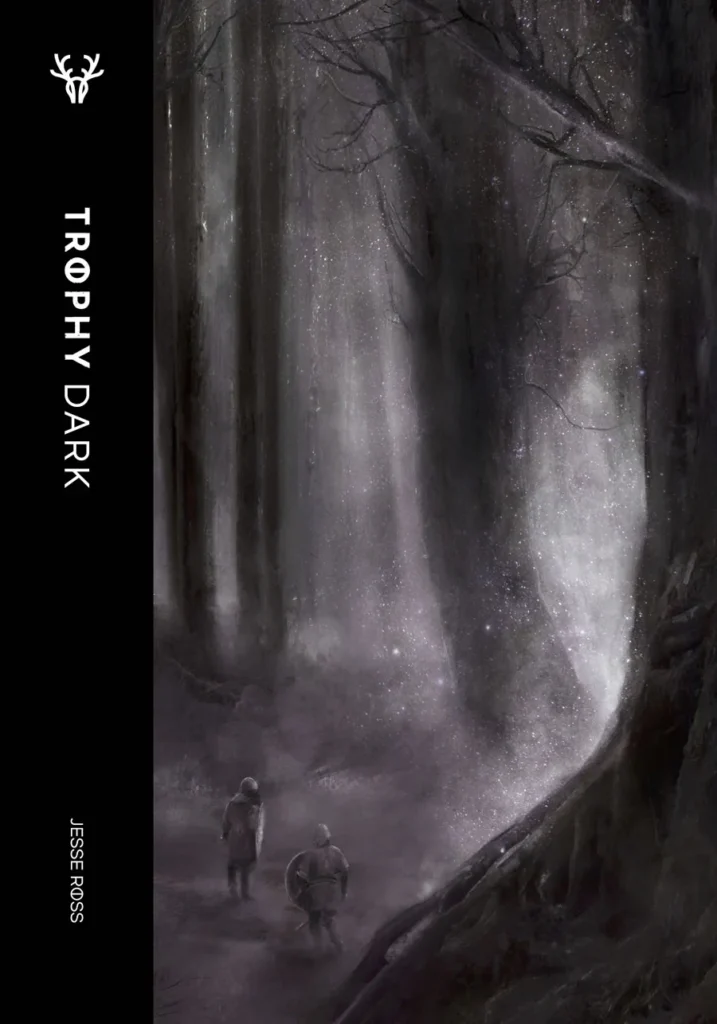
Trophy Dark takes fantasy adventure and turns it into pure horror. You play as treasure hunters heading into a cursed forest in search of wealth. But this isn’t D&D, it’s an outstanding example of toxic engagement. To survive the expedition, you have to often use the same black magic and corruption that are actively destroying you.
The mechanics revolve around a single escalating track: Ruin. You accumulate Ruin by attempting risky actions, confronting horrors, or pushing your luck to succeed. While there are ways to reduce it (usually by betraying your party) the overall arc is ruthlessly downward. The ratchet is absolute.
As your Ruin increases, the probability of catastrophic failure skyrockets, systematically stripping away your control. Once your Ruin reaches 6 you permanently lose the steering wheel. Your character is absorbed into the forest, transforming into just another monster for the next group of fools. You don’t play to escape with the gold. You play to see exactly what kind of monster you become along the way.
Try it with: the Core book comes with starter adventures for you.
The Cost of Missing Criteria (And Why That Matters)
Understanding why games fail the horror criteria is as useful as knowing which pass, because it reveals what players actually want versus what horror systems deliver. Once you know the pattern you can look at any “horror” playtest doc or published game and predict, if the rules will hold up or slide into something else.
KULT: Divinity Lost looks like horror because the floor drops, but dropping the floor is actually how the game rewards you. Characters who hit bottom gain cosmic perception and shift toward Enlightened archetypes, so the Awakening system turns Stability collapse into a power ladder. That’s not a ratchet, it’s revelation. Kult is a game about awakening through suffering, not being consumed by it.
Vampire: the Masquerade tracks your descent into the Beast through Humanity, and it looks like a horror ratchet. But(!) every edition is built around managing the Beast, not being consumed by it. In V5 the Remorse Check clears Stains on a successful roll, and in V20 Humanity can be recovered through roleplay. Hunger fluctuates instead of compounding because if you feed, you’re back in control. That’s not erosion, it’s resource management with fangs. Vampire is actually a dark political fantasy with horror trappings, as it allows the ratchet to go both ways.
Alien RPG is a hybrid, one mode is horror but the other mode is not. In Cinematic mode it’s perfect: stress dice accumulate, panic rolls escalate, and it passes all three criteria. But Campaign mode fails the ratchet test: stress resets between acts, Signature Items reliably reduce stress mid-scene, and downtime mechanics return characters to baseline. The stress-as-power-up mechanic creates the sensation of downward pressure even when the system is actually resetting. I discuss the awesomeness in my post on The Best Licensed RPGs.
Vaesen isn’t horror, it’s Gothic mystery. Its Fear tests, Broken condition, and critical injury tables create genuine dread at the table, but the rules are built for recovery. Conditions, like Broken, heal through Medicine, Inspiration, Rest scenes, and the Society’s downtime between mysteries. The Between Mystery phase is a reset: wounds close, trauma resolves, and characters return to baseline. There is no ratchet. Fear checks deliver immediate shocks, not progressive erosion. Vaesen is a game about solving folkloric problems, not being consumed by them.
Candela Obscura markets itself as a horror investigation game, but its Gilded Die mechanic is an escape valve. Marks can accumulate into Scars (permanent shifts that simulate a floor drop without enforcing one) but your Drives replenish between assignments and Scars reshape character rather than erode it. The system is designed to make actions feel rewarding, not corrosive, and there is no control-transfer mechanic. Candela Obscura is a supernatural mystery thriller: stylistically it’s horror, but mechanically it’s closer to Blades in the Dark.
Conclusion
I may sound like a broken record, but understand what you’re building. Horror TTRPGs aren’t defined by dark monsters or creepy settings. Horror game design is about trajectory: the rules guarantee that agency degrades when playing. Engagement is toxic, the floor permanently drops, and control transfers from the player to the system. When you design a horror system, you’re committing to mechanical enforcement of loss. That’s a specific design stance with specific market implications.
These three criteria describe what horror has enforced mechanically for over four decades, from Call of Cthulhu’s cosmic unraveling to Trophy Dark’s inevitable corruption. Horror systematically destroys equilibrium. The tracks go by different names—sanity, stress, ruin—but the contract never changes. The system is taking the steering wheel, and you aren’t getting it back.
For you designers out there, the useful question isn’t “Does this feel scary?” It’s “What happens to player agency under sustained play?” Answering that with this model in hand doesn’t just explain existing games; it lets you predict, at the design stage, whether your horror engine will actually hold or low-key revert to another genre of play. Dark games can provide tension, but horror force feeds you descent. Know which game you’re building before you go to print.
Please, if you know a game that meets all three criteria that I missed, tell me about it in the comments below.
For those interested my next post is: TTRPG Consequence Routing: When Getting Stronger Doesn’t Make You Safer.
Want this kind of structural analysis applied to your system? Request a Structural Audit
You’ll get a written diagnosis of where your mechanics create unintended pressure, plus concrete fixes aligned to your intended play experience.
If you’d like notifications for future posts, subscribe below.