Heroic Fantasy TTRPGs: You Think It’s About Dragons. It Isn’t.
This is part of my ongoing series on system structure and pressure models—see also: Grimdark TTRPGs: The Real Test (And Why Most Games Fail It)
You think you know what heroic fantasy means: dragons, epic quests, characters who rise to save the world. This post is not about what modern heroic fantasy looks like, it’s about what the systems do.
The setting is the world you’re playing in. The underlying engine, the mechanics, is what drives that world. Heroic RPGs are about a lot more than just allowing heroic moments. Almost any RPG in the industry can allow moments of heroism: Call of Cthulhu, Warhammer or Torchbearer can all allow heroic moments, but that doesn’t make them heroic games. If that’s the standard then an “heroic game” can mean everything, which is completely useless as a definition.
That’s what this analysis is designed to identify: the mechanical tentpole of pure heroic games. The core question is: If you took away all the artwork, cut out all the fiction and stripped away the GM’s narration, would the mechanics alone still give you the feeling of the genre? The five criteria that follow and the pressure model they create identify that tentpole in game mechanics. From there you can decide whether to build directly around that tentpole, modify one of its components, or create something adjacent.
Without rules that actively support heroic play, the first time someone gives a rousing speech and dies to one bad roll, the table learns the rules aren’t cooperating. Heroic tone survives on GM mercy, until it doesn’t. A true modern heroic system is one where the rules are working with the players toward expansion and recovery, not just staying out of the way.
The same restorative upward engine I describe appears in heroic sci-fi, superhero, and pulp games. Fantasy is simply where the mislabeling is most common, where fantasy dragons and mythic quests get mistaken for structural heroism.
Methodology
These five criteria are based on what games actually enforce through their rules, not just their feel at the table. I studied games called “heroic fantasy” over the past fifty years, starting with the original D&D (1974), and searched for the common mechanical supports that let some systems sustain heroic structure over time, while others only look heroic but still let characters spiral downward. This led to a model of the genre’s core mechanics. Designers can use this tool to spot the main features of heroic structure and decide how much they want to include them in their own games.
The Five Structural Criteria
These criteria aren’t about labeling games, they help you see what your system will actually create during normal play. For a TTRPG to be truly heroic it needs all five criteria working together. If you miss one, you’re leaving GMs to handle what your mechanics should cover; you don’t just get a slightly-less-heroic game — you get pulled toward whatever genre that missing piece opens the door to.
1. Death Takes Time. Is there at least one step between being fine and dying, so the group has a chance to react? In D&D 1st edition you can die instantly, with no time to intervene. Heroic systems give players a chance for dramatic rescues and tactical choices by adding buffer states before death.
2. Recovery Is Built In. Setbacks should hurt, but not leave you permanently weaker. Can you get back to full strength without permanent scars? Some games use permanent stat loss or injuries, but heroic systems let you recover fully. This keeps heroes strong throughout the campaign instead of spiraling downward.
3. You Outgrow Threats. As you level up, old threats should become less dangerous—not just easier, but less likely to kill you. Does your system make you tougher so past dangers stop being a real risk? This can mean more HP, better defenses, new abilities, or more authority.
4. Bad Luck Can’t Erase You. Bad dice rolls should add tension, but not permanently wreck your character. Does your system limit how much one bad roll can hurt you? Relying on careful play isn’t enough, the rules need to protect against really bad luck.
5. Playing Doesn’t Break You. Playing the game shouldn’t wear down your character’s identity or abilities. Does regular play avoid slowly destroying who your character is? Optional corruption systems are fine, but core rules shouldn’t force this kind of erosion.
If any of these are missing, your game might have heroic moments, but it won’t support heroic play over time. C1 and C4 may seem similar, but a game can pass one and fail the other, as I’ll show later. The same goes for C2 and C5.
The Restorative Upward Pressure Loop
The five criteria describe what heroic structure looks like in action. The engine running underneath most of them is the same core loop: Risk, Wound, Restoration, and Expansion. Players take risks. The wound does not change who you are, as in grimdark games. Instead, it tests if you can return to your old self and then go beyond it. Once you see if your rules support this loop, you can tell if your campaign will stay heroic or shift into something else. If any part of the loop needs the GM to step in instead of the rules handling it, the heroic structure is weak.
For example, in D&D and Pathfinder resting helps you recover, and as you advance each step builds on the last. A 10th-level Fighter has far more HP than a 1st-level Fighter, along with better defenses, more powerful abilities, and greater action economy. Early battles that once felt deadly become manageable. Your character does more than survive the world, they gain the power to change it.
Most games labeled heroic actually fail at either Criterion 3 or 4. C4 protects the Risk stage from ending the run outright, and C3 is what actually pays off the Expansion stage; lose either one and the loop stops climbing.This loop is crucial because it shapes what the game is really about. Even more, you can build it on purpose or break it by accident through your game’s rules. The goal is to see how far you can go, what you can achieve, and how many people you can save. If your loop does not push players to grow, you are making a different kind of game, no matter what the cover art looks like.
Survival systems: Existing costs you.
Grimdark systems: Fighting evil corrupts you.
Horror systems: Exposure erodes the self.
Heroic systems: Setbacks wound you. Recovery restores you. Growth makes you stronger.
In heroic systems the main question is not how long you can last before breaking, but how much you can achieve.
Why People Play Heroic Games
Modern heroic TTRPGs don’t focus on dodging consequences. Instead, they make sure setbacks won’t erase everything you’ve achieved. The rules ensure that any losses are temporary and your character gets stronger as you play. With recovery and progress built into the game, it’s worth investing in long-term arcs. You give characters names, form relationships, and take risks because the rules make that investment worth it.
That’s what draws people in, and why heroic games like D&D are still around after 50 years and multiple editions. Players who choose heroic systems want a specific kind of growth fantasy: it’s not just about getting stronger, but about having a bigger impact. At level 1, you clear out caves. By level 10, you’re negotiating with kings. At level 20 you might change the fate of nations. For these players, seeing a character rise from nothing to someone important is the whole point. Make sure you know your audience before you design your game.
Tentpole Heroic Fantasy Systems
These systems show how different mechanical approaches can all produce the same upward arc. They are the games this model was extracted from, and they are also the games it correctly predicts as true heroic fantasy when you apply the five tests.
5e is a broad, adventure-first fantasy toolkit: a party of exceptional adventurers who explore dangerous ruins, fight classic monsters, and eventually face threats that could end the world. Based on this idea, the game meets all five criteria of the model, but just barely. When you drop to 0 HP, your party usually has a chance to save you, and resting helps you recover your main abilities, so the basic heroic cycle is there. Leveling up does make you stronger and harder to defeat, but because of bounded accuracy, weaker enemies remain a threat longer than in most heroic games. The system also doesn’t do much to protect you from bad luck, since Inspiration is optional and not always reliable. So, while 5e aims for a heroic feel, it’s a more unpredictable and fragile version of heroic design.
I put the following exemplars in chronological order so you can see how heroic structure became an intentional design philosophy, rather than a byproduct of fantasy tropes.
Earthdawn (1993, Greg Gordon)
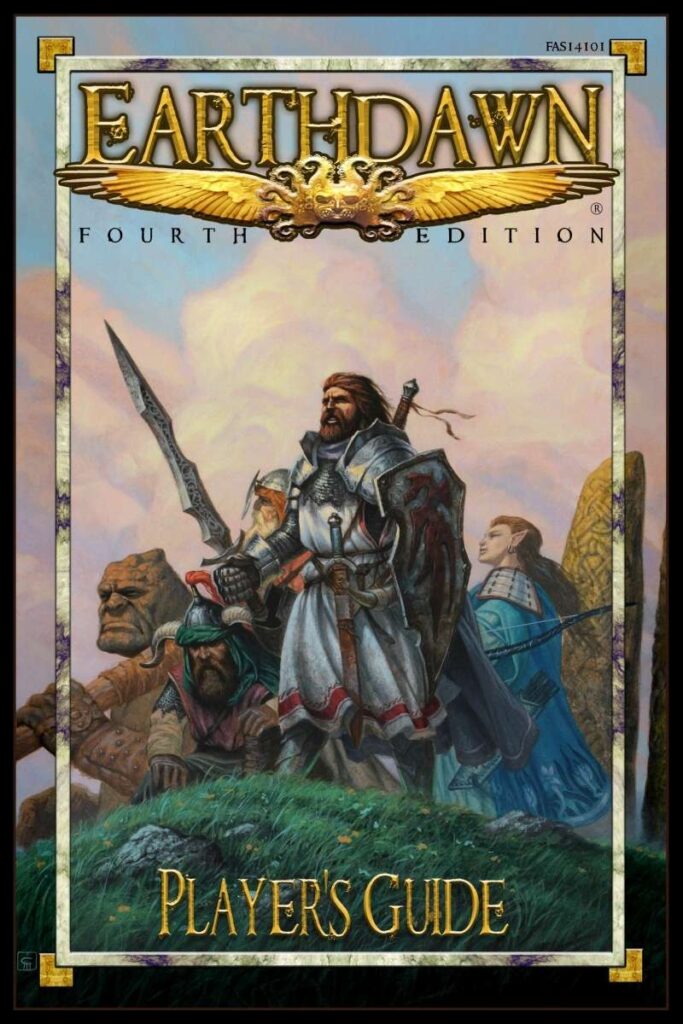
Earthdawn was the first fantasy system to deliberately construct a restorative upward pressure loop in its full form. Set in a post-apocalyptic magical world where civilizations have rebuilt after a world-consuming catastrophe, it blends dungeon-delving exploration with the recovery of lost knowledge and ancient horrors.
Instead of using the old-school approach where characters wear down over time, Earthdawn built a heroic arc into its rules. The Death Rating is much higher than the point where a character falls unconscious, so there is a safety margin before anyone dies and allies can help. Recovery Tests let characters heal using their own strength, not just by resting or using rare magic. As characters advance through Circles their defenses improve, so earlier threats become less dangerous. Players can also use Karma to improve their chances and turn bad luck around. Now in its fourth edition, Earthdawn stands out as an early example of a game where characters are meant to survive, grow, and discover the lost history of a broken world.
Try it with the Earthdawn 4th Edition Quick Start, which is free.
Dungeons & Dragons 4th Edition (2008, Heinsoo/Collins/Wyatt)
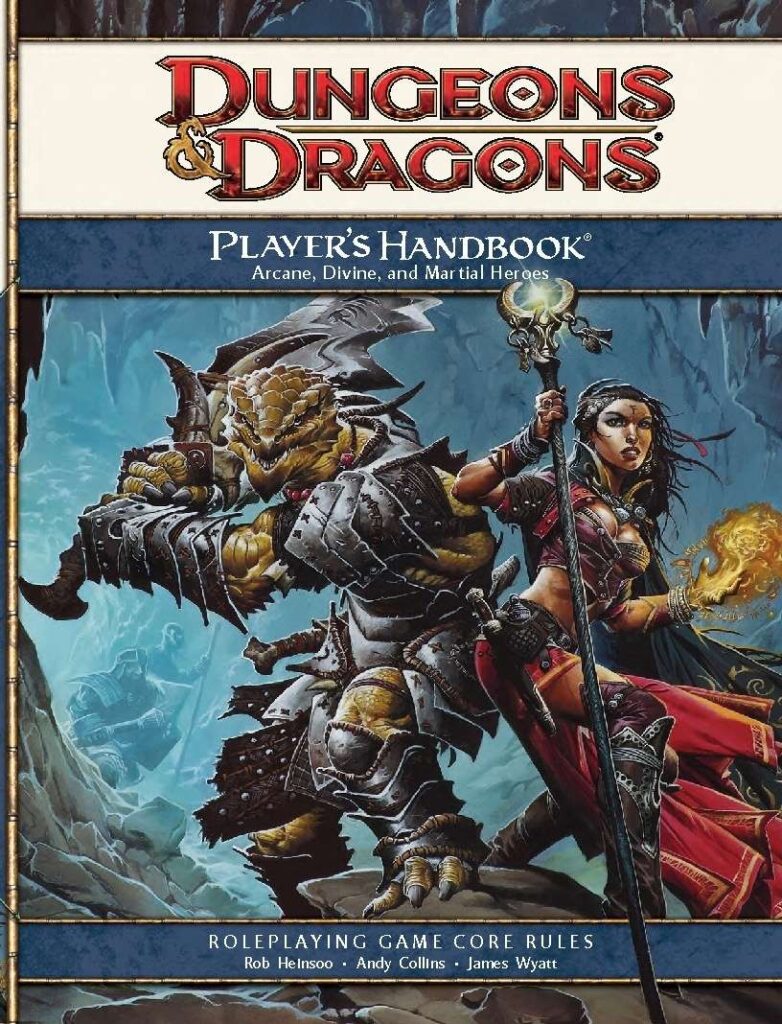
D&D 4e was built from the ground up for set-piece fantasy battles where heroes are expected to fall and get back up. If a character drops to 0 hit points, they don’t die immediately. Instead, they make death saving throws, giving the group a few rounds to help out. This creates a buffer between being in danger and being out of the game, so a single bad roll doesn’t mean losing a character. The Healing Surge system is central to this: each character has a pool of healing, and a quick five-minute rest lets them use it to jump back into the action. The game is built around the idea that heroes might fall, but they can always get back up.
As characters level up, they get tougher, gain more ways to act, and get stronger defenses. By the Epic tier, heroes can use powers that help them avoid death once per day, act outside the normal turn order, or survive things that would defeat lower-level characters. Action Points help too, letting players push their advantage or regain momentum when it matters most. In 4e, being a hero isn’t just a story—it’s built into the rules. Players are encouraged to take risks because the game expects them to survive, recover, and come back even stronger.
If you want to try playing this game, start with Keep on the Shadowfell. It’s a good intro, and even has quick-start rules if you’re not sure about investing in the entire system yet.
Fate Core (2013, Balsera/Hicks/Donoghue)
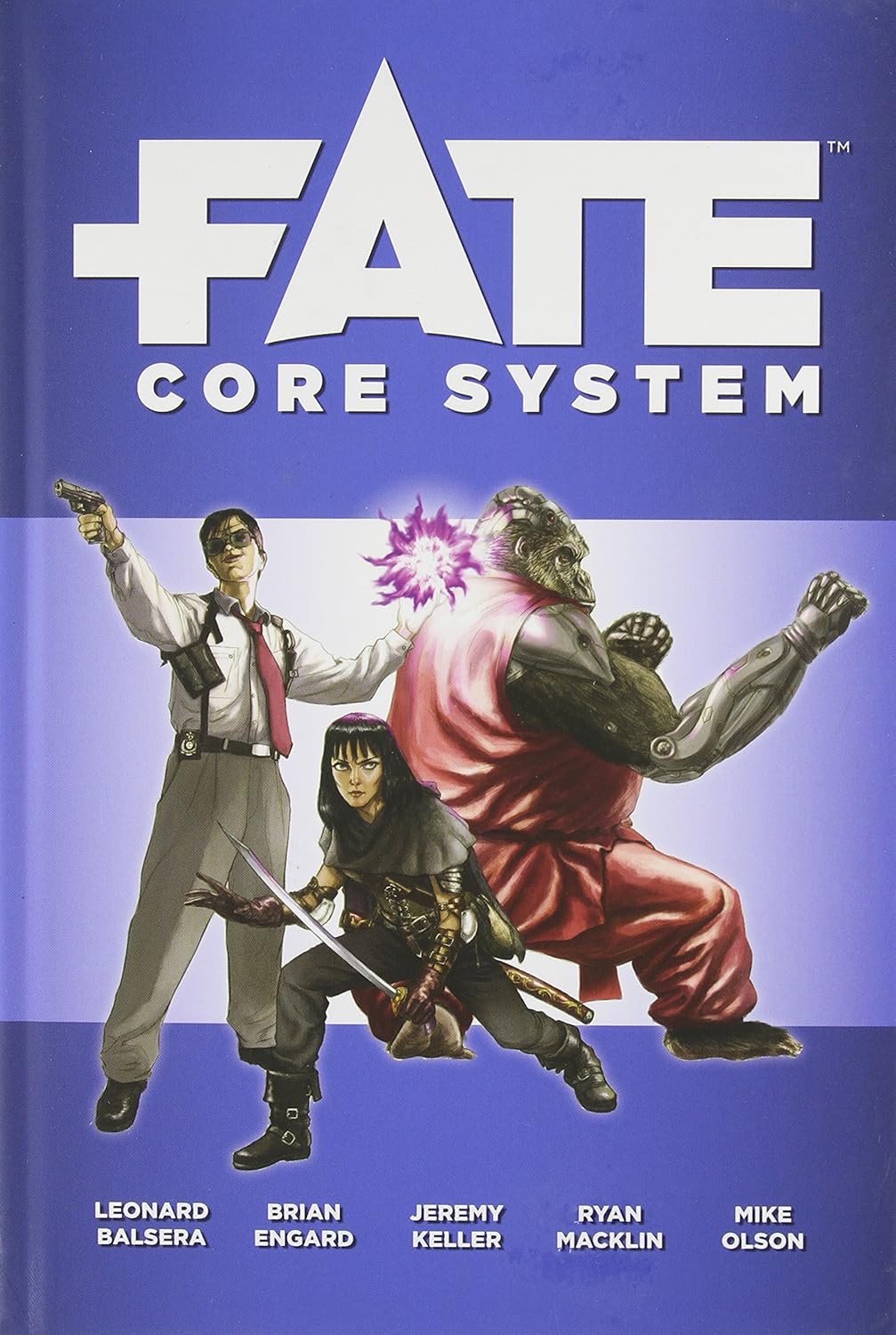
Fate Core isn’t inherently a fantasy system: it’s a fiction-first, narrative engine designed to emulate proactive, capable characters in any genre. It shows you don’t need hit points or spell slots to tell a heroic story. Instead, the rules handle how tension builds and how characters recover. Harm is tracked using Stress and Consequences, which come in Mild, Moderate, or Severe levels. These need to be filled before a character leaves a scene, and even then, what happens next is negotiated at the table rather than being instantly fatal. Recovery is built into the game’s flow; stress goes away between scenes, and Consequences heal in a predictable narrative order.
Fate Points help protect players from bad luck. You can spend them to use your character’s aspects, reroll dice, or change the scene to your advantage which lets you stay competent even when the dice aren’t on your side. If you accept a complication you earn more Fate Points to use later. This system helps long campaigns feel fair and balanced by the rules, not just by the GM’s decisions.
Check out the Condensed rules for free on the official site to see what Fate is like.
Pathfinder 2nd Edition (2019, Bonner/Seifter)
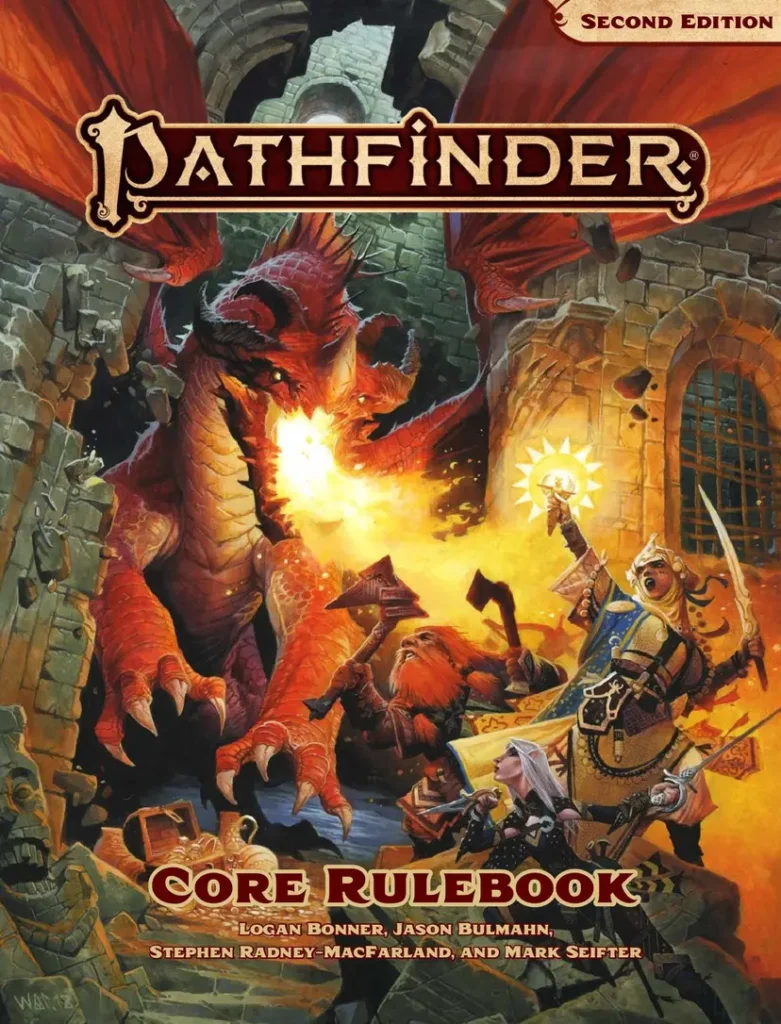
Pathfinder 2e is a high-adventure fantasy game built for deeply customized, highly competent heroes tackling an explicitly level-scaled world of deadly hazards and legendary monsters. It creates its heroic feel by tightly balancing its math and rewarding coordinated teamwork. When a character drops to zero, they enter a Dying state, but death only happens after several failed checks, so teammates have a chance to help. If someone goes down more than once, the Wounded condition keeps track, but it can be cleared between fights. The Treat Wounds skill lets the party heal themselves using skill and time instead of using up spell slots.
As characters level up, their proficiency bonuses increase with them, so earlier dangerous enemies become easier to handle. Hero Points help protect against bad luck by letting you reroll or automatically stabilize if things go wrong. The system avoids punishing setbacks and instead rewards tactical mastery, making character growth feel truly empowering.
Start with the Pathfinder Beginner Box if you just want a taste. The Player Core Remastered edition is the current baseline if you want to really get started.
Fabula Ultima (2023, Emanuele Galletto)
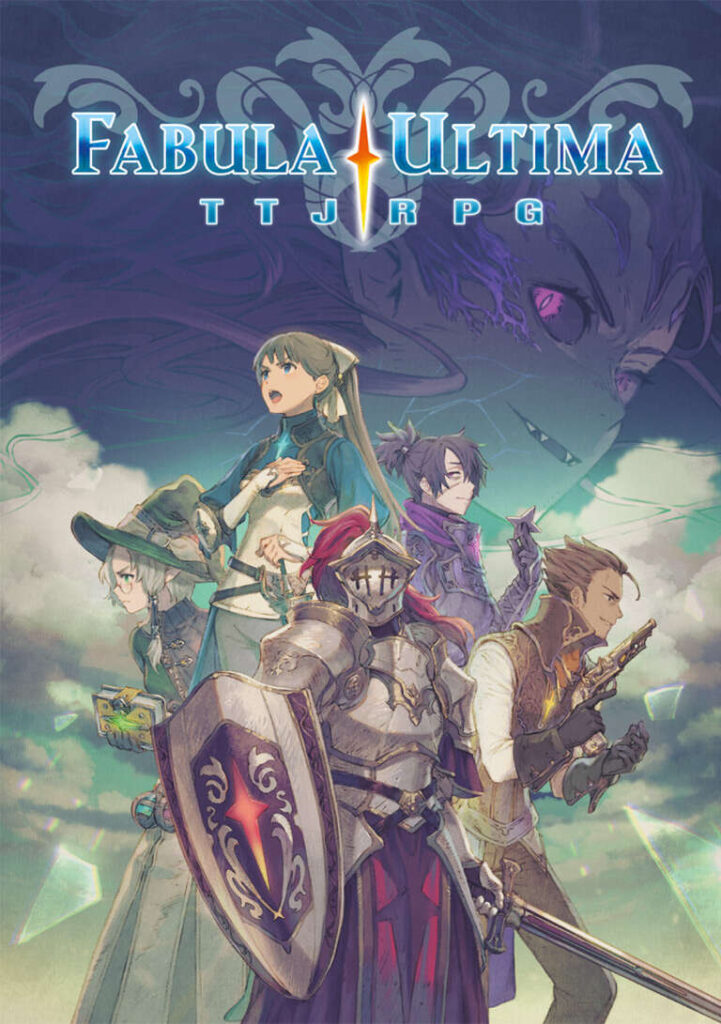
Fabula Ultima draws inspiration from JRPGs, where heroes face setbacks but always come back stronger. One of its most heroic features is that death is up to the player, not left to chance. When a character hits 0 HP, the player decides if the character survives in defeat or makes a dramatic sacrifice.
During big moments limit-break-style powers come online, making them strongest when it counts most. As they advance, players gain more options and build toward these key moments. Fabula Points allows a reroll or improve results when it matters, so bad luck won’t ruin dramatic scenes, and failing gives them resources for future success, and overcoming challenges makes your character stronger. You can even embrace dramatic defeats since the system makes sure the characters’ arc keeps moving upward.
Begin with Press Start. It’s the perfect intro and it’s free!
Shadow of the Weird Wizard (2024, Robert J. Schwalb)
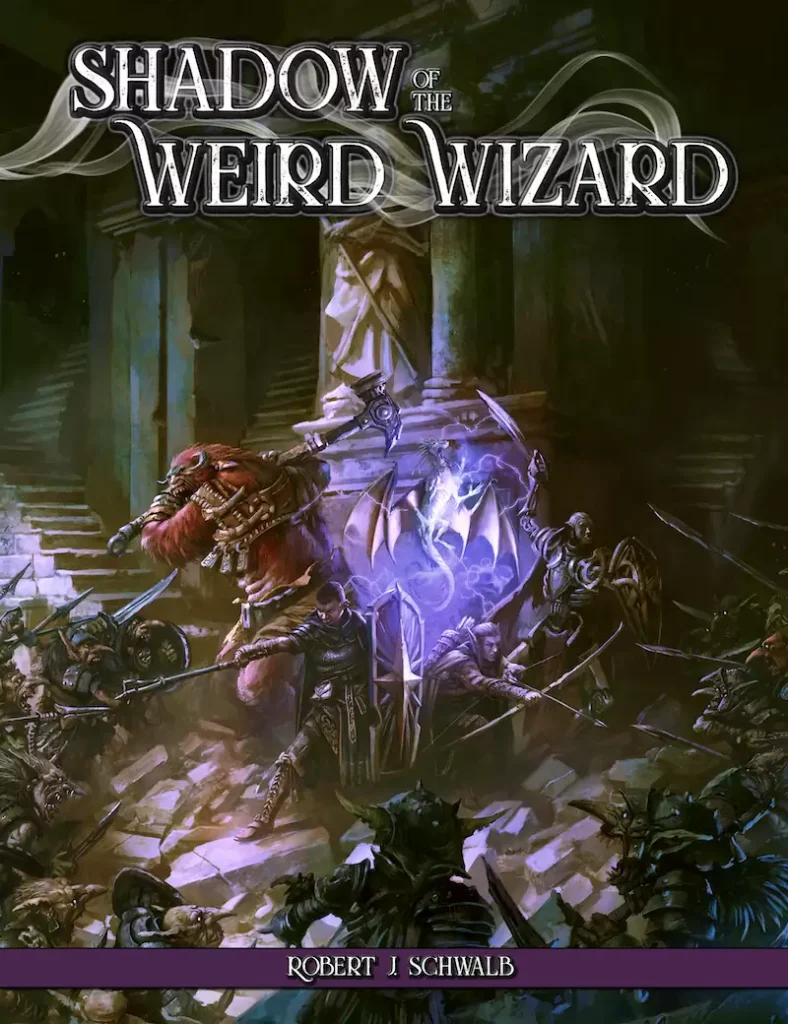
Shadow of the Weird Wizard is important because it marks a deliberate pivot by the designer away from erosion. His earlier game, Shadow of the Demon Lord, builds Corruption and psychological decline into the core loop; fighting evil inevitably degrades you. Weird Wizard removes that downward pressure and replaces it with restorative pressure. Characters become incapacitated rather than instantly dying, recovery from rest and other sources is predictable, and Boons and Luck mechanics cap how badly a single roll can hurt you.
The upshot is that the vibe follows the structure. You keep Demon Lord’s speed and crunch, but the engine no longer steers you toward doom. If you want fast, sharp, and tactical gameplay aimed at heroes rather than erosion, this is the refined evolution.
To play SWW, begin with any of the Novice Adventures. I’ve linked to the list of official ones that are good AND cheap.
Draw Steel (2025, James Introcaso)
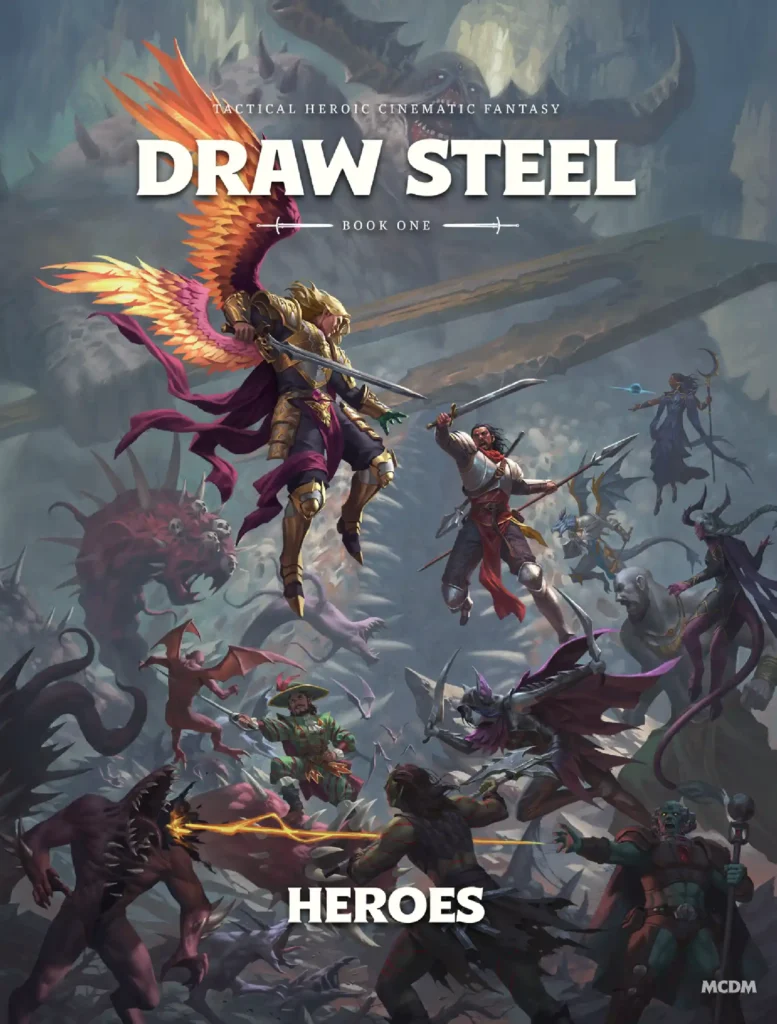
While earlier heroic systems focused on managing attrition, Draw Steel is designed to create a sense of cinematic momentum. It represents the current state of the art in heroic fantasy design by moving away from the “per-day” resource drain of the last fifty years and replacing it with a system where cinematic power builds during every fight. It’s built specifically for heroic fantasy battles where player characters fight through waves of minions, unleash dramatic signature abilities, and grow stronger during each combat round instead of just using up a daily pool of resources.
The game’s mechanics support this style of play. Instead of sudden one-shot deaths, heroes have a negative Stamina buffer that grows as they level up, so they can survive longer in battle. Recovery happens during combat as a tactical choice, not just after the fight. The Echelon system gives big, clear upgrades to Stamina and damage, letting heroes quickly outpace earlier challenges. The game also uses a 2d10 bell curve instead of a d20, making results more predictable, and adds Hero Tokens to help avoid disastrous failures. All of this makes high-energy heroic action the standard way to play.
The best prewritten adventure to start with is The Delian Tomb.
The Cost of Missing Criteria (And Why That Matters)
Knowing why some games fail the five-part test is just as helpful as knowing which ones pass. It shows what players really want compared to what heroic games offer. Once you understand the pattern, you can look at any “heroic fantasy” game and predict if the rules will hold up or slide into something else instead.
Early D&D and OSR: If you apply these criteria to early D&D or OSR games, they will fail. AD&D 1e and 2e fail C1 and C4 by design: a bad roll can mean instant death at any level and nothing prevents it. These are crucible systems: high-attrition engines where fragility never fully goes away, even at high levels. Early games certainly allowed heroic play, but an upward loop is not enough; the rules also have to protect the player’s investment in that arc.
Dragonbane markets itself as a classic fantasy adventure. But if you examine it closely, skill advancement and survivability are separate. Even a veteran with 80% weapon skill remains physically fragile, since being skilled doesn’t make you tougher. This is where C3 falls short. C4 also fails because the system doesn’t limit how bad a single roll can be, so everyone is vulnerable to terrible luck. The game is more like a crucible system than a heroic one.
RuneQuest and Mythras isn’t heroic fantasy, it’s more of a crucible game too. They are mythic Bronze Age epics, but mythic doesn’t mean survivable. They fail C1 because a critical hit can maim or kill instantly with no intervention window. C3 and C4 also fall short. Improving your skills makes you better at fighting, but not harder to kill—a veteran can die from the same lucky spear thrust as a beginner.
Pathfinder for Savage Worlds carries an iconic heroic fantasy brand, but its mechanics are still Savage Worlds, which is a pulp attrition model. It passes C1 but fails C4. Bennies let you reroll or soak damage, but they’re a finite resource spent against an uncapped mechanic, as exploding damage dice can stack enough wounds from a single hit to erase a character regardless of level, and nothing puts a ceiling on that. It also fails C3, since leveling up gives you more choices but doesn’t make you harder to kill.
The One Ring presents a classic Tolkien-style adventure, but its trajectory is not heroic and fails C5. Shadow builds up during regular play faster than Hope can be restored, leading to Miserable states and lasting Shadow Scars. You can have heroic moments, but the core loop runs the other direction.
Dungeon Crawl Classics fails C2. In DCC survival always comes with a permanent cost: the Turn Over the Body rule saves fallen characters at the price of 1 Stamina permanently, making each near-death experience riskier. Spellcasters add to this problem with Corruption. Instead of returning you to normal, DCC brings you back a little weaker each time.
Heroic fantasy as a game structure is about whether the rules help keep protagonists effective, able to recover, and grow stronger. These mislabeled systems instead focus on surviving challenges, risky outcomes, and character strain over time. All are good designs, but they don’t sustain heroic play structurally.
Conclusion
Know what you’re designing for. Modern heroic systems aren’t just about mood, optimism, or fantasy themes. What matters is the trajectory your game takes. When you design a heroic game that includes all five criteria and the upward pressure loop, you’re making a mechanical commitment to support lasting player agency throughout campaigns. This structure is a promise to your players, and your rules either keep it or they don’t.
Most fantasy games use some version of a heroic structure because that’s what players expect. But being “heroic by default” often just means the system meets some of these standards by chance, not by design. As a designer, the key question isn’t “Does this feel heroic?” but “What do my characters become over time?” Using this model helps you understand existing games and predict, during design, if your heroic system will last or shift into another genre. It’s important to know this before you publish.
Please, if you know a game that meets all five criteria that I missed, I want to hear about it! Tell me about it in the comments below.
For those interested my next post is: Survival / Attrition games.
Want this kind of structural analysis applied to your system? Request a Structural Audit
You’ll get a written diagnosis of where your mechanics create unintended pressure, plus concrete fixes aligned to your intended play experience.
If you’d like notifications for future posts, subscribe below.
Very professional and well-structured article.
I appreciate that, man. I worked hard on it.