Grimdark TTRPGs: You Think You Know What Grimdark Means (But You Don’t)
You think you know what grimdark means: dark atmosphere, high lethality, and morally grey characters in a brutal world. By that logic, Shadow of the Demon Lord is grimdark, right? Shadowdark? Call of Cthulhu?
Nope.
The setting is the world you’re playing in. The underlying engine, the mechanics, is what drives that world. Warhammer Fantasy Roleplay is fantasy, and Warhammer 40k: Dark Heresy is science fiction, but both can be grimdark because their rules encourage similar styles of play.
That’s what this analysis is designed to identify: the mechanical tentpole of pure grimdark. The core question is: If you took away all the artwork, cut out all the fiction and stripped away the GM’s narration, would the mechanics alone still give you the feeling of the genre? The four criteria that follow and the pressure model they create identify that tentpole in game mechanics. From there you can decide whether to build directly around that tentpole, modify one of its components, or create something adjacent.
Tone and setting obviously matter, but they sit on top of an engine. If that engine doesn’t enforce the premise, then the GM has to do it themselves. Without rules that actively pressure players away from idealism, for example, your grimdark tone only survives through GM effort. The moment someone goes heroic and finds mechanical leverage, the atmosphere can easily collapse. A true grimdark system is one where playing heroically means fighting the game itself.
Methodology
These four criteria are based on what games actually enforce through their rules, not just their atmosphere. I studied games called “grimdark” over the past forty years, starting with Warhammer Fantasy Roleplay (1986), and searched for the common mechanical pressures that let some systems maintain a grimdark feel over time, while others only look dark but still support the players acting heroically. This led to a model of the genre’s core mechanics. Designers can use this tool to spot the main features of grimdark and decide how much they want to include them in their own games.
The Four Structural Criteria
These criteria aren’t about labeling games, they help you see what your system will actually create during normal play. For a TTRPG to be truly grimdark it needs all four criteria working together. If you miss one you’re leaving GMs to handle what your mechanics should cover; if it misses any you don’t just get a slightly-less-grimdark game — you get pulled toward whatever genre that missing piece opens the door to.
1. Progress Is Temporary. Do reforms last on their own, or does the world always slip back into cruelty? In grimdark the world pushes back against improvement. Local victories can matter, but reforms decay, corruption returns, and the world grinds back toward cruelty. Erosion ultimately swallows everything.
2. Acting Heroic Costs You Something. Does being good cost you in ways that ruthless play does not? The rules should penalize you for acting like a hero. Doing the right thing should have a real cost, like gaining corruption, going into debt, or losing your sanity. The longer you try to stay good the harder it gets, while being pragmatic or predatory makes survival easier. The game doesn’t stop you from being heroic, but it makes sure you pay for it.
3. The System Itself Is Cruel. If you removed the monsters and demons, would violence persist? In grimdark games, the answer is yes. Violence comes from things like institutions and power structures, not just outside threats.
4. The World Cannot Be “Saved.” Does the game let you truly change or replace the system? If so, it’s not grimdark. You can win fights and survive, but you cannot fix the world. If the rules support any kind of revolution then it’s rebellion fiction, not grimdark.
Most games labeled grimdark actually fail at either Criterion 2 or 4. They punish risky actions instead of goodness, or they let players eventually win and change things. These are really dark fantasy, cosmic horror, or apocalyptic nihilism—genres that look similar but play differently. True grimdark games don’t just look grim, their rules force grimdark outcomes.
The Moral Downward Pressure Loop
Grimdark games are built around one main idea: moral downward pressure.
The main gameplay loop turns every challenge into some kind of lasting decline. This could show up in your character as corruption, instability, or debt; in institutions as reforms falling apart; or in the world as progress turning back into decay.
This isn’t just about danger or atmosphere. The rules need to make sure that the longer you play, the more your characters are pushed toward compromise, corruption, instability, or degradation. Once you see if your rules do this, you can tell if your campaign will stay grimdark or turn into something else.
Your game design should make sure that playing longer doesn’t build up hope or progress. Instead, the main loop should accelerate erosion. That’s the key difference: in grimdark games, decline isn’t a sign you’ve failed. It’s what’s supposed to happen as you keep playing.
Why Would Anyone Want to Play Grimdark Games?
Grimdark isn’t just about losing or dying, but it is an extreme. For designers, it’s about making moral compromise the main pressure in the game: who you become when things are bad, and what you’ll give up to keep or lose your values. The rules don’t just punish risky choices, they make it fundamentally hard to be good. Doing the right thing always costs you something you can’t get back.
This means your game is aimed at a certain kind of player. People who pick grimdark games aren’t trying to save the world—they’re searching for meaning in a system that almost never rewards it. Winning isn’t about toppling the empire; it’s about small, personal victories that matter even when the world stays broken. These players find more satisfaction in surviving with their values half-intact than in any triumph the system was never built to deliver.
That’s one reason Warhammer Fantasy Roleplay has lasted for decades: it mixes grim stakes with dark humor, letting players have some fun even though the world stays harsh. Make sure you know your audience before you design your game.
Tentpole Grimdark Systems
These systems show how different mechanical approaches can all produce the same downward arc. They are the games this model was extracted from, and they are also the games it correctly predicts as pure grimdark when you apply the four tests.
I put the following exemplars in chronological order so you can see how grimdark structure became an intentional design philosophy, rather than a byproduct of dark fantasy tropes.
Warhammer Fantasy Roleplay (1986, Halliwell, et al)
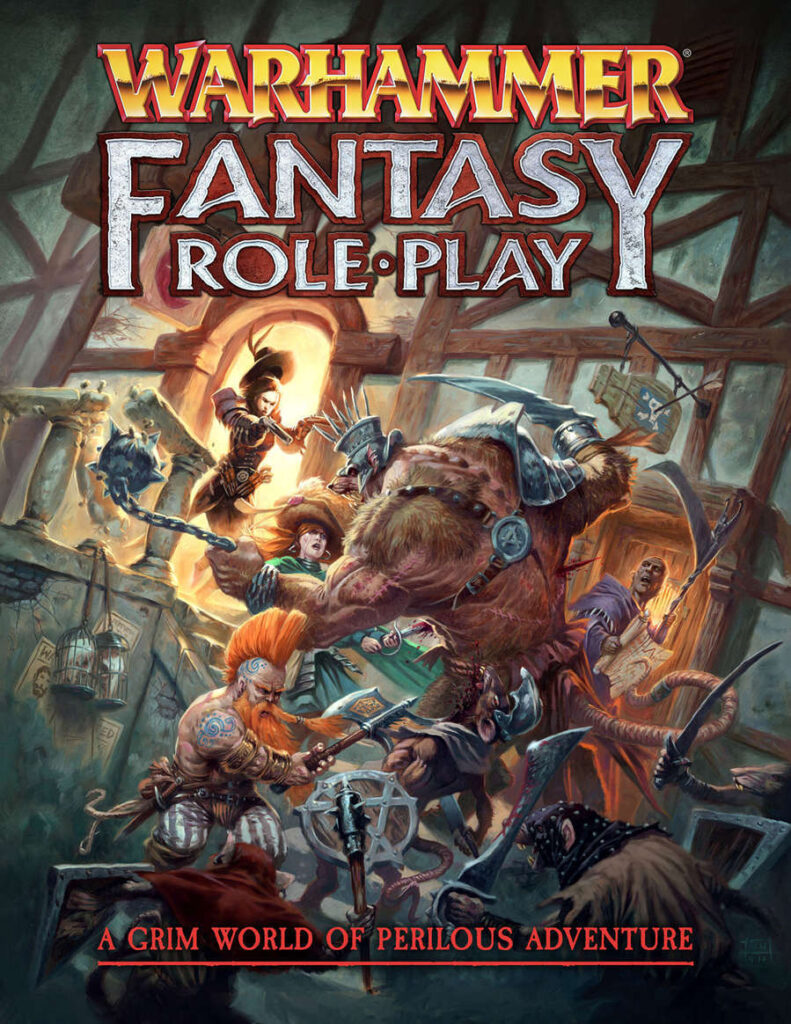
Warhammer Fantasy Roleplay is the first true grimdark fantasy tabletop RPG. It set the standard for the genre, and its rules back it up. In WFRP, you play in the Old World, a medieval setting full of Chaos corruption. You start as rat catchers, grave robbers, or failed priests—not heroes. The Corruption mechanic means fighting evil always hurts you: you might beat the Chaos cultists, but you’re still one step closer to madness. You can save a town but not the Empire. Reforms don’t last, and idealism often costs your sanity or your life.
Violence in WFRP isn’t just about fighting. The Empire is built on witch burnings, harsh taxes, and religious purges. Wounds and trauma add up in the rules. You can move up in your career, but most paths end badly, and the world punishes naivety faster than it rewards virtue. But WFRP’s dark humor makes the misery interesting, like the absurd comedy of dying because your own cart ran you over.
The 4th edition is the latest version and is still supported. The Starter Set has everything you need to begin. If you enjoy WFRP, try The Enemy Within. It’s a legendary campaign with five parts full of conspiracy, mutation, and moral decay across the Empire. It’s so good I covered it on my 8 Best TTRPG Campaigns Ever Written.
Dark Heresy (2008, Barnes/Flack/Mason)
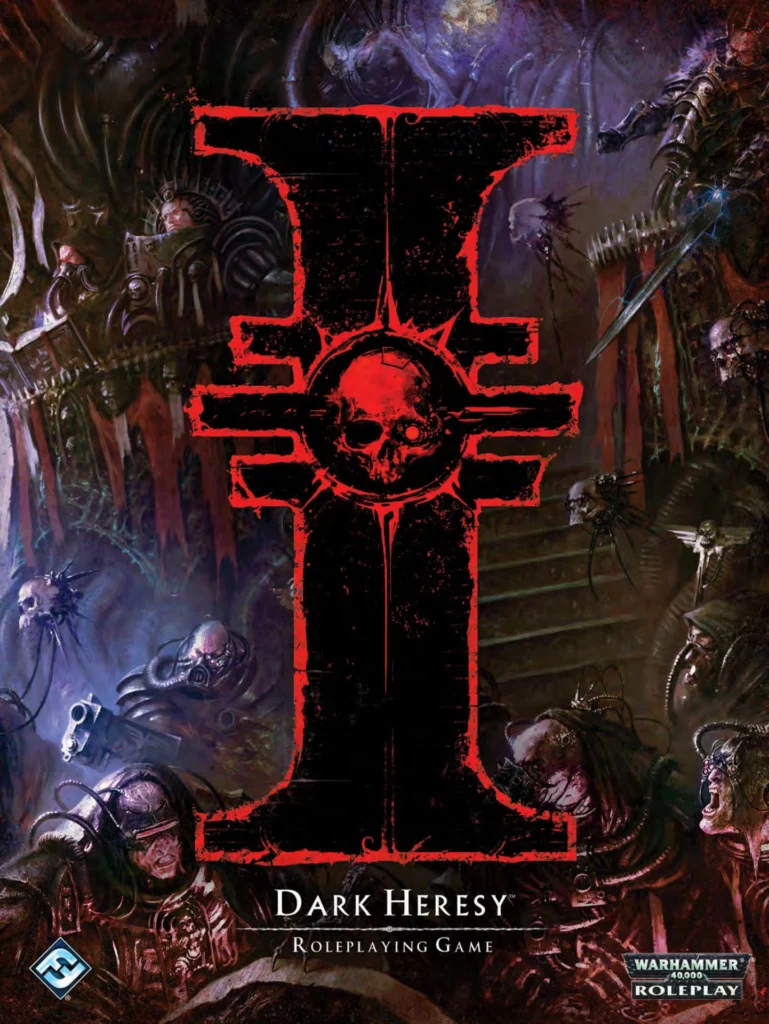
In Dark Heresy you play as investigators in the grim future of Warhammer 40K working for the Inquisition, a secret police force in a religious empire. In the 41st millennium, there’s no hope for progress, just endless war. You’re expendable, serving leaders who might destroy whole worlds to fight Chaos. The Corruption system means facing daemonic threats always leaves a mark. Every ritual you see or forbidden book you read brings you closer to mutation. You might stop one cult, but the Imperium’s decay never ends, and showing mercy could unleash a daemon. Here, brutality is rewarded and mercy is dangerous.
Violence is built into the system: the Inquisition orders executions, the Imperial Church burns heretics, and governors crush dissent as policy. Insanity Points show how your mind breaks down when facing cosmic horror. Fate Points can save you from death, but you only get a few. You can move up from Acolyte to Interrogator, but even success means getting deeper into the Imperium’s cruelty. Dark Heresy is pure grimdark because you’re not saving humanity, just putting off the next disaster. That’s why every small win feels like a real achievement.
Start with Illumination, included in the rulebook. If you like DH, many GMs also recommend playing the free Edge of Darkness adventure before going to full-on campaigns.
Misspent Youth (2010, Robert Bohl)
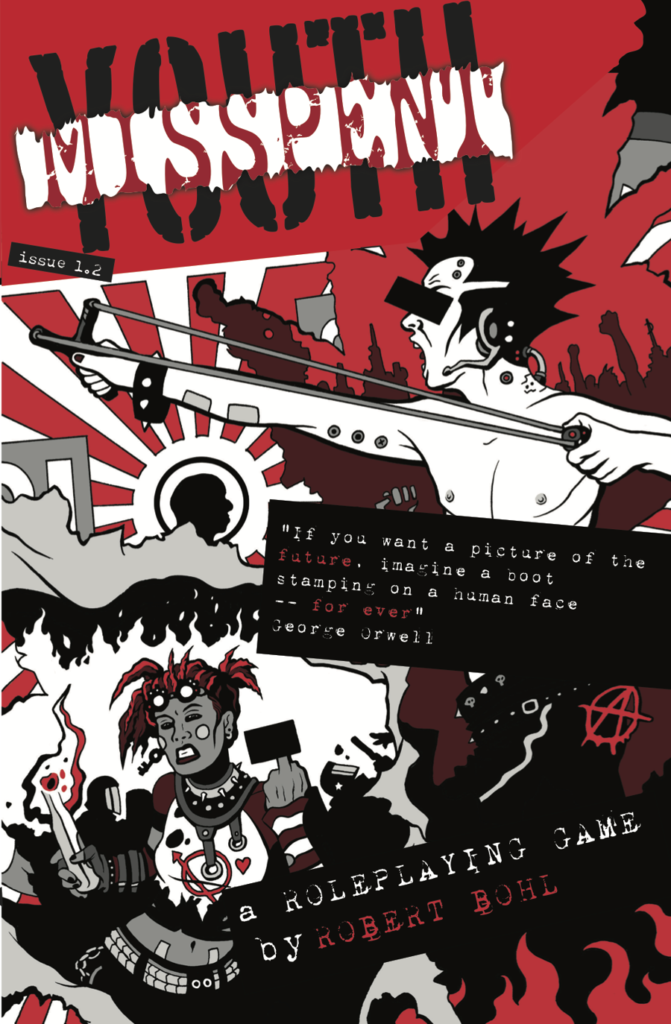
Misspent Youth is built around one trade: to win you have to sell out. It puts you in the shoes of teenage rebels fighting oppression in a near-future dystopia. Your table creates “The Authority”—the government, corporation, or system you’re up against—and decides how it controls people. Progress doesn’t last, you defeat one oppressor and another takes over. The main mechanic is Sell Out: to win big conflicts, you have to betray your ideals. Your Altruistic side turns Transactional, your Innocence becomes Cynicism, and these changes are permanent. If you stick to your principles, you lose; if you give them up, you win, but only by becoming what you hated.
Violence comes from the ways your Authority controls people, like surveillance, propaganda or harsh laws. You can push the rebellion forward through different story arcs, but even if you beat the regime the game asks what you’ve turned into. There’s no pure victory. Whether you win or lose, your last stand is tragic because every victory was purchased through permanent mechanical compromise.
If you want something prewritten, start with the self-contained introductory episode Fall in Love, Not in Line.
Red Markets (2017, Caleb Stokes)
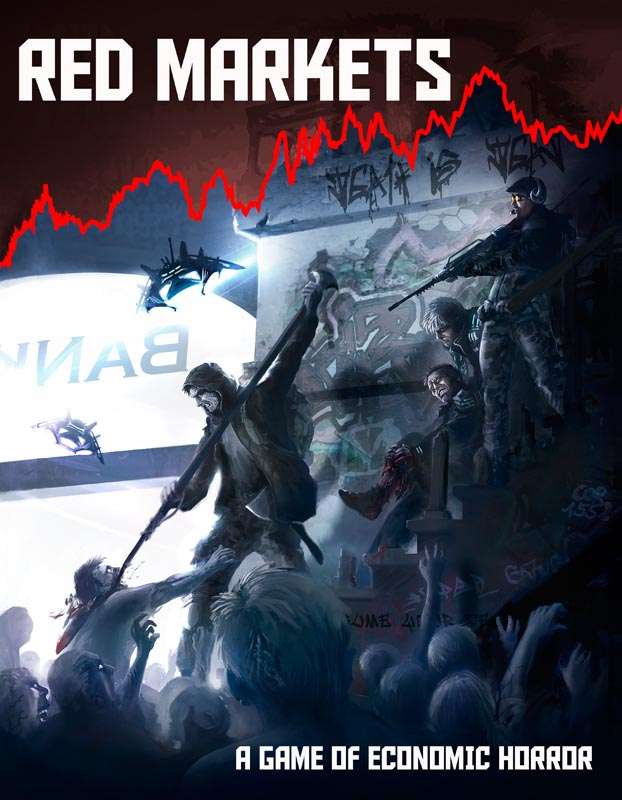
Red Markets throws you into a world of economic horror. After the zombie apocalypse you play a Taker, a mercenary trying to survive in quarantine zones. Progress is an illusion; any money you make gets eaten up by debt, gear repairs, and people who depend on you. The Profit system uses two opposing dice (Black vs Red): if Red wins, you fall further into debt. Being idealistic makes things worse, taking jobs to help others just speeds up your debt spiral. Compassion leads to more debt, and debt means your character’s end.
Violence flows from economic structures: corporate enclaves exploit Takers, rival crews compete for contracts, and scarcity perpetuates conflict. You can escape by retiring with savings, but the predatory market persists. Every altruistic choice costs you mechanically, and those costs compound toward character death. You’re not surviving zombies, you’re surviving capitalism, and the zombies are just the setting.
Begin with the free Quickstart Guide, and run a short first job. There is also a great, self-contained Session Zero a fellow blogger wrote that I recommend. You may also consider an extremely useful actual play podcast called The Brutalists which demonstrates the system.
Zweihänder (2017, Daniel D Fox)
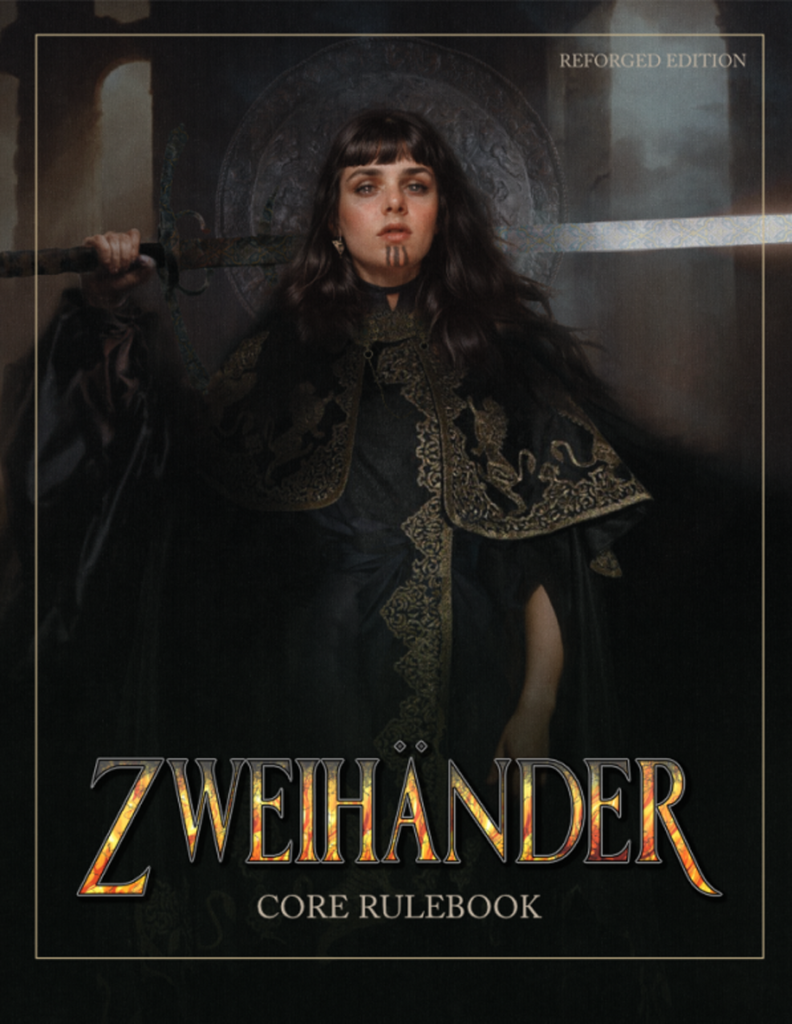
Zweihänder is the spiritual successor to WFRP for players who want grim fantasy. You play desperate people in a dark Renaissance world full of Chaos, fanaticism, and political decay. The Corruption mechanic tracks your moral decline, since facing darkness always leaves a mark. Zweihänder focuses more on social and legal cruelty than cosmic threats, but the result is the same: being good makes your character fall apart faster.
Violence comes from the system itself: Inquisitions burn heretics, nobles exploit peasants, and corrupt officials keep cruelty going as policy. You can move up through grim jobs, but you can’t change the world. If you’re lucky, you might retire alive, but the system stays the same. Zweihänder carries WFRP’s grimdark engine into a new setting. Small wins matter because that’s all you’ll get.
If you want something prewritten, take a look at the Starter Kit. The main differences in Reforged (which I’ve linked to) are mostly just streamlining, so any Starter Kit adventure will convert easily.
The Cost of Missing Criteria (And Why That Matters)
Knowing why some games fail the four-part test is just as helpful as knowing which ones pass. It shows what players really want compared to what grimdark games offer. Once you understand the pattern, you can look at any “grimdark” game and predict if the rules will hold up or drift into dark fantasy or another genre.
Mörk Borg is apocalyptic doom metal. Mörk Borg drops Criterion 1, there’s no system to erode because the apocalypse has already started. That’s what pulls it into doom metal instead of grimdark: the same bleak aesthetic and lethal stakes, but decline gives way to a countdown.
Shadow of the Demon Lord is dark fantasy with apocalyptic stakes. Shadow of the Demon Lord drops both Criterion 2 and Criterion 4: heroism carries no extra mechanical cost, and the apocalypse can actually be stopped. That’s what pulls it into dark fantasy instead of grimdark; the problem here is it installs a way to be a hero, so there is no moral downward pressure.
Cyberpunk RED nails Criterion 3 because corporate and state violence are structural, not incidental, but it drops Criterion 2: playing it straight doesn’t cost you any more than being ruthless. That’s what pulls it into dystopian survival instead of grimdark, heroism isn’t mechanically punished, so there’s no moral downward pressure.
Ten Candles doesn’t drop Criterion 2 so much as make it irrelevant. Death is predetermined, so there’s no virtue tradeoff to punish. That’s what pulls it into tragic horror, not grimdark: the same doom, but you’re writing a beautiful ending, not losing a war of attrition.
Spire brilliantly punishes idealism (Criterion 2) and features genuine institutional violence (Criterion 3), but revolution can eventually succeed through sacrifice. Spire drops Criterion 4, and that’s exactly what pulls it into revolutionary tragedy instead: it does have institutional cruelty and moral cost, the loop grinds you down the whole way, but the world can be saved.
These are all brilliant dark games, but each offers a different experience: terminal collapse, cosmic dread, cathartic tragedy, or revolutionary hope. Grimdark games are about ongoing moral decline in systems that can’t be fixed. It’s a rare and specific design challenge.
Conclusion
Grimdark is an extreme approach. Know your audience: most players don’t really want the full grimdark structure, they usually prefer a dark look with a way out for heroes. If you design a grimdark game that includes all four criteria and the moral downward pressure loop you’re making a tough, unforgiving game on purpose. It’s a rare and demanding style, not as popular, but it’s powerful for groups who want to explore moral decline instead of eventual victory.
Grimdark TTRPGs aren’t just about feeling dark, they’re about what the rules make unavoidable. The question for designers isn’t “Is this dark and bleak?” It’s “What do my characters become after sustained play?” With this model you’re predicting, from the design stage, whether your grimdark engine will hold or become something else.
Please, if you know a game that meets all four criteria that I missed, I want to hear about it! Tell me about it in the comments below.
This is part one of my ongoing series on system structure and pressure models. See also: Heroic Fantasy TTRPGs: Dragons Don’t Make a Game Heroic — The Rules Do
Want this kind of structural analysis applied to your system? Request a Structural Audit
You’ll get a written diagnosis of where your mechanics create unintended pressure, plus concrete fixes aligned to your intended play experience.
If you’d like notifications for future posts, subscribe below.
How would you categorize Black Sword Hack here? It’s a variant on Black Hack which is modeled on sword and sorcery and in particular Michael Moorcock’s Eternal Champion cycle.
I would call Black Sword Hack cosmic-tragic sword & sorcery. It has strong character erosion via the Doom die, but no framework suggesting player victories are temporary or that the world actively fights against improvement (Criterion 1: ✗). The system doesn’t punish virtue over ruthlessness (Criterion 2: ✗), its cruelty is metaphysical rather than institutional which is a possible pass (Criterion 3: ?), but its Law/Chaos endgame allows decisive victory (Criterion 4: ✗). Great Moorcock-style antiheroes, but not a grimdark system.
Warlock
Warlock! is grim, lethal low-fantasy peril. While its tone is dark and combat brutal, it fails core grimdark criteria: progress is real and lasting, not temporary (Criterion 1: ✗), virtue isn’t punished over ruthlessness (Criterion 2: ✗), cruelty is tonal rather than systemic, which is a possible pass (Criterion 3: ?), but the world is changeable through player action (Criterion 4: ✗).