The Best D&D 2e Adventures from Dungeon Magazine
Issues 39-59 Issues 60-81
In the early D&D era, TSR produced adventure modules that are the classics so much of tabletop roleplaying is built on. In 1989, when 2nd edition was released, TSR reduced module publishing in favor of settings and supplements, while Dungeon magazine routinely produced great written adventures. I first learned about this at the Dragonsfoot forums. There just aren’t resources for figuring out which are worth trying, however, and there were a lot of adventures: on average 4-6 per issue, and 2nd edition ran from issues 18-81. Still, I decided to go through and rate them according to how well they are designed, so that DMs or players wanting to explore can use my work as a resource. Dungeon issues are free to download from Archive.org.
I went through every issue, culling out the strongest 2e entries and rating each adventure across five dimensions. First, situation clarity. How clear is the premise, goal, and adventure structure? Second, decision density. How many truly meaningful player decisions are in the adventure? Third, Table Usability: How runnable is the adventure from the page, and how much does the DM need to keep track of while running it? Fourth, Distinctiveness: how special, creative or unique is the adventure compared to a generic dungeon crawl? Fifth, Patch Burden: How much does the DM have to invent or fix to make it work? I scored each dimension from 0–4 and averaged them, but to be eligible no adventure can have a 0 or 1 in any category. I also checked for railroading, which tanks the score automatically.
I then went through the best adventures a second time. This resulted in stronger, more consistent results. I had to raise my standards quite a lot, because there are lots of good candidates. I’m very confident in my results now, and will only include those that are truly exceptional (average is 3.6 or higher), very strong (3.2 – 3.5), or good (3.0). Notice that even ‘good’ adventures also have to average highly across every dimension. This is batch one, covering issues 18-38. Not every issue will be here, because not every issue had a 2e adventure up to my standard. This is just the first batch, more are coming!
Dungeon issue 18
Chadranther’s Bane, Paul Hancock – Score 3.2, Strong
Recommended for 5-8 PCs, levels 4-6.
PREMISE: After being magically shrunk by an ancient artifact, the adventurers must navigate a normal-sized wayhouse and garden filled with other diminutive factions to find and destroy the artifact.
Chadranther’s Bane is essentially Honey I Shrunk the Kids for AD&D. The shrinking idea is not just for show either; it changes how spells work, how creatures are summoned, and how characters move. The setting is filled with tiny factions, and the way the party deals with them affects how they can destroy the artifact. There are several possible paths, and the adventure avoids the usual problems of being too restrictive. The clear structure and logical limits mean the GM will not need to fix much. This is one of the more creative adventures from the magazine’s early issues.
Whitelake Mine, Willie Walsh – Score 3.2, Strong
Recommended for 3-6 PCs, levels 2-4
PREMISE: Hired to eliminate a giant pike menacing a gnomish underwater mining operation, the adventurers must devise a way to hunt the monster and ultimately uncover a hidden colony of aquatic ogres breeding the beasts.
What starts as a straightforward monster hunt quickly turns into something much stranger. The gnomish diving bell and underwater mining operation make the setting stand out right away. The real twist is the cause of the trouble, which I won’t mention here. The story moves smoothly from a hunt to an investigation and then to a cavern raid. There are several ways to handle both the pike and the ogre lair, so it never feels like a straight path. The rewards make sense, and the factions are clear, so the adventure runs smoothly without much work from the GM. The underwater farm is the kind of detail that sticks with players.
Dungeon Issue 19
House of Cards, Randy Maxwell – Score 3.2, Strong
Recommended for 4-6 PCs, levels 9-12 (Forgotten Realms)
PREMISE: Hired to eliminate the Night Masks thieves’ guild, the adventurers must infiltrate their hidden sanctuary and navigate the deadly temple of Mask, whose doors are sealed with cards from a modified Deck of Many Things.
House of Cards sends the party to infiltrate the hidden sanctuary of the Night Masks thieves’ guild, but the real hook is the inner temple of Mask. Each door is locked by a modified Deck of Many Things, and an alloy that stops any magical shortcuts. You have to draw from the deck to move forward, and the outcome of each draw can change the party’s makeup, alignment, and resources in the middle of the adventure, so every door feels like a big moment. Progress depends more on randomness than on complex branching, but the early choice to ally with the Shore Patrol gives players a meaningful decision. The deck-as-infrastructure idea is fully built in and doesn’t need any fixes from the GM. It’s a wild, creative adventure that really delivers on its unique concept.
The Serpent’s Tooth, Nigel Findley – Score 3.4, Strong
Recommended for 4-8 PCs, levels 3-6
PREMISE: Hired by a supposed government agent to spy on a dockside tavern and its owner, the adventurers are actually being used as unwitting pawns by a free-lance assassin gathering intelligence.
Serpent’s Tooth is built around a clever twist: the employer is actually the threat, while the target is the one you end up sympathizing with. This deception isn’t just a late-game reveal either, it shapes every part of the adventure, from how you infiltrate to the daily reports and a final confrontation with Andura that changes what the party gets out of the mission. Important decisions come up throughout the story, so your players have to think. The NPCs are more distinct than usual for a 1989 module, and the network of factions is essential to the plot. The main challenge is at the table: Dungeon Masters have to manage a five-day timeline and adjust NPC events on the fly. It’s a fantastic, reactive scenario that can be tough on DMs who aren’t well prepared.
Dungeon Issue 20
The Ship of Night, Wolfgang Baur – Score 3.2, Strong
Recommended for 5-7 PCs, levels 7-9
PREMISE: Hired by a dwarven sage to investigate the ancient ruins of Hammerkeep, the adventurers must explore a massive underground dwarven construction known as the Ship of Night, which is now infested by derro and their cult.
The Ship of Night takes the party deep underground to explore Hammerkeep. Its node-based layout creates a solid Underdark sandbox, offering real faction play, branching exploration paths, and traversal choices shaped by rivers and gates. What elevates it is the atmosphere, which is built into the dungeon itself. Features like a projected moon cavern, a glowing moonscape floor, and cultists who use phase potions to walk through walls are an integral part of how the dungeon works. Meeting characters like Madame Narcosa adds even more depth. This adventure is complete, creative, and ready to run right away.
White Fang, Nigel Findley – Score 3.0, Good
Solo adventure for a 10th-level thief
PREMISE: A lone thief ascends the treacherous mountain of White Fang to steal the legendary Gem of the Giants from a frost giant settlement.
White Fang offers a change of pace as a dedicated solo gamebook adventure. The premise is pure high-stakes heist: climb a dangerous mountain, sneak into a frost giant settlement and steal the gem. The game uses paragraph-routing and item numbers to track your inventory and choices as you go. While the format is more structured than a typical sandbox, the creative use of cursed items and environmental hazards adds real depth to the gameplay. It’s self-contained and runs smoothly. This is a great option when a player can’t make it to a session.
Dungeon Issue 21
The Cauldron of Plenty, Willie Walsh – 3.4, Strong
Recommended for 4-6 PCs, levels 2-4
PREMISE: Hired by a druid on behalf of the Ri Luachra, the adventurers travel to the Poll Dubh Doracha to recover the magical cauldron of plenty from a verbeeg giant without using violence, if possible.
Cauldron of Plenty centers on a rule that is enforced by the game itself, not just suggested by the story: you need to recover the cauldron from the giant, but any violence will trigger a supernatural curse built into the adventure. This one rule makes the whole experience about negotiation and creative problem-solving. Bolg Mór stands out as a character: he drinks tea, keeps the heads of his enemies, and reacts differently depending on how strong he thinks the party is. The Celtic setting, Irish-language command words, and the honor-price system are totally essential to how the adventure works. This is one of the most uniquely integrated designs from the early releases.
The Chest of the Aloeids, Craig H Barrett – Good, 3.0
Recommended for 6-8 PCs, levels 6-8
PREMISE: The adventurers are chosen by the goddess Athena to travel back in time to ancient Arcadia and rescue the infant god Hermes from the giant Aloeids, who have imprisoned him in a bronze chest.
The adventure centers on time travel, active involvement from the gods, and a finale where the players must figure out a way to beat the giants without fighting them, since defeating them directly is impossible. Players make meaningful choices throughout the wilderness, at the sphinx gate, and during the escape. The main challenge is managing Athena, Hermes, and Silenus in a way that keeps player agency intact, which demands active GM judgment throughout.
Dungeon Issue 23
Old Sea-Dog, Thomas Kane – Score 3.0, Good
Recommended for 2-5 PCs, levels 2-5
PREMISE: The PCs are hired by Sir Veneti to recover his prized mastiff, Sirius, from a ship captained by Leono, but must contend with a pirate mutiny occurring at the same time on the ship.
The premise is awesomely frantic: you have to sneak onto a docked ship to rescue a 160-pound irritable mastiff named Sirius, all while a pirate mutiny breaks out. This concept drives the whole adventure. There are several ways to infiltrate the ship, and the shifting loyalties between crew and mutineers keep things flexible in the early stages. At 11:00 PM, the ship suddenly sets sail, turning stealth into chaos and raising the stakes. While the timing of events means the DM has more to track, the module provides good support. Overall, it’s a memorable canine heist.
Dungeon Issue 24
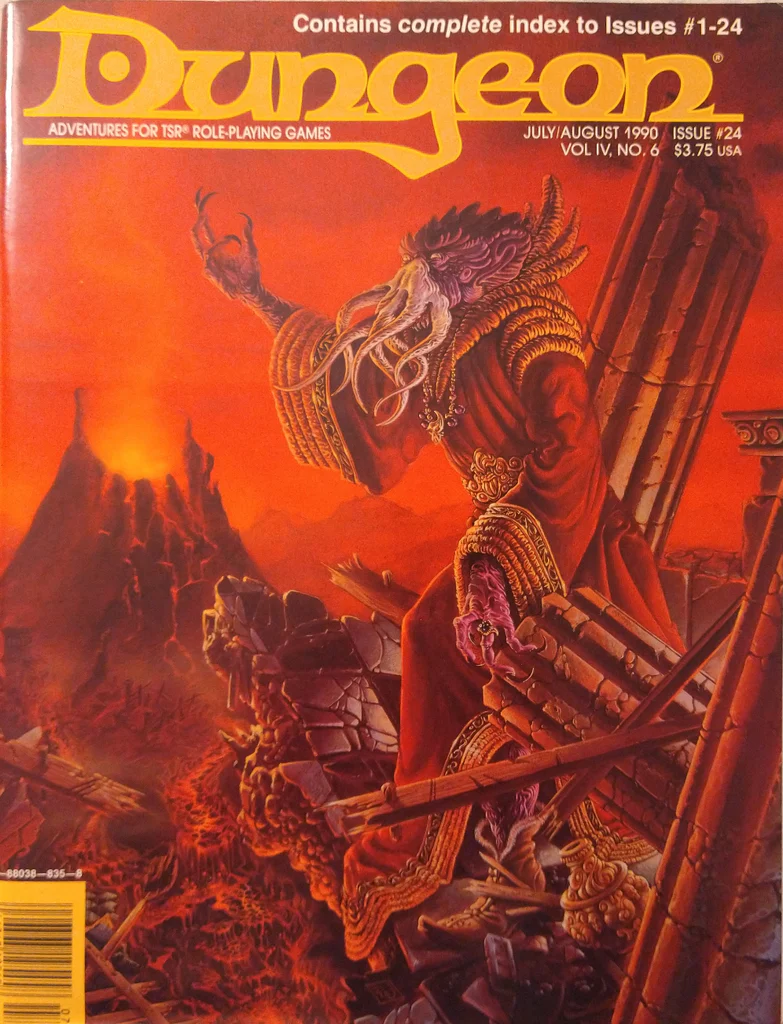
Thunder Under Needlespire, James Jacobs – Score 3.4, Strong
Recommended for 4-6 PCs, levels 8-12
PREMISE: Hired by a desperate deep gnome village to investigate mysterious earthquakes they believe are caused by an illithid outpost, the PCs discover the mind flayers are equally threatened by the quakes. The true cause is [redacted] which the PCs and mind flayers must temporarily ally to destroy before the mountain becomes a volcano.
Needlespire is great because its structure feels necessary, not forced. The magma-feeding creature that could turn the mountain into a volcano is immune to illithid powers, which leaves them powerless and desperate. This is more than just a monster trait, it drives the whole adventure: it explains why the mind flayers can’t fix things themselves, why they need the PCs, and why the alliance happens out of necessity. There are three factions and a built-in betrayal thanks to someone’s secret orders at the heart of the mission. Some of the reward logic is a bit thin and will need the GM to fill in the gaps, but overall this is a fantastic Underdark sandbox, written by the legendary James Jacobs.
There is another adventure in this issue, In the Dread of Night. It’s 1e, but it’s exceptional.
Dungeon Issue 25
A Rose for Talakara, Wolfgang Baur/Steven Kurtz – Score 3.8, Exceptional
Recommended for 6-10 PCs, levels 8-12
PREMISE: A skeleton warrior trapped in servitude to an evil wizardess orchestrates the kidnapping of a high priest, leaving clues to goad a party of adventurers into attacking her stronghold and unknowingly freeing his soul.
A Rose for Talakara is the first truly great adventure in 2e. It is built around one of the more elegant conceits in the magazine’s run: the apparent antagonist is the actual scenario designer. Agrovale, the skeleton warrior, sets up the entire adventure by planting clues, steering the investigation, and pushing the party to defeat his captor so he can finally be free. This twist is not just a surprise at the end; once you realize it, it changes how you see every major encounter, since their goals only sometimes match the party’s. The adventure offers meaningful choices at every stage, from the investigation and wilderness travel to sneaking in, dealing with factions inside, and the final decision with Agrovale. With 71 locations, teleporter networks, gemkey systems, and strict magical rules, the adventure is large in scope and holds together on its own. It’s a masterpiece.
Dungeon Issue 26
The Inheritance, Paul F Culotta – Score 3.4, Strong
Recommended for 4-6 PCs, levels 9-12 (Forgotten Realms)
PREMISE: One of the player characters inherits a keep from a deceased uncle but must get rid of an occupying hobgoblin troop within 30 days to claim it legally.
The Inheritance uses a premise that creates real pressure without railroading: you inherit a keep near Waterdeep, but you have to clear out the hobgoblin troop within 30 days or lose your claim. The hobgoblin lord is stuck because of his own vanity mirror, and this detail is built into the mechanics. Choosing your route and deciding whether to side with Grinkle are the main points where the story can branch, and there are several ways to move through the keep, so players have real tactical choices. The adventure provides clear NPC actions, reward rules, and boundaries, so the GM can focus on running what’s given instead of making things up. It’s one of the more self-contained keep-crawls available.
Nine-Tenths of the Law, Willie Walsh – Score 3.4, Strong
Recommended for 5 PCs, levels 7-10
PREMISE: The party is hired to track down an infected lycanthrope, completely unaware that his body has been taken over by the magic-jarred spirit of a deceased evil wizard seeking his lost spell books.
Nine-Tenths of the Law takes a standard werewolf hunt and turns it into a complex urban mystery. The twist shapes the whole investigation and pushes players to look past the obvious threat. The full moon gives a clear deadline for curing the lycanthropy, which keeps the tension high. What really makes this adventure work is how it gives players real choices—how to investigate, when to confront, whether to chase leads or turn to the thieves’ guild, and how to deal with Nerick once the truth comes out. The adventure also handles failure in a clear way, with specific consequences for each possible outcome. It demands a prepared DM, but everything you need is on the page.
Dungeon Issue 29
Ex Libris, Randy Maxwell – Score 3.2, Strong
Recommended for up to 4-7 PCs, levels 5-8 (Forgotten Realms)
PREMISE: The PCs are hired by the Silverymoon town library, the Vault of Sages, to find the ruins of Bard Keep and recover any magical or sage-lore tomes hidden within its shifting library rooms.
Ex Libris is made for players who love puzzle-heavy dungeon crawls. The heart of the adventure is an ancient library that functions as a giant, sliding 4×4 spatial puzzle, using physical tiles, alphabetical rune-page logic, and rooms that change every turn. The adventure mixes combat, exploration, and faction play, especially during tense showdowns with a rival party, all while keeping track of many moving parts. Running it can be a challenge, but if your group enjoys tactical maps, creative problem-solving, and weird magical lore, this is absolutely worth the prep.
Mightier Than the Sword, Willie Walsh – Score 3.2, Strong
Recommended for up to 6 PCs, levels 1-4
PREMISE: A penmaker named Callery Frickard invents a metal pen nib and is subsequently murdered. The party is hired by opposing factions to investigate his death in the town of Bordton.
Mightier Than the Sword takes the invention of a metal pen nib and makes it into a deep political mystery. After the inventor is murdered the party finds itself caught between really specific factions: the Guild of Scribes, the Inkmakers’ Union, and the Goose Breeders’ Association. Each group has a stake in the new technology and all of them actively get in the way of the investigation as the town teeters on the edge of a riot. I really like the twist: while the party gets tangled up in trade-war politics, the real motive is just [redacted]. The adventure spells out exactly when mobs or militias might act, and the GM gets clear, scripted moments to shift the story.
Dungeon Issue 30
A Wrastle with Bertrum, Willie Walsh- Score 3.2, Strong
Recommended for up to 8 PCs, levels 2+
PREMISE: The party attends or participates in a wrestling match against a tame troll at a disreputable tavern, only for the event to be interrupted by a tavern brawl, a magical prank, and multiple factions attempting to steal the prize money.
A Wrastle with Bertrum turns a tavern into a single-location comedy of chaos. It starts with a staged wrestling match against a tame troll; what follows is a triple-robbery, a magical prank, and tangled faction trouble. A halfling gang pretends to be dwarves while the real dwarves are right there, and a magic horn turns the fight into wild acrobatics. Every part adds to the rising action instead of just being extra. The main challenge is running it at the table. Custom wrestling rules and random magical movement, all packed into seven pages, make things tough for the DM. It’s a lot to manage, but the fun is worth it.
…and a Dozen Eggs, Randy Maxwell – Score 3.6, Exceptional
Recommended for up to 4-6 PCs, levels 1-3 (Forgotten Realms)
PREMISE: Twelve tanystropheus dinosaurs have hatched from eggs meant for potions and escaped into the Waterdeep sewers. The PCs are hired to track them down and capture or kill them.
…and a Dozen Eggs starts with a premise that sounds like a joke but turns it into a well-designed hunt. There’s a growth clock that drives the adventure, because the dinosaurs actually grow larger and more dangerous the longer the party takes. This makes route choices and timing matter throughout the scenario, not just at one point. Navigating the sewers means getting past locked grates, managing resources under time pressure, and deciding whether to bargain or compete with Pravus, a rival trap-setter on the same job. Pravus’s wererat connections add a predator-hunting-predator twist to the bounty. This adventure stands on its own and is one of the best, most polished entries in the series.
Dungeon Issue 32
The Wayward Wood, Leonard Wilson – Score 3.2, Strong
Recommended for up to 4-6 PCs, levels 6-9
PREMISE: The adventurers must investigate and stop a magical forest that has uprooted itself and is migrating toward a human village to escape a destructive war between resident firbolgs and invading trolls.
The Wayward Wood centers on a cool idea: a whole forest pulls up its roots and moves toward a human village to escape a war between firbolgs and trolls. This isn’t just for atmosphere. There’s a fire-spread system, a synchronized faction schedule, and hourly hex tracking, all working together to create a detailed, procedural adventure. Players face a lot of meaningful choices, from negotiating with factions to interacting with the environment. The main challenge is keeping track of everything at the table. The moving forest map, four-day schedule, and multiple factions all moving at once can be tough to manage during play, so the DM needs to be well prepared.
Hermes’ Bridge, Timothy Leech – Score 3.2, Strong
Recommended for up to 4-6 PCs, levels 7-10
PREMISE: The party encounters a massive, ancient bridge over a turbulent river, originally built by a Greek-style civilization to honor Hermes. They must navigate the bridge’s magical guardians and hazards to cross or loot its tolls.
Hermes’ Bridge is a small, focused adventure built around a bridge dedicated to Hermes, still guarded by its original magical protectors after centuries. The main event is a standoff between a troll and a golem, with a special shield that lets players take over the golem’s senses and give it commands. There’s also an urn-lever puzzle for a non-combat solution, resource basins that add risk and choices, and a dwarven NPC party that brings in a real-time diplomatic challenge. All interactive parts are straightforward and tied to the location, not bogged down by a bunch of rules. There are clear hazards, puzzles, and rewards, so no extra prep is needed. The adventure packs a lot of interesting mechanics into a small space.
Pearlman’s Curiosity, Willie Walsh – Score 3.6, Exceptional
Recommended for up to 4-6 PCs, levels 1-4
PREMISE: A wizard named Pearlman leaves a crate containing a paralyzed nilbog in the town of Grinley Crossing to study the effects of its chaotic aura on the townsfolk from afar, prompting the PCs to investigate the strange behavior and locate the missing crate.
Pearlman’s Curiosity does an outstanding job of turning a classic monster trope into a unique investigative engine. The players have to figure out why the townspeople are acting so strangely. Instead of following rumors the investigation follows a trail of weird, reversed behavior caused by the nilbog’s aura. This twist isn’t just just a gimmick, it drives the whole adventure. The scenario fits together well: there’s a missing crate, the whole town is acting backwards, a magical hazard is contained, and the wizard is safely watching from a distance. The chaos from the nilbog’s effect adds a real challenge at the end, but the adventure gives you everything you need to handle it. It’s great and runs flawlessly.
Dungeon Issue 33
The Siege of Kratys Freehold, Ted James Thomas Zuvich – Score 3.4, Strong
Recommended for up to 4-8 PCs, levels 1-4
PREMISE: The adventurers are hired to help defend an isolated farmstead against a massive, organized siege by a vengeful orc tribe.
The Siege of Kratys Freehold drops low-level players directly into tactical command of a farmstead facing an organized orc assault. The preparation phase is decision-rich: man-hour allocation, construction priorities, messenger dispatch, and ally selection all affect defensive capability and survival odds, under grueling constraints including war drums that disrupt spell recovery. That military logic makes the siege premise the module’s actual engine rather than a flavor wrapper. The honest caveat is table usability. Once the assault begins, the DM must juggle a mass-combat subsystem, real-time multi-front tracking, and a metagame shift that forces players out of character to run Tarran’s strategy. A distinctive, rewarding challenge for an organized group with a prepared DM.
Mad Gyoji, Colin Sullivan – Score 3.4, Strong
Recommended for up to 4-6 PCs, levels 7-10, (Oriental Adventures) a Shukenja PC
PREMISE: An exiled shape-shifting fox creates a spiritual curse to murder the lineage of the village elder who banished him, forcing the adventurers to travel to an abandoned, mist-shrouded temple island to break the curse.
Mad Gyoji might be the most atmospheric and unique adventure so far. It is an Oriental Adventures scenario inspired by Japanese folklore. Instead of defeating the fox, players have to resolve a curse through a ritual. The adventure’s island pilgrimage structure is great, with festival boat taboos, a haunted sohei who gives the party a map, a treetop tasloi village, and a final encounter with a mad potter who can be redeemed. However, the main issue is how the story resolves. Beating Gyoji in combat does not break the curse. The real solution is a ritual, but this path is hidden behind scattered clues. Changing the usual “defeat the boss” expectation fits the setting, but the alternative is not clear enough and can feel unfair. DMs will likely need to adjust the adventure a bit to prevent a frustrating ending, which can be done by simply giving the PC’s a real chance to put the clues together. If it weren’t for that, Gyoji would jump to at least a 3.6.
Dungeon Issue 34
The Lady Rose, Steven Kurtz – Score 3.8, Exceptional
Recommended for up to 5-7 PCs, levels 8-11
PREMISE: A technologically advanced naval ship attacks the port of Sandbar and abducts adolescent elves to be sold into slavery, prompting the PCs to infiltrate the heavily armed vessel and rescue the captives before the ship sails.
The Lady Rose is a high-stakes infiltration scenario centered on a technologically advanced slaver warship from the Talangrán Empire. It comes equipped with anti-ship ballistas, mage-shot ammunition, a resentful marid guarding the payroll and captives kept passive through magical amnesia. These elements are indispensable because the ship’s technology, its faction ties, and its rising alert levels all directly affect how the infiltration unfolds. Players face meaningful choices at every turn, from how they board and whether they negotiate or fight, to how they move through the ship, deal with officers, and decide if they want to recruit crewmates. Each decision has real consequences before the ship goes on full alert. The scenario provides a complete operational framework including approach options, infiltration routes, internal security, and escalation logic all included. One of the strongest exceptional entries in the series.
On Wings of Darkness, Craig Barrett – Score 3.8, Exceptional
Recommended for up to 4-6 PCs, levels 5-8 (Forgotten Realms)
PREMISE: A rich widow named Raisa Enshada hires the PCs to hunt down strange predators that have been slaughtering her sheep, as part of an elaborate prank against her rival. However, the predators were actually created by an evil wizard as a distraction to assassinate the rival, forcing the PCs to uncover the plot and stop the wizard.
On Wings of Darkness takes a strange premise and makes the whole thing a race against time. The story starts when a widow hires the party to hunt sheep-killing predators as a prank on her rival, but these predators are actually created by an assassin to cover up a political murder. The fake motive and hidden assassination plot fit together smoothly, and the way the predators turn back into dead sheep at sunrise is a nice detail that makes the adventure even better. A talking owl who wants its freedom and the need to save an annoying romantic rival add extra layers to the story. Keeping track of the timeline to match nightfall with the assassination adds tension, and the adventure provides clear procedures and everything fits together well. This is one of the best and most memorable entries in the series.
Dungeon Magazine Issue 36
Granite Mountain Prison, Roger Baker – Score 3.4, Strong
Recommended for up to 4-6 PCs, levels 4-6.
PREMISE: The High Council of Interlaken has falsely imprisoned the rebel leader Jathan Paark in Granite Mountain Prison, a supposedly inescapable fortress built in the heart of a dead volcano. The PCs are hired by the Order of the Holy Ring to break him out before their rebellion collapses.
Granite Mountain Prison is a prison-break adventure with a strong mechanical focus. The main target is locked away in a volcanic fortress designed to be impossible to escape, and the module really lives up to that reputation. The Wheel-cell extraction challenge is at the heart of the adventure, and is a brilliant mechanism. Features like the anti-spellcaster stammering procedure, a metagolem food server, and a trapped air elemental pump make the setting feel unique. There are several ways to get inside, and the choices between stealth and triggering alarms keep the infiltration from feeling linear. The open-ended extraction puzzle puts a lot of responsibility on the GM to make rulings, but the module provides plenty of details about the environment, restrictions, and NPC actions. It’s not easy, but everything you need is there.
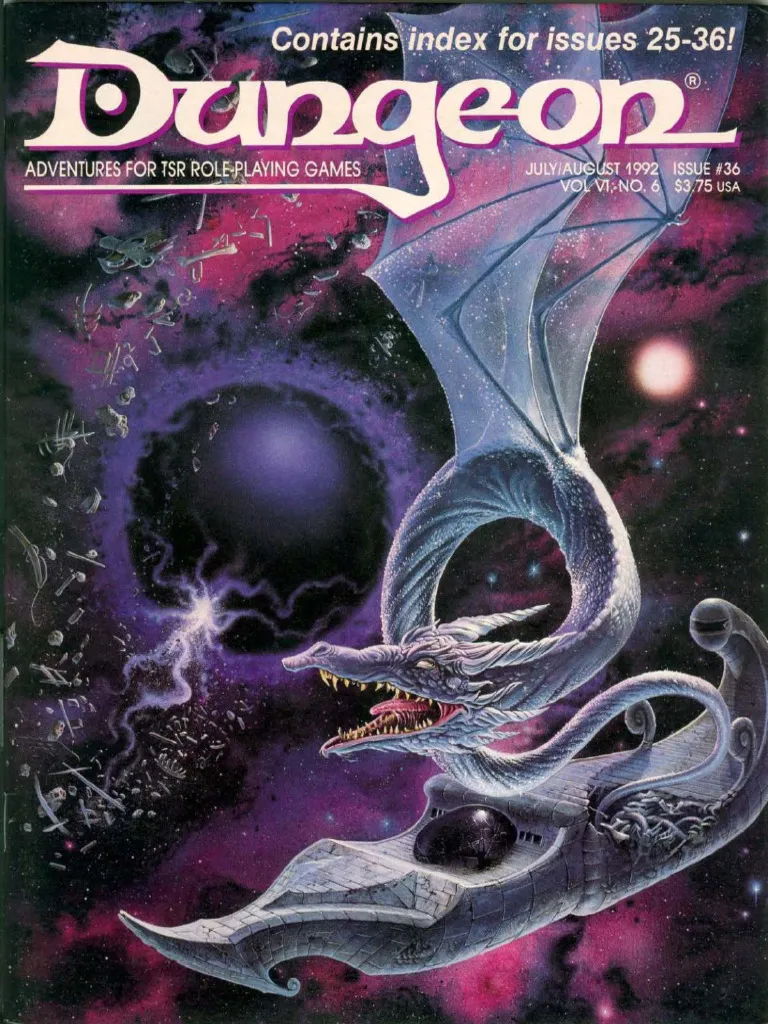
Sea of Sorrow, Steve Kurtz – Score 3.6, Exceptional
Recommended for up to 4-6 PCs, levels 7-9. (Spelljammer)
PREMISE: The party is hired by the Arcane to slay a radiant dragon named Blacklight that has been destroying ships in Pirtelspace. They also need to map the sphere and brave the Sea of Sorrow, a magic-dead sargasso filled with derelict ships and space monsters.
The Sea of Sorrow is an outstanding Spelljammer adventure thanks to its ambitious structure. The party is hired to hunt the dragon, but the real focus is the Sea of Sorrow itself. This area is a magic-dead area full of wrecked ships and space monsters, which takes away the party’s spellcasting and forces them to get creative with movement. Players have to make choices about their route, chase ghost ships, decide whether to salvage derelicts, and balance air supply against treasure, and these decisions matter throughout the adventure. Facing the dragon in a space leviathan’s lair is a great climax. The module uses a lot of Spelljammer rules, but everything you need is included. It’s best for groups already familiar with the system.
Dungeon Magazine Issue 37
The Mud Sorcerer’s Tomb, Mike Shel – Score 3.6, Exceptional
Recommended for up to 6-8 PCs, levels 10-14.
PREMISE: The PCs explore the labyrinthine crypt of Tzolo, an evil “mud sorceress” of an ancient and persecuted cult. She sealed herself in temporal stasis to wait out a religious purge, only to be betrayed and left to slowly die by a rival sorcerer. The tomb is filled with lethal traps, puzzles, and guardians designed to test her returning disciples.
The Mud Sorcerer’s Tomb is the gold standard of high-level dungeon design. It’s a puzzle-filled crypt that actually delivers on the promises made by Tomb of Horrors. The tomb is built around the hidden sanctum of an ancient mud sorcerer and is famous for its environmental storytelling. You’ll find a 40-foot elephant-headed statue to climb, a sea chamber that floods unless you find the drain, a mudship hanging over an underground river, and several false crypts meant to trick you into thinking the adventure is over. If your group enjoys dungeons where clever thinking matters more than hit points, this adventure rewards every bit of preparation you put in.
Dungeon Magazine Issue 38
Things That Go Bump in the Night, Rich Stump – Score 3.8, Exceptional
Recommended for up to 4-7 PCs, levels 3-6.
PREMISE: The Noraldai wood elves hear eerie noises echoing from an ancient, taboo hobgoblin ruin and fear the spirits of their vanquished enemies have returned. They hire the PCs to investigate and stop the haunting, but things are much more than they seem.
Things That Go Bump in the Night is a subversion of the classic haunted ruin crawl. What starts as an undead investigation becomes a high-stakes diplomatic adventure. The wood elves of Brettonwood mistake the noise from a friendly firbolg demolition crew for a vengeful ghost army. The real heart of the adventure is the forest itself: Magical thrumwood trees pick up and spread sounds throughout the woods, so what should be a simple demolition turns into a panic for the whole village. The real problem is a renegade drow cleric who lives peacefully under the protection of a black unicorn, with help from one of the chattiest owls in D&D history. If your group enjoys solving mysteries, making tough choices, and talking with different factions instead of just fighting, this one is a real gem.
Horror’s Harvest, Chis Perkins – Score 3.6, Exceptional
Recommended for up to 4-8 PCs, levels 2-4. (Ravenloft)
PREMISE: A fallen comet buried in the woods sprouts an alien “doppleganger plant” that secretly enslaves the villagers of Delmunster, turning them into podlings whose life essence is slowly drained. The PCs are hired by an astronomer to retrieve the comet, thrusting them into a paranoid village where anyone could be a monster in disguise.
Horror’s Harvest is one of ChrisPerkins’ early works — an Invasion of the Body Snatchers theme mixed into the gothic atmosphere of Ravenloft. A fallen comet has sprouted an alien doppleganger plant, and it’s been quietly replacing the villagers of Delmunster with podlings who are smart enough to fight back. These podlings plant fake evidence, charm innocent bystanders into giving you bad information, and might even frame your fighter for murder just to get them locked in a cell overnight. The investigation is adversarial, and the mutation table alone makes this adventure awesome. If your group loves paranoid social horror where every question counts and trust is in short supply, this is a must-play.
Tabletop RPG Hub
An excellent series of articles. Well done!!!
May I translate them into Italian and publish them (obviously crediting the original author and including a link to your articles) on an Italian website dedicated to role-playing games?
You are very welcome to do that! I’d love for it to be shared
Thank you soooo much! Once the articles will be online, i send you a message with the links.
I look forward to it
Hi! The first two parts of your article are online at these links:
https://www.dragonslair.it/forums/topic/71661-le-migliori-avventure-per-add-pubblicate-sulla-rivista-dungeon-parte-1-di-3/#comment-1964010
https://www.dragonslair.it/forums/topic/71724-le-migliori-avventure-per-add-pubblicate-sulla-rivista-dungeon-parte-2-di-3/#comment-1965275
As soon as I’ve posted the last one online (which includes the necessary acknowledgements for your fantastic work), I’ll send you the missing link too.
Thanks again for your help.
Horror’s Harvest is 5/5 for me. Way better than most of the official Ravenloft modules.
Keep up the great work!
Nice ! Thank you 🙂