Best DC Rebirth Comics: Great Start, Messy Finish
Best Reads for the New 52
There was no clear “final issue” for the New 52 reboot, DC just started with Rebirth #1. In a nutshell, DC Rebirth was a major success at first, but later it lost its way. Both statements are true, and this post focuses on what went right. Rebirth started in 2016 and ended in 2020, so it’s now celebrating its 10th anniversary, which is why I’m writing about it; it was followed by Infinite Frontier in 2021.
DC really needed this change, as I talked in my last post. The New 52 had taken away the marriages, legacies and hope that made these characters important, and fans noticed, so Rebirth was DC’s way of making up for it. Geoff Johns brought back the original Wally West, who spoke for the fans by pointing out that something was off in this universe. The story then blamed Doc Manhattan from Watchmen for stealing ten years of history, which was a smart way for DC to admit the problem without taking the blame. Instead of completely starting over again they kept the best parts of the New 52 and blended them into the old continuity.
For about two years the plan worked: DC released some of its best superhero comics in a long time, and readers came back… but then things started to fall apart. Doomsday Clock was supposed to wrap up the whole initiative, but it came out about a year late, and Geoff Johns left his executive position in 2018. Heroes in Crisis made Wally West (who represented Rebirth’s hope) into a killer, while Bendis made Jon Kent older and split up the Superman family, which had been a highlight of Rebirth. Since monthly comics can’t stop, the series kept going without clear direction.
So to recap, Rebirth was a great relaunch, but as an overall plan it didn’t work out. The delays and people leaving explain why it fell apart, but that’s not an excuse, because DC understood what was wrong with the New 52 but didn’t stick with the solution. So my advice is the same as before: focus on the comics themselves, not the whole era. Here are best DC Rebirth comics I recommend without hesitation, that do NOT cross into Rebirth stuff. Each one stands on its own, with no crossovers or extra reading needed. The era itself was hit-or-miss, but these books are rock solid.
FYI I get a small commission if you buy anything through my links, but it doesn’t cost you anything extra. I only recommend comics I believe in, and your support helps keep the site going.
The Top 6
Superman (Tomasi and Gleason, #1–17)
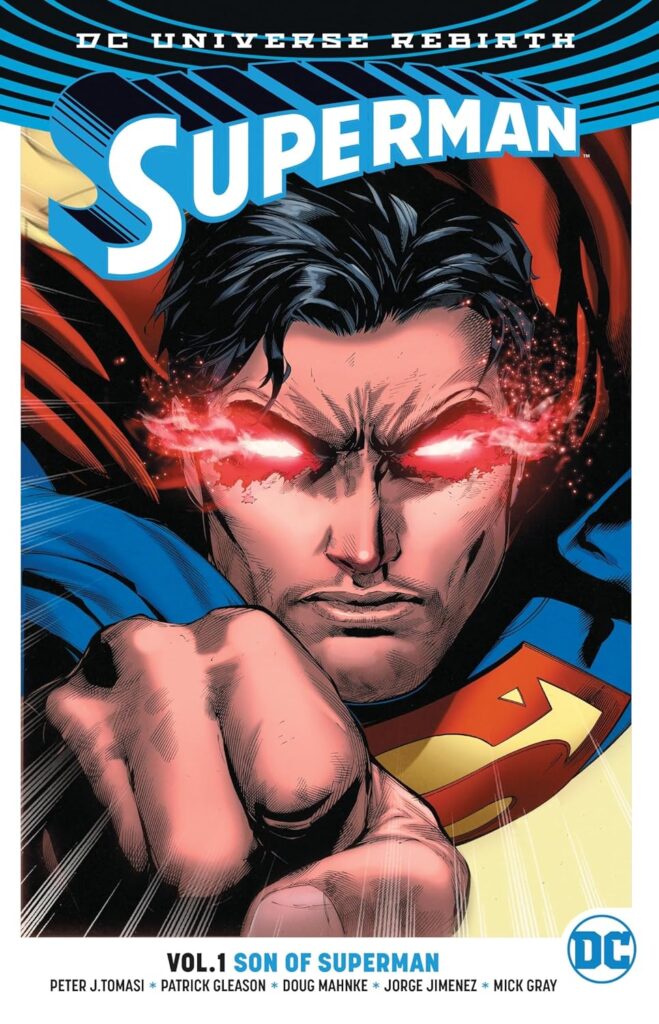
The New 52 showed us a serious, isolated Superman. Tomasi brought back what makes him special: his family. Here, Clark is a husband and dad, living quietly in Hamilton County with Lois and their ten-year-old son, Jon. When Jon’s powers start to appear, Clark has to help his son learn how to handle a world that isn’t ready for him.
The story in Superman works because it shifts smoothly between huge, world-saving moments and everyday family life. Clark might stop an invasion, but he still needs to teach his son about right and wrong. The tone is honest, warm, and joyful, without the cynicism of earlier stories. Gleason’s art makes quiet family scenes feel just as important as big battles.
Recommendation: Vol. 1, Son of Superman, through Vol. 3. After issue 17 things start crossing over and diving more into DC Rebirth. If you love the run and are fine with reading Rebirth-related stuff, get the Omnibus because it ends well and isn’t that expensive for ~45 issues..
Super Sons (Tomasi and Jimenez, #1–10)
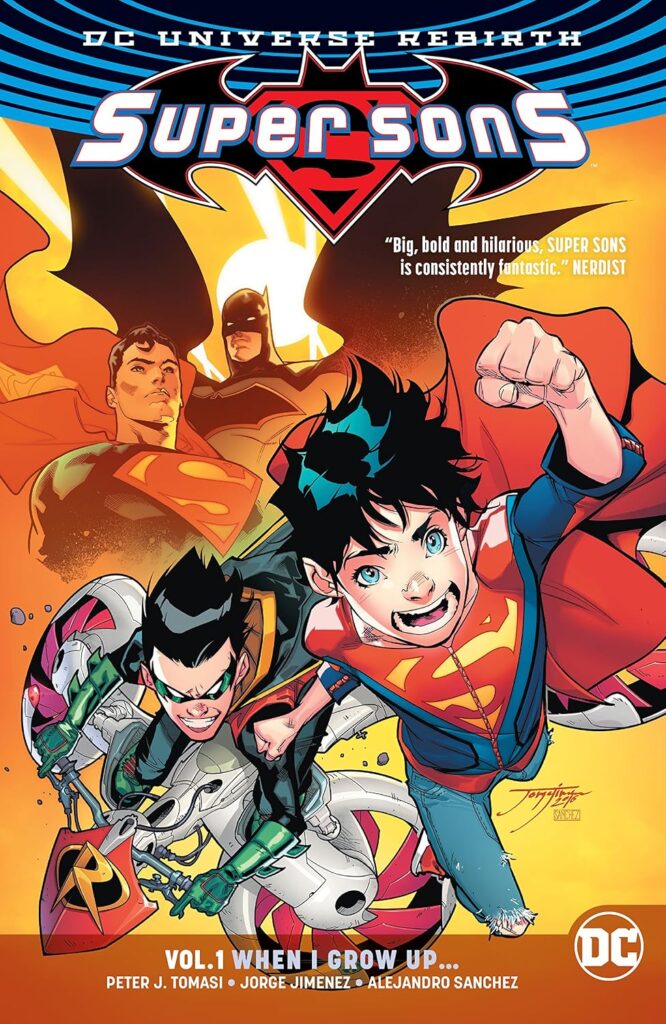
Here’s what Super Sons is: imagine the world’s most arrogant, assassin-trained ten-year-old, Damian Wayne, teaming up with Jon Kent, a cheerful and sincere half-Kryptonian farm kid. Now, try telling them not to sneak out after bedtime. Jon wants to be a hero and is still learning how his powers work, while Damian already believes he’s a hero and doesn’t have any patience for anyone who disagrees.
Tomasi and Jiménez really make the most of this contrast. Damian’s attitude clashes with Jon’s optimism, which leads to a lot of funny moments, but both kids are more than just comic relief; their arguments, mistakes, and moments of real teamwork make their friendship feel real. Jiménez’s kinetic, expressive art gives the action the same energy as the boys. You don’t need to know anything about their famous fathers to enjoy seeing them get into trouble.
Recommendation: Begin with Vol. 1, When I Grow Up for the first 5, and Vol. 2, Planet of the Capes for the rest.
Mister Miracle (Tom King and Mitch Gerads)
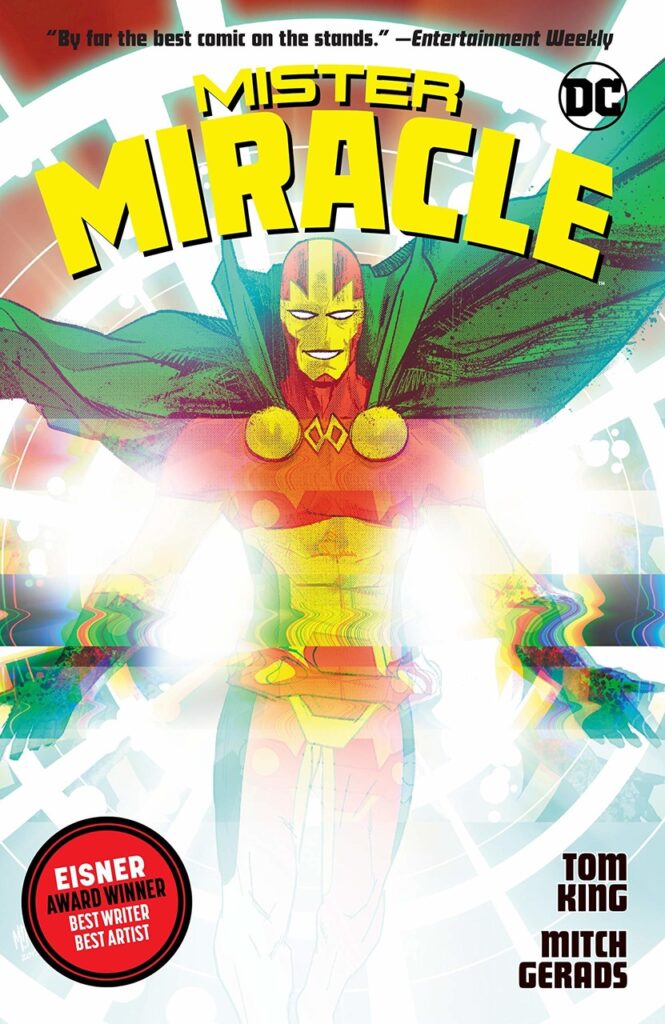
Scott Free, Mister Miracle, is the greatest escape artist in the universe, a god who broke out of the pits of Apokolips. He can get out of any trap, prison, or even a death sentence, but what he can’t escape is his own head. The series starts grimly, with a failed suicide attempt, and Scott has to deal with that as the war between New Genesis and Apokolips pulls him back in.
King and Gerads turn one of DC’s strangest characters into a cosmic war epic, a story about a marriage under stress, and a raw look at depression—all at the same time. Scott and Big Barda are stuck between raising a child, facing the horrors of war, and feeling like reality itself is falling apart. Gerads uses a strict nine-panel grid throughout, which makes the book feel tight and closed in. The twelve issues form a complete story about survival and commitment, but not every question gets answered. This story is so good it won two Eisner awards.
Recommendation: Grab the collection (#1–12). It’s a standalone story, not connected to the rest of DC, and you don’t need any background so just dive in.
Wonder Woman (Greg Rucka with Sharp/Scott, #1–25)
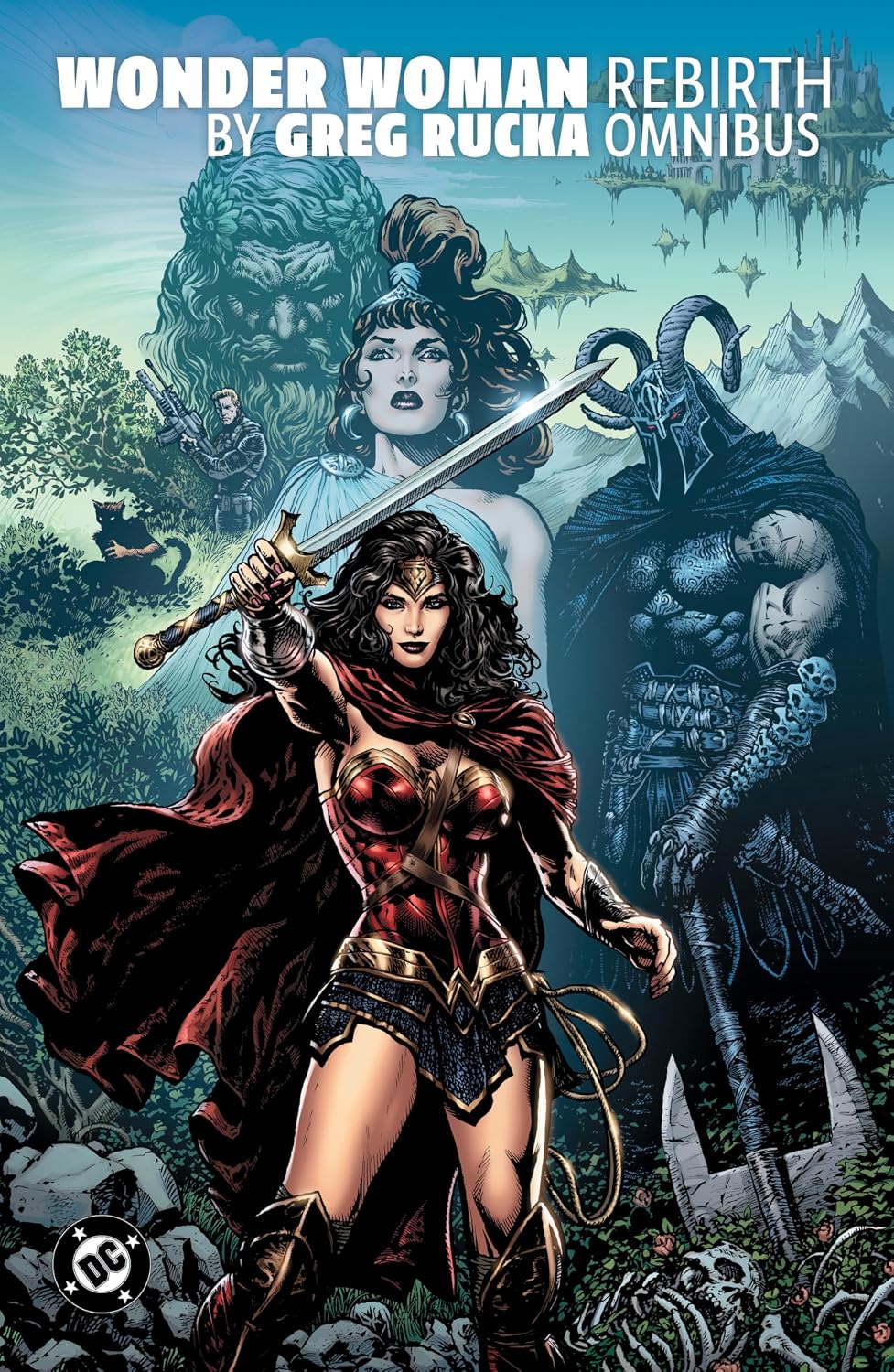
Diana is struggling with memories that don’t add up, and she knows someone hasn’t been honest with her. To get answers she teams up with Cheetah, even though they’ve been enemies for years. At the same time, Rucka revisits Diana’s first trip from Themyscira to the outside world, showing her as a young woman learning about humanity without losing faith in it.
These two Wonder Woman stories fit well together because Rucka shows that Diana’s compassion is her real strength, not something she needs to hide. She’s able to fight monsters, but it’s just as important to her to help people others have given up on. Nicola Scott brings warmth and a sense of wonder to Diana’s origin, while Liam Sharp makes the present-day mystery feel strange and dangerous. The origin story is the stronger half but both focus on who Diana is, not just on superhero action. This version of Wonder Woman feels powerful because she cares, not because the story keeps telling us how tough she is.
The single best way to own this is the omnibus. If you just want to dip your toe in, try Wonder Woman Vol. 1: The Lies.
Detective Comics (James Tynion IV, #934-940)
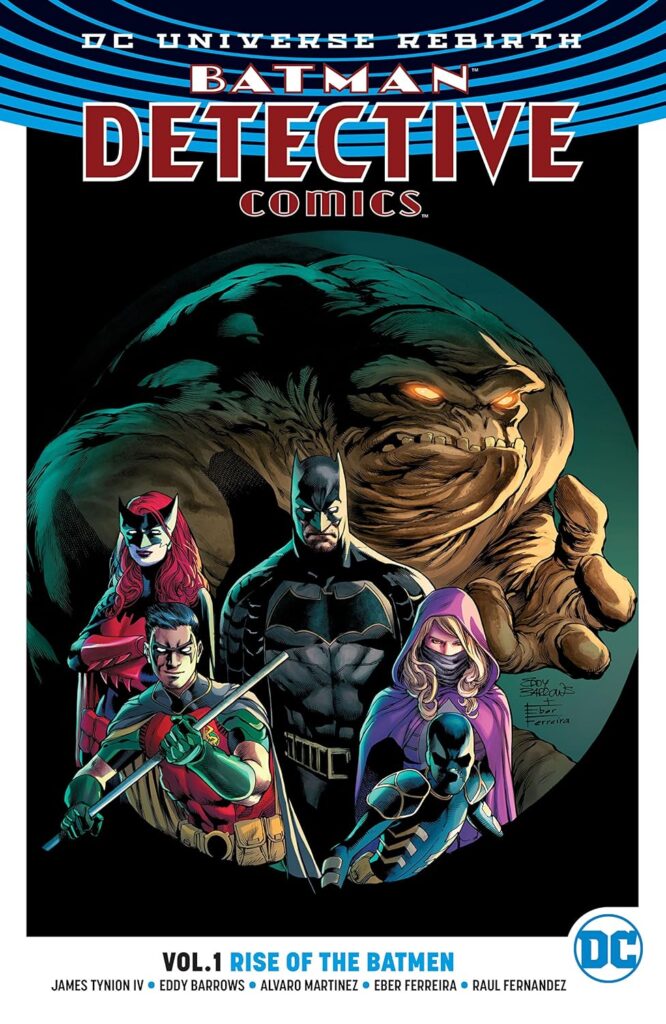
Batman finally admits he can’t protect Gotham by himself. A military-level threat is targeting the city’s vigilantes, so Bruce joins forces with Batwoman to form a team: Red Robin, Spoiler, Cassandra Cain, and a reformed Clayface. They don’t fit together easily, and getting them to work as a team is just as tough as facing their new enemy.
Tynion swaps the usual brooding, lone Dark Knight for an ensemble book, and it works. Batwoman brings the military discipline, the younger heroes find real purpose, and Clayface becomes something more than just a monster. The story balances tactical action with family drama, never losing sight of either. Barrows and Martínez bring really sharp, energetic art, and the quieter moments make the big scenes hit harder. This arc is a great introduction to Batman’s wider family, and it ends with a real emotional punch.
Start with Detective Comics Vol. 1: Rise of the Batmen. It’s complete as a story and the best pitch for the run. If you want more, Vol. 2: The Victim Syndicate is a good follow-up, but it skips over a Batman crossover and leans on the team’s relationships more than a big plot.
Deathstroke (Christopher Priest, #1-50)
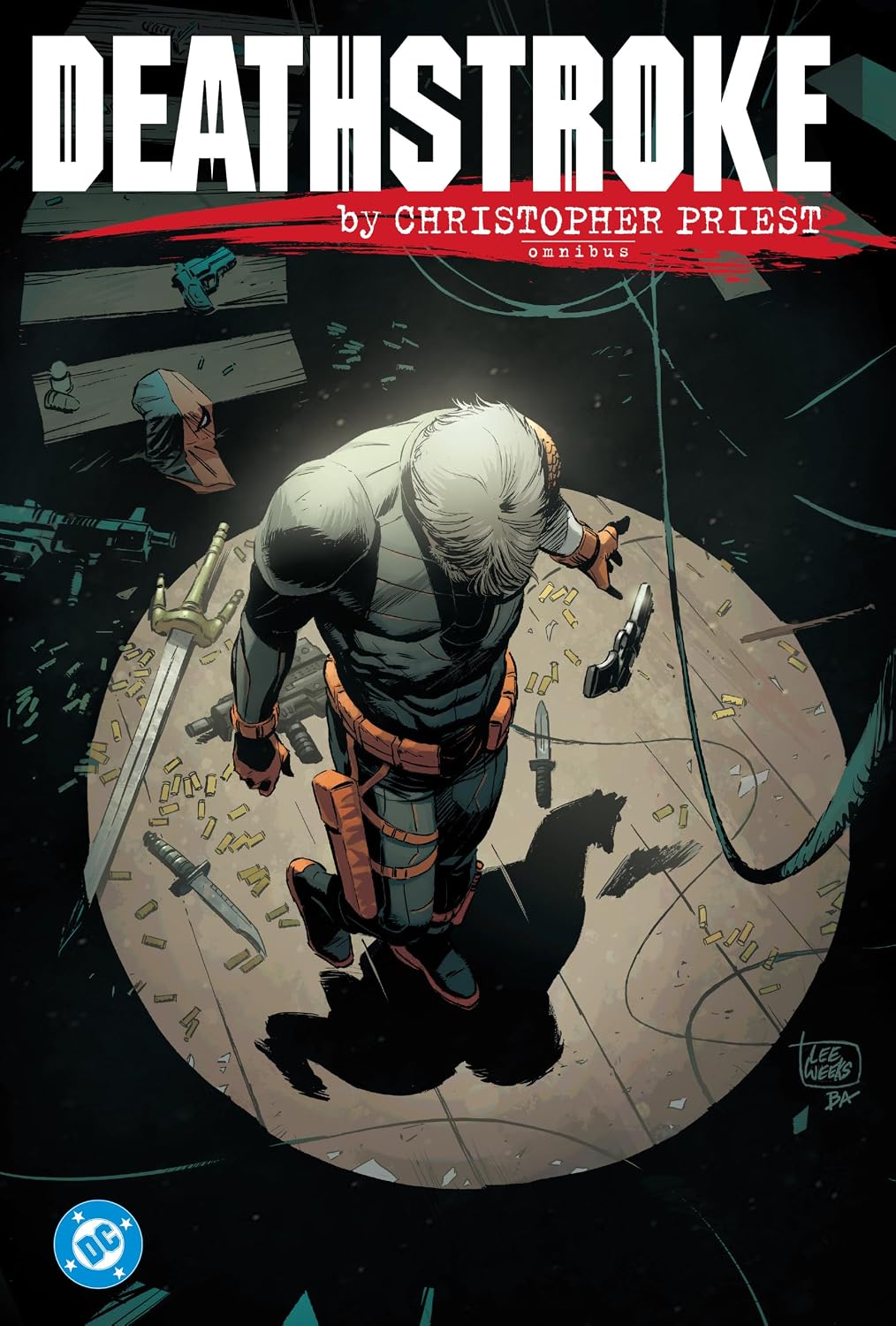
Slade Wilson isn’t your typical anti-hero: he’s a cold, amoral mercenary and a catastrophe as a father. When his past comes back to haunt him he pulls his estranged kids, Rose and Jericho, into the crossfire, and the damage he does to them is as much a part of the story as anything he does with a sword.
Priest structures the book as a non-linear puzzle, using dry humor and sharp dialogue, and lets you figure things out for yourself. It’s a hard-edged character study that never tries to make Slade more likable, which is a nice change if you found Rebirth’s warmth and nostalgia a bit much. It’s also pretty unusual for a modern superhero comic to keep one clear vision all the way through. Priest wrote all fifty issues and gave the story a real ending in #50, it’s exceptional work
Vol. 1, The Professional is the first six issues and a reasonable starting point, but one of the true rarities in the Rebirth era is a rock solid series from beginning to end, so again I recommend the omnibus. It is expensive though.
Okay, that’s it. As I said in my previous post, there are more good comics than just these six, but these are the best runs that you don’t have to know anything about or get bogged down with the Rebirth event to enjoy or appreciate today. To recap what was happening: Rebirth was additive, putting pre-Flashpoint elements back alongside the New 52 ones. The next event, Infinite Frontier made the combined timeline explicit and treated everything as having happened. I’ll talk more about that in my next post.