What D&D 2e Got Right About TTRPG Endgame Design
Dungeons & Dragons 2nd Edition is where I started in the tabletop roleplaying hobby. I was in college at the time, I found a great DM and a good group, and we had a lot of fun. As a part-time RPG mechanics auditor I decided to take a closer look at my first system, tearing it down to its studs. What I found was something modern heroic TTRPG endgame design has lost: the idea that advancement should eventually change the game itself.
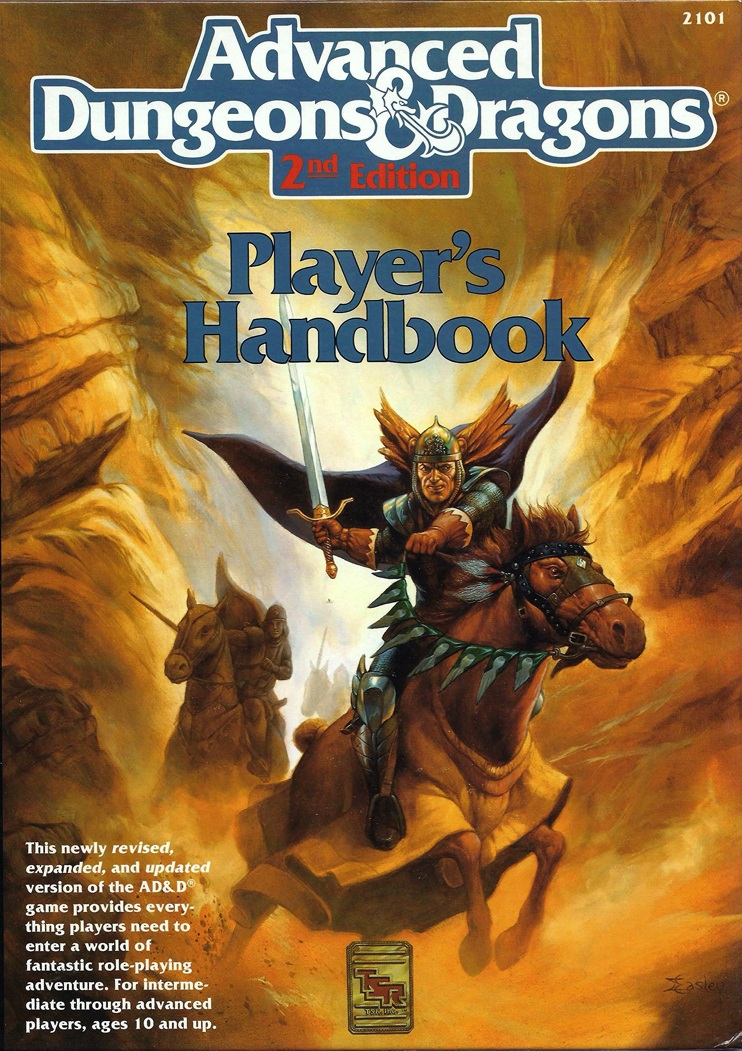
The first thing to know is that the Player’s Handbook alone is not a complete game. It never was. It gives you everything you need to know about playing–character creation and progression, spells, equipment and combat resolution–but it delegates world control, encounter structure, and reward systems to other books. The rules are also exceptionally modular, giving your table the option to use major subsystems (such as weapon and non-weapon proficiencies) or bypass them altogether.
D&D works absolutely brilliantly as a system for the first 10 levels. What the PHB doesn’t tell you is that its core play model really tops out around levels 9–11, even though it has rules up to level 20. By level 11 a spellcaster has exponentially more power than everyone else, and the gap only widens after that. They can walk through walls, lay waste to a battlefield, open any lock, find any trap, and cast Find the Path. They can Teleport or Word of Recall to leave a dungeon instantly, create safe zones with Leomund’s Secure Shelter or Mordenkainen’s Magnificent Mansion, and wrap themselves in long-lasting defenses like Stoneskin. None of these spells individually break the ceiling; it’s the spell library that does.
Martial stamina is a huge advantage when the environment (such as a dungeon) dictates the pace, but once spellcasters reach the point where their magic allows them to dictate the pacing and rest whenever they want, the attrition model breaks down. What fighters, rangers, and thieves mostly get are bigger numbers. Above level 10 martial characters stop scaling tactically and start scaling institutionally: commanding armies, ruling domains, and anchoring conflicts larger than a dungeon. I’ll say it again: traditional heroic adventuring in 2e has a level 9-11 ceiling.
Let’s recall the era in which 2e was published. The average 2e campaign didn’t get past level 10 due to higher lethality and slower progression, so the ceiling was rarely hit. That makes the design choice smarter in retrospect: TSR built a brilliant 1–10 engine, printed the full 1–20 math as aspiration and framework, and trusted the ecosystem of campaign worlds to handle the rest. And that ecosystem was enormous. The whole point of a heroic RPG is that setbacks wound you temporarily, recovery restores your capability and advancement expands what you can do. I write about heroic design in my post on Heroic TTRPGs. This creates an arc where higher-level play needs to be solved.
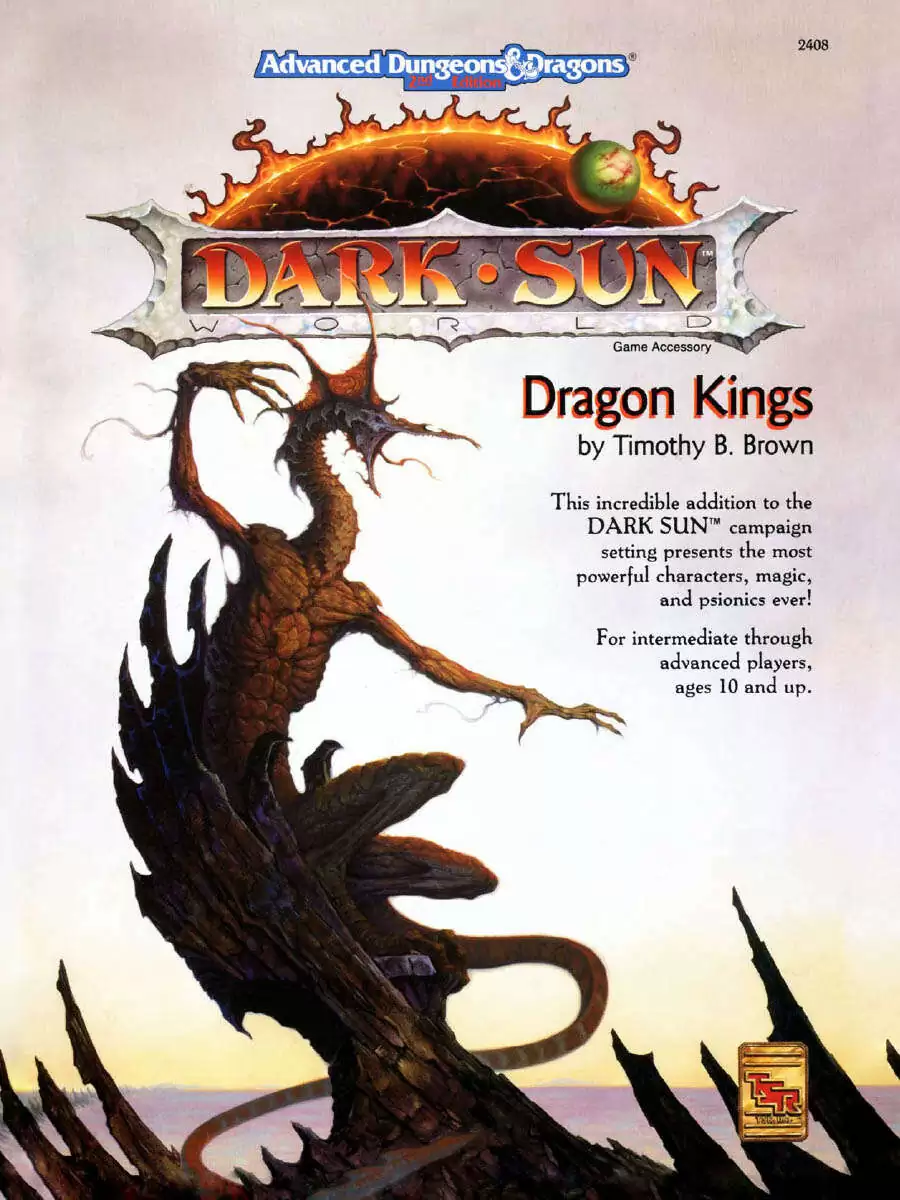
D&D 2e intentionally does not try to solve high-level play in the same way as lower-level play. Instead, the entire genre shifts into different possible modes: domain play, mass combat, planar escalation and magical suppression all come into play because player characters are getting too powerful to continue to crawl through dungeons. This is why in TSR’s published adventures and campaigns we see a significant change in emphasis after level 10, as the burden is off-loaded to other products. Planescape is all about planar escalation, while domain play is what we see in Birthright’s setting; mass combat shows up in The Night Below Act III, Axe of the Dwarvish Lords, Dark Sun: Dragon Kings, and The Apocalypse Stone. Magical suppression (or irrelevancy) occurs in The Ruins of Undermountain, The Ruins of Myth Drannor and Return to the Tomb of Horrors if a table really wants further dungeon crawling.
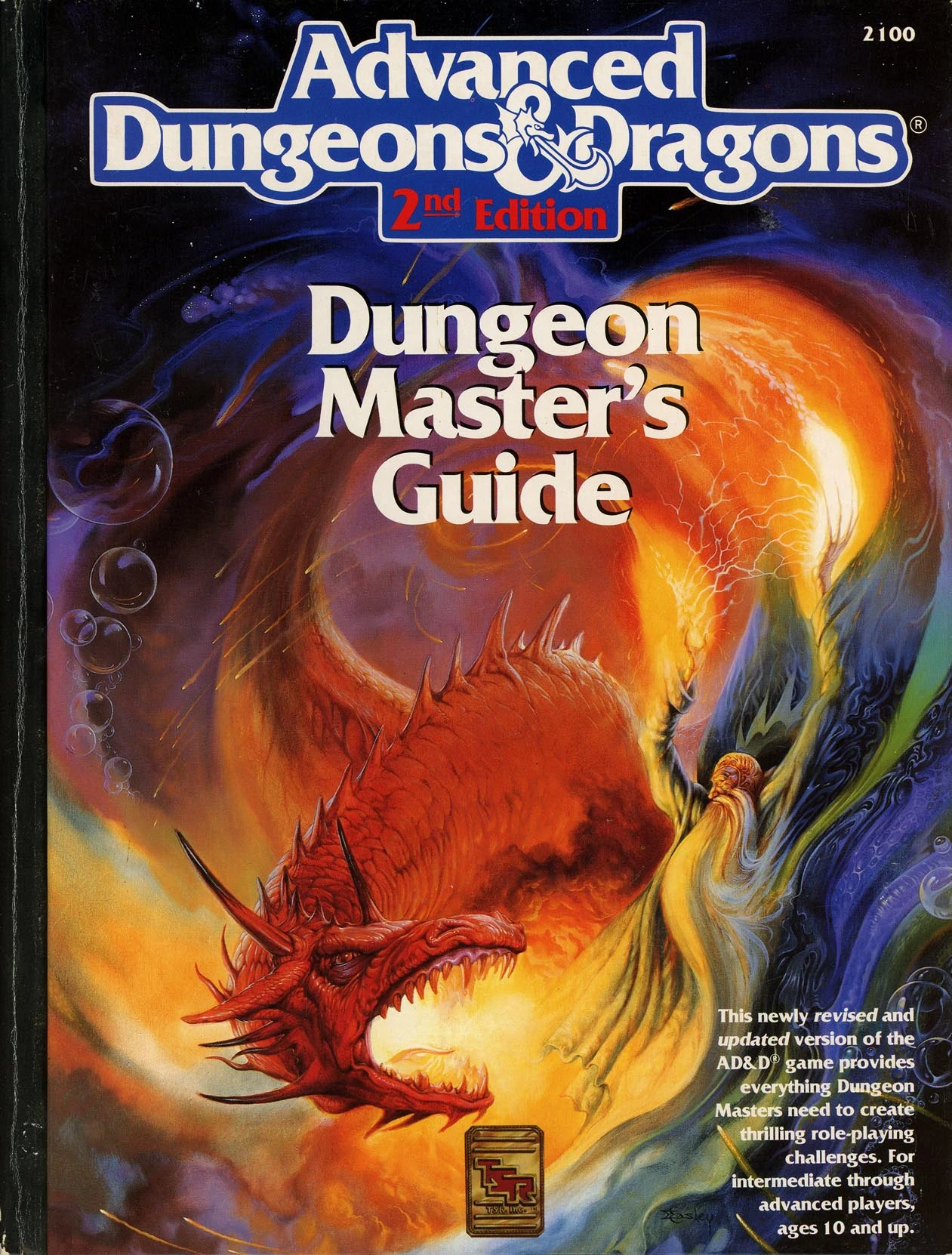
2e isn’t a closed system; it’s a gear locker pointed at a world. The PHB, the DMG, the setting, and the DM’s judgment are separate components that only become a game when they meet at the table. Maybe that sounds like a weakness. It isn’t. It means the DM can pull whatever the campaign needs — the planar survival of Planescape, the mass combat of Battlesystem — and just add it on. The players don’t know what game they’re playing next until they get there. Reaching level 11 feels like discovering a new world, not reading the next chapter of a manual you’ve already memorized. Meteor Swarm in a dungeon is just overkill math. In mass combat it breaks an army. Wish in a dungeon bypasses a lock or replicates a spell, but in domain play it can rewrite a whole kingdom. The gear was always there, you just finally have somewhere to use it.
Contemporary design is obsessed with encounter balance, making sure every class is equally viable and has something cool to do in a 30-foot room. If you think about D&D 5e or Pathfinder 2e for example, we have what I call “the illusion of scale.” There is a tactical gameplay loop that starts at level 1 and goes up to level 20, so you are doing basically the same kind of things regardless of level, and that really began with 3e. D&D 2e was balanced across time and attrition instead: it gives you the option of doing fundamentally different things after you cross a certain threshold. In 2nd edition’s case you could even alternate between multiple kinds of campaigns depending on your table’s preference, and only one of them involves fighting monsters in a dungeon. It kinda feels like a new game.
Modern heroic TTRPG endgame design often mistakes completeness for quality. When a single book maps the entire arc from level 1 to 20, it’s making a promise: the designer has already solved the endgame for you. The cost is that the mechanics become load-bearing walls because you can’t rupture the frame without the whole thing collapsing, which means you can’t change what kind of game it is. That’s fine if that’s what you want, but while D&D 5e has dozens of supplements it still does the same thing at level 17 that it does at level 3. The cage is just bigger.
Forbidden Lands is a rare modern exception, and is worth checking out. If players survive long enough, the game rules facilitate a transition from a hex-crawling survival game into a macro-level stronghold management game where they can become a lord. FL actually changes the kind of game it is. D&D 2e takes this further because it does not care what kind of “lord” you become, or whether you become one at all. It offers a wider menu of possible escalations. Kevin Crawford’s Without Number RPGs do something similar: the Faction system runs as a parallel macro-level engine that has nothing to do with a 30-foot room.
Yes AD&D 2e’s math is quirky, it can be uneven, and is dependent on DM judgment, but it preserves something vital that many modern systems lose. When looking at heroic endgame design, the real question to ask isn’t whether level 17 looks like level 5 with bigger numbers—it’s whether the game knows what to do with you once you’ve outgrown the dungeon.