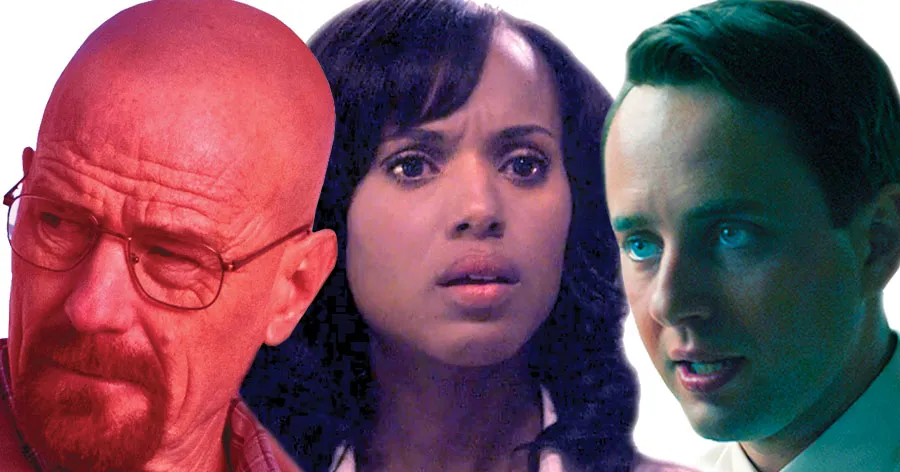
The Golden Age of TV?
Darker is Not Deeper: The Hidden Toll of TV’s “Mature” Storytelling
I recently came across a Wikipedia article that says we’ve just experienced an extraordinary moment in modern broadcasting. In its entry on the “Golden Age of Television (2000s–2023),” the era is described as:
“…having such a number of high-quality (or ‘prestige’), internationally acclaimed television programs, that they should be regarded as the Golden Age of Television… a subset of this era also known as Peak TV or the Prestige TV era.”
I think that label is a lie. The problem isn’t just ‘prestige TV’ anymore; it’s what the prestige label did to the rest of the medium.
Over the past twenty-five years, the television industry didn’t actually raise the standard of the medium. Instead, they redefined “quality” to mean dark, cynical, and explicit. By praising antihero-driven dramas as the highest form of art, they treated prosocial values as artistic weaknesses. There was certainly great television during this time, but at some point, we started to mistake darkness for depth and edginess for maturity.
Those qualities are not the same. It is time we look past the “prestige” label and consider what this era of television has actually cost us.
The Triple Cocktail
When premium cable and streaming moved beyond broadcast limits, many saw it as a win for creative freedom. But rather than using this freedom to tell deeper stories, the industry turned it into a marketing tool, which led to the Triple Cocktail: pervasive profanity, sexually explicit content, and graphic violence.
These are not artistic upgrades, they are artistic liabilities. The tragedy of prestige television is that it started treating them as selling points. Graphic violence was seen as a sign of seriousness, explicit sex became a shortcut for emotional honesty or intimacy, and constant profanity became synonymous with realism.
In the process, a bizarre double standard emerged. Stories built around moral emptiness were celebrated as sophisticated just because they were explicit, while stories featuring any prosocial values were dismissed as naive. Worse, this standard didn’t stay confined to premium cable, it became the blueprint for the entire streaming era. Television didn’t actually become more mature, it just became more explicit, and critics confused the two.
Moral Emptiness vs. Moral Ambiguity
To defend the Triple Cocktail, creators hide behind the shield of “realism,” claiming clean-cut heroes belong in children’s stories. This is a bait-and-switch that collapses two different ideas: moral ambiguity and moral emptiness.
Moral ambiguity gives us flawed characters wrestling with difficult choices where decency remains possible. Moral emptiness builds a universe where everyone is corrupt, and integrity is a joke.
Great drama needs conflict, but it doesn’t have to get rid of virtue. Prestige television did not invent complex television; it only elevated one specific, cynical flavor of it. Decades before the so-called Golden Age, television understood the difference. In the 1970s, All in the Family tackled race, class, and sex with frank language and intense ideological conflict. In the 80s, Hill Street Blues pioneered serialized storytelling, gritty realism, and deep attention to social issues. In the 90s, Picket Fences spent years deconstructing incredibly complex ethical questions without ever handing the audience neat moral answers.
Crucially, these shows did not equate depth with a lack of heroes. Archie Bunker was bigoted and wrong about many things, but he was also a loving, recognizable human being. Hill Street Blues revolutionized television by embracing grit, flawed heroes, and moral ambiguity, but it never abandoned the idea that fundamentally decent people could still carry great drama. The characters in Picket Fences had flaws, but they were still decent people trying to do the right thing in hard situations. Earlier generations of television understood that flawed people did not need to be stripped of their humanity to create compelling drama.
Today’s prestige model separates complexity from conscience, and it happened in stages. The Sopranos broke ground by inviting us to understand a violent, morally flawed mob boss. The show was brilliant, but it also set the wrong standard: that the best television made deeply immoral people the emotional center of the story. Dexter took the next step by training audiences to actively root for a serial killer. Finally, a show like Succession built an entire world devoid of morality, assuming goodness simply isn’t interesting. When fans obsessively rank Succession’s characters from “least to most despicable” today, they aren’t embracing the moral void—they are trying to find a drop of decency in a story that refuses to give it to them.
Real Quality Doesn’t Need the Cocktail
Audiences reject actual “realism” everywhere else—we expect James Bond to survive impossible situations and villains to have perfectly paced tragic backstories. So why is the triple cocktail the only place where critics suddenly demand gritty reality?
The truth is, relying on the cocktail often makes the work weaker. The question has never been whether a story is “realistic” or not; the question is whether it’s convincing or not.
Take profanity. People often say that frequent swearing is needed to show the tough reality of working-class life. But if you look at Roseanne, the show captured working-class struggles, marital tension, financial anxiety and family dysfunction with immense bite and authenticity. It was blunt, angry, and undeniably real, and it did it without a relentless barrage of profanity. Compare that with a modern prestige hit like Yellowstone, where pervasive profanity is peppered through every episode. When every character speaks with the same constant hostility, cursing stops revealing personality and is just wallpaper. It no longer tells us who someone is; it just tells us what kind of show we are watching.
The same idea goes for sexual content. The industry often suggests that graphic scenes are needed for “adult” romance. Shows like Game of Thrones and True Blood helped make explicit sexuality a common tool for moving the plot forward, a failure called “sexposition,” or as an easy way to seem edgy. This change didn’t happen on its own. Sociologist Gail Dines has said that as pornography became more accepted in mainstream culture, television started to use visual styles that used to be found in softcore pornography.
But real intimacy doesn’t depend on what’s shown. Downton Abbey proved that high stakes, ruined relationships, and deep emotion can all be shown through suggestion alone. And then there is Friday Night Lights: the marriage between Eric and Tami Taylor is one of the most electric and authentic relationships in modern television. Their intimacy was built through shared burdens, mutual respect, difficult conversations and quiet moments of understanding. Intimacy didn’t come from what the camera showed, but from what the audience understood about their commitment, sacrifice, and trust. The show proved that emotional vulnerability is far more powerful than displaying naked bodies. Real romantic weight comes from emotional stakes.
Finally, think about graphic violence. Some people say that showing every detail is the only honest way, but too much graphic violence loses its impact. The Walking Dead used so much gore that after a while, the violence stopped being shocking and just felt numbing. Breaking Bad showed how violence can be powerful when it’s connected to the characters and their consequences, but its spinoff, Better Call Saul, showed how holding back can be even more dramatic. Because the show exercised restraint, moments of moral collapse or physical danger carried more weight.
Restraint is not a sign of creative timidity, it’s a sign of confidence. True quality knows how to build tension, reality, and intimacy without the cocktail.
The Human and Societal Toll
This is why exposing the myth of prestige television matters: the triple cocktail isn’t just an aesthetic failure, it causes measurable harm.
The human cost starts behind the scenes. When explicit content becomes the mandated norm, young actors are pressured into crossing personal boundaries for “artistic necessity.” Actress Evangeline Lilly’s humiliation at being forced to be partially nude at times in Lost, Emilia Clarke coercion into sex and rape scenes in Game of Thrones, and Amanda Seyfried being told not to wear underwear on set; they’ve all spoken about being pushed into these scenes early in their careers because they feared losing their jobs or being labeled “difficult.” Just recently Variety magazine featured GoT actress Lena Headey being shocked at how angry fans of the show were that she refused to do nudity in it.
Audiences are trapped as well because to get quality shows, they have to take the explicit content too. Streaming platforms then see high viewership as proof that people want more profanity, sex, and violence, even though Nielsen charts show that many viewers still choose more family-friendly shows as well as adult dramas. The demand for less explicit content is still there, people just want good stories; but the big, heavily promoted shows are almost always TV-MA.
Defenders of the cocktail often point to R-rated historical films like Saving Private Ryan or Schindler’s List to justify graphic content, but this is false equivalence. Showing the Holocaust or Omaha Beach is about real tragedy, whereas prestige dramas manufacture profanity, violence and explicit sexual content as a recurring engine to keep viewers subscribed. Furthermore, the problem of adult-only access has vanished. You used to have to buy a ticket and enter a theater for an R-rated experience; today, TV-MA content are difficult-to-avoid household wallpaper, auto-playing on devices 13-year-olds carry in their pockets.
The cost of graphic violence is just as steep. The strongest findings in the modern research literature are that repeated exposure can produce emotional desensitization. Even researchers skeptical of the stronger claims about aggression have found evidence that repeated exposure dulls emotional responses to violence. That should concern us, because entertainment should not train us to feel less empathy.
Adults are affected too. Watching a lot of cynical, violent stories doesn’t just entertain us—it changes how we react emotionally. When we see cruelty often it starts to seem normal, and it becomes harder to feel outraged. Violence loses some of its emotional weight, and the cynical outlook that prestige television often celebrates begins to feel less exceptional and more ordinary. Both viewers and researchers have observed signs of it following repeated exposure to violent media.
The deepest toll, however, is what this steady diet of cynicism does to us culturally and psychologically.
There is a tangible decline in how we talk to each other in this country. Vulgarity and profanity have been normalized, and these are bad trends. A culture saturated with these images and assumptions has consequences. When women are routinely sexually objectified for entertainment, it inflicts real harm; warping men’s image of women and damaging how women see themselves. I cover this is more detail on my piece about female self-image.
The stories we celebrate become the emotional vocabulary we use to understand each other. TV used to see maturity as facing human flaws while preserving human dignity, and it should be that way again. Profanity, explicit sexuality, graphic violence and other filth are not upgrades to the truth of the human condition; they are cheap substitutes for it.
This is not the Golden Age of TV, and darker is not deeper. What began as the prestige model has become the industry’s default. If audiences stop rewarding the Triple Cocktail, the industry will eventually stop treating it as the formula for success. We don’t have to accept this as the future of television. Maybe it’s also time to ask ourselves whether the price of filling our homes with endless profanity, explicit sex, and graphic violence is really worth the entertainment value.