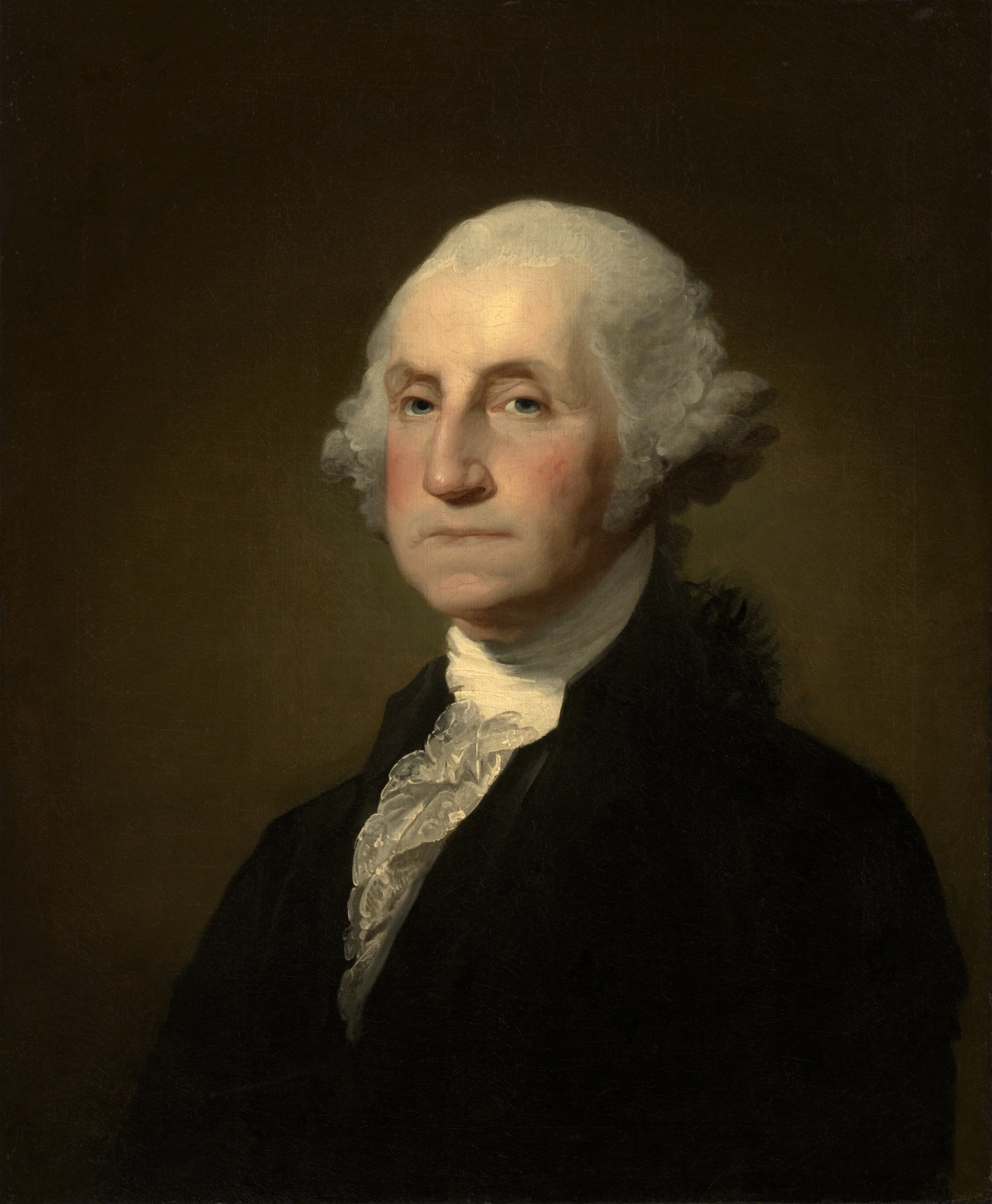
George Washington’s Presidency and Legacy
Read Part One
This is part two of my series on George Washington. To understand the American founding, we have to stop looking at George Washington as two completely different people. We tend to split him into a double portrait: on one side the marble saint of democratic liberty and national survival; on the other the compromised Virginia planter whose comfort rested on slavery.
But this division is an illusion because Washington didn’t govern through two separate moral systems. The same preference for disciplined authority, hierarchy, and preserving the larger order that helped him build legitimacy for a fragile new government, enforce federal authority, and discipline the nation’s expansion also shaped how he handled slavery and other injustices in his world. He did not confront these problems at their full moral cost, he managed them the same way he managed an army, a cabinet, or a farm: with control, patience, and constant attention to keeping the larger enterprise intact.
That thread runs through everything that follows. Washington’s greatness and failures were not opposing forces pulling him in two directions. They were the same instinct aimed at different problems, some deserving management and others that never should have been. So just what is the George Washington legacy?
Untrodden Ground
Even getting the job was an exercise in controlled distance. In the political culture of the time, openly campaigning for power showed you were too ambitious to be trusted with it. Washington stayed quietly at Mount Vernon, professing reluctance, while allies like Hamilton lobbied behind the scenes to ensure he accepted what everyone else considered foreordained. He privately outlined policy to Lafayette and worked through an inaugural address with David Humphreys. He told Henry Knox the ordeal felt “not unlike those of a culprit who is going to the place of his execution.” The result: all 69 electors voted for him, making Washington the only president in American history ever elected unanimously.
When Washington became President in 1789, he was working on a blank canvas. Article II gave him a title and barely defined powers, leaving the shape of executive authority almost entirely unsettled. To make this fragile new office visible and authoritative, he relied on his deepest instinct: control through distance, restraint, and carefully staged public presence.
That preference shaped his government from the start. He appointed a cabinet of extremely capable men, balanced competing regional interests through those appointments, and kept final authority for himself. He helped establish presidential control over executive officers and drew an early boundary between executive and legislative power by refusing to let the Senate turn treaty-making into a public negotiation. He also toured the states deliberately and visibly, making federal authority something citizens could actually see rather than an abstraction on paper.
The judiciary posed the same blank-canvas problem, because Article III said even less than Article II. A Senate committee shaped the federal court system in 1789; it created a Supreme Court layered awkwardly over district and circuit courts, with jurisdiction blurred to avoid alarming states’-rights skeptics. Washington wanted something more unified, calling the judiciary “the keystone of our political fabric,” but he let the ambiguous structure stand and focused on staffing it. He gave judicial appointments more careful attention than almost anything else in his first term, spreading his six Justices across six states so the new courts would look national. They cleared the Senate in 48 hours. He built its legitimacy not by picking loyalists but by choosing men whose stature made them hard to attack, like leading nationalists John Jay and James Wilson.
To command respect in the office, Washington relied on some aristocratic pomp. He held formal weekly levees — receptions where visitors were received standing, on his terms — rode in an elaborate carriage, and accepted public rituals that kept ordinary citizens at a calculated distance. This was a political tool to produce deference and make federal power feel tangible. The fears that the new government was drifting toward monarchy were rational responses to a president openly borrowing the symbols and psychological weight of the old imperial order to build a strong center of state authority.
The stakes here were not about vanity either. When the Revolution rejected the king, it did more than remove a person, it took away the only source of legitimate authority America had ever known: blood, crown, and divine right. Washington was the only possible replacement, and all he could offer in place of the king was his own reputation. At that time no institution could give the presidency legitimacy, so the office had to borrow it from him. That is why the levees, the carriage, and the careful distance were not just for show. They were the only way the presidency could seem legitimate.
Peace Through Order
Foreign policy was the clearest, highest-stakes arena where Washington chose survival over ideology. When the French Revolution split American opinion, many wanted to support France, and they had a point: France had supplied money, weapons, military equipment, around 12,000 troops, officers, and its navy. Still, Washington would not let that loyalty pull the young country into a war it could not handle. He issued the 1793 Neutrality Proclamation and stopped Citizen Genêt from drawing the United States into the conflict. Critics saw this as betraying an ally, grabbing power, and siding with Britain while pretending it was about principle. None of that was true. The alliance didn’t obligate America to fight in France’s wars, and Washington made his decision only after meeting with his cabinet and getting their full support. In his private letters he was harshly critical of British actions; he blamed London for keeping troops on the frontier and for encouraging Indigenous resistance to American settlement.
But that last accusation misses the mark. Washington’s private letters from this time show strong dislike for Britain, not support. He thought British actions had “worn a very hostile appearance.” He pointed to Britain’s continued occupation of northwestern frontier posts it had promised to leave in 1783 and suspected London of helping Indigenous groups resist American settlement. Washington’s decision was not about liking Britain. He knew the United States did not have the military or money to fight the world’s top naval power. He estimated the country needed about twenty more years before it could risk such a fight and survive.
The anger reached its peak with the 1795 Jay Treaty, and critics had good reasons for their complaints. Britain agreed to leave the northwestern posts and let American claims for seized cargoes go to arbitration. However, Jay didn’t even address impressment, accepted trade terms that favored Britain, gained only limited and short-term access to the West Indies, and got no compensation for enslaved people taken by Britain at the end of the war. Even Washington, when he read the draft treaty in private, must have gagged at how heavily it favored the other side. He asked Hamilton for a full accounting of its favorable and unfavorable provisions before deciding whether to sign.
He signed it anyway because it gave him what he thought mattered most: it kept the country out of a war it could not survive. This was not about sticking to an ideology or showing moral clarity. It was an unequal deal, trading full American rights for time to build a stronger nation. Ellis later argued that the gamble paid off. Waiting allowed the young republic to strengthen its institutions and become ready to face Britain again when the War of 1812 arrived almost exactly on Washington’s predicted schedule. That is persuasive, though it credits the outcome with a certainty Washington did not have in 1795. He was taking a risk on time, not making a promise.
Order as Statecraft
Washington’s drive for federal order started with the Continental Army, where he faced the gap between revolutionary sentiment and military reality. Early in the war Congress and the public clung to the myth that citizen-militias, fired by “The Spirit of ’76”, would naturally outfight trained professionals. Washington had already learned otherwise. Commanding the Virginia Regiment decades earlier, he had grown to despise relying on what he called “hooping, hallowing, Gentleman-Soldiers.” Their short enlistments and independence made them useless for any sustained fight. He carried that conviction into the Revolution, telling Congress that expecting raw recruits to perform like veterans was wishful thinking.
Skeptics warned that a standing army betrayed the principles the Revolution was fighting for, but Washington pushed back hard: those principles didn’t mean much if the war was lost, and winning demanded a permanent, professional force. With Baron von Steuben supplying drilling and discipline at Valley Forge, Washington got exactly that. He turned a revolving door of volunteers into an army built to last. That fight, waged years before he took the presidential oath, is where his preference for centralized, durable institutions was forged.
After becoming President he applied the same institution-building preference to the executive branch. Hamilton designed the core of the fiscal program: the national bank, assumption of state debts, and excise taxes. Washington was not just lending it his prestige from the sidelines, he shared the conviction that a durable union needed real federal power. He backed the program because he believed in it and ultimately signed the Bank bill despite Southern and states’-rights objections that it exceeded the Constitution.
The same style shaped how he handled the Senate. In 1789, after senators tried to debate the details of an Indian treaty on the floor instead of just approving his terms, Washington walked out and never sought their advice again on treaties in person. This break effectively changed “advice and consent” into consent after the fact. For Washington, federal authority was not a subject for negotiation; it was something to be established and then defended.
That preference met its hardest test in the 1794 Whiskey Rebellion. To put down western Pennsylvania distillers resisting a federal excise tax, Washington mobilized roughly 13,000 militia, a larger force than he had commanded for much of the Revolutionary War, against an insurgent threat estimated at only 6,000 – 7,000. The rebellion collapsed almost without bloodshed, and Washington followed it up with amnesty for those who took a loyalty oath.
But in his address afterward, Washington went beyond the rebels and attacked the “self-created societies” that had organized peaceful opposition, treating dissent itself as a symptom of disorder. James Madison privately called it perhaps the greatest error of Washington’s political life. The instinct that had built a durable executive, kept the peace with Britain, and put down an armed rebellion had started reaching for targets that had never taken up arms at all.
Slavery as a Governed Contradiction
Washington’s failure was not in abandoning his philosophy, but in applying it to people it was never meant to protect. That same preference for order led him to rotate enslaved people across state lines to avoid Pennsylvania’s emancipation law, and to let recognized Native land rights collapse whenever they conflicted with settler expansion. His relationship with slavery can’t be separated from his political genius; his years as a slaveowner shaped his approach to leadership, and how he treated the people he owned has to be judged on its own terms. He cultivated a public image of disinterested virtue while running Mount Vernon and his executive households through the daily coercion of enslaved people.
This was not a passive inheritance but a system he actively managed. When a Pennsylvania law threatened to free any enslaved person who lived in the state six months, Washington didn’t comply. He quietly rotated his household staff back to Virginia to reset the clock, instructing an aide to carry it out under a pretext meant to deceive both the enslaved people and the public. That was a private choice with no national-survival justification.
His pursuit of Ona Judge and Hercules after they escaped makes the same point. He spent years trying to recover them, refusing Judge’s offer to return in exchange for a promise of eventual freedom, and used his own network to track down both. He was driven by a sense that their self-emancipation was an intolerable theft rather than a claim they had any right to make. Even his will, the one clear break from this pattern, was delayed for a decade, took effect only after Martha’s death, and freed only the people he owned outright, not the larger group of slaves tied to her estate.
His public silence followed a different logic. He likely believed no first president could force a direct national reckoning with slavery without risking the collapse of a union that barely existed. He had watched the issue nearly break the Constitutional Convention, and he treated holding the union together as the overriding priority. It’s why he was silent during the 1790 Quaker petitions: the first major, unified anti-slavery appeal split Congress down the middle, but the petitions died there. It is also consistent with his signing the Fugitive Slave Act of 1793, which gave federal legal cover to exactly the kind of recapture he pursued against Judge. That belief helps explain his public restraint but does not excuse the personal choices by which he sustained slavery in his own household the whole time.
It’s true his views shifted: he opposed buying more slaves, discussed gradualist hopes in private, and eventually freed the people he legally owned. These facts set him apart from most of his Virginia peers. But they don’t rebalance the record. They sharpen it, showing a man who recognized the wrong clearly enough to feel it and still chose for years to manage it rather than end it. Even the final act likely involved the same calculation that built his presidency. Whether he freed them because he believed it was wrong, because he knew posterity was watching, or a mix of both is impossible to know for certain. What is clear is that this was the one place where doing right and protecting his reputation aligned.
Native Policy and Ordered Expansion
Washington’s Native policy was the same centralizing preference applied to the frontier. Just as he wanted the economy and foreign policy run through federal channels, he wanted western expansion handled by treaty and diplomacy rather than the chaos of settler land grabs. Working with his Secretary of War, Henry Knox, he backed a policy recognizing Native nations as prior occupants with legitimate claims to their land and treated treaties as binding federal commitments. Washington believed unregulated settlement would trigger endless frontier wars the new republic could not afford.
That vision kept collapsing and the collapse wasn’t just about a weak, cash-strapped federal government. Washington did have limited capacity to enforce — Knox said real enforcement would take a chain of forts and about 50,000 troops, and Washington admitted only a “Chinese wall” could stop White settlers. But capacity wasn’t the main constraint. The 1790 treaty guaranteeing Creek land was quickly undermined by Georgia’s land deals with speculators, and the federal government didn’t do much to stop it. When settler expansion and treaty-recognized Native land collided, Washington’s administration showed almost no willingness to physically restrain its own citizens. The power it used against the Whiskey rebels never showed up on the frontier against encroaching settlers.
Instead, when treaties broke down and violence followed, the government directed its force at Native confederacies, not at the settlers provoking it. Washington authorized the punitive expeditions that ended in Harmar’s defeat in 1790 and St. Clair’s catastrophic loss in 1791, where roughly 900 of 1,400 troops became casualties. Those disasters didn’t produce restraint but led to a bigger, more professional army built to finish the job.
Washington was not a Jacksonian; he preferred negotiated boundaries over open removal, and he meant it, but that restraint does not erase what actually happened. When it came down to a choice between restraining White land hunger or using force against Native people defending their land, Washington’s commitment to federal order consistently protected the former by sacrificing the latter.
Master of Farewells
Washington’s last major political act was leaving. By stepping down after two terms, he set a precedent that held until Franklin D. Roosevelt and it may have been his most important act as a statesman. He had surrendered his military commission at Annapolis, and this was the same move again. If the federal order he’d spent eight years building needed him personally to survive, then it wasn’t really a republic, just a monarchy with a different name. Leaving was the real test of whether the system he’d built could stand on its own.
He backed that decision with the 1796 Farewell Address, written with Hamilton’s help. He warned against the “spirit of party” that had split his own cabinet, against North-South factionalism, and against permanent foreign alliances. These were direct responses to the Whiskey Rebellion, the Jay Treaty fallout, and the sectional tension building around slavery.
That address is also where his method reaches its limit. He could name faction, foreign influence, and disunion as threats to the republic, but he said nothing about slavery — the one issue most likely to actually break the union he was urging Americans to protect.
So Where Does that Leave Us?
To repeat from my intro: just what is the George Washington legacy? Washington was a monumental state-builder and one of our greatest Presidents. He gave a fragile Constitution real force, built a durable executive and an enduring judicial branch, and kept a fractured country from falling apart in its infancy. But that institutional greatness cannot be separated from the moral evasions built into the same style of rule.
The republic he stabilized did inherit secure borders and durable federal institutions, but also inherited a habit: the calculated postponement of justice whenever justice threatened to disrupt the existing order. That pattern ran through his handling of slavery and Native treaty rights alike, and it outlived him.
Washington’s instinct for order was real, and so was the line it drew between disorder to be fixed and people to be controlled. The nation got both, and we are still working through that second inheritance.