
The Most Underappreciated PS2 games, Part 1
Part 2 Part 3
My last post was about underappreciated Super Nintendo games, which was a daunting task given the SNES catalog.
This is more difficult and more work because the library is so incredibly vast! As a result I expected to find more than nine PS2 games, and I did. It’s a long list but I’m not going to shorten it, I’ll just divide it up into different posts.
I’ve divided the games into tiers this time, just S Tier and A Tier made the cut. This list covers underappreciated PS2 games that are well-made, creative, or important, but never got the recognition, sales, or attention they deserved—even today. If you want a list of the best PS2 titles ever, I’ve written about that here. Let’s get right to it.
Finally, heads up—I earn a small commission if you buy anything through my links. No extra cost to you, and it helps support the site!
S Tier – Criminally Underappreciated PS2 Games
Kinetica (2001, Santa Monica Studio)

Before Santa Monica Studio gave us God of War we got Kinetica. In Kinetica, you’re a human motorcycle. You wear a suit with wheels on your hands and feet, racing through sci-fi cities at 350mph. It feels exactly as dangerous as it sounds. It’s more than racing, you could wall-run through entire sections, flip off ceilings, and chain aerial stunts that would make Tony Hawk jealous. What adds to its appeal now is that it is a hard game to master, and it makes no apologies for it, but mastering it gives you that rush.
What makes it so underappreciated is the innovation that came with it. The stunt system, where tricks filled your boost meter, created a risk-reward loop: do you play it safe or go for that insane ceiling run to build massive speed? Then there was dual analog setup, which felt revolutionary in 2001 when most racers still used face buttons for everything. It’s also highly playable today thanks to the 2016 PS4 re-release.
Rule of Rose (2006, Punchline)

If you are used to monsters and killer in horror games, Rule of Rose something worse: the terrifying social hierarchy of children. You play as Jennifer, navigating the Red Crayon Aristocrats, a clique of girls who use emotional cruelty as a core mechanic. Your dog, Brownie, is your only ally. In fact they are the only tether to sanity in a game that feels like a dream of repressed trauma. It was brilliant innovation that may never be followed up on, for a few reasons.
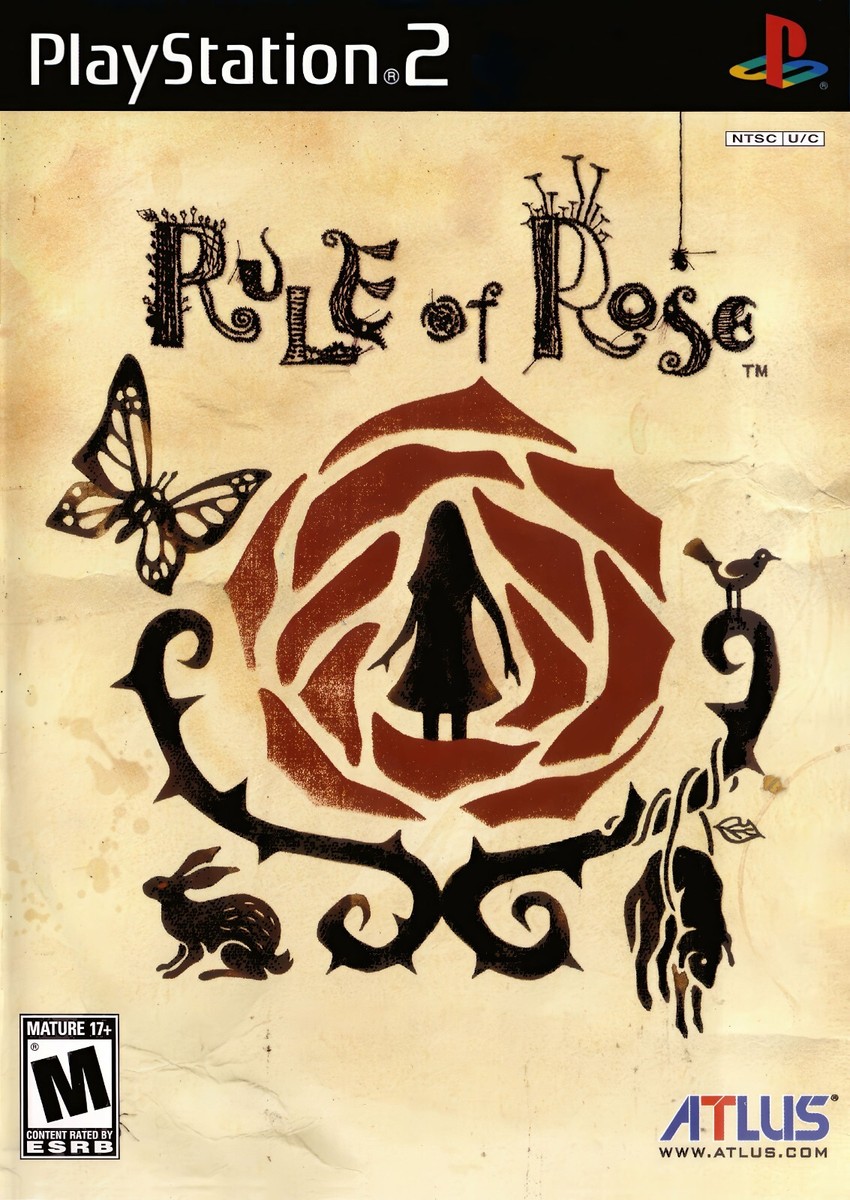
The combat is pretty bad, but the narrative was so powerful it sparked a fake-news moral panic in Europe that effectively deleted the game from retail history. Now it’s a holy grail for collectors, sometimes costing more than a used car. It’s too bad that most people only know this through YouTube essays. Actually playing it, even with the controls, is a deep dive into a type of psychological horror that mainstream studios are still too afraid to touch.
Psi-Ops: The Mindgate Conspiracy (2004, Midway Games)

Just like Kinetica, Psi-Ops: The Mindgate Conspiracy started something new. It was one of the first action games to base combat on physics-driven psychic powers, which Half-Life 2 did later on with the Gravity Gun. You are more than just a soldier, you’re a psychic wrecking ball. If you’ve never picked up a guard with your mind and hurled him into a group of his friends, or mind-drained his head until it pops….well, it’s a power fantasy that still feels incredible today.
It’s S-Tier because it turned every room in the game into a sandbox of physics-based violence way before “emergent gameplay” was a term. The amnesia plot is a bit clichéd, but the way it teaches you new powers through flashbacks is really smart. The sequel got cancelled after Midway’s bankruptcy left Warner Bros. owning it, and copyright lawsuits complicated development. Without ports or remasters, Psi-Ops mostly vanished. This level of innovation and almost no recognition is what S-tier is for.
Radiata Stories (2005, tri-Ace)

The things that sets Radiata Stories apart is, in most JRPGs NPCs are basically furniture that occasionally spits out a hint. In Radiata Stories, they have lives. Every single one of the 170+ characters has a rigid daily schedule: they go to work, they grab a drink, they go home to sleep. If you want to recruit them you have to learn their routine, stalk them for a while, or sometimes just kick them in the shins to see how they react.
Back on 2005 having a living world was a bit of a gimmick, but today Persona 5 and Yakuza are still less complex. In fact they are primitive by comparison. Halfway through, the game forces a choice between Humans and Non-Humans that completely forks the narrative, locking you out of half the cast. It’s a game that respects your agency enough to let you miss things. The combat is simple, but the fun is in the social engineering required to build your own massive, weird army. If you like Suikoden, you’ll probably like RS.
Haunting Ground (2005, Capcom)

There is a specific kind of dread that sets in when you realize your only defense against a huge genetically-engineered pursuer is a white German Shepherd named Hewie. Unlike Resident Evil, where you can blast your way out of fear, Haunting Ground forces you to hide in cupboards and pray your character’s Panic Meter doesn’t send her into a blind, uncontrollable sprint.
It’s the spiritual successor to Clock Tower, and it might be the peak of stalker horror. The AI for Hewie is way ahead of its time; he isn’t just a tool, he’s a partner you have to train and bond with. If you mistreat him, he might not save you when a stalker corners you in the castle. It’s a $300 collector’s item now, partially because it was buried by the launch of RE4, which came out at the same time. But if you can find a way to play it, you’ll see the DNA of modern horror hits like Amnesia and Alien: Isolation everywhere.
Magic Pengel: The Quest for Color (2003, Garakuta Studio)

Most creature collector games treat you like a consumer, but Magic Pengel: The Quest for Color treats you like a creator. Imagine if Pokémon ditched the Pokédex and just handed you a brush and said go to work. You just draw whatever kind of monster you want, in 3D, and the game’s Doodle engine translates your sketches into fully animated fighters with stats determined by your line thickness and color choices. It’s nuts.
In 2003, this was a tech miracle. It bypassed the whole ‘collect the mascot’ loop and replaced it with mechanical elegance. The games looks like it was drawn by the guys at Studio Ghibli, but it’s been largely forgotten because it was too weird for the mainstream. We talk about player agency today, but Magic Pengel was literally letting you draw your own solutions twenty years ago. It’s the ultimate hidden gem for anyone tired of static game design.
A Tier – Significantly Underappreciated PS2 Games
Full Spectrum Warrior (2004, Pandemic Studios)

Full Spectrum Warrior is a tactical shooter where you never actually pull the trigger. This game came from a $5 million U.S. Army training simulator, and the point is to strip away direct aiming to focus totally on squad-level geometry. You aren’t a super-soldier, you’re a commander orchestrating fireteams through a high-stakes puzzle of cover and suppression.
Even though it won Best Original Game at E3, it missed its window on the PS2, arriving late to a market obsessed with twitch-reflexes and Halo clones. While other shooters rewarded your aim, this game rewarded your tactical discipline. It demands real-world doctrine like bounding overwatch and suppressive fire, but without the gamey parts like power-ups. I think it’s probably the most authentic, cerebral infantry experience on the console. If you like deep systems over a lot of button-mashing, this is the one you missed.
Aggressive Inline (2002, Z-Axis)

The Tony Hawk games were always about beating the clock, but Aggressive Inline was about finding your flow and staying there. It got rid of the two-minute timer for a Juice Meter that stayed filled as long as you kept landing tricks. It kind of turned the skating genre into a survival-RPG where your stats grew naturally the more you used them. If you grind more, your balance actually improves.
This was the most elegant evolution of the extreme sports genre IMO, changing rigid procedural steps for intuitive, “use-it-to-grow” mechanics. It even introduced vaulting and pole-swinging long before the Tony Hawk franchise caught up. It’s a cult favorite now (probably because inline skating lost the culture war to skateboarding) but mechanically, it might be a better experience depending on taste. If you want a skating game that respects your momentum, this is the peak.
Gun (2005, Neversoft)

Years before the open-world Western became a genre, Neversoft dropped this gritty, condensed masterpiece. What I like about Gun is, it doesn’t waste your time. It doesn’t have any of the procedural bloat of modern sandboxes and just gives you a lean, 8-10 hour bloodbath across the 1880s frontier.
The voice cast (Kris Kristofferson, Ron Perlman, Lance Henriksen) gives it the weight of a major movie, but the real star is the horse-to-ground combat flow. The Quickdraw system was the fix for early 2000s controller aiming, so saloon shootouts turned into a cinematic ballet. It’s violent, very cynical, and mechanically tight. It actually sold well at launch, but its legacy was swallowed by all the giants that followed. If you want a Western that hits like a shot of cheap whiskey without the hundred-hour commitment, Gun is the one to revisit.
kill.switch (2003, Namco)

Kill.switch introduced taking cover before shooting, it’s as simple as that. In 2003 we were still mostly strafing like idiots in the open, then this game arrived and taught us how to actually use a piece of concrete for protection. It pioneered the snap-to-cover mechanic and blind fire, allowing shooters to become the tactical games they are today instead of a contest of who has the fastest thumb. Gears of War, Mass Effect and Uncharted owe a lot to this game.
It’s a mean military thriller that doesn’t overstay its welcome. While the plot about a remote-controlled soldier is fairly basic, the mechanical revolution is what matters. It didn’t have the marketing budget to become a household name, and the lack of a remaster means it’s currently only on original hardware. But for anyone interested in the literal DNA of the modern third-person shooter, it’s essential. It’s the missing link that changed the genre forever, even if it didn’t get the credit.
Shadow Hearts (2001, Sacnoth)

While the rest of the RPG world was chasing Final Fantasy X’s cinematics, Shadow Hearts did something weirder and more ambitious. It takes place picks up after the bad ending of the PSX game Koudelka, in pre-WWI Eurasia, and is a gothic horror JRPG that replaces menu-mashing with the Judgment Ring. It’s a spinning dial that could have been a radical change to the entire genre.
It was awesome because it added crunch to turn-based combat without bloating it. You aren’t just selecting an option, you’re physically engaging with the machine to land hits or manage your Sanity Points. If those points hit zero, your character goes berserk and you lose control. It’s dark but surprisingly funny too, following a shape-shifting anti-hero through a world of cosmic horror. It’s a cult masterpiece because it was buried by the heavy hitters of 2001, but its rhythmic combat still feels more alive than a lot of modern turn-based systems.
The Mark of Kri (2002, San Diego Studio)

Don’t let the Disney-style animation fool you; The Mark of Kri is a total bloodbath. It’s a Polynesian epic that looks like a hand-drawn feature film but plays like you’re in the middle of a samurai movie. The genius is in the right analog stick: you flick it to tag enemies in a 360-degree radius, assigning them to face buttons so you can bounce between targets without ever fighting the camera. Sound familiar? This is where the Batman Arkham games got the idea.
It’s a example of mechanical elegance that actually solves the 3D melee problem. You aren’t just button-mashing, you’re choreographing a violent ballet of decapitations and spear-thrusts. While the stealth segments can sometimes feel like a momentum-killer the core combat loop is a revelation of fluid, rhythmic design. It’s one of the few games from 2002 that feels like it was built for a modern controller. I like the eagle too.
XIII (2003, Ubi Soft)

XIII looks like a graphic novel that crawled inside your PS2. In an era where every shooter was going for gritty realism, this game went completely the other way, using cel-shading and actual comic book panels to tell a paranoid conspiracy story. For example when you land a headshot, the game pops a small panel in the corner to show the impact. It’s one of those nice touches that makes kills feel different than anything else.
While the shooting mechanics aren’t as good as Halo, the commitment to style is a fricking awesome. You play as an amnesiac accused of assassinating the President, running across rooftops while sound effects like “TAP!-TAP!” float in the air. The 2020 remake was such a disaster it actually reminded everyone why this 2003 original was special, don’t buy the recent version. The original is a moody, stylish relic of a time when developers actually took massive risks on art style.
Spartan: Total Warrior (2005, Creative Assembly)

Creative Assembly took a break from their Total War strategy maps to make Spartan: Total Warrior, and it’s a miracle the PS2 didn’t melt trying to run it. While other brawlers had a tough time with five enemies on screen, this game threw entire Roman legions at you. You aren’t just a soldier, you’re a mythic force of nature trying to stop an invasion by cutting your way through a sea of bodies to reach a Medusa or a Hydra.
The controls provide a cool blueprint for navigating a blood-soaked melee. It uses a simple split between versus attacks for duels and radial attacks for crowd control, so every massive skirmish becomes a rhythmic dance of death. In terms of sheer scale there’s nothing like it, not even God of War. It’s a spectacular, high-octane brawler that never got the franchise it deserved, leaving it as one of the most impressive technical feats on the console.
The Fatal Frame trilogy (2002 – 2005, Tecmo)

Most horror games give you a gun to create distance between yourself and the dark. The Fatal Frame Trilogy does the opposite, it gives you a camera and makes you let the ghosts get close enough to touch you. This isn’t just a gimmick either, the Camera Obscura is a beautiful piece of psychological design that uses your instinct to look away against you. To deal real damage you have to center a screaming spirit in your viewfinder and wait for the “Fatal Frame”—that split second right before they strike.
The first game follows a girl trying to find her vanished brother in a ritual-cursed mansion. Crimson Butterfly puts twin sisters in a fog-shrouded village haunted by a sacrificial rite. The Tormented is the most complex, and refines the formula with a dual-world structure, three different protagonists, and a series of hauntings in Rei’s apartment, which is probably the trilogy’s gameplay peak.
The series never achieved the blockbuster status of its other horror games, partly because its brand of slow-burn, atmospheric dread is so emotionally demanding. It’s a great collection of expensive, cult-status artifacts that proved you don’t need a shotgun to feel powerful; you just the guts to keep the lens focused when everything in your brain is screaming at you to run.
Alright, that’s all for part one. Part two will have more underappreciated PS2 games. Do you agree, disagree, have I missed an S-tier game? Let me know in the comments, then continue to part 2.
Great writeup man,you really know this stuff. I never heard of some of these,and i consider myself knowledgeable about ps2 games. Cant wait to try them.
Thanks so much for the kind words! It means a lot. I’m always on the lookout for more hidden gems, and I have fairly strict criteria for inclusion.
Hope to see more great articles like this,and more unknown libraries explored (gbc has lots of forgotten obscure releases for example). Id also like to see some kind of system tags to easier navigate the site
Funny you should say that…