Survival TTRPGs: You Think Survival Is Scarcity. It Isn’t.
This is part of my ongoing series on system structure and pressure models—see my previous: Heroic Fantasy TTRPGs: The Real Test (And So Many Games Fail It)
This post is about what survival games do at the system level. If you’re designing a survival TTRPG, resource tracking is not the point. Torches, rations, and scarcity-themed bookkeeping are not survival design by themselves. What matters is the pressure model your mechanics create and enforce. If your rules allow players to replace resources as fast as they spend them, or if your system still runs a heroic recovery engine where setbacks reset and characters bounce back stronger, then your mechanics are quietly fighting your premise.
Most mainstream TTRPGs, especially fantasy systems, run on a heroic pressure model: setbacks wound you temporarily, recovery restores baseline, and advancement expands capability. Survival games require a different contract. Survival isn’t just scarcity, it’s trajectory. In a survival system, play costs more than it gives back, and “doing fine” becomes the victory condition.
The core constraint looks like this: dC/dt ≤ 0, where C is the group’s capability: health, gear, ammo, money, mobility, skill, etc. Capability cannot increase over time, at best it stabilizes. Put simply, you can never get ahead. If smart play reliably generates surplus such as better loot, safer routes, compounding advantages, then the game isn’t survival anymore. It’s heroic fantasy with expensive entry costs.
Methodology
The following five criteria are the clear pattern that appears when you research what games enforce through their rules, not just their atmosphere. I researched systems labeled “survival” across the gaming history, going as far back as The Morrow Project (1980) and Outdoor Survival (1972)! I found the industry-wide threads that separate true structural survival from games that just might have scarcity, but restore capability on demand. What you’re reading is not my personal preference for what survival should mean, it is a description of what the subgenre has been doing for decades that no one has mapped before. I am presenting a tool that designers can use to make their games survival.
The Five Structural Criteria
These criteria are about whether your system structurally enforces dC/dt ≤ 0 across a campaign. Miss one, and you’re asking GMs to do the work your mechanics should be doing. These are diagnostic checks you can apply to your own system to predict whether it actually runs a survival engine.
1. Playing the Game Costs Resources. Does playing the game cost more than it pays? Normal play has to burn consumables or capabilities faster than the system naturally replenishes them. Survival systems convert play into net depletion. If engaging with the system reliably produces surplus, it’s not a survival system.
2. Recovery Isn’t Free. Is healing a reset button or a transaction? Returning to baseline must consume scarce resources, time, risky rolls, or trigger further losses. Heroic systems treat recovery as a pause button: rest for free, wake up restored. Survival systems treat recovery as a transaction you can’t always afford.
3. Setbacks Make Things Worse. Does failure make future success harder? Setbacks have to increase the expected cost or risk of future actions, not just cause temporary inconvenience. In heroic systems a fighter at 1 HP attacks at full strength but in survival systems, wounds make you worse at staying alive.
4. Time Itself Is Hostile. Do resources deplete when nothing is happening? The question is whether avoiding risk stops the downward trajectory. If playing carefully can halt the resource drain entirely, then you haven’t built a survival system, you’ve only built a game where smart players can escape attrition.
5. You Can Never Outgrow the Scarcity. Can wealth or infrastructure eventually make you safe? Good players can stay even, but the rules never let you pull permanently ahead. Survival systems make breaking even the victory condition.
FYI, C1 tracks per-session flow, while C5 tracks campaign-long trajectory. Playing the game always costs resources, and you can never outgrow that.
The fastest way to identify a false survival game is to check what happens when the party sleeps. In a survival game rest is a transaction that you have to pay for. If you can heal for free by just waiting, you’re playing heroic fantasy with a slower clock.
The Material Downward Pressure Loop
Survival systems don’t just make things scarce, they engineer the dC/dt ≤ 0 condition directly into play. Capability does not steadily increase over the course of the campaign. This isn’t difficulty, this is trajectory.
It’s important to build this core mechanical loop: Engagement → Expenditure → Degradation → Maintenance → Engagement. Players act, and the mechanics guarantee that action costs resources: time, consumables, wear, economic security. Well-designed systems make sure those costs accumulate into damage, scarcity, debt, or exhaustion. Rules force the players to pay for stabilization instead of advancement, then the cycle repeats. Your math must promise that every action burns capability, and even success doesn’t always create a net gain. If any step can be bypassed by careful play or GM generosity, the survival structure is fragile.
This loop structure matters because it determines what the game is about. More importantly, it’s something you can deliberately build, or accidentally break, through mechanical choices. Heroic systems give you a ladder: climb higher, get stronger, shape the world. Survival systems give you a treadmill: you can stabilize, you can slow the belt, but the system fights any attempt to get ahead permanently.
That’s what separates survival from other pressure models:
Heroic systems: Setbacks wound you. Recovery restores you. Growth makes you stronger.
Grimdark systems: Fighting evil corrupts you.
Horror systems: Exposure erodes the self.
Survival systems: Just existing costs you.
Why People Play Survival Games
Survival games aren’t about scarcity for its own sake. From a design perspective they’re about making every action a transaction players can’t fully afford: recovery costs something, resources don’t come back clean, and the system pushes against you whether you play well or poorly. When material downward pressure is built into the core loop, resource management stops being a subsystem and becomes the primary strategy.
That’s the appeal. Players who choose survival aren’t looking to “win”, they’re looking for the particular satisfaction of holding the line. The question survival systems ask isn’t how high you can climb or who you become under pressure, it’s whether you can stay in the game at all. For some players, stabilizing a deteriorating situation is more rewarding than any heroic arc. The win condition is still being there.
Survival Game Systems
These systems demonstrate how different mechanical approaches can all produce the same dC/dt ≤ 0 trajectory. Real survival systems are rare because they require designers to abandon the power fantasy and accept that maintenance is the victory condition. These are the only five I’ve been able to find:
Torchbearer (2013, 2021, Olavsrud/Crane)
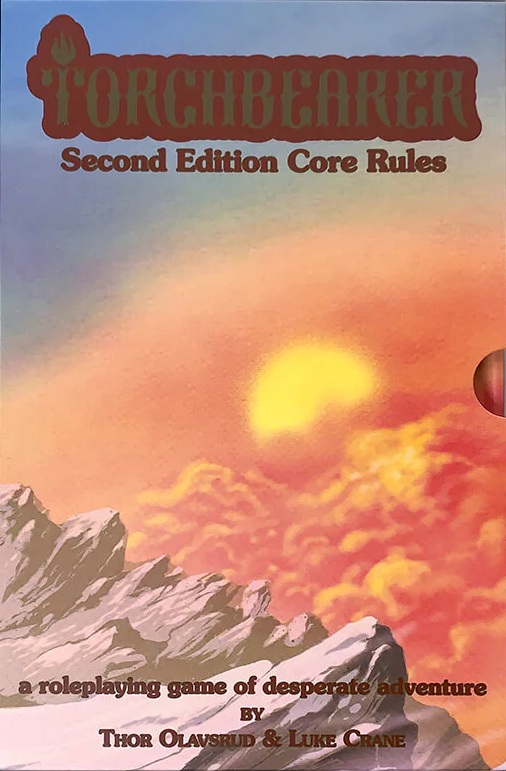
Torchbearer 2e is really the gold standard of survival games. It’s about surviving dungeon expeditions when time itself is your enemy. Every four Turns the party accrues Conditions (Hungry, Thirsty, Exhausted, Sick, Injured) that reduce your capability. Actions cost time and resources, and careful play doesn’t stop attrition because the clock ticks regardless. Recovery is transactional: camping consumes Turns and requires Checks that may fail. Survival is about keeping the group alive long enough to stabilize and try again, not about looting or getting stronger.
For players who like tense resource management and constant pressure, Torchbearer turns dungeon crawling into a survival puzzle. You’re juggling risk, time, and limited supplies, and small wins feel earned. Download the free Dread Crypt of Skogenby! introductory adventure. There’s also a nice YouTube video of a conflict demo.
Red Markets (2017, Caleb Stokes)
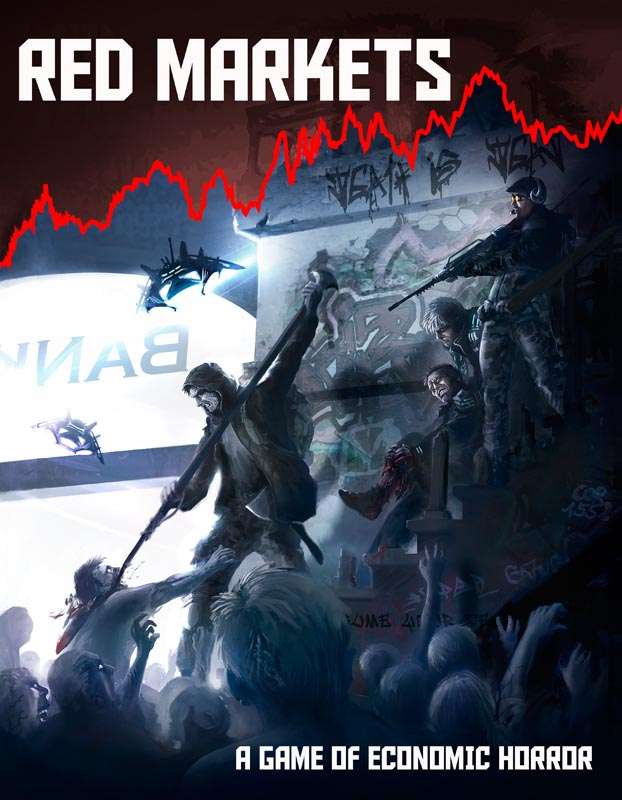
Red Markets is a singular game, as it fully meets the structural criteria for both a grimdark game and a survival game! RM is about surviving as a wage-slave in a collapsing economy. Every mission risks draining capability: recurring Upkeep (rent, food, dependents) and in-mission Gear Charges (ammo, batteries, durability) can leave you poorer even after success.
Recovery, such as healing, repairs, and psychological care costs Bounty, creating a constant tradeoff between surviving today and affording tomorrow. Victory isn’t wealth or power, it’s keeping your crew functional long enough to take another job. If you like games that treat money, equipment, and mental stability as weapons in their own right, Red Markets is the game for you.
Begin with the free Quickstart Guide, and run a short first job. There is also a great, self-contained Session Zero that a fellow blogger wrote that I recommend. You may also consider an extremely useful actual play podcast called The Brutalists which demonstrates the system.
Miseries & Misfortunes 2nd Edition (2019, Luke Crane)
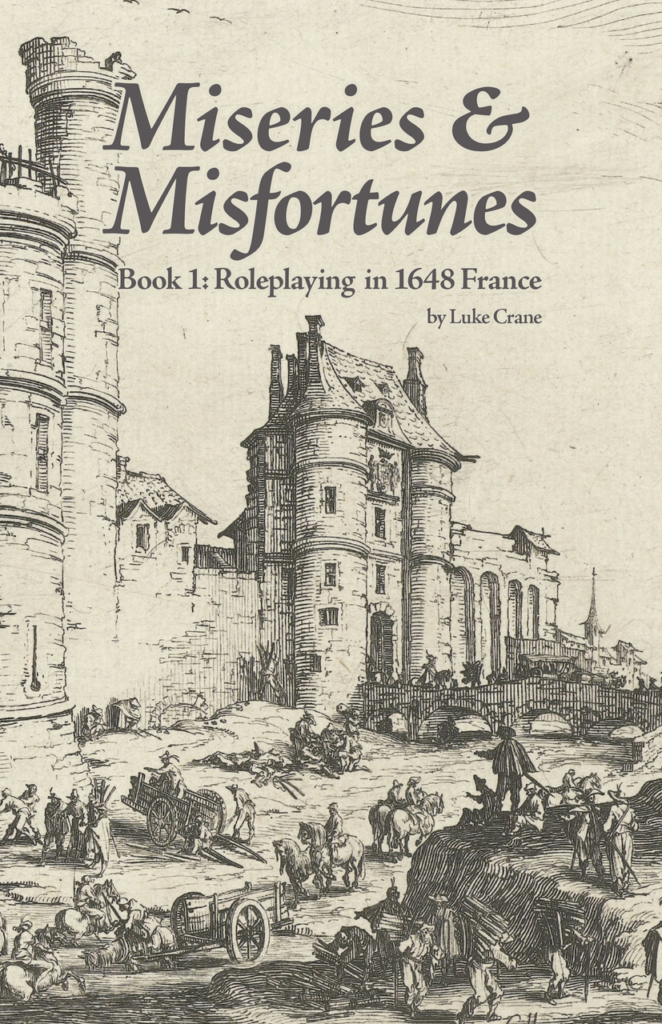
Miseries & Misfortunes is about surviving life in 1648 Paris when your own lifespan is a resource. Designed by Luke Crane of Burning Wheel fame, this plays differently. Using Exertion to reroll failures or survive dangers subtracts years from your Mortal Coil. Recovery is slow and costly, whether by bed rest, treatment, or social expenditure. Rising in status increases required upkeep, so that even advancement compounds attrition. The survival question is simple: can you carve out enough of a life to keep going, knowing every choice eats into your finite existence?
If you want survival to feel personal and existential, this is your game. Progress exists, but every gain comes at a real cost. You’re surviving yourself, not just the city. The first books are enough to get you started, but if you want more detail try the book Paris 1648.
Twilight: 2000 4th Edition (2021, Härenstam/Lites/Keeling et al)
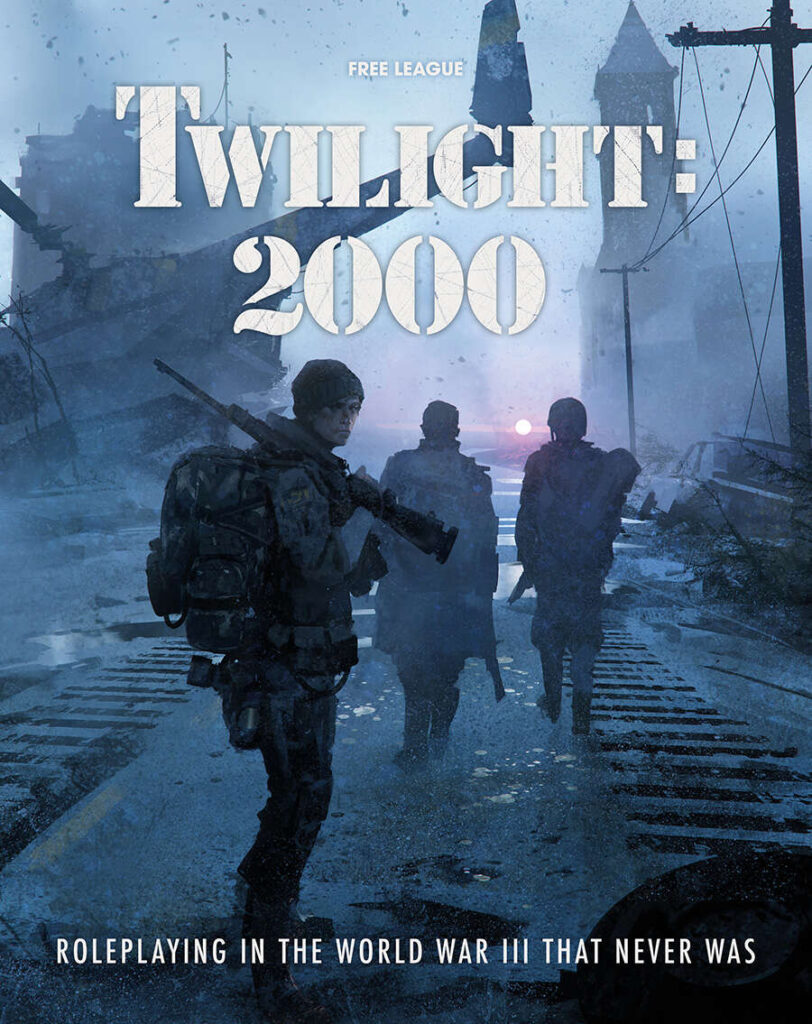
Twilight: 2000 is about surviving the collapse of military infrastructure after World War III. Each day is divided into Shifts where actions like marching, scavenging, and repairing drain fuel, rations, and clean water. Success can degrade weapons and tools, forcing repairs that consume scarce resources. Recovery is slow, and critical injuries can impose long-term penalties. The game’s challenge is maintaining capability over time; you can build stability, but you can’t eliminate attrition. Safety is never guaranteed and stability is a constant, precarious achievement.
Players who enjoy strategy under pressure will find every decision consequential. Twilight: 2000 turns logistics, exploration, and combat into a tense survival calculus where just sustaining your capability is the game itself. The starting scenario, Escape from Kalisz is included with the book. If you want an actual play podcast, here you go.
Coriolis: The Great Dark (2025, Kostulas/Karlén/Grip/Härenstam)
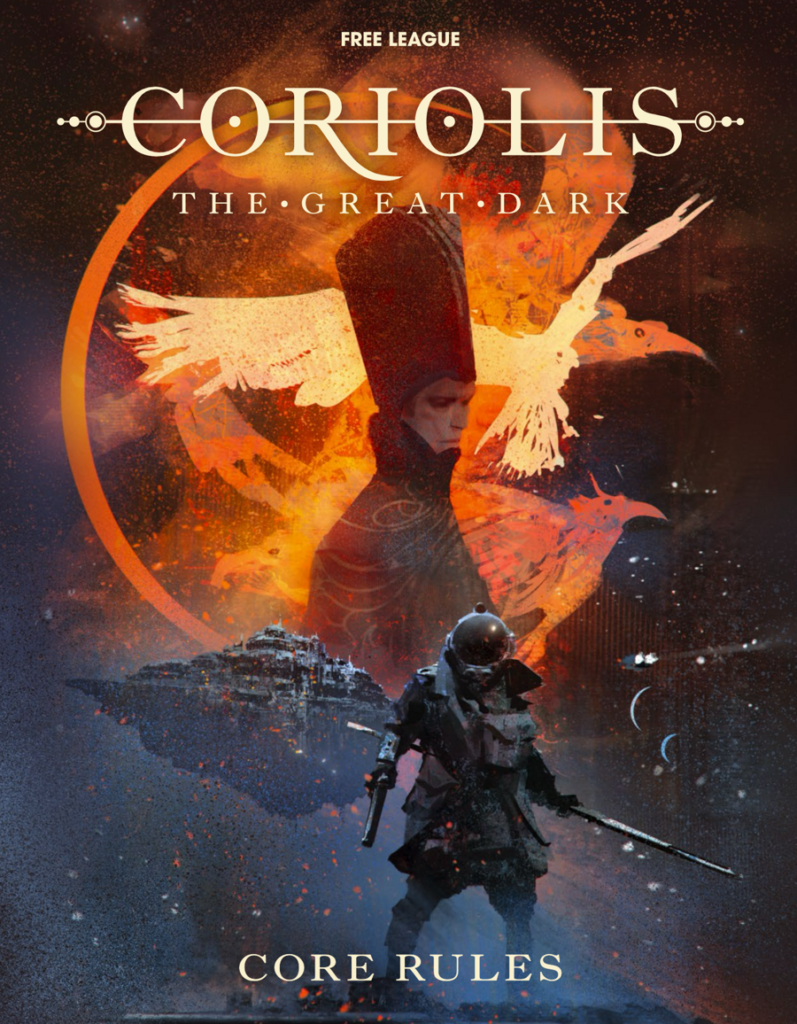
Coriolis: The Great Dark is about staying operational in a collapsing interstellar infrastructure. Ship crews explore alien ruins and have to pay Slipstream Fees, Docking Fees, and supply costs for every trip. Supplies deplete on travel and cannot be fully restored without risk. Recovery is partial, and failures leave long-lasting physical and spiritual consequences. Survival is not exploration or loot, it is preserving capability enough to make it back for the next expedition. You cannot outgrow scarcity, you can only plan to afford one more jump into the dark.
If you like exploration under tension, where every single mission can cause permanent loss, you will love Coriolis. The game turns travel, supply management, and environmental hazards into a constant, high-stakes challenge. Begin with the starter adventure contained in the book. I found an actual play video for this one as well.
Emerging Contenders: The 2025–2026 Survival Convergence
The current trend is to treat ‘pushing’ as a kind of mortgage, and inventory as your health. In these games, pushing a roll is not a heroic act but more like taking out a loan. You get success right away, but the game makes you pay for it later with things like Blight, Stress, or even death spirals. By turning attrition into slots or cards, the pressure to survive becomes more physical and immediate. Getting hurt, going thirsty, or pushing further means you have less space to carry the things that keep you alive.
| Game | The innovation | The “hard contract” (what it forces) |
|---|---|---|
| Crows | Wounds as slots | Injury isn’t a HP reduction, it physically occupies inventory space. Getting stabbed can prevent you from carrying food. |
| Vaults of Vaarn (2e) | The water-slot tax | Every slot not filled with water is a gamble on whether you’ll make it back before heatstroke. |
| Red Markets (2e) | Card-based attrition | Your capability is tied to a hand of cards that thins under pressure, not a pool that refills. |
What Gets Mislabeled as Survival (And Why That Matters)
Understanding why games fail the survival criteria is as useful as knowing which pass, because it reveals what players actually want versus what survival systems deliver. The survival model classifies what the rules incentivize under normal play, not what a table can force through GM rationing or player discipline.
Shadowdark is a high-lethality exploration game, not a survival system. The real-time torch rule does make time an inescapable cost because if the table spends 20 minutes debating, they burn 20 minutes of light, and when the light dies the dungeon becomes a lot more dangerous. But it doesn’t enforce C2 (frictional recovery), C5 (no late-game escape from scarcity), or the compounding economy treadmill that defines true survival. It’s a lethal OSR, not scarcity.
Forbidden Lands starts out as a survival game that later turns into a domain campaign, failing C5. It begins with real attrition, but collapses once you build a Stronghold. Strongholds allow production chains (hunters, tanners, workshops) that generate income passively. Infrastructure doesn’t stabilize survival it solves it, so it’s not a survival game anymore. This is actually a sophisticated feature of the game: a transition from hex-crawling survival into a macro-level stronghold management game, using the same engine. You start as a scavenger and can end as a lord.
Mutant: Year Zero starts as a survival game and then evolves out of it. Early play features brilliant attrition: Resource Dice degrade, the Zone is hostile, and mutations impose permanent costs. But Ark Projects converts scarcity into permanent infrastructure, solving the food problem and trivializing gear maintenance. The design intent is to rebuild civilization, not sustain equilibrium, so the campaign shifts into a post-apocalyptic settlement sim. This is the point—but it’s a clean C5 failure. The goal of MYZ is to start at survival, not to stay in it forever.
Salvage Union shows how a game can feel harsh without being a survival system. The Crawler’s upkeep forces constant scrap runs, so the campaign always needs another expedition; C1 passes. But after each run, downtime on the Crawler restores core mech resources and lets you repair, washing out a lot of attrition between expeditions. Some character options can even eliminate Crawler deterioration, making long-term pressure into a solvable problem. C2 fails (recovery resets too much) and C5 fails too.
Alien RPG (in campaign mode) is a survival-adjacent system that fails C3 (Setbacks Make Things Worse) in a specific way. Stress is the core pressure track, but it’s double‑edged: adding Stress dice to skill rolls can make immediate success more likely, not less. The catch is that any Stress die showing a 1 triggers a panic roll. Pushing failed rolls adds Stress and improves reroll odds simultaneously, so the immediate response to failure is often “better chance, worse consequences.” Failure doesn’t narrow your options, it gambles them on a roll of the dice. This is perfectly fine since it’s trying to be a horror game, not a survival one.
Zombicide: Chronicles fails C1 (Playing the Game Costs Resources) despite its survival aesthetic. Campaign play has a Shelter Phase, but it’s described as an abstract downtime for restocking and planning, not a punishing upkeep ratchet. The real engine is Adrenaline: as you succeed you earn Adrenaline that unlocks stronger skills as the mission escalates. When you return to the Shelter, Adrenaline resets but long-term Experience upgrades remain across missions. So “playing the game” reliably converts action into greater capability. That’s heroic slasher growth with a safehouse wrapper, not structural survival.
Conclusion
Designing a real survival system requires you to abandon the power fantasy dynamic and build an engine where maintenance is the reward. Most “survival” games are actually just heroic systems with additional bookkeeping. If you are deliberately designing a survival RPG these five criteria are the blueprint.
For designers, the useful question is “What does sustained play do to capability over time?” If your core loop enforces dC/dt ≤ 0—if playing reliably costs more than it returns—you’ve built a survival system. If the party can permanently escape the pressure, they’ve exited survival. Know which game you’re building before you go to print.
Please, if you know a game that meets all five criteria that I missed, I want to hear about it! Tell me about it in the comments below.
For those interested my next post will be: Horror Systems: The Rules are the Monster
Want this kind of structural analysis applied to your system? Request a Structural Audit
You’ll get a written diagnosis of where your mechanics create unintended pressure, plus concrete fixes aligned to your intended play experience.
If you’d like notifications for future posts, subscribe below.