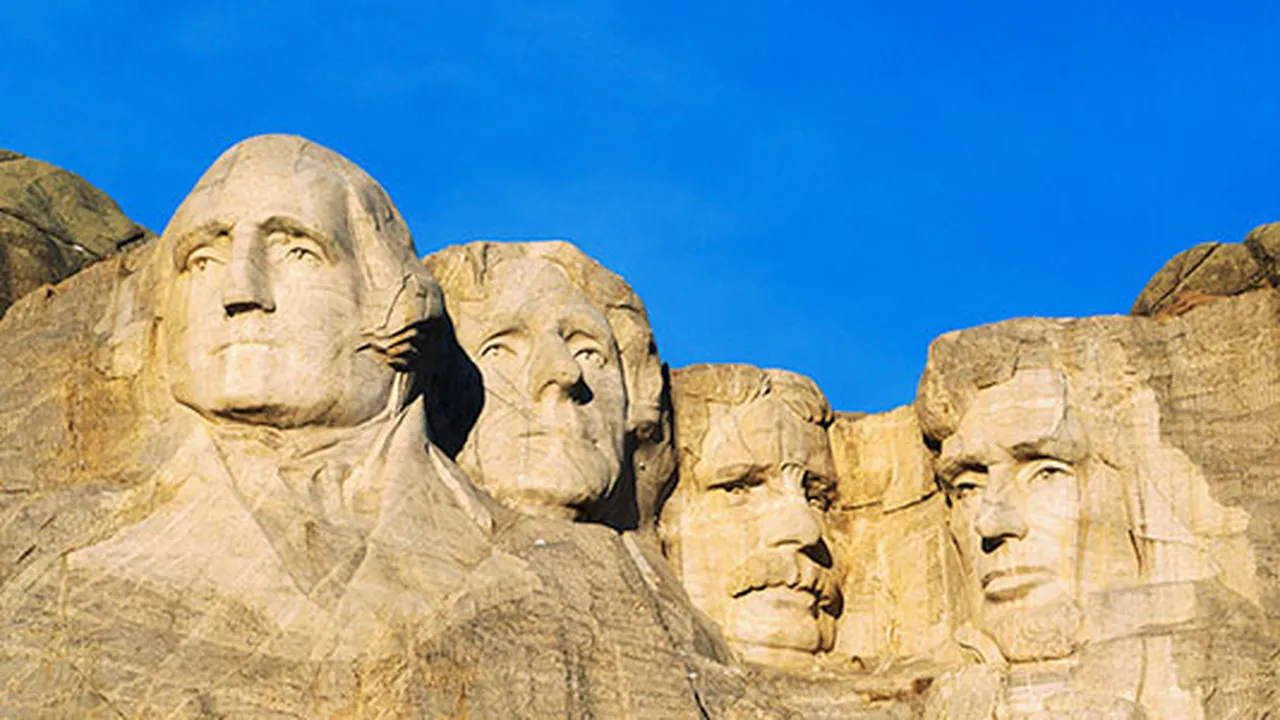
My NBA Mount Rushmore of All Time
My top 5 NBA team of all time is right here, it’s not who you think
I’ve been writing about professional basketball lately, and I was wondering who is the GOAT? The more I thought about it, the more I realized that the ‘ultimate #1 player of all time’ is not really solvable because there are too many variables, not to mention we all have our biases. So I made my NBA Mount Rushmore of all time, and I developed what I think is a better way to decide who is on it. This is not a list of who’s had the greatest career, and it’s not about the guys I like the most.
There are lots of great players, but only a tiny few bent the whole game systemically, from end to end. Physical bending is possession-level: Shaq forced teams to redesign their roster weight and foul distribution for a night. Systemic bending goes deeper than that: players whose very presence forced opponents to rethink their entire game plan — not just who guards who but how they ran their offense, built their defense, and made decisions before the opening tip. Only four players have ever met that super-high standard. These guys did more than dominate, they dictated how the whole game had to be played.
Michael “Air” Jordan – Inevitability
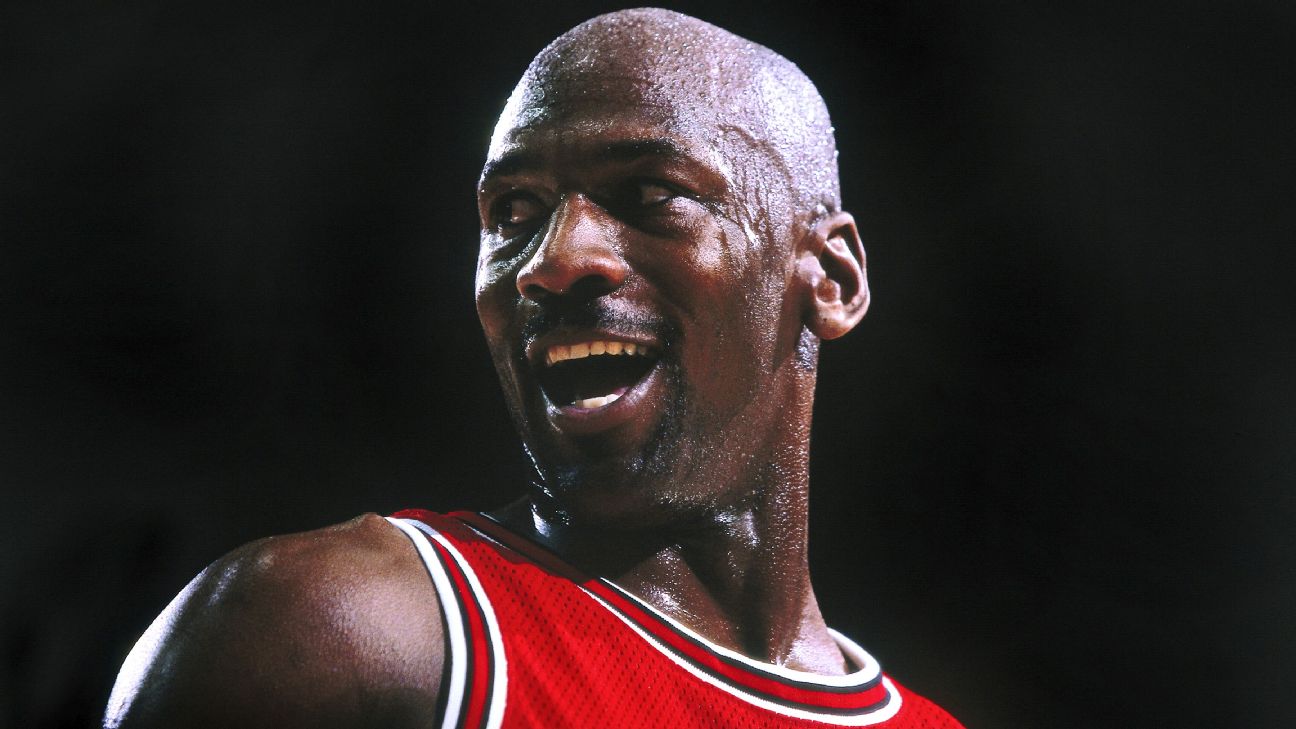
Michael Jordan could collapse entire defenses. His dominance was two-way and absolute, because defenses knew where he wanted to go but they still had to redesign half-court principles just to survive.
Geometrically, Jordan’s scoring gravity forced constant, structural concession. Entire defensive philosophies, most famously “The Jordan Rules,” were invented specifically to wall off his driving angles. Teams bent their defensive shells and even illegal defense guidelines because the coverage was doomed. He turned the mid-range into a kill zone, which forced double-teams that compromised every other threat.
Systemically, his control extended to the other end. As a premier perimeter defender, Jordan dismantled opponents’ point-of-attack options and forced losing decisions before the first pass was even made. Every defensive rotation, every help assignment, every late-game scheme was built around stopping him first, and then figuring out everything else.
Jordan didn’t just dominate possessions; he made them virtually unplayable on his terms. The triangle offense was built to create the exact isolations where Jordan was unstoppable; defenses knew it and still couldn’t stop it. And he only got better in the Finals. That is geometric, systemic bending at its purest. If you want an example of Jordan being a two way killer, check out the 1998 Finals Game 6 on YouTube. If you want offense inevitability even when they were prepared, watch the 1993 Finals on YouTube.
Kobe “Black Mamba” Bryant – Execution
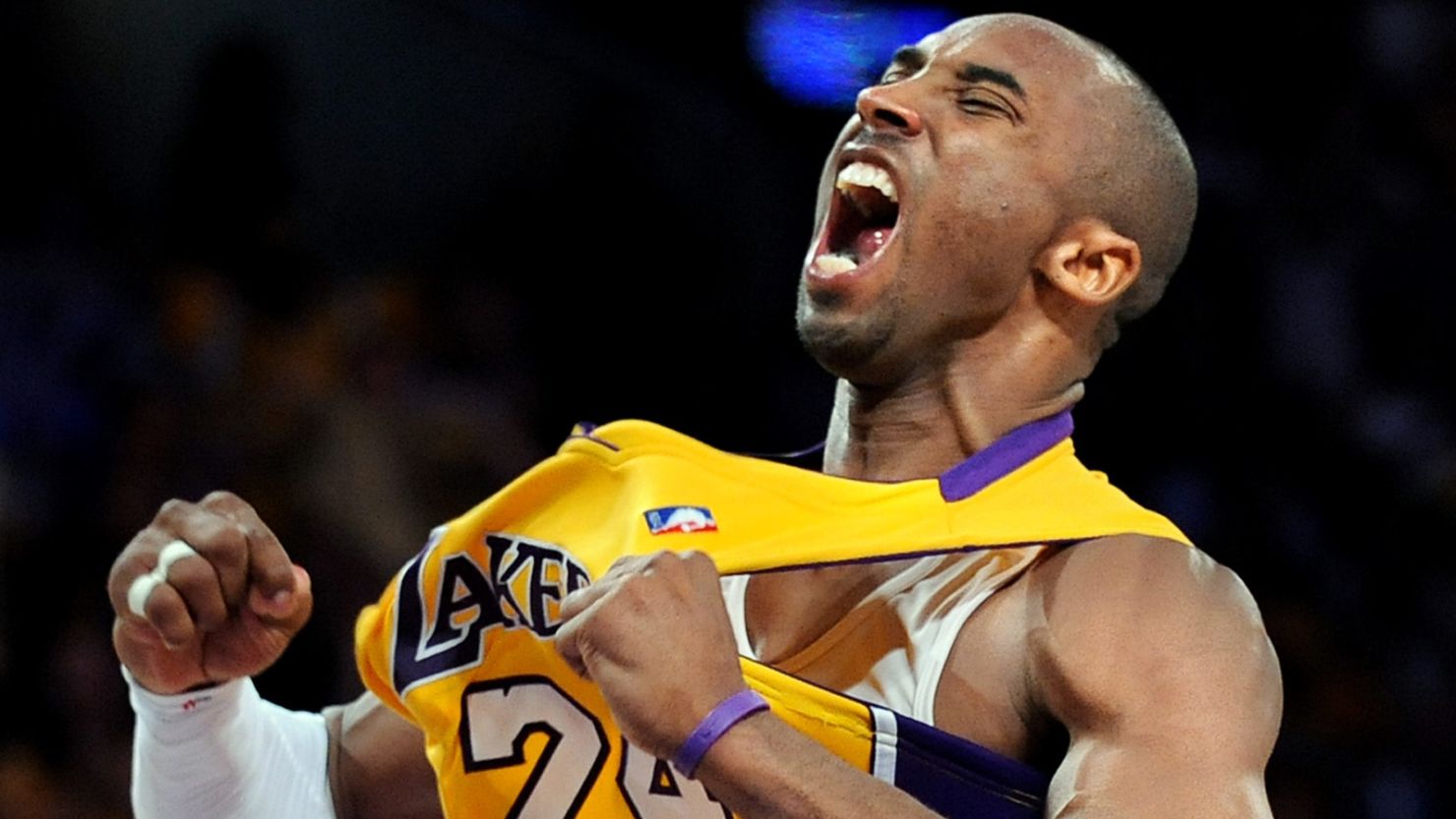
Kobe Bryant built his domination through precision. Where Jordan bent defenses through scoring gravity, Kobe bent them through technical mastery. His footwork, shot creation and post-ups forced defenders into impossible decisions: if they shade him off the ball he would exploit screens perfectly; if you forced him left, he went left. The mid-range became his personal domain not because defenses ignored it, but because it was unsolvable.
Kobe reached his peak right after the NBA legalized zone defenses and strong-side overloads. He did more than beat 1-on-1 coverage, he systematically dismantled modern overloading schemes, hitting highly contested shots with an efficiency that made whatever the defense did to compensate seem irrelevant.
On the floor, Kobe dictated basketball. Rotations, foul management, and personnel deployment were all shaped around his isolations. Combined with his elite perimeter defense, he created a schematic pressure network that teams couldn’t defend, so they had to reorganize the whole court around his threats.
Kobe’s peak was excellence in execution. He forced defenses to bend in real time, making so many high-difficulty shots into certainties. Every possession was a puzzle, and Kobe consistently made sure the defense failed. If your want to watch a great example of Kobe doing his thing, watch the 2008 WCF Game 5 on YouTube.
LeBron “King” James – Orchestration
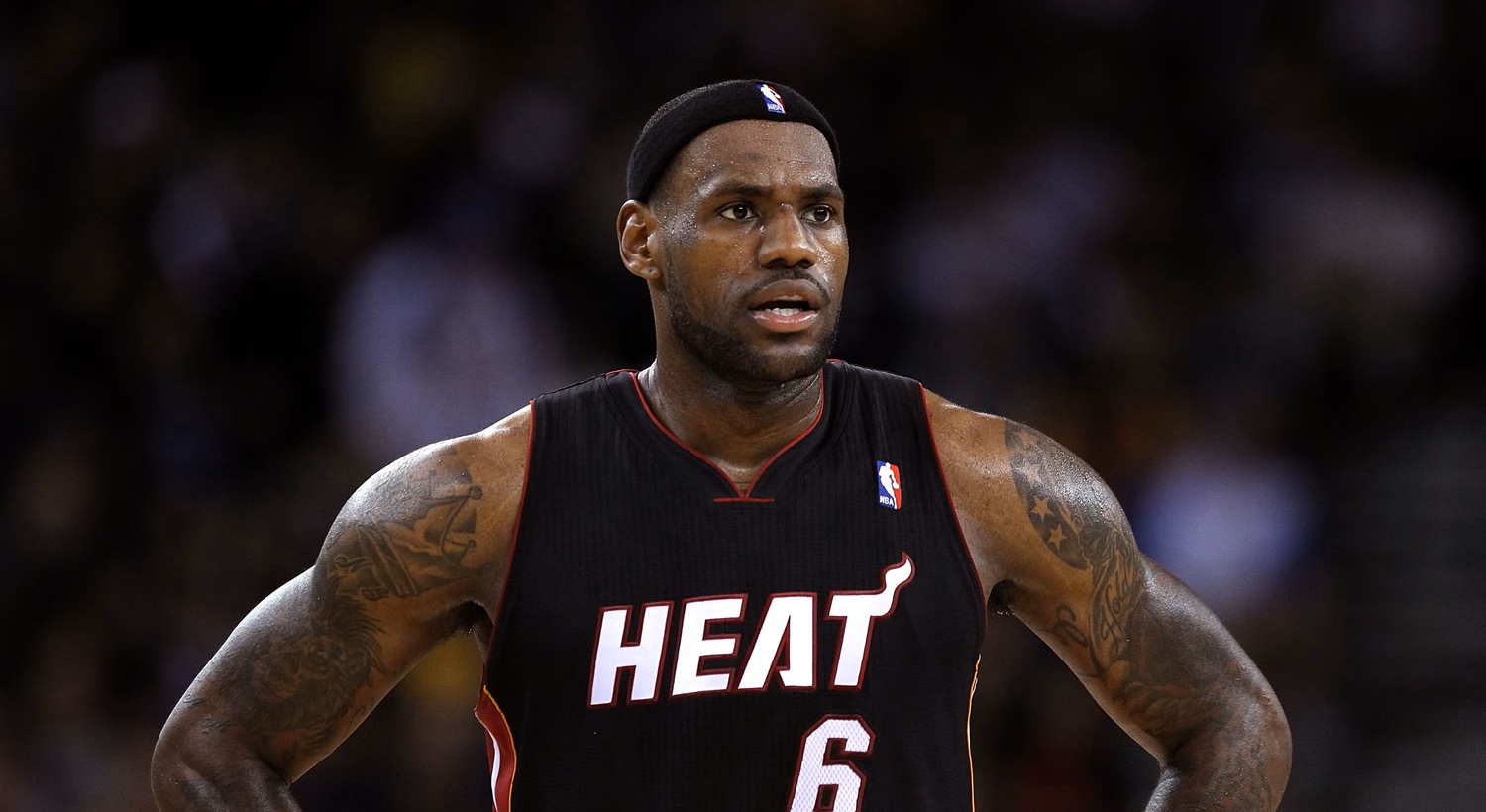
Here’s evidence this is a neutral list: I’m not even a fan of this guy and he’s on my Rushmore. At his best, LeBron James bent the game by being every weapon at once. If Jordan imposed inevitability and Kobe imposed execution, LeBron imposed total-court orchestration. Size, speed, vision, and scoring pressure all arrived from the same position, creating a problem modern roster construction wasn’t designed to solve.
LeBron created physical mismatches that defenses couldn’t assign, because guards were overwhelmed by his strength, forwards couldn’t stay with him in space, and centers were exposed in pick-and-roll coverage. Opponents couldn’t guard LeBron with a single defender so they had to use a committee, and committees have weak points.
His decision-making warped the court before rotations even formed. Collapse on the drive, and he passed it to shooters. Stay home on the perimeter, and he’d hit the rim with overwhelming force. Every possession became a real-time stress test of defensive communication, reaction speed, and positional integrity.
His defensive range destroyed weak matchups across the floor, meaning opponents couldn’t hide anyone, anywhere. It was more than making one skill unguardable, he made the entire concept of defensive assignment unstable. LeBron forced the game to reorganize around his decisions. If you’re interested in watch a great example of Lebron as a master orchestrator, watch the 2009 Eastern Conference Finals Game 5 on YouTube.
Earvin “Magic” Johnson – Information
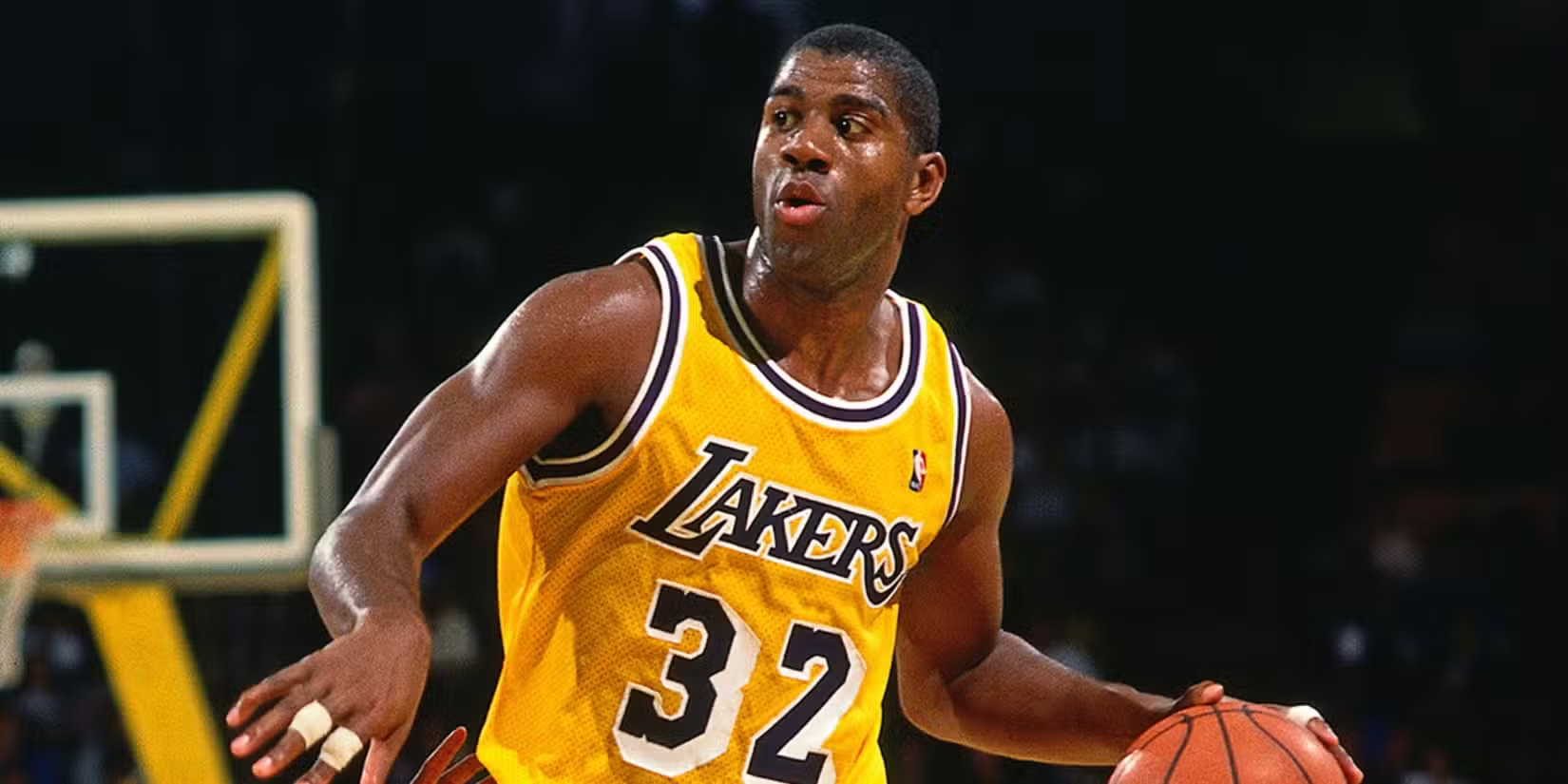
Magic Johnson controlled the game’s information environment. In contrast to the other three, Magic imposed information asymmetry. His processing speed and spatial vision operated faster than any defense could respond, meaning opponents were always solving a problem that had already moved. He weaponized the entire floor.
As a 6’9″ running point guard, Magic broke the sport’s positional geometry. Guards couldn’t handle his size, forwards couldn’t match his decision speed, and centers couldn’t survive the transition tempo he initiated. His height unlocked passing lanes that were inaccessible to normal playmakers, which let him see and exploit spaces defenses didn’t even recognize yet.
The Showtime Lakers didn’t run set plays — they ran at whatever speed Magic decided, reading and attacking defenses before they could organize. A defensive rebound immediately triggered transition pressure, while in the half-court his reads manipulated defensive rotations before they formed. He did way more than find open teammates, he created the conditions that made them open.
Opponents went from trying to defend plays to defending Magic’s next calculation. Game 6 of the 1980 Finals — 42 points, 15 rebounds, 7 assists, starting at center as a 20-year-old rookie in a road closeout game — is the single best proof that his dominance was never about the system. It was about him. At his peak, the entire court operated at the speed of his mind. If you’d like to watcha great example of Magic being the best at what he does, check out 1984 Finals Game 3 on YouTube.
The Rushmore-Adjacent
Bill Russell
Bill Russell is the undisputed king of winning. C’mon, 11 championships in 13 years is completely insane. Russell essentially built the defensive backbone of the Celtics dynasty. His timing, anticipation, and discipline turned shot-blocking into a whole system: altering attempts, controlling rebounds, and redirecting blocks to teammates to ignite the fast break. Opponents had to completely avoid the area near the basket because of his dominance.
If my Rushmore were just about having the best career or being the best defender, Russell would be the first face I carved. But for what I’m specifically doing, he’s not quite there. He was the ultimate defensive safety net, but he didn’t run the offense or control the entire flow of the game. Russell controlled the results and anchored one of the best defenses in history, it’s true. My Rushmore four, through, controlled the entire court and reshaped the game itself.
Wilt Chamberlain
Wilt Chamberlain was the probably ultimate physical force the game has ever seen. His dominance was so extreme that the NBA changed the rules — widening the lane and banning offensive goaltending — just to give opponents a fighting chance. His stats still feel unreal, like someone made a typo in the record books.
But Wilt’s power was mostly about position and brute force. He controlled the paint, but he didn’t dictate how the game flowed from baseline to baseline. Teams could adjust with bigger rosters or different schemes, and the structure of possessions stayed intact. It was still a normal game, just played against a man who was too big and strong to stop. Wilt forced the league to rewrite some of the rulebook, but my four rewrote how the game is played.
Kareem Abdul-Jabbar
Kareem Abdul-Jabbar had the most unstoppable scoring weapon in history. The skyhook was virtually impossible to guard because defenders knew exactly what was coming but they still couldn’t stop it. For twenty years, he was the most reliable offensive anchor in the league, racking up a résumé that belongs on a Rushmore for best career.
But Kareem’s greatness was about being the perfect player within a normal basketball game, not forcing the whole game to bend around him. He could break defenses when he got the ball close to the basket, but he didn’t control every single thing that happened on the court. My Rushmore guys controlled the entire floor.
Stephen Curry
Stephen Curry is the game-changer when it comes to shooting. His range forced defenses to extend beyond 30 feet in ways that had never been necessary before. He did more than just shoot threes, he stretched the entire playing area, changing how coaches plan and how teams are built.
But Curry’s dominance is primarily gravitational. To utilize his gravity fully, he requires a motion system and secondary playmakers. The Rushmore four didn’t need a system, they were the system. Curry absolutely evolved the game’s geometry, but the Rushmore four dictated it.
Shaquille O’Neal
Shaquille O’Neal was the ultimate physical bully. In his prime almost no single player could guard him. Teams had to send double teams, hit him hard, and swarm him just to survive after he got the ball. Teams actually hired big, clumsy players just to have extra bodies to throw at him. He owned the area near the basket every time he touched the ball.
But Shaq’s dominance was a localized earthquake. He took a massive physical toll on the other team, but he didn’t control how the game moved across the whole court. The basic flow of the game stayed the same — teams adjusted their lineups to deal with him, but the sport itself didn’t change. Shaq was an unstoppable bulldozer, my Rushmore four were the architects who designed the roads.
Hakeem Olajuwon
Hakeem Olajuwon is the perfect example of a player with zero weaknesses. He could completely shut down the other team on defense and pull off magic tricks on offense. His famous “Dream Shake” move was so good that the best defenders studied it, knew it was coming, and still fell for it. Winning two championships without another superstar on his team is the best proof of a player carrying a team on his back.
But being the most complete player isn’t the same as forcing the game to change its structure. Hakeem easily solved whatever problems the defense threw at him. The Rushmore four didn’t just solve problems, they forced the game to answer to them.
Larry Bird
Larry Bird bent the game with his mind. He didn’t rely on running fast or jumping high because he saw what was going to happen before anyone else did. Defenders had to guess what he would do next, and they usually guessed wrong. If they crowded him near the basket, he passed to an open teammate. If they stayed back to guard the pass, he drove right past them. If they did anything else he’d sink a 3. Every trip down the court was a chess match, and Bird was always three moves ahead.
Bird’s influence was massive, but he still played within the normal rules of the game. He controlled where players stood and forced opponents into making bad choices at the half-court, but he never forced the entire sport to change how it was played. That is the difference with the Rushmore four: Jordan, Kobe, LeBron, and Magic reshaped how the game worked.