The War Machine: Why My All-Time Starting 5 Beats Yours
I wrote a companion piece on my NBA All White Starting 5 if you are interested
If you want to read my team of current players that beat the Warriors and Celtics, read here
This is NOT a fantasy draft of my favorite players. I assembled a team designed to do one thing: win a seven-game series against any other lineup in NBA history. My team is built to brawl with giants like Shaq in the post while also smothering modern, 3-point offenses on the perimeter. There are no weak links to target, no bad defenders to hide, and no easy matchups. The mistake most people make is they forget there is only one ball. You can’t have 4-5 guys on a team wanting the ball all the time or you’ll lose, that’s what happened to the 2004 Olympic Dream Team.
The Ground Rules: No positionless cheating, every player must have played at their actual position. Crucially, my team is deliberately designed to dominate both the physical hand-checking era and the modern game built on spacing, switching, and endless pick-and-roll attacks. It’s a very ambitious goal I’ve set for myself; I’ve never seen a top 5 list meant to do all that. Four of my five guys are proven in the hand-checking era, and my only modern era guy would be arguably more dominant in that era than in this one.
Unlike how most people list their top 5, I am going from back to front. That’s because my team is built from the back.
The Anchor: Hakeem “The Dream” Olajuwon (Center)
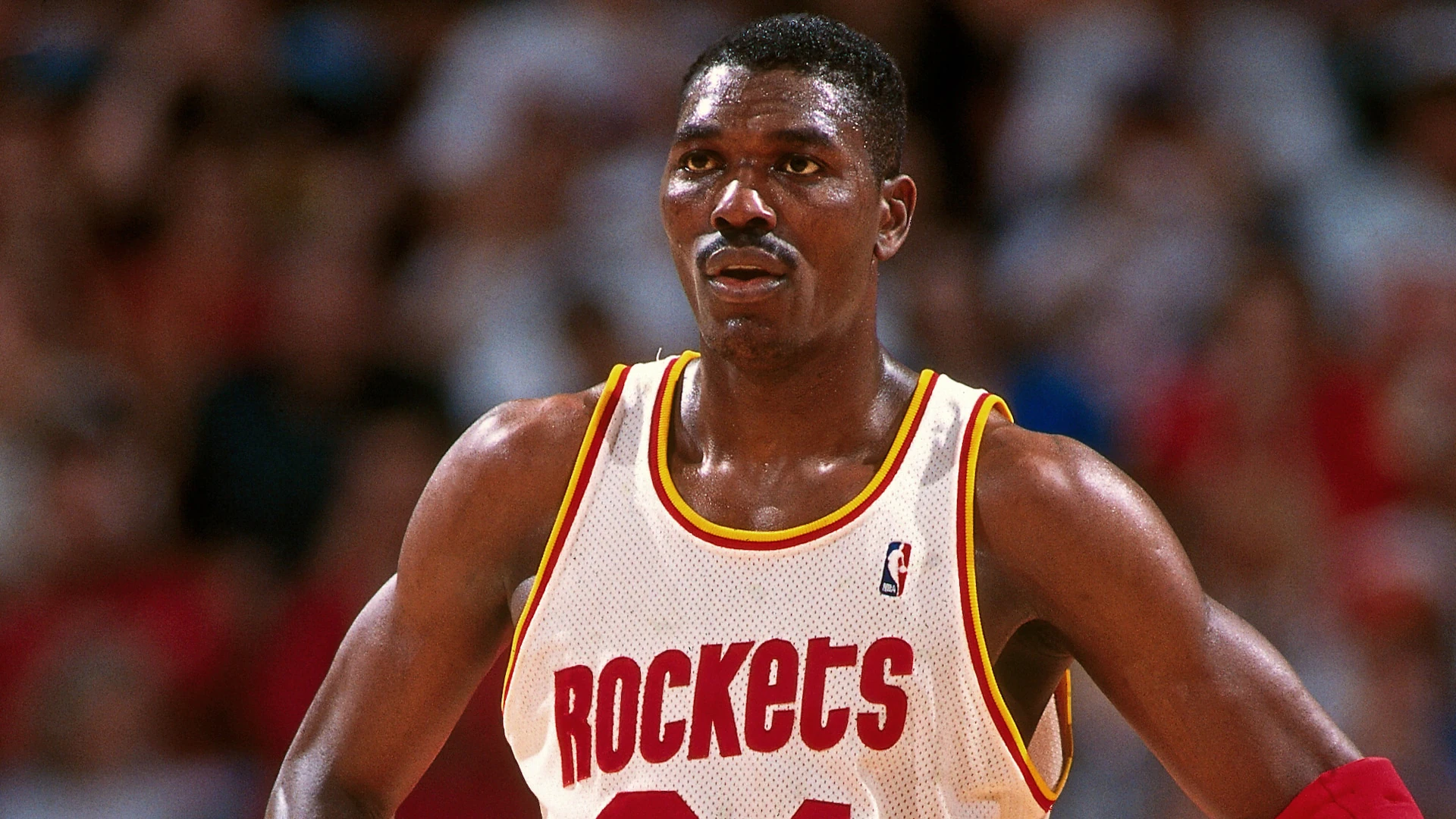
Why Hakeem over Shaq, Kareem or Wilt? Because Hakeem is the best center for dominance on both ends in any era, and he neutralizes other great centers head-to-head.
In the 1995 Finals he outplayed prime Shaq, averaging 32.8 points and 5.5 assists in a sweep. Shaq later admitted Hakeem was “the only guy I couldn’t intimidate… I couldn’t figure him out.” Hakeem has the strength to hold ground in the post and the foot speed to contest, recover, and block secondary moves—something 300-pound centers can’t do. In his prime he was top-10 for points, rebounds, steals, blocks, and FG%, not to mention the Defensive Player of the Year trophy is named after him! Since he shoots 71.2% from the free throw line you never have to take him out of the game, unlike Shaq or Wilt.
Hakeem solves every matchup problem from both ends. Offensively, the Dream Shake is unstoppable; he dominated even 4× DPOY Dikembe Mutombo. In transition, he runs the floor like a forward, beating traditional centers to the rim before they can recover. Defensively, he is the all-time blocks leader and the only center in the top 10 in career steals so he doesn’t just protect the rim, he disrupts entire actions. His greatest value is as the ultimate finisher of a defensive set: whether through a demoralizing block or a high-point rebound, he delivers the instant outlet pass that launches our transition before the opponent can retreat. Hakeem handles any matchup, any pace, and any era.
The Force Multiplier: Kevin “The Big Ticket” Garnett (Power Forward)
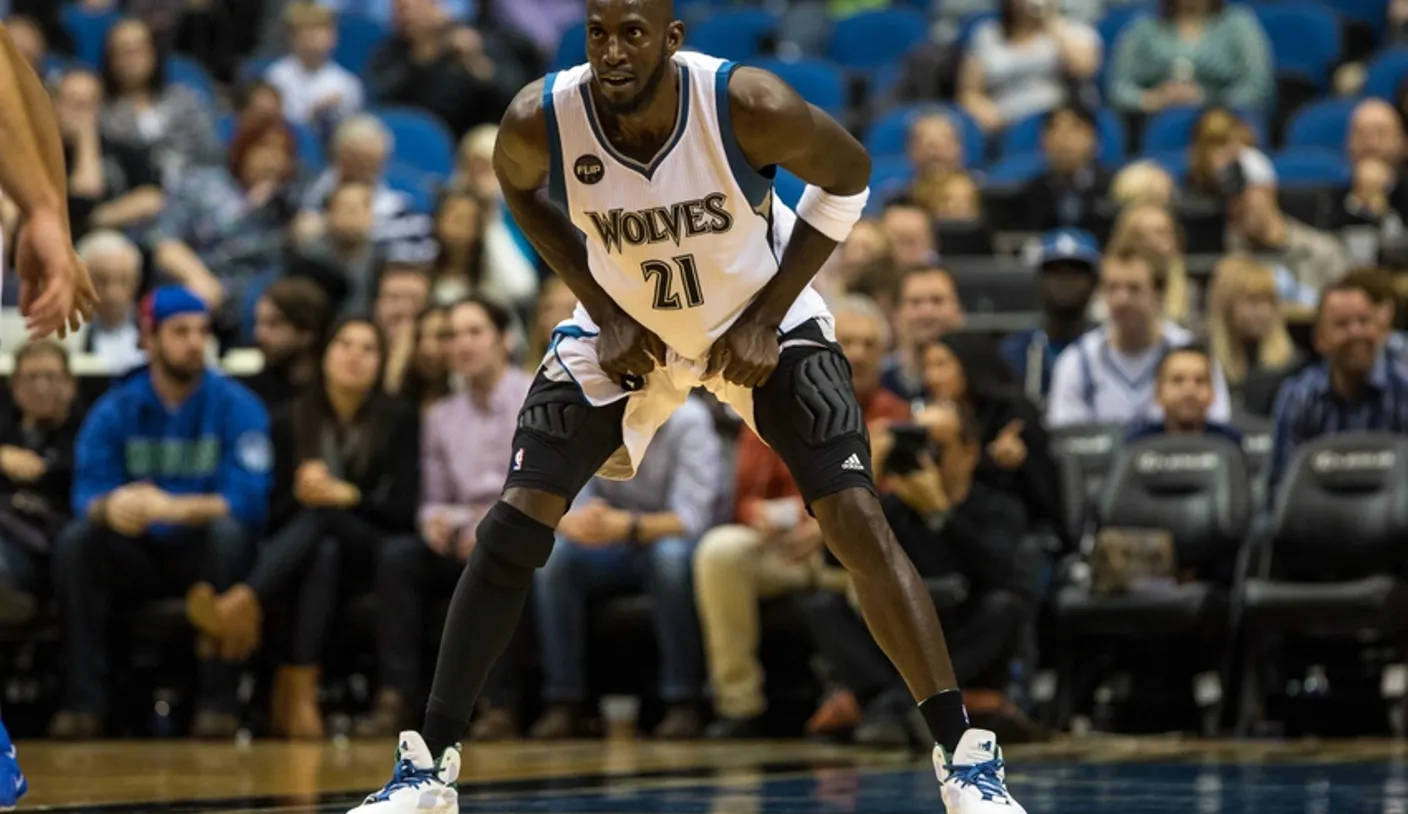
The rarest thing in basketball is a power forward who can both protect the rim and switch onto any perimeter threat without being exposed. That’s Kevin Garnett, and it’s why he is the keystone of my defense. His 2004 MVP season averaged 1.5 steals and 2.2 blocks, applying pressure at every level. With 12 All-Defensive selections and a DPOY, he erases the advantage of the switch completely. He is also 10th all-time in rebounds, giving me the second of three elite guys at the glass.
His greatest individual tool is actually his processing speed: as the most vocal defensive communicator in NBA history, he is the coordinator of my defense. Offensively, he is the ultimate force multiplier. He sets bone-crushing screens for Jordan and Kawhi, hits 18-foot jumpers to clear driving lanes, and makes the extra pass that turns a good look into a certainty. He doesn’t need 15 shots to determine the outcome, he controls the floor’s geometry.
KG and Hakeem are the ultimate frontcourt engine offensively because their skill sets never overlap. By operating from the high post while Hakeem dominates the paint, they never crowd each other’s space. When KG drags his defender away from the hoop, Hakeem executes inside. When KG switches out to smother a guard, Hakeem locks down the drive. They don’t just cover for each other, they strangle the opponent’s options. Garnett and Hakeem can switch onto ANYBODY, 1-5.
The Perimeter Predator: Kawhi “Klaw” Leonard (Small Forward)
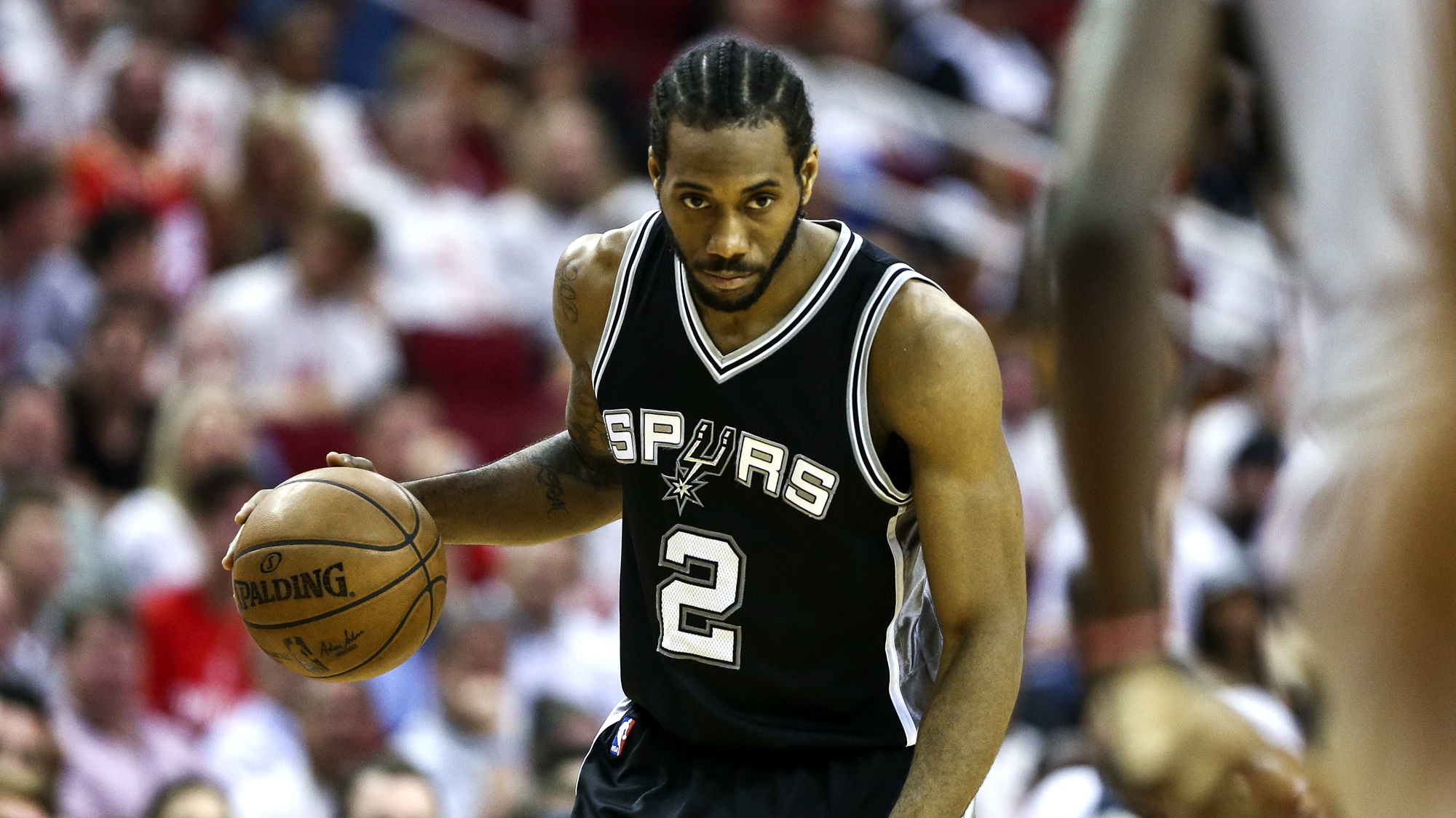
Kawhi Leonard is the only wing I know who combines championship-level floor spacing with elite shutdown defense without leaving a weakness opponents can exploit. This is exactly why Bird and LeBron don’t fit my roster the way he does. Shooting 39% from deep for his career and peaking at 44%, he forces defenders to play him tight so Jordan and Hakeem have the space they need to operate. As a 2-time Finals MVP and 2-time DPOY winner with a 7’3″ wingspan, my boy has successfully guarded LeBron, KD, Harden, Giannis, and Curry one-on-one. Because of that, he frees every defender I have to focus anywhere they want.
Kawhi is the exact reason my team works in both the modern and hand-checking eras. He was first coached by Gregg Popovich to be an elite stopper–he would be even more dominant pre-2003. He’s physical enough to wall off the giants of the 90s and has those Klaw hands to strip modern ball-handlers at the logo. The live-ball turnovers fuel our transition attack, letting Magic attack before the defense can retreat. With Kawhi locking down the primary threat, Jordan roams free, which means that opposing offenses end up running out of room.
On offense, Kawhi is the executioner. He doesn’t hold the ball to find his rhythm, the second a defender sags he punishes them with a catch-and-shoot dagger. He doesn’t demand touches, he finishes possessions. Most teams in this field took a fourth superstar, but they left one of the most efficient postseason finishers in NBA history on the board. Nobody took Kawhi, so he’s my secret weapon.
The Apex Aggressor: Michael “Air” Jordan (Shooting Guard)
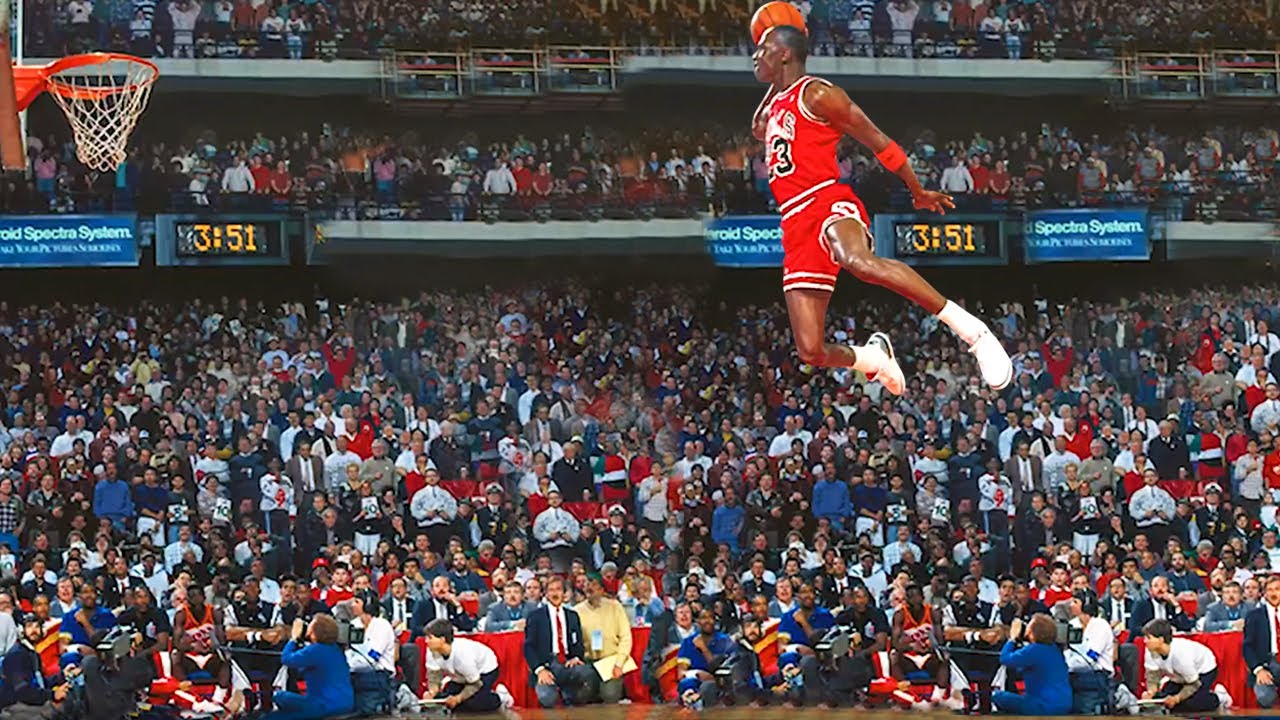
Michael Jordan is my closer. The only player in history to average 30+ PPG while winning Defensive Player of the Year, he doesn’t ask you to choose between offense and defense; you get both. Defensively, his full-court pressure in the 1993 Finals suffocated Phoenix into a slow grind. In my system, that same predatory pressure drives ball-handlers directly into the KG/Hakeem trap. We don’t wait for stops, MJ forces them.
Since Kawhi handles the best wing, Jordan is free to be the disruptor. He dares opponents to challenge him, funneling them toward Hakeem at the rim. Meanwhile, KG erases the escape routes. His legendary conditioning lets him hunt for 40+ minutes at maximum intensity. No wasted possessions, no breathing room.
Offensively, Jordan is the inevitable conclusion of every set. In transition, he’s the lethal finisher for Magic’s vision; when the pace slows into a half-court crawl, he’s the greatest one-on-one weapon in history. In any era, against any scheme, he is the answer for the hardest buckets; and he played even better in the Finals. MJ spearheads my offense, and dominates.
The Possession King: Earvin “Magic” Johnson (Point Guard)
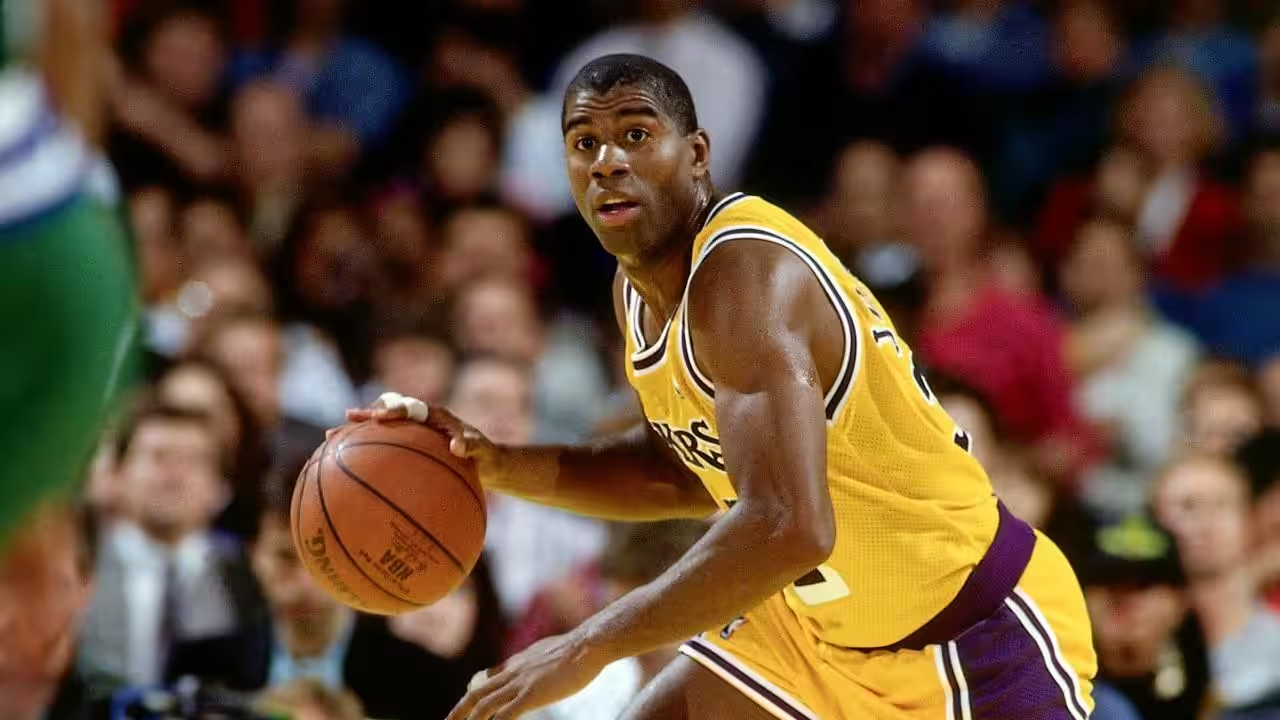
Magic Johnson is both the offensive field general and the engine of our team. With Jordan, Kawhi, and Hakeem providing the scoring, my team doesn’t need another ball-dominant shooter, it needs a player whose superpower is maximizing everyone else without competing for their touches. Magic controls the ball: he possesses it, protects it, and delivers it to our scorers with the physical advantage. With 11.2 assists and an elite assist-to-turnover ratio, he makes sure MJ and Kawhi attack collapsing defenses, not set ones; he led a top-2 offense for most of a decade because he exploits mismatches before defenses can rotate.
Every defensive stop becomes an offensive advantage in his hands. Magic is my third elite guy at the board. Whether he gets the rebound or receives an outlet from KG or Hakeem, the result is the same: transition execution. Magic hunts the open floor while opponents backpedal. When the pace slows, Jordan, Kawhi and Hakeem execute the half-court set; when the defense fractures, Magic converts it into a blowout with a single pass. This is a man who played positionless basketball way back in the 1980 Finals.
In fact under modern rules, the Transition Take Foul penalty turns Magic’s downhill drives into virtually unstoppable possessions, because if anyone tries to foul him in transition he gets a free throw and the ball back. Every turnover is a guaranteed high-value opportunity.
There is no scheme that breaks these guys. We can switch every screen, protect the rim, and shut down the perimeter at the same time. We dictate the terms of the game until you run out of answers.
But what if an opponent packs the middle of the floor and dares us to win a shooting contest? That is where my sixth man comes in.
The 6th Man/Power Forward: Larry “Legend” Bird
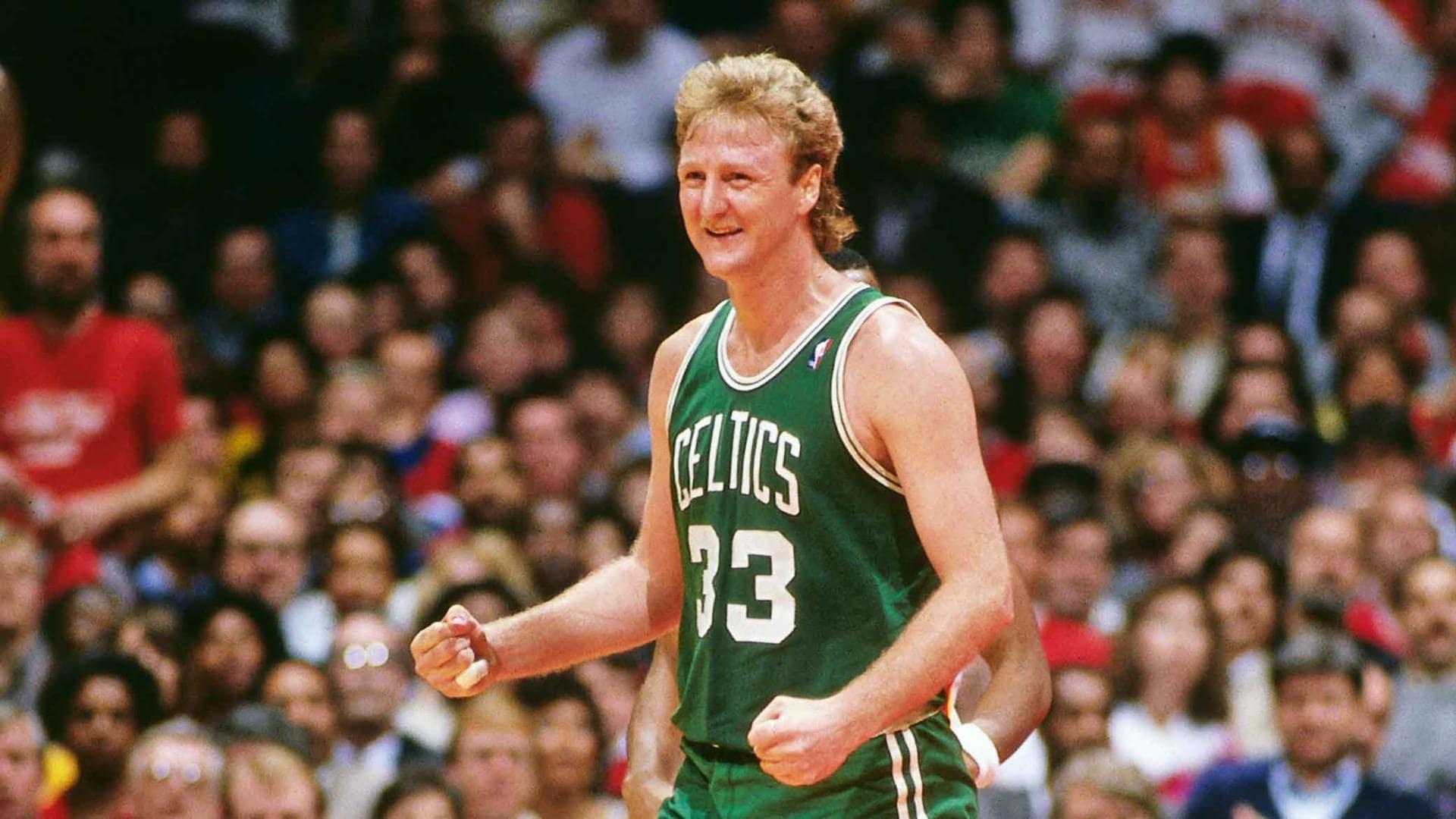
Pat Riley once said, “If I had to choose a player to take a shot to save a game, I’d choose Michael Jordan; if I had to choose a player to take a shot to save my life, I’d take Larry Bird.” Larry solves any spacing problem I have. He, Magic, and Jordan played together on the ’92 Dream Team, so the chemistry is already there. Bird averaged 10.0 rebounds per game for his career and made three All-Defensive Teams, enough to hold the fort while he dismantles the defense from the outside.
When opponents pack the paint, Bird comes in for KG. His incredible basketball IQ and passing make defenses choose to either stay back and risk giving up a shot, or step up and get beaten off the dribble. He also rivals Jordan for sheer psychotic competitiveness. Larry does a lot more than just score; he demoralizes. He tells you what he’s about to do, and then does it.
Why is he 6th? Starting Bird means losing Garnett’s switchability onto faster guards, which limits the defensive stops that fuel our transition attack. As a bench weapon, Bird is the fail-safe for any team that thinks they can neutralize us. When they pack the paint, he’s the tactical nuke that forces them back out. In the fourth quarter, when the defense is exhausted and the margin is thin, he is the last person any opponent wants holding the ball.
My Defensive Control System: We Don’t Adjust. We Hunt.
Our defense doesn’t react to your offense, we dictate it. Jordan and Kawhi pressure the ball until you make a mistake. KG switches onto any player, erasing any advantage, while Hakeem protects the rim like a human firewall. Every defensive stop becomes an instant offensive opportunity. Magic, KG, and Hakeem dominate the glass, then trigger offense immediately, with Magic attacking before defenses can set their feet. This creates a minimum additional 8–10 high-quality possessions per game, while every other possession is a 24-second war of attrition.
We don’t panic when opponents try to exploit a weakness. We just hunt theirs. Whether you try pick-and-rolls, post-ups, or isolations, we have answers without scrambling into emergency rotations. And if the game slows down to a crawl, we have the most reliable scorers in history. Jordan, Kawhi, and Hakeem don’t need a system to get a bucket because they are the system. We control the tempo, dictate the terms, and physically overwhelm you until you break.
Over a seven-game series the win condition isn’t just the math, it’s the mental grind. Every possession forces high-risk decisions under relentless pressure, and modern offenses don’t just lose rhythm and flow, they lose the ability to process fast enough to survive. Unlike most all-time top 5 lineups, I’m not just stacking talent. There is only one ball. My team wins because it because it is built around each player having a separate role, no one is competing for touches.
The Predator Mindset: Why Physics Beats the 2017 Warriors
The greatest trick the “Death Lineup” ever pulled was making the world believe they were the hunters. Against this system, the roles reverse. We don’t go small to match their shooting, because we know they only got one elite defender on their team, where ours is packed with them. We stay big, stay mean, and force them to survive us. While they scramble to hide Curry on defense, we hunt him nonstop with Jordan: 35 points per game on a defender who can’t guard him. While Draymond tries to survive Hakeem in the post, we exploit the 6-inch height difference until they’re forced to double-team, leaving our closers open.
We don’t adjust to their pace, we impose ours. We drain their legs with 48 minutes of brutal rebounding, suffocating ball pressure, and an 8-10 possession advantage from controlling the glass. And if they somehow survive the initial attack and try to pack the paint, we sub in Larry Bird to turn a physical grind into a spacing execution. When the math of the three-pointer meets the engineering of the Defensive Control System, the math loses. My team wins in 5 or 6. If we play in the hand-checking era, the nightmare gets worse.
Think I’m wrong? Let’s hear it below.