Breaking the Map: The 3 Players Who Redesigned the NBA
My all-time starting 5 NBA team is right here, it’s not who you think
I’ve been writing about professional basketball lately, and I kept coming back to the same question: who is the GOAT, because debates about the greatest or most influential NBA players usually turn into the GOAT argument. The more I thought about it, the more I realized that the ultimate number one player of all time is not really solvable. There are too many variables, too many eras, and too many biases, so I stopped trying to build a standard all-time ranking. This is not a list of who had the greatest career, and it is not the players I like most. I wanted a harder test.
There are lots of great players, but only a tiny few bent the whole game from end to end. I’m not just talking about physical dominance, who had the highest stats or the most rings. What I’m looking for is harder: players who were so dominant they forced opponents to redesign their defense, restructure their offense, rebuild their pregame architecture around them, and rethink how basketball was played as a sport. That is the standard here, and there are only three players who ever did that. Since they all share the same crown, I’ll put them in chronological order.
Earvin “Magic” Johnson – Information
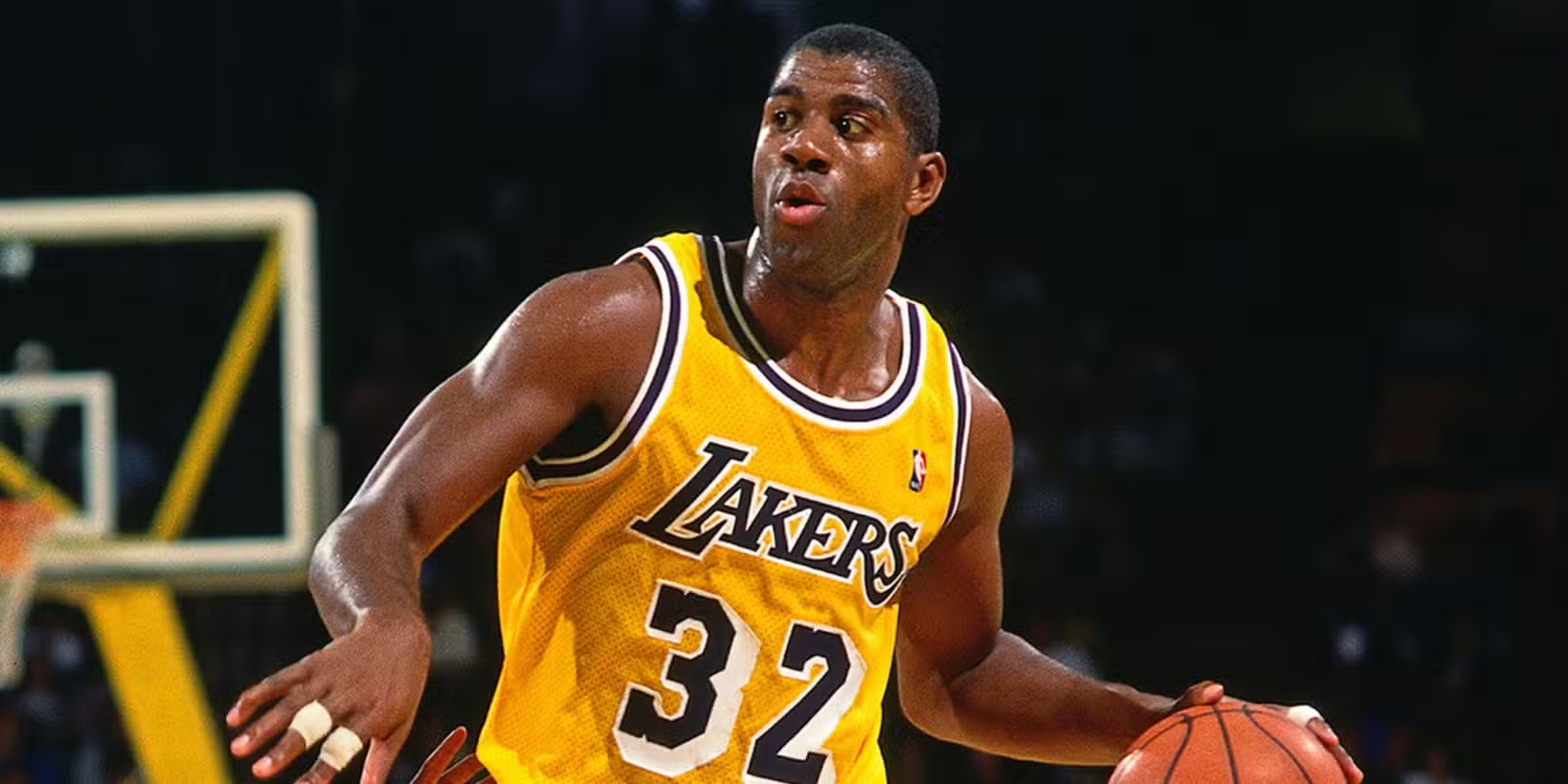
Magic Johnson controlled the game’s information environment. While Oscar Robertson expanded the role of a point guard by being incredible at it at 6’5, it was Magic that made it a problem the whole sport had to solve. As a 6’9 point guard, Magic broke basketball’s positional geometry. Smaller guards could not deal with his size, bigger defenders could not match his processing speed, and centers were constantly dragged into a tempo they were never meant to survive. His height opened passing lanes normal playmakers did not have, but what made him terrifying was how quickly he saw everything. He was doing more than finding open teammates, he was creating the conditions that made them open.
That is why Magic meets all four criteria. He forced opponents to redesign their defense, restructure their offense, rebuild their pregame architecture, and rethink what basketball could look like when the lead playmaker was that big, that fast-thinking, and that impossible to map in advance. Opponents stopped defending plays and started defending Magic’s next calculation, usually a beat too late. Game 6 of the 1980 Finals is proof: with Kareem out, Magic started at center as a rookie and finished by clinching the title. If you’d like a more mature example, check out the 1984 Finals Game 3. He led a top 2 offense for nearly a decade because at his peak, the entire court operated at the speed of his mind.
Michael “Air” Jordan – Inevitability
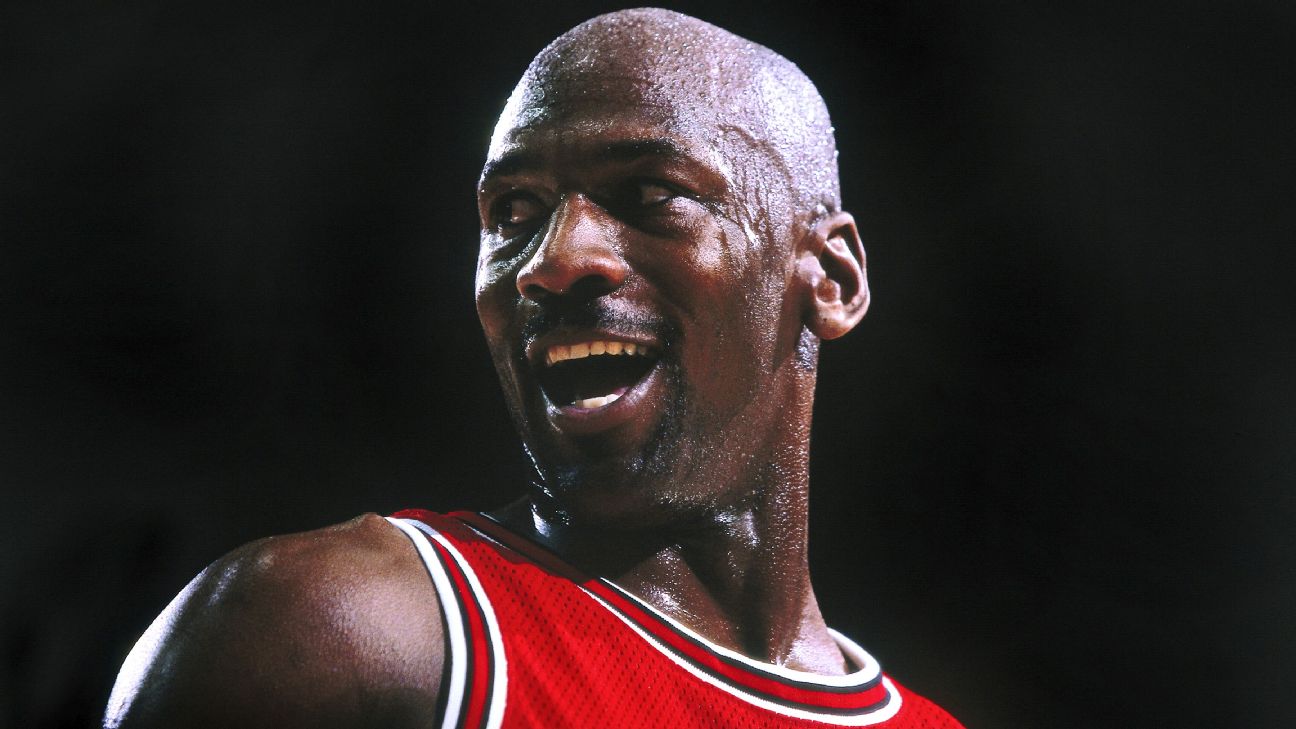
Michael Jordan belongs here because he changed the logic of what a team could be built around. Before MJ the sport still treated the dominant big man as the center of gravity, the player around whom championships were most naturally organized. Jordan shattered that model. He turned a scoring guard into the most powerful force in basketball and forced defenses to invent new survival strategies just to keep the game from breaking open. The Pistons’ Jordan Rules were a prime example: they weren’t normal star coverage, but a whole philosophy built to wall off his driving lanes, load help toward his spots, and turn every touch into a war of attrition.
That is why Jordan clears all four of my criteria. He forced opponents to redesign their defense because he could collapse entire defenses. He forced them to restructure their offense because if they couldn’t wear him down or protect the ball against his pressure, he bent the possession battle at both ends. He forced pregame decisions because everything started with the same question: how much of your own identity are you willing to sacrifice just to survive him? And he forced basketball to rethink itself as a sport because after Jordan, an elite wing scorer was now the new center of its gravity. If you want to see Jordan being a two-way killer, check out the 1998 Finals Game 6 on YouTube. If you want offense inevitability even when the defense was prepared, watch the 1993 Finals on YouTube.
LeBron “King” James – Orchestration
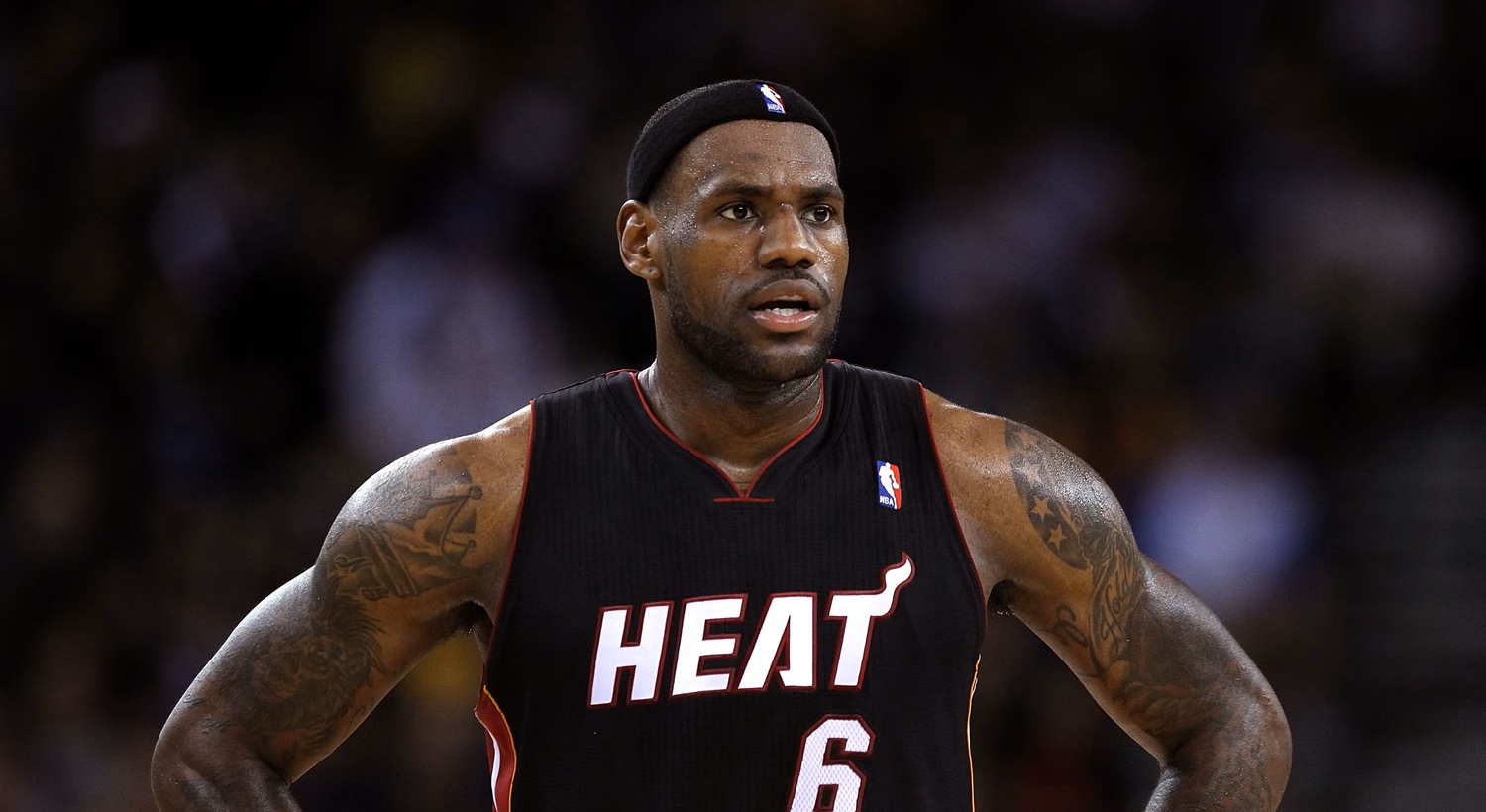
Here’s evidence this is a neutral list: I’m not even a fan of this guy and he’s here. LeBron James bent the game by being every weapon at once — scorer, point guard, freight train, transition engine, and defensive eraser — all arriving from the same body type and the same positionless template. If Magic broke positional geometry and Jordan broke perimeter hierarchy, LeBron broke defensive assignment itself. He was too strong for guards, forwards couldn’t always stay with him in space, and centers were dragged into actions they weren’t built to survive.
That is why he clears all four criteria. He forced opponents to redesign their defense because no single defender was enough, so every coverage became a chain of compromises. He forced them to restructure their offense because any weak defender, slow-footed big, or limited spacer could become a target the moment he identified the mismatch. He forced pregame architecture decisions because roster construction itself started bending toward switchable wings, mobile bigs, and lineups with nobody obvious to hunt. And he forced basketball to rethink itself as a sport because after LeBron, the question was no longer what position your best player was, it was whether positions still mattered in the old way at all. If you’re interested in watching a great example of Lebron as a master orchestrator, watch the 2009 Eastern Conference Finals Game 5.
The Triple Crown-Adjacent
Bill Russell
Bill Russell is the undisputed king of winning. C’mon, 11 championships in 13 years is just ridiculous. Russell essentially built the defensive backbone of the Celtics dynasty. His timing, anticipation, and discipline turned shot-blocking into a whole system: altering attempts, controlling rebounds, and redirecting blocks to teammates to ignite the fast break. Opponents had to think twice about every drive because the space near the basket was his.
If this were about having the best career or being the greatest defender, Russell would be up there. While he was the ultimate defensive safety net and a tempo-setter, he didn’t run the offense or dictate every dimension of the court. Russell controlled the results and anchored maybe the greatest defense in history; the Triple Crown guys, though, controlled the entire court and forced the sport itself to reorganize around them.
Wilt Chamberlain
Wilt Chamberlain was probably the ultimate physical force the game has ever seen. His dominance was so extreme that the NBA changed the rules — widening the lane and banning offensive goaltending — just to give opponents a chance. His box scores still feel unreal, like someone made a typo in the record books. At his peak, he turned the paint into his private ecosystem where normal size and strength just didn’t apply.
But Wilt’s power was still mostly about position and brute force. He controlled the area around the rim so completely that teams had to change how they attacked the basket, but he didn’t dictate how the game flowed from baseline to baseline. Coaches could adjust with bigger bodies, extra fouls, and paint‑packing schemes so the structure of possessions stayed intact. It was still the same sport, just played against a man who was too big and too strong to solve. Wilt forced the league to rewrite parts of the rulebook. The Triple Crown guys forced basketball to rethink the whole map.
Kareem Abdul-Jabbar
Kareem Abdul-Jabbar had the most unstoppable scoring weapon in history. The skyhook was virtually impossible to guard because defenders knew exactly what was coming and still couldn’t do anything about it. For almost twenty years he was the most reliable offensive anchor in the league, racking up a résumé that belongs on any short list for best career.
Kareem’s greatness was about being the perfect player inside a normal basketball universe, not forcing the whole universe to bend around him. He could break defenses whenever he got the ball in his spots, and teams had to game-plan for his hook every single night, but he didn’t control every layer of the court. He stretched conventional basketball to its limit instead of redefining the whole map. The Triple Crown guys are the ones who made the sport itself feel like it had to change its shape.
Larry Bird
Larry bent the game with his mind. He didn’t rely on running fast or jumping high because he saw what was going to happen before anyone else did. Defenders had to guess what he would do next, and they usually guessed wrong. Crowd him and he’d hit a cutter or a shooter; stay back to guard the pass and he’d walk into a jumper; overplay either one and he’d slip into space, relocate, or turn a shot into a pass at the last second. Every trip down the court felt like a chess match, and Bird was always a few moves ahead.
Bird’s influence was massive, but it lived mostly in the half-court geometry of offense. He controlled where players stood, how defenses shaded, and which actions became instant advantages, and the Celtics’ offenses with him on the floor were among the best the league had ever seen. What he didn’t quite do was force the entire sport to rewrite its full-court logic on both ends. He stretched conventional basketball to its limit as an offensive fulcrum rather than changing the whole blueprint the way the top three guys did.
Hakeem Olajuwon
Hakeem Olajuwon is a beautiful example of a player with no real weaknesses. He could erase your offense at the rim, switch onto any player, and then go down to the other end and make elite defenders look like fools with the Dream Shake. His footwork and touch were so good that defenders could study the tape, know exactly what was coming and still guess wrong. Winning two championships without another superstar is about as strong a proof as you can get of one player carrying a team on both ends.
But being the most complete problem-solver isn’t the same thing as forcing the game to change its whole structure. Yeah, Hakeem solved whatever questions defenses asked him, but the Triple Crown guys did something different: they didn’t just solve problems in the game, they made basketball itself answer to them.
Kobe Bryant
Kobe Bryant was the most complete expression of the scoring wing the game has ever seen. His footwork, shot-making range, and perimeter defense made him nearly unsolvable within a framework that already knew he was coming because defenses had a vocabulary for elite wing scorers and still couldn’t stop him. That’s a different kind of dominance, and it’s real.
But that’s also exactly why he misses the top three. He didn’t break Jordan’s mold, he perfected it. Magic broke positional geometry, Jordan shifted the sport’s center of gravity, and LeBron dissolved fixed positions. Kobe forced opponents to confront just how high the scoring-wing ceiling could go. That’s elite, but it’s not the same as forcing the sport to reorganize itself around something completely new.
Shaquille O’Neal
Shaquille O’Neal was the ultimate physical bully. In his prime, almost no single player could guard him. Teams had to send doubles, hit him hard, and swarm him just to survive after he got the ball. Franchises literally signed extra big, clumsy bodies just to have more fouls to throw at him. He owned the area near the bucket every time he touched it.
But Shaq’s dominance was a localized earthquake. He took a massive physical toll on the other team, but he didn’t control how the game moved across the whole court. The basic flow of basketball stayed the same — teams adjusted their lineups and foul patterns to deal with him, but the sport itself didn’t change. Shaq was an unstoppable bulldozer, but the Triple Crown guys are the guys who redesigned the roads.
Stephen Curry
Stephen Curry is the game-changer when it comes to shooting. His range forced defenses to go beyond 30 feet in ways that had never been necessary before, and his off-ball movement and release speed turned spacing into a full-time emergency. He stretched the whole court and helped push modern offenses, from AAU to the NBA, toward pace, spacing, and shooting as their default language.
Curry’s dominance is primarily gravitational though. To use his gravity at his best, he needs a motion-heavy system with secondary playmaking and constant off-ball action. The top three guys didn’t need a system because they were the system. Curry definitely evolved the game’s geometry and inspired a new offensive meta, but the Triple Crown dictated the entire court, on both ends, in a way no scheme could fully contain.