The Modern Dynasty Killer: A Current NBA Anti-Meta Squad
After building an unbeatable top 5 all-time team and an all-White team, I am trying something different. I am assembling a team to beat both the 2017 Warriors and 2024 Celtics. My crucial restriction—doing this with only players in the league right now—is sort of insane, but I did it. I’m sure this post will irritate people who think that small-ball or 5-out spacing is the best possible way to play modern basketball, because I am specifically targeting the two teams who were at the peak of those systems. I’m gonna punch them both right in the ovaries.
I first built a 6-man rotation (my top 5 +1 bench), like my other all-time lists, but I realized I was handicapping myself. Coaches Steve Kerr and Joe Mazzulla both used 2 rotation pieces and situational players as well, in order to swing different games. To match that I’m carrying a full three-man bench. Every player I have solves a specific problem created by the Warriors or the Celtics.
This is NOT a fantasy draft of my favorite players. I assembled a team designed to do one thing: win a seven-game series against two of the best teams in NBA history. I gave myself one more restriction, in line with my past top-5 lists: No positionless cheating. Every player must have played that position professionally. Unlike my last two posts, which were listed back-to-front, this time I’m listing them 1 through 5.
The Efficiency Floor: Shai Gilgeous-Alexander (Point Guard)
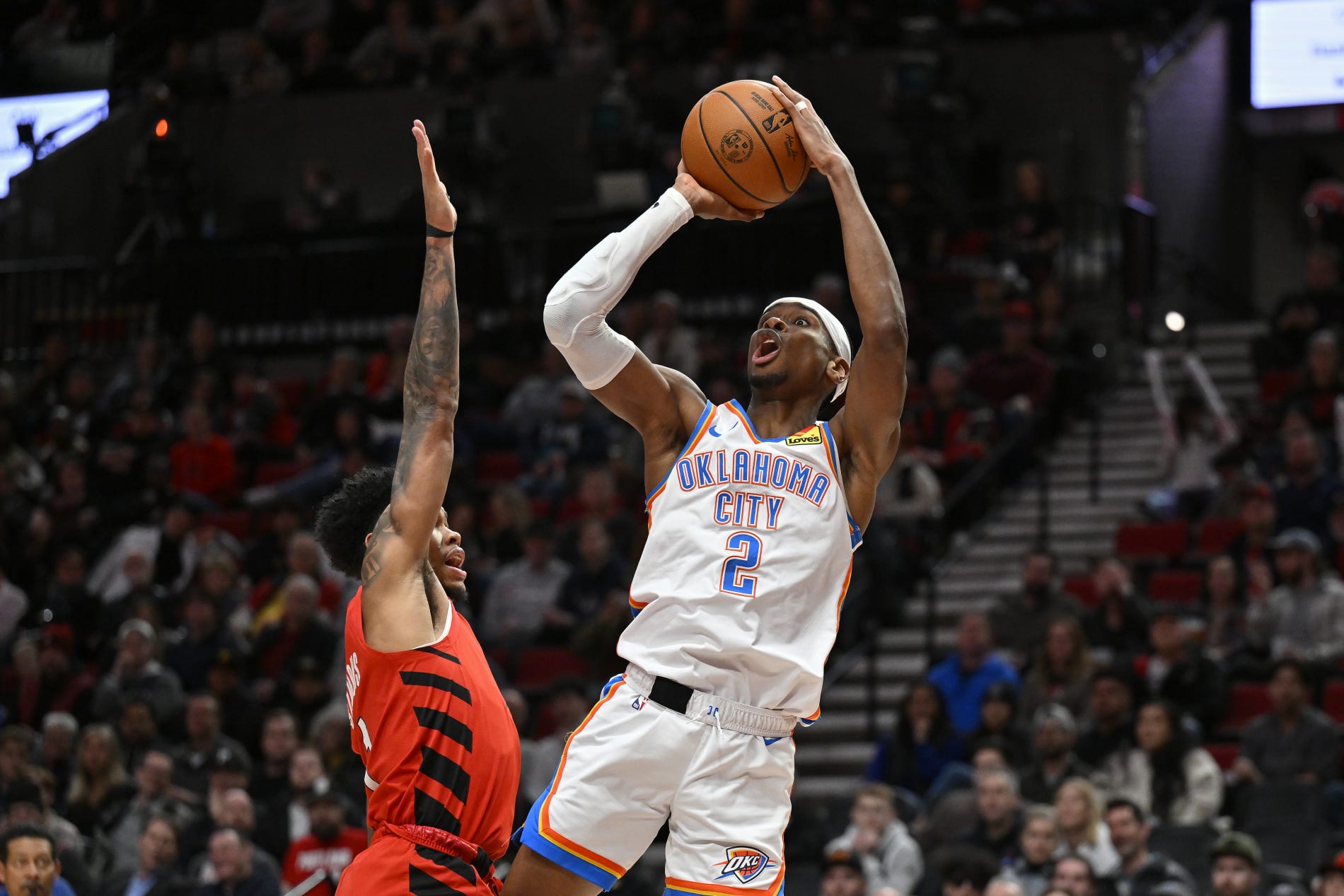
Shai Gilgeous‑Alexander is the engine. Four straight All-Star selections, the 2024–25 MVP and a scoring title put him at the absolute peak of the league, but that’s not why he’s the perfect lead guard for my team. SGA is a possession stabilizer. He creates advantages without detonating the offense, lives at the line without gambling the ball away, and almost never feeds the live-ball chaos that fuels modern 5-out runs. In 2025–26 he’s at 31.8 points on 55.4% shooting—elite volume with the efficiency profile you need when every playoff game slows into half-court execution.
Against switching defenses he doesn’t rush, he controls the possession. He uses the screen, keeps the defender on his hip, and forces the defense to commit before he makes his move. That’s why the elbow handoff game with my center is so hard to stop and why he’s so reliable when the clock is winding down. You still get a quality shot without having to go small or fall back on the same high pick-and-roll every trip.
Yeah Luka is great, but he needs constant defensive protection. SGA gives me advantage creation, foul pressure, clutch shotmaking, and defensive survivability without bending the roster around him. He’s the guard who lets a jumbo-skill team function possession after possession.
The Defensive Ceiling: Mikal Bridges (Shooting Guard)
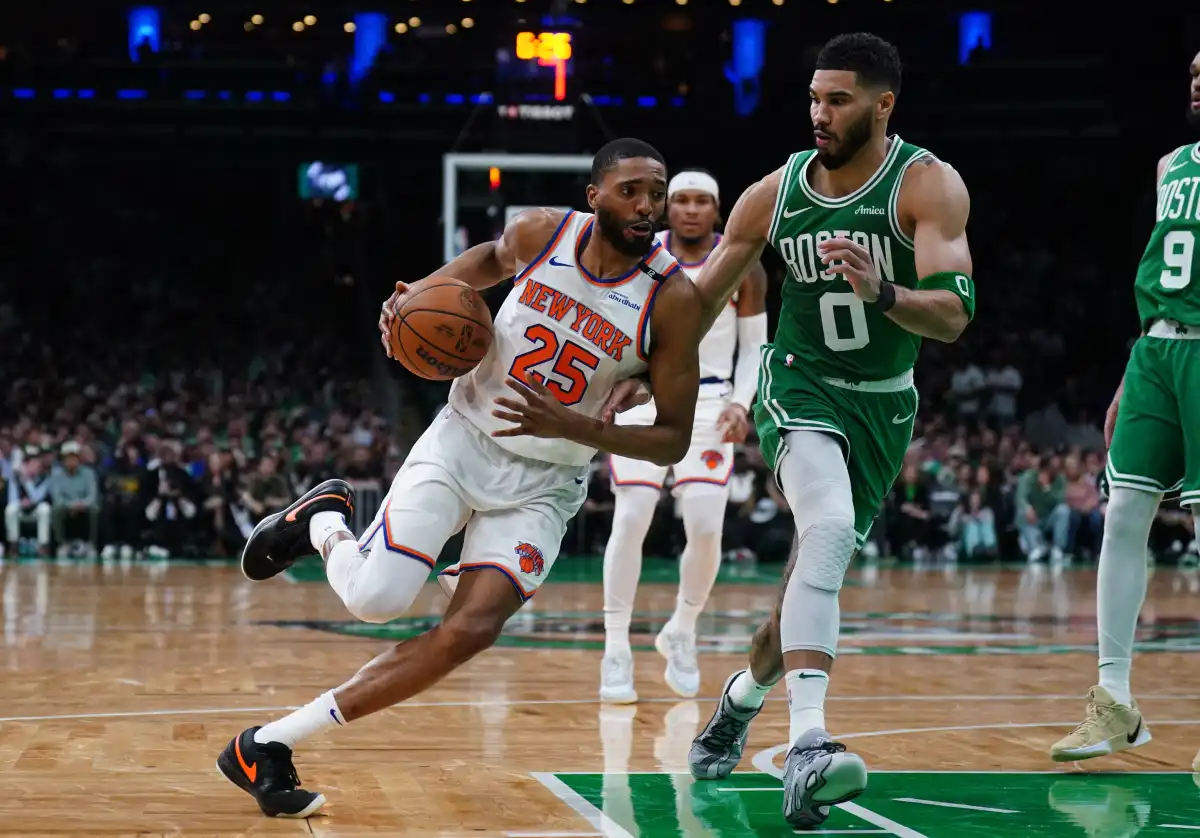
Mikal Bridges is my anti-chaos man, and the reason this roster doesn’t eat itself. He’s a perennial top-tier wing stopper and the NBA’s active ironman: he takes the hardest perimeter assignment every night, no maintenance days, no drama. He’s already closed a playoff game against Boston by taking the ball from Tatum at the horn; he’s lived inside their spacing and knows what it looks like when it gets real. He’s the piece that lets the stars dominate the ball without the defense ever finding a place to attack. No other SG playing today can take his place on my team.
Chasing Curry or Bane through 40 minutes of screens, handoffs, and constant relocation is a tax—Bridges pays it. He’s the guy that lets my stars dominate the ball without the defense ever finding a place to attack. He does it at only 2 fouls per game, which means unlike every other possible candidate for his position, he’s on the floor when it matters. He doesn’t have to shut those players down completely, but he does prevent them from warping the rest of the defense. His length lets him recover and still contest even when he’s trailing.
Anthony Edwards is a superstar with the ball, but I need an All-Defense wing who crushes without it. Bridges gives me what I need to keep the stars fresh and the structure intact. Offensively, he’s a possession finisher. He reads the floor instantly, threads Jokić’s handoffs, and makes decisions fast enough that the offense never stalls. He spaces the floor deep enough that defenders can’t cheat, can shoot or drive immediately on the catch, and converts advantages into points.
The Physics Button: Giannis Antetokounmpo (Small Forward)
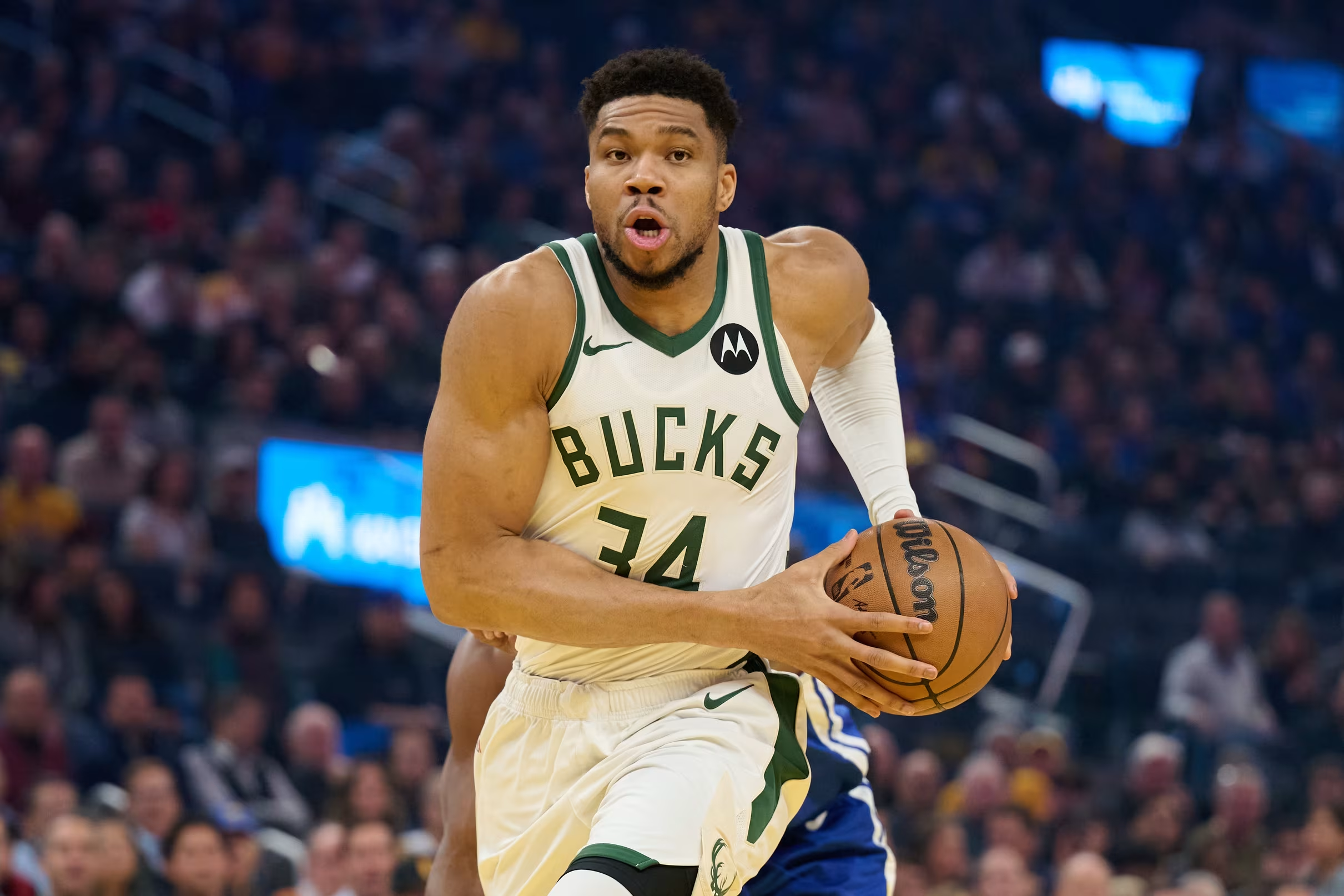
Giannis Antetokounmpo is the roster’s physics button. Two MVPs, a Finals MVP, Defensive Player of the Year, a title—he’s a career beast, but the real point is simpler: he forces the defense to change shape before he even touches the ball. Every drive, every cut, everybody knows he’s coming downhill. He attacks the rim nonstop, through contact, over help defenders, and the league still hasn’t found a good answer. That constant pressure is what opens everything else up, creating gravity for the rest of the stars.
Defensively, he adapts to the opponent. Against Boston or other shooting-heavy teams he can anchor the rim, contesting everything without gambling and forcing tough shots. If lineups feel comfortable leaving open, then he becomes an extra body: cutting off passes, turning stops into transition opportunities, and making the help defense pay for every inch of misalignment.
His low three-point volume isn’t a weakness, it’s the trap. If opponents try to build a wall in the paint, Giannis punishes them downhill, pulling them into spacing dilemmas they can’t solve. He’s the force multiplier that makes the roster function, turning size and skill into real advantage on every possession. So far I’m well on my way to building the best current NBA team to beat the Warriors and Celtics.
The Release Valve: Victor Wembanyama (Power Forward)
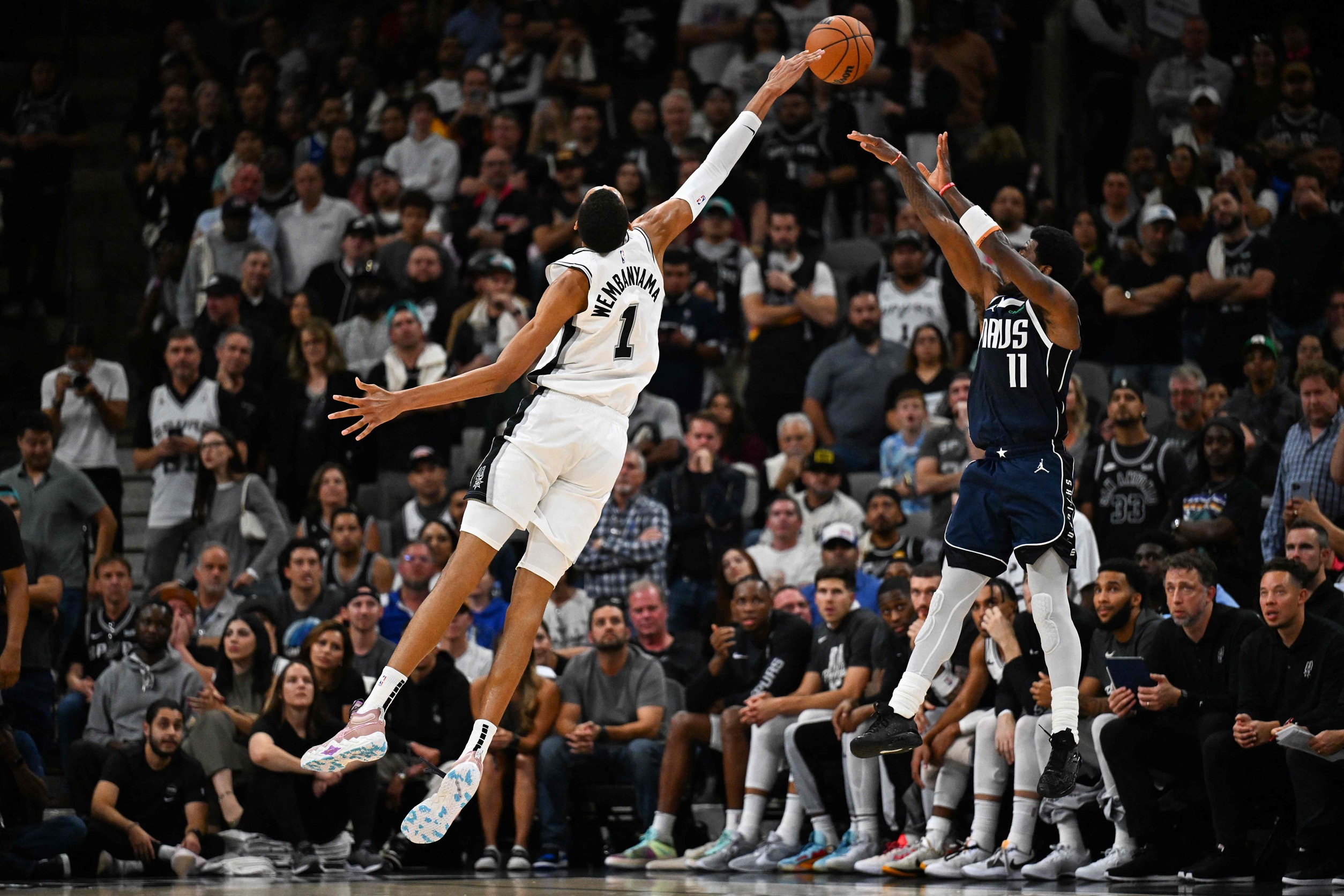
Victor Wembanyama is the piece that lets this roster stay enormous without feeling stuck. Two years into his career he’s already a rare combination: a true rim protector who can also step out and has real three-point volume. That dual-threat is the reason he’s here. He doesn’t just block shots; he changes what teams even try, forcing every opponent to account for him without sacrificing spacing.
Defensively, Wemby allows our guards and wings to pressure the ball aggressively. Last season he averaged 3.8 blocks a night, and that’s before you count the shots that never happen because he’s just standing there. If someone gets past the first line they’re driving into a 7’4″ frame with an 8′ wingspan and no good options. He anchors the paint, turns drives into contested finishes, and reshapes the defense in real time, giving Bridges freedom to chase without breaking down the coverage.
Offensively he’s what keeps the machine moving. You can’t overcommit your big defender in the paint when Wemby is ready to pop and shoot, which stretches the floor and opens downhill lanes for Giannis, clean posts for Jokić, and space for Shai to drive without collisions. He’s the piece that makes his size into an opportunity, so the jumbo-skill machine runs smoothly possession after possession.
The Possession Anchor: Nikola Jokić (Center)
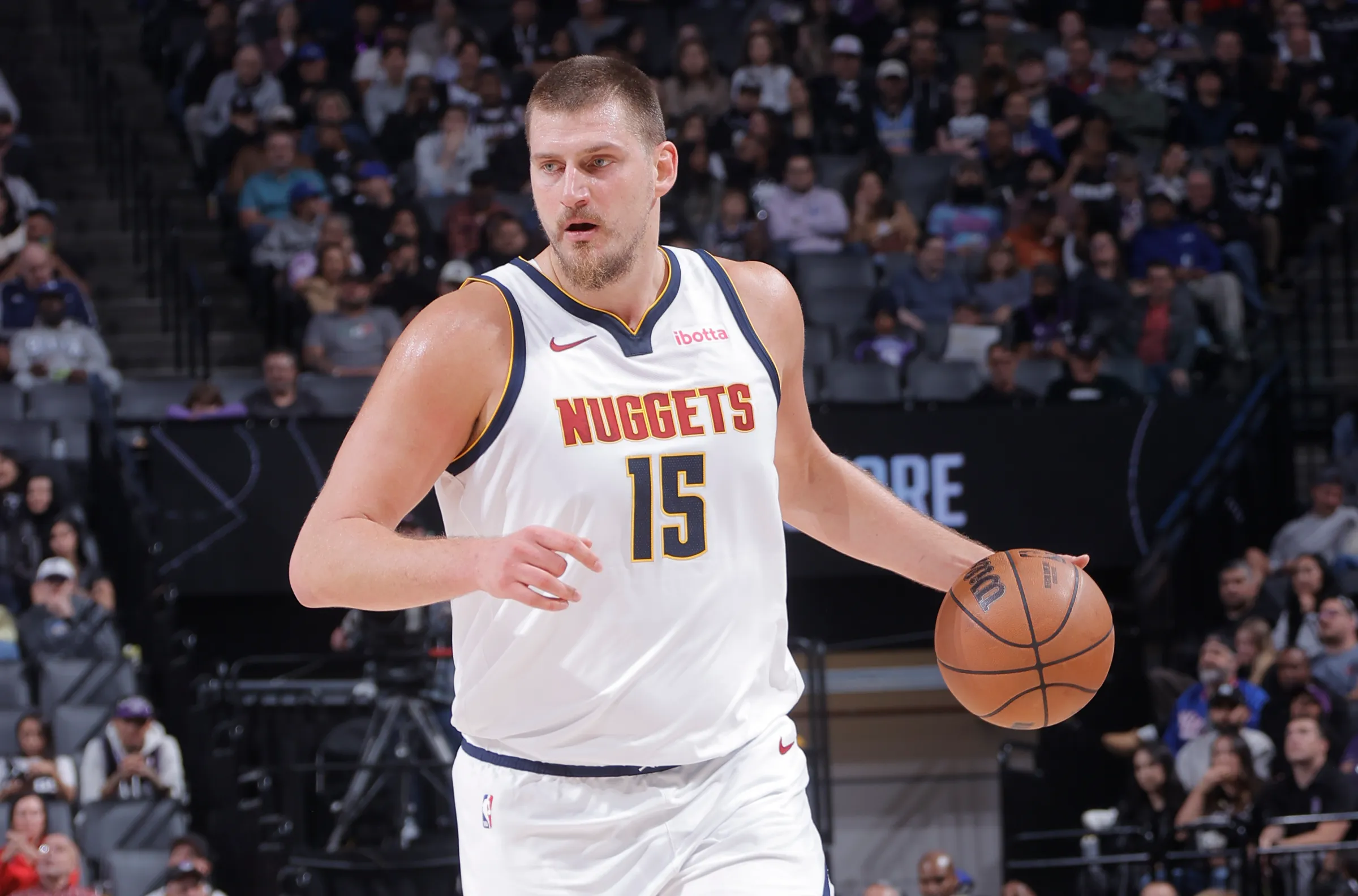
Nikola Jokić is the brain and the possession anchor of this roster. Three-time MVP, Finals MVP, and currently averaging 28.6 points, 12.3 rebounds, and 10.5 assists, he’s a whole offense built into one player. The dude is a beast.
His real value is structural, because Jokić controls the pace when the game slows into half-court execution. Every action runs through him: handoffs to Bridges, two-man reads with Shai, and post touches that punish mismatches. Put a smaller defender on him and it’s an easy basket or foul. Send help, and the ball is flying to an open shooter or cutter. He transforms defensive schemes into opportunities, making “wall” defenses break themselves.
On defense he doesn’t need chase to every screen. He positions smartly, slows the first move, and funnels attackers toward help. Behind him Wembanyama erases the rim, letting the guards and wings chase without compromising protection. On the glass, he ends opposing possessions and extends ours, turning rebounds into both stops and opportunities.
Still, defenses adapt, and elite teams exploit every weak link. That’s why my bench isn’t just rest, they’re a set of specialized tools to counter a different threat, just like the Warriors and Celtics do. When matchups shift, we shift back.
The Geometric Lever: Chet Holmgren
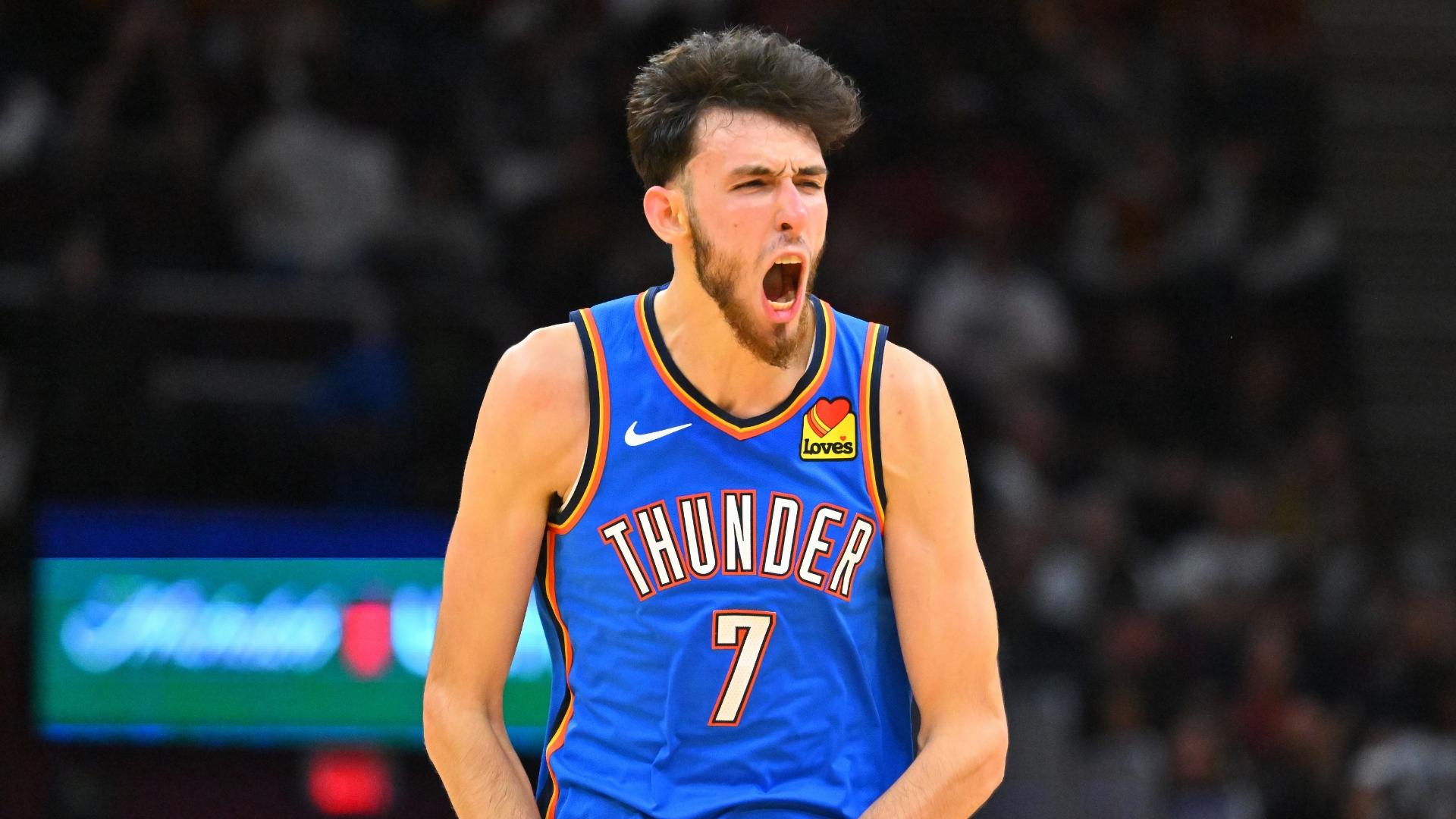
Chet Holmgren isn’t Jokić insurance, he’s the guarantee that you always have two fast seven-footers on the floor. At over 7 feet with a 7’6″ wingspan, he protects the rim while staying mobile enough to stretch the floor and defend the perimeter.
He usually comes in for Wemby or Giannis, unlocking two looks: a lighter, faster 5-out with Jokić running the hub, or a Holmgren–Wemby pairing for maximum length and mobility without shrinking the frontcourt.
Holmgren’s role is geometric: shifting the floor against Curry pick-and-rolls or Boston-style 5-out without sacrificing size, spacing, or rim protection. At 17.4 points, 8.7 rebounds, 1.9 blocks, and 1.3 threes per game, these shape-shifts don’t cost the roster on either end—they just keep the floor flexible, big, and dangerous.
Perimeter Havoc Generator: Dyson Daniels
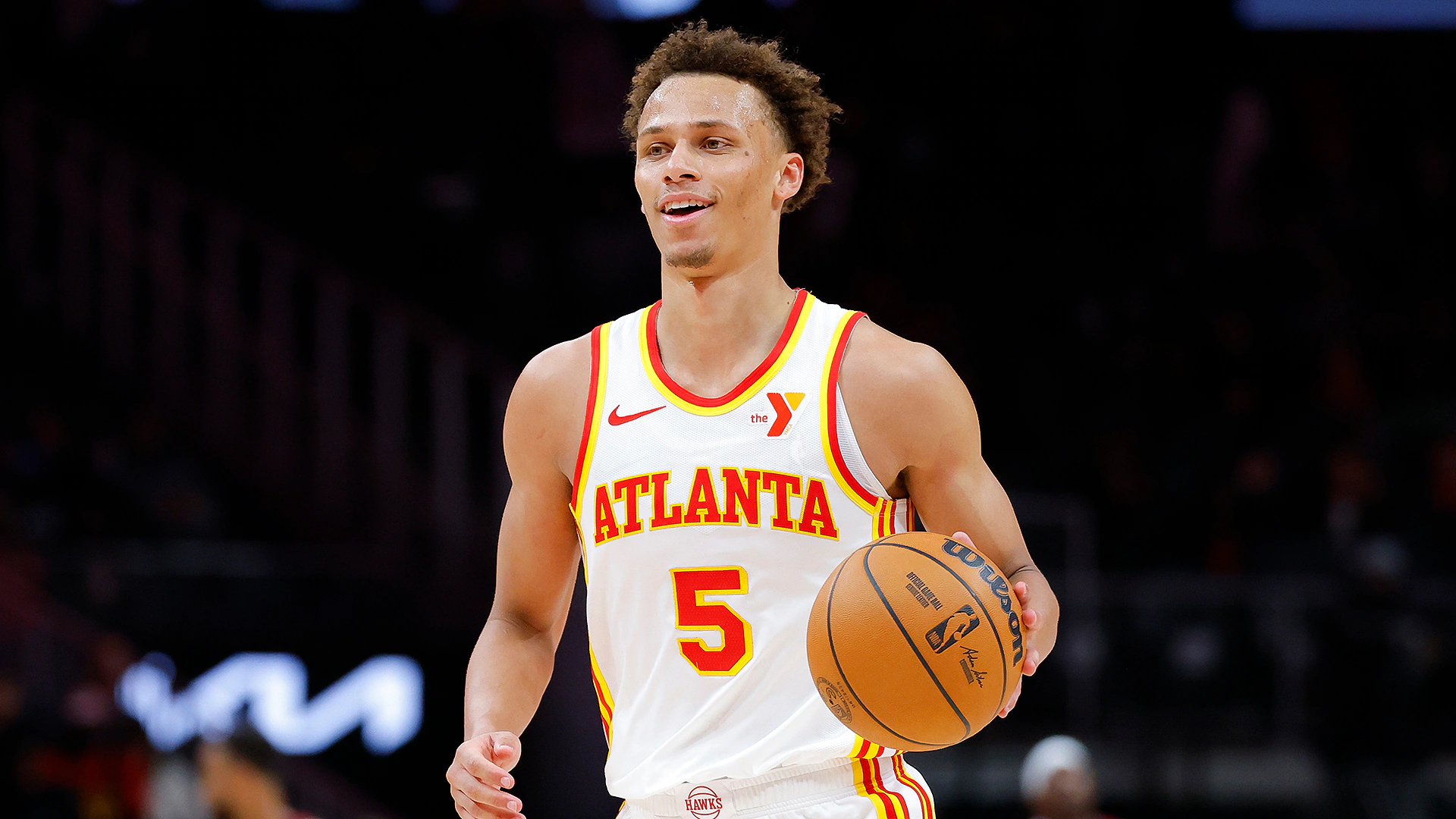
Dyson Daniels is the roster’s primary pressure applier, rotating in for whichever guard or wing needs a break. He disrupts opponents’ main actions before they can develop, and he does it without needing the ball in his hands. At 6’7″ with elite instincts, he led the NBA last year with 3 steals per game and 229 total steals, becoming the youngest player ever to hit 200 in a season, breaking Magic’s old record.
His value is pure perimeter chaos: blowing up sets, winning isolation possessions, and generating 440+ deflections in a single year. Daniels lets the primary offensive stars stay fresh while keeping constant pressure on the floor. He doesn’t just guard a possession, he usually ends it. He forces mistakes, turnovers, and disruption that tilt the game in my favor.
Pure Gravity Spacer: Trey Murphy III
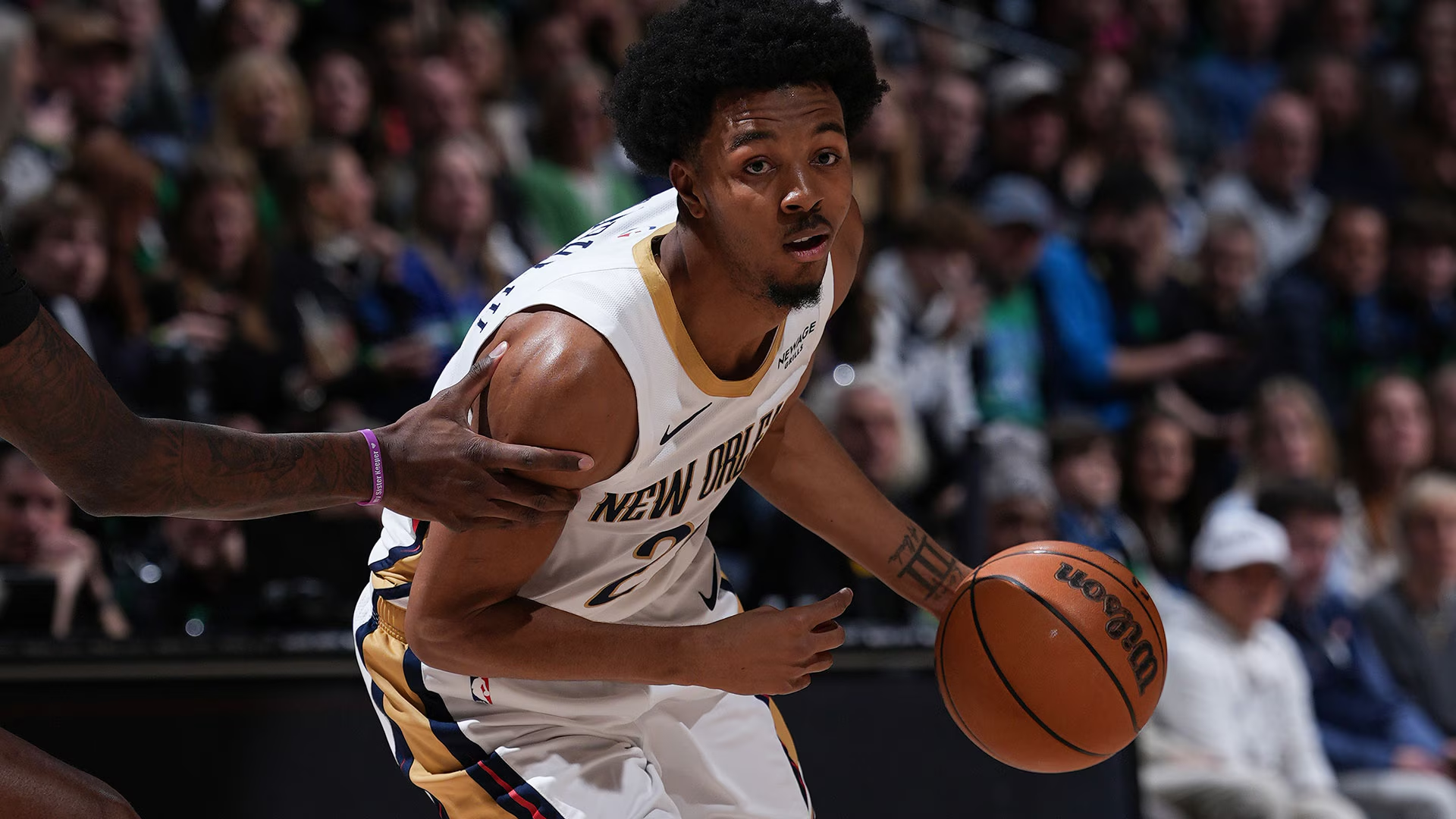
Trey Murphy III is the direct counter when Boston or Golden State pack the paint against Giannis. At 6’8” with real length, he handles perimeter switches without sacrificing the roster’s size advantage.
His peak value is spacing. As one of the league’s best high-volume catch-and-shoot threats, he stretches defenses to 28+ feet. Park him deep and make defenders face a problem: leave him open for a three, or stay and leave the lane for Shai isolations or Jokić post-ups.
Murphy usually rotates in for Bridges or Shai, letting the starters stay fresh while keeping defensive pressure high. He thrives when the half-court slows and the offense must stretch every inch, turning congestion into opportunity without downsizing the lineup.
The Strategy: Upsizing the 5-Out Era
Modern basketball says the way to beat 5-out is to join it: go small, switch everything, hope you can keep up. My roster does the opposite. The best answer to five shooters isn’t to shrink with them, it’s to go bigger with skill and make their math break first. Defensively, Bridges and Daniels chase guards and wings over screens, knowing there are always two mobile giants behind them—whether that’s Wemby–Giannis, Wemby–Chet, or Chet–Jokić. I don’t have to concede mismatches or abandon the paint because every single drive and cut runs into length. Small-ball faces the same problem: there’s no slow big to hunt because my bigs are the spacing. Every coverage adjustment concedes something. Against the Warriors, that means Draymond Green gets posted up against a 7-foot triple-double machine; against the Celtics, it means Tatum or Brown on Jokić at the elbow. Neither team built a center answer for this, and that’s the whole game.
Offensively, the gravity is inverted. Shai and Jokić hunt the weakest defender on the floor—not by forcing the issue, but by controlling pace until the mismatch is unavoidable. They slow the game, avoid live-ball turnovers, and force switches until something breaks. Our base plan is a pin-down into a Jokić elbow handoff (the “Chicago” action). Shai flows off the screen into the handoff at the elbow. If you switch, my center buries the guard. If the defense tries to stop Shai on the handoff by showing, he can drive to the basket with Giannis right behind him. There’s no low man to tag because Wemby is stretching the floor. If the defense tries to stop the handoff, it leaves space near the basket for one of my guys to cut behind them and score. I’ve built a jumbo-skill machine to hunt 5-out, absorb its best punches, and force it to play a bigger, more physical game than it ever wanted. By the time I’m done with them they’ll feel like they’ve been punched right in the ovaries.