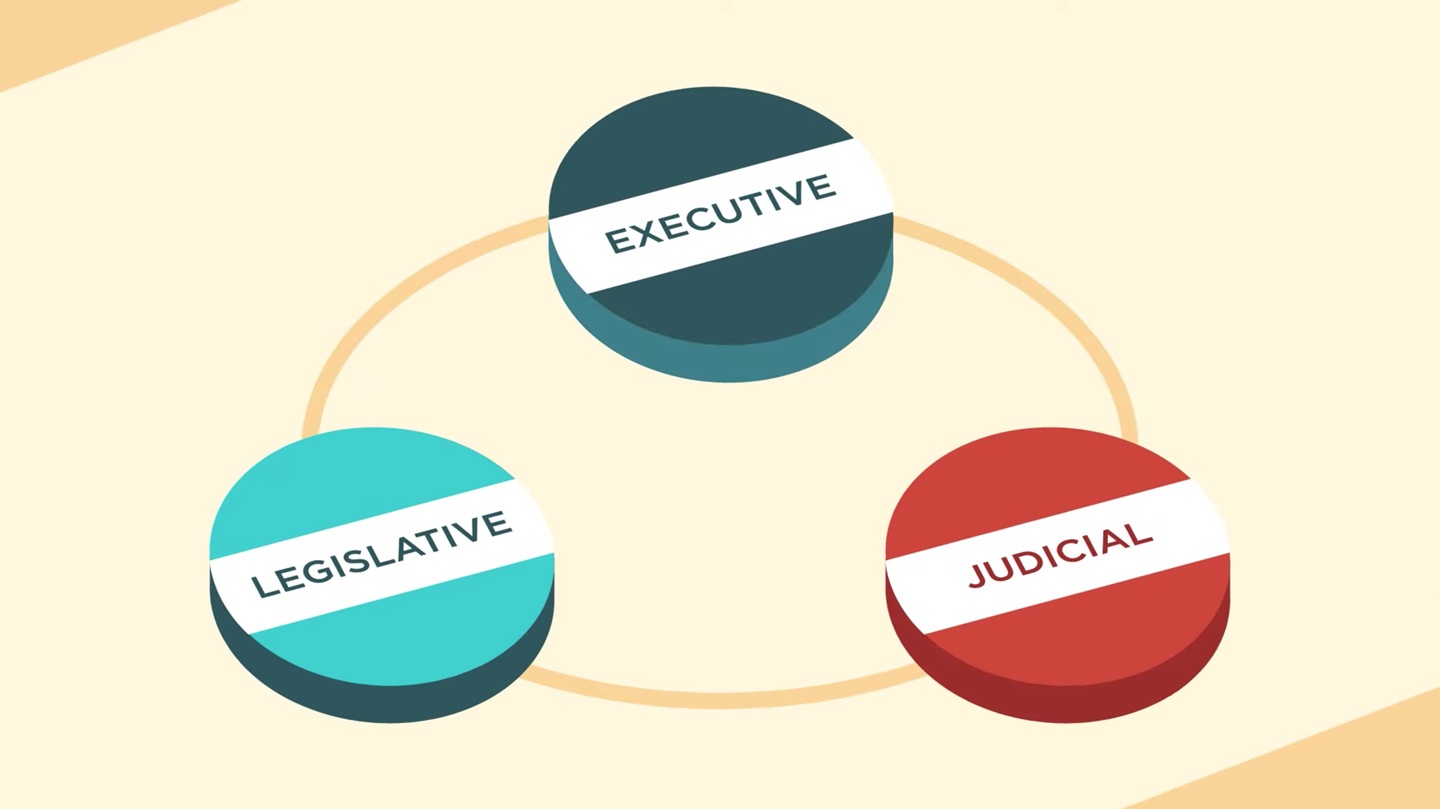
Testing Constraints: Executive Power First, Constitutional Limits Later
See my companion analysis: “Presidential Conflicts of Interest“
Since late 2024, executive action across four constitutionally distinct domains: foreign policy, constitutional text, separation of powers, and domestic enforcement has followed a consistent pattern: legal and institutional constraints are treated as obstacles to be tested rather than defaults to be respected. Authority is asserted first, while compliance follows only after courts, Congress, or public pressure intervene. This article examines that pattern—not as a coordinated authoritarian “master plan,” but as a documented shift in how constitutional safeguards function in practice. Legal protections increasingly operate as reactive remedies rather than preventive defaults, with consequences that are no longer abstract, but borne by institutions and individuals alike.
The pattern is most visible where executive power is broad and institutional resistance is slow to form. Foreign policy provides the clearest initial test case, not because its constraints are weaker in law, but because they are often enforced only after action has already occurred.
From Rhetoric to Force: Foreign Policy as the First Test Case
The pattern is easiest to see in foreign policy because presidential authority is expansive and institutional pushback is often delayed.
The White House confirmed that military force was “always an option” in discussions about acquiring Greenland, a self-governing Danish territory within NATO. Danish officials warned the proposal would severely strain alliance relationships. No institutional constraint followed. The significance was not that force would be used, but that it was treated as an acceptable option in public executive discourse.
Weeks later, rhetorical boundary-testing gave way to executed force.
In early January 2026, U.S. military forces conducted a nighttime operation in Caracas, capturing Venezuelan President Nicolás Maduro and his wife without the consent of the Venezuelan government. They were transported to the United States to face criminal charges in federal court. Senior administration officials defended the operation publicly. International leaders and United Nations officials raised concerns that the raid violated international law. Only after the fact did members of Congress advance a War Powers Resolution seeking to require authorization for future military action in Venezuela.
The constitutional issue was not whether Maduro was corrupt or whether indictments existed. It was whether criminal indictments alone could serve as sufficient threshold justification for unilateral military action inside a sovereign state without prior congressional authorization. Prior administrations invoked AUMFs or imminent-threat doctrines; treating criminal law as a standalone authorization rationale marked a departure from that practice. Yet the operation proceeded anyway, with institutional response arriving only after escalation.
This was the first complete cycle of the pattern: boundary-testing, execution, then delayed constraint. Prior administrations conducted extraterritorial operations under AUMF authority or imminent threat doctrines; what distinguished this action was asserting criminal indictments as sufficient justification for military force inside a sovereign state, with congressional authorization treated as optional rather than constitutionally required at the threshold.
What is occurring is not the erosion of constitutional law, but a shift in how that law operates in practice. The formal rules remain intact. Courts still issue injunctions. Congress still retains authority. Statutes still say what they have long said. What has changed is sequencing.
Constitutional safeguards are designed to function as defaults: they constrain action before it occurs, shaping executive behavior in advance by making certain moves unavailable absent authorization. Increasingly, those safeguards now function as remedies. Executive action proceeds first. Constraint arrives later, only after escalation, litigation, or crisis.
This inversion does not require defiance of law. It relies instead on normalization of delay. If authority can be exercised up to the point where institutions intervene—and if that intervention is slow, fragmented, or politically costly—then the practical boundary shifts. The burden moves from the executive to justify action beforehand to courts and legislators to halt it afterward.
Each intervention preserves legality. But cumulatively, the system’s orientation changes. Compliance becomes conditional, not assumed. Enforcement becomes episodic, not structural. The question is no longer “is this authorized?” but “who will stop it, and how quickly?”
In that environment, constitutional limits still exist—but they operate only after momentum has already been gained.
If foreign policy demonstrated the pattern in action against external constraints, domestic constitutional rhetoric revealed the same approach applied to the foundational text itself.
Saying the Unsayable: Elections and Constitutional Text
On January 6, 2026—the anniversary of the Capitol attack—Donald Trump told House Republicans, “I won’t say cancel the election… they should cancel the election.” The phrasing mattered. It simultaneously introduced election cancellation as a possibility while denying that it was being proposed. At the same time, the administration continued to dispute the legitimacy of the 2020 election despite a comprehensive judicial rejection.
No institutional sanction followed the rhetoric itself.
This was not an attempt to cancel an election. It was a test of whether openly articulating unconstitutional possibilities would trigger consequences. It did not.
Where rhetoric met resistance, executive action followed. On January 20, 2025, the administration issued an executive order attempting to end birthright citizenship for children born in the United States to undocumented or temporary-status parents. The order directly contradicted the Fourteenth Amendment’s plain text. Federal courts blocked enforcement. Litigation continued, partial stays were issued, and families faced prolonged uncertainty.
Constraint functioned—but only after judicial escalation.
Separation of Powers: Treating Safeguards as Optional
The pattern did not emerge suddenly. It was already evident during the transition period, before inauguration, when institutional safeguards were treated less as mandatory constraints than as negotiable obstacles. These safeguards involve routine coordination with federal agencies responsible for continuity of government, background checks, and federal funding.
These procedures exist precisely because enforcement mechanisms are weakest during transitions. Before the inauguration, there is no formal exercise of executive power to challenge in court. Instead, the system relies on voluntary compliance with norms designed to protect continuity, security, and institutional trust. Background checks, interagency coordination, and standardized agreements are not mere formalities; they are preventive safeguards intended to surface conflicts, risks, and constraints before authority is assumed.
Treating those safeguards as optional does not violate the law. It alters expectations. When compliance occurs only after public pressure or partisan objection, the signal is not that norms are illegitimate, but that they are contingent. That contingency matters. Systems designed to prevent abuse depend on early friction points at which caution is required before momentum builds.
The transition period, therefore, functions as a revealing test case. It shows how an administration approaches constraint when enforcement mechanisms are weak and immediate legal consequences are absent. The posture adopted there tends to persist once power is fully vested, when the consequences of delay are greater and institutional resistance more costly.
In that sense, the transition behavior was not an anomaly. It was a preview. The posture toward constraint—treating safeguards as contingent rather than binding—was already visible during the transition period, and persisted once formal authority transferred to contexts with constitutional force.
During the November–December 2024 transition, the incoming administration delayed signing standard DOJ and GSA agreements and initially declined to submit senior nominees to FBI background checks, relying instead on private vetting. These actions were not illegal. They were norm violations. Compliance occurred only after sustained public pressure and objections from Senate Republicans.
This approach is carried directly into governance.
On January 27, 2025, the Office of Management and Budget issued a memo freezing federal assistance across broad categories of congressionally appropriated programs. Federal courts quickly intervened, finding the action likely exceeded executive authority. The memo was rescinded within forty-eight hours, but only after nationwide disruption—and even then, the administration asserted that the underlying freeze remained operative.
These actions established a pattern and precedent. Safeguards were not abolished, but treated as obstacles rather than baselines, with compliance following only after resistance became costly.
When that same approach reached domestic enforcement, the consequences were no longer confined to institutions.
Domestic Enforcement: When Boundary-Testing Reaches Civilians
In late 2025 and early 2026, the Department of Homeland Security launched a large-scale immigration enforcement operation in Minnesota involving approximately 2,000 federal agents—the largest such operation in state history—with little to no advance coordination with state officials.
The legality of immigration enforcement itself was not in question. What distinguished the operation was scale, visibility, and process.
On January 7, 2026, an ICE officer fatally shot Renee Nicole Good, a 37-year-old U.S. citizen, during the operation. Good was in her vehicle in her residential neighborhood after dropping off her young child at school. Minneapolis Police Chief Brian O’Hara stated publicly that there was “nothing to indicate that this woman was the target of any law enforcement investigation.” Community members described Good as someone who cared for her neighbors. When large-scale federal enforcement proceeds without advance state coordination or clearly articulated safeguards, failures of constitutional process are no longer abstract—they are borne by specific individuals.
Federal and state accounts diverged sharply. Homeland Security Secretary Kristi Noem characterized the incident as an act of “domestic terrorism,” claiming Good’s vehicle posed a threat to officers. Local officials disputed that account, citing eyewitness video showing the vehicle moving slowly and witness statements contradicting claims of imminent danger. The FBI assumed investigative authority. Minnesota’s Bureau of Criminal Apprehension withdrew from the joint investigation, citing concerns about evidence access and jurisdictional clarity under federal lead.
This was not an isolated context. ProPublica documented more than 170 cases in 2025 in which U.S. citizens were detained during immigration operations, some for over 24 hours without access to legal counsel. Those incidents raised constitutional concerns but were largely resolved administratively. In Minnesota, the consequences escalated.
Authority was asserted first. Institutional review followed later.
Domestic enforcement did not create the pattern. It revealed its human consequences. The question then became how institutions designed to remedy such outcomes responded.
Judicial Resistance: Constraint Still Functions—But Only After Escalation
That escalation increasingly took the form of serial emergency litigation rather than ordinary judicial review. Courts were not asked to resolve novel constitutional questions so much as to repeatedly restate settled ones under compressed timelines, often in response to executive narrowing or reinterpretation of prior rulings.
A recurring example involved the administration’s response to injunctions blocking the birthright citizenship order. Initial district court rulings barred enforcement nationwide. The administration publicly stated it would comply while simultaneously advancing narrower interpretations of what constituted “enforcement,” prompting plaintiffs to return to court seeking clarification. Judges were then required to issue supplemental orders specifying that the prohibition applied not only to formal rulemaking, but also to agency guidance, internal memoranda, and indirect implementation through benefits denial. Each clarification reaffirmed existing constitutional doctrine, yet each was necessitated by executive efforts to test the edges of compliance.
Similar dynamics appeared in litigation over the attempted funding freeze. After courts enjoined the Office of Management and Budget’s January 2025 directive, the administration rescinded the memo but maintained that agencies retained discretion to pause disbursements under alternative authority. Plaintiffs again sought emergency relief. Courts responded with expedited hearings and narrowly tailored orders compelling specific agencies to release funds by a date certain, effectively converting general constitutional constraints into itemized compliance instructions.
In multiple instances, judges expressed frustration at the need to restate principles already deemed “clear and unambiguous.” Opinions emphasized that the executive branch was not being asked to concede policy disagreement, but to comply with binding law pending final adjudication. The repetition itself became evidence of strain: judicial authority still prevailed, but only through iterative enforcement.
This procedural pattern matters because it alters the functional role of courts. Rather than operating as a background constraint shaping executive behavior ex ante, the judiciary increasingly functioned as an active supervisory body intervening midstream to halt or reverse actions already underway. Each emergency order resolved the immediate conflict, but normalized a new equilibrium in which constitutional compliance was provisional until judicially reaffirmed.
Constraint, in other words, continued to exist—but only when invoked repeatedly, explicitly, and at escalating institutional cost.
Historical Memory and the Meaning of Constraint
Constraints operate not only through enforcement decisions, but through mandated acts of institutional acknowledgment.
In 2022, Congress mandated the installation of a memorial plaque honoring the law enforcement officers who defended the Capitol on January 6, 2021. The plaque was produced and placed in storage. It remains undisplayed.
Capitol Police Officers Daniel Hodges and Harry Dunn filed suit to compel installation. The Department of Justice intervened, arguing the plaque failed to meet statutory requirements. Years later, the mandate remains unfulfilled.
At the same time, the administration promoted an alternative narrative of January 6, describing it as a “peaceful protest” despite extensive judicial findings and more than 1,200 convictions before mass pardons were issued.
Officers who defended the Capitol on January 6 faced violence documented in extensive judicial proceedings. Capitol Police officer Harry Dunn later reported that rioters beat officers with Blue Lives Matter flags. Yet Congress’s mandate to memorialize the officers who defended the institution remains unfulfilled. President Trump subsequently issued mass pardons for January 6 defendants who collectively assaulted at least 174 police officers. Meanwhile, federal agents involved in politically aligned enforcement actions—including the ICE agent who fatally shot U.S. citizen Renee Nicole Good in Minnesota—received immediate executive defense despite conflicting accounts from local authorities. The pattern is not hostility toward law enforcement, but support that persists only when enforcement aligns with political objectives.
What unifies the episodes examined here is not motive or coordination, but the documented willingness to test constraints publicly, followed by resistance to accountability or normalization when opposition proves fragmented or ineffective.
The danger is not that constraints never work. It is that they no longer work by default, arriving only after action has been taken and harm has already occurred.
The Pattern vs. Isolated Friction
Some will argue these are isolated incidents, not a pattern; that any president facing opposition will produce similar examples.
This objection misunderstands both the evidence and the logic it justifies.
First, the pattern appeared across different areas: foreign military operations (Venezuela), constitutional rights (birthright citizenship), congressional spending authority (funding freeze), and domestic law enforcement (Minnesota ICE operation). The common feature was timing: action came first, constraints came later, and only after crisis or court orders.
Second, courts had to repeatedly clarify “settled and unambiguous” constitutional rules. In the birthright citizenship case and funding freeze litigation, judges expressed frustration at having to restate basic principles. This kind of repeated clarification—judges restating “clear and unambiguous” principles multiple times for the same executive action—represents unusual strain on judicial resources.
Third, the stakes are high. These cases involve military force, civilian deaths, and fundamental constitutional questions. When the pattern appears in such critical areas, waiting for definitive proof before responding carries serious risks.
If this pattern is temporary, institutional reforms create modest coordination requirements. If it represents lasting change, waiting allows harm to accumulate. Precautionary reforms do not require proving permanence. They require showing documented harm plus plausible escalation risk. That threshold is met.
What emerges from these episodes is not evidence of constraint’s collapse, but of its transformation.
The pattern documented here is not the collapse of constraint, but its inversion—from preventive safeguard to reactive remedy.
These episodes show the same sequence repeating: executive action happened first, institutional constraint came second—through delayed congressional response or emergency court intervention. The Minnesota operation proceeded without state coordination before a U.S. citizen was killed. The Venezuela military raid occurred before War Powers review. The birthright citizenship order required multiple court clarifications after it was issued.
Whether this represents permanent systemic change or temporary stress under an aggressive executive cannot be proven without comparing response patterns across multiple administrations.
But here’s the key question: What’s riskier—acting now or waiting for proof?
If this proves temporary, the reforms below add modest procedural steps. If it represents lasting transformation, delayed response lets institutional damage and human harm become normal.
Immediate Responses Warranted
Judicial and Enforcement Reforms
- Fast-track court review for executive actions raising major constitutional questions
- Require Inspector General coordination for federal enforcement operations over 500 agents, with advance notice to state officials
Congressional Authorities
- Require congressional notification within 48 hours for military operations outside existing AUMFs, automatically starting the War Powers Resolution 60-day countdown
- Create procedures letting Congress respond quickly to constitutional concerns without needing supermajorities
Constitutional limits remain on the books. What changed is timing. In these documented cases, constraints arrived after action, not before—after harm, not in time to prevent it. Restoring constraints as defaults rather than emergency responses requires making unauthorized action more difficult and reducing the window where contested actions can proceed unchecked.