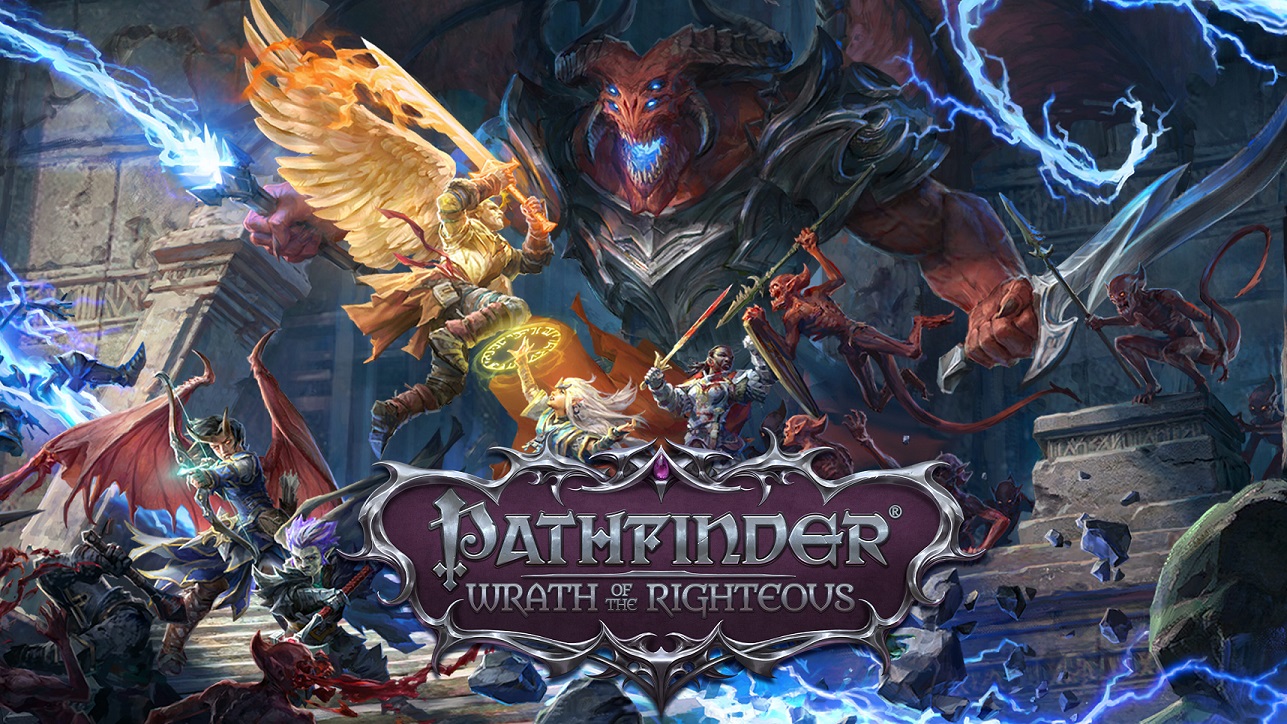
I’m a fan of Pathfinder. I love it and I love playing the tabletop game with my friends. Every system has its warts, but I really love the system and the written Adventure Paths that I’ve journeyed through over the past several years. Wrath of the Righteous is a PC Pathfinder game by Owlcat Games, and is based on the tabletop version of the Adventure Path–with several key differences.
The purpose of the next few posts is for those who play the tabletop game and want to know what differences there are in the races, classes, archetypes, or rules of the video game. And there are differences! In fact I cannot find any comprehensive comparison anywhere on the web in a convenient form, so I’ve decided to make one.
Some of the rules we know from the original game have been modified. For example, instead of rolling hit points every level an average is taken and applied upon level up (e.g. an Alchemist would gain a base 5 HPs per level). What we of the tabletop world call Traits are now known as Backgrounds. While there are no lances, thanks to a recent patch spears function as lances when charging. Finally there are no Favored Class Bonuses, they are gone.
Skills have also changed. There are now 11 skills instead of 24, and as a result most classes gain less skill points per level. Some skills have been consolidated, some have different names. I’ll list the new skills and summarize their uses, as they include abilities that are not part of the tabletop skills.
Athletics: This skill covers catching an object, climbing an obstacle, jumping, swimming
Knowledge (Arcana): This skill covers spell scroll scribing during camping, identifying magic items, learning spells from spellbooks. It is not possible to craft magic items of your own in the game, but you may craft potions or spell scrolls. There are feats such as Brew Potion and Scribe Scrolls that are required. You will need an item such as an Alchemist’s Kit (level I – IV) or a Scroll Scriber’s Kit (levels I – IX), and to find the right components.
Knowledge (World): This skill covers deciphering writing, identifying monsters (humanoids), learning languages, recalling knowledge about geography, history, locales, or nobility, cooking food when camping, and in determining success for brewing potions.
Lore (Nature): This skill covers handling animals, identifying monsters (aberrations, animals, fey, monstrous humanoids, oozes, plants, vermin), recalling knowledge (about dungeons or nature), stabilizing the wounded, hunting when camping, helping cure a disease (Religion determines this when using remove disease.)
Lore (Religion): This skill covers identifying monsters (outsiders and undead), recalling knowledge (about the planes or religions).
Mobility: This skill covers moving without provoking AoO’s, keeping your balance, escaping from restraints, flying maneuvers, riding mounts, softening falls, squeezing through tight spots
Perception is still perception, but now includes sense motive
Persuasion: This skill covers changing other’s attitude, creating diversions, gathering information, intimidating others, lying, making requests, passing secret messages
Stealth is still stealth
Trickery: This skill covers concealing objects on your body, disarming traps or devices, opening locks
Use Magic Device is still Use Magic Device
Here is a quick list of links for my content on race, class, archetype and prestige class changes:
- Race Changes
- Classes and Archetypes: Alchemist – Arcanist
- Classes and Archetypes: Barbarian – Bard
- Classes and Archetypes: Bloodrager, Cavalier, Cleric
- Classes and Archetypes: Druid – Fighter
- Classes and Archetypes: Hunter, Inquisitor, Kineticist
- Classes and Archetypes: Magus – Monk
- Classes and Archetypes: Oracle
- Classes and Archetypes: Paladin – Ranger
- Classes and Archetypes: Rogue – Shaman
- Classes and Archetypes: Shifter – Slayer
- Classes and Archetypes: Sorcerer
- Classes and Archetypes: Warpriest – Witch
- Classes and Archetypes: Wizard
- Prestige Classes, Part 1
- Prestige Classes, Part 2
Here is a quick list of my power builds, all of which are unfair viable:
- Sosiel companion build
- Camellia companion build
- Ember companion build
- Death Knight Lich
- Broken Demon Shifter
- Oracle Angel 2.0
- Skald 2.0
- Seelah companion build
- Solo Build (designed for tabletop)
- Two Summoner builds
- Alchemist Bomber Legend
- Oracle Angel
- Lich Wizard
- Which party members are best?
- The ultimate PC party member–this is a follow-up to the party member link
- Demon Cavalier: the highest damage possible
- Two Power Rogues
- Druid Shapeshifter
- Archer builds
- Mystic Theurge
- Best Aeon Build
I may add more later, depending on demand.